
Nikon D750 f/7.1 1/320 24mm 100 ISO
Nikon D750 f/7.1 1/320 24mm 100 ISO
The practice of the presence of God as being
comparable to that of consciousness
finally makes possible “full awareness” applied
to every thought, word, and deed.
~ Unknown


Nikon D750 f/4.5 1/320s 85mm 100 ISO
This week’s photo study is inspired by my initial reading of Bruce Percy’s ebook, “The Art of Tonal Adjustment.” Thus far into this photo study project, the majority of discussions about composition generally concentrate on the basics of photography; such as, the rule-of-thirds, rule of odds, leading lines, the color red, and so on. Tone, on the other hand, doesn’t seem to be a popular subject and one that has a variance of definitions. For example:
Hue is the color. Saturation is the purity/intensity of the color. Tone is the degree of lightness and darkness.

Nikon D750 f/4.5 1/160 85mm 100 ISO
Tone is probably the most intangible element of composition. Tone may consist of shadings from white-to-gray-to-black, or it may consist of darks against lights with little or no grays. The use of dark areas against light areas is a common method of adding the feeling of a third dimension to a two-dimensional black-and-white picture. The interaction of light against dark shades in varying degrees helps to set the mood of a composition.

Nikon D750 f/4.5 1/160 85mm 100 ISO
A picture consisting of dark or somber shades conveys mystery, intrigue, or sadness. When the tones are mostly light and airy, the picture portrays lightness, joy, or airiness.
“Tonal range” is another way of saying what the difference is between the darkest and the lightest parts of a picture.

Nikon D750 f/4.5 1/4,000 85mm 800 ISO
“Tonal contrast” is created when light tones and dark tones lie alongside each other. In any photograph it is natural for the eye to go straight to the highlights and then move about the image, taking in the details.

Nikon D750 f/4.5 1/320s 85mm 100 ISO
Tonal contrast is the basis of many successful black and white images. If you need help to see the tones in your color photos an easy way to do so is to reduce the color saturation to zero. It is easier to see tonal contrast in black and white images because there is no color to distract your eye from the brightness values within the photo. It is important to note that reducing the color saturation to zero is usually not the best way to convert a color image to monochrome.

Nikon D750 f/4.5 1/320s 85mm 100 ISO
Throughout my inital research, I found Bruce Percey’s articles about tone to be an invaluable read. Hope you enjoy.
https://www.brucepercy.co.uk/blog/?category=Tonal+Relationships
How do you understand and demonstrate tone within your photographs?

Nikon D750 f/5.6 1/2,000 45mm 800 ISO
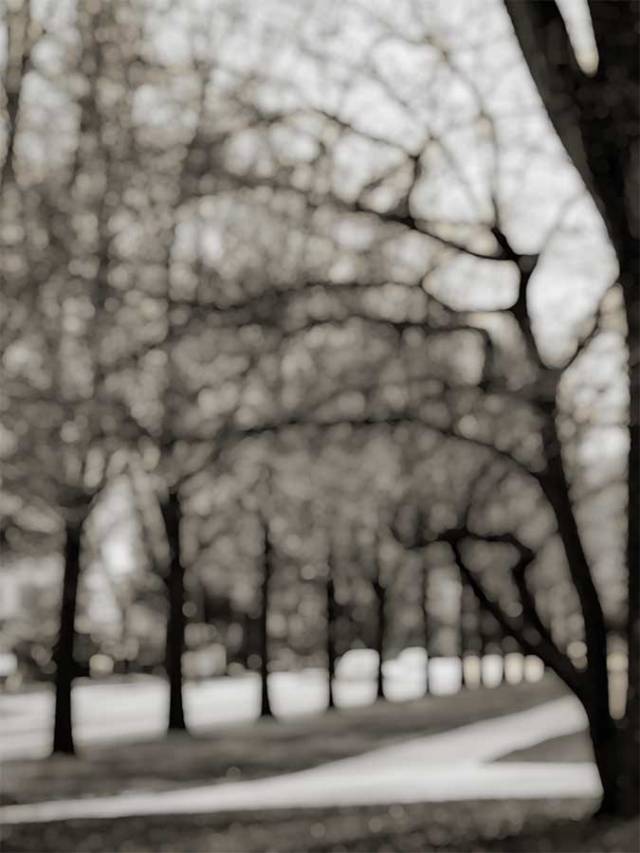
Nikon D750 f/11 1/1,000s 85mm 800 ISO
This week’s photo study is a sharing of blog that discusses focal points in landscape photography. Enjoy.

Photo by 12019 / CC0 When it comes to landscape photography we should consider exactly what we want the viewer to focus on and where. This sounds very…obvious. But how do we do so? There’s a certain amount of nuance that photographers don’t always take to heart when looking at a scene. So let’s explore…
via How to Choose a Focal Point for Your Landscape Composition — Loaded Landscapes
 For this week’s photo study I am sharing a link to a photo educational post written by Etienne Bossot, a travel photographer based in Asia. I found this discussion on composition templates valuable as it expands upon a number of my past photo study blogs.
How to Use Composition Templates to Improve Your Photography
I will be having the first of two scheduled eye surgeries this coming Monday. I was told that my vision will be greatly improved so am hoping to be back on photo walks, in the digital darkroom, and blogging within a couple of weeks.

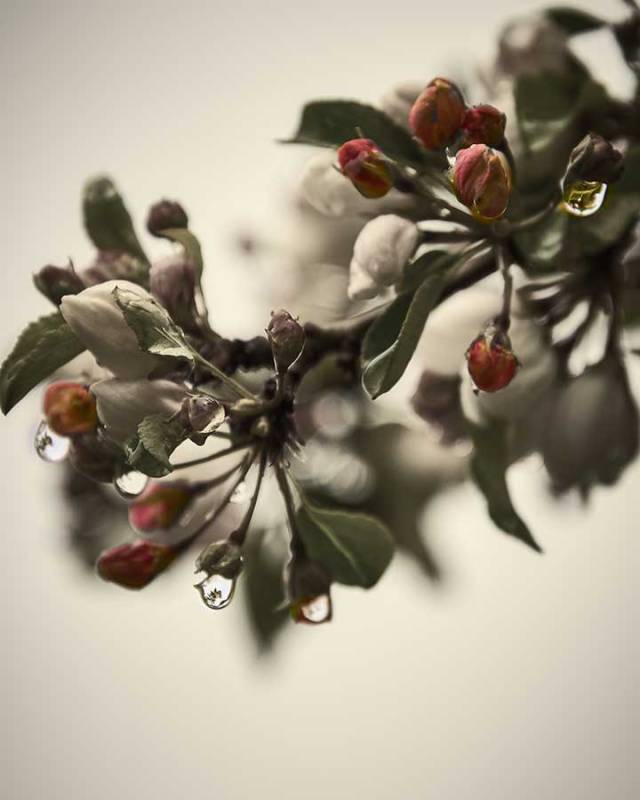
Nikon D750 f/4.5 1/2,000 85mm 800 ISO
This week’s photo challenge has been inspired by Ted Forbes’ Using Low Angle video. Low-angle composition invites the photographer to create images with different and unique perspectives.


We generally experience our daily lives at eye level and often feel more comfortable photographing at eye level. Low angle photography invites us to look up…to create images from any point below eye level which gives the effect of looking up at an object or person. Also you can go to the extreme and show a worm’s eye view of the world.
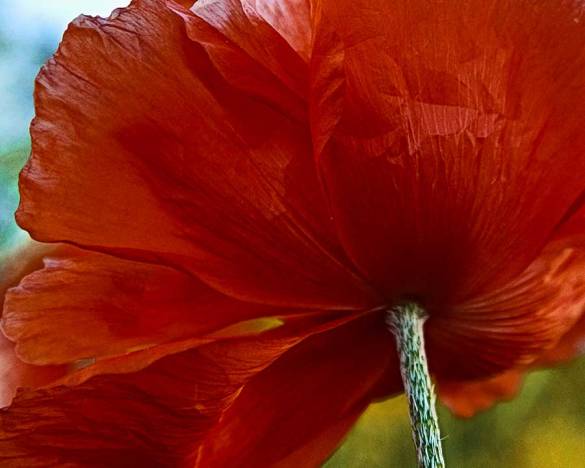
A worm’s-eye view is a view of an object from below, as though the observer were a worm; the opposite of a bird’s-eye view. It can be used to look up to something to make an object look tall, strong, and mighty while the viewer feels child-like or powerless. A worm’s eye view commonly uses three-point perspective, with one vanishing point on top, one on the left, and one on the right.
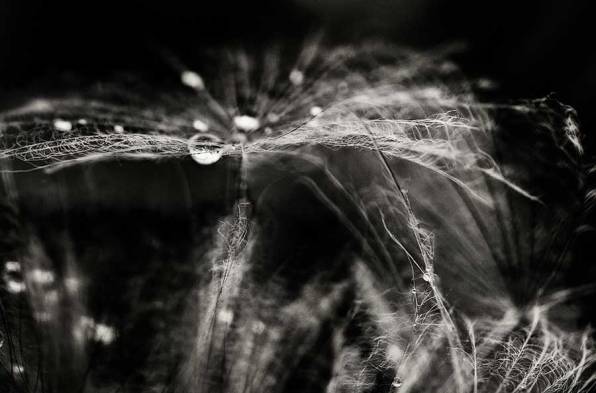
To photograph low angle composition, you will need to crouch, bend, or get down onto the floor. A personal note ― have found that when crouching I need to find a way to brace myself as without there often is a slight tremble which, sigh, results in a blurred image.
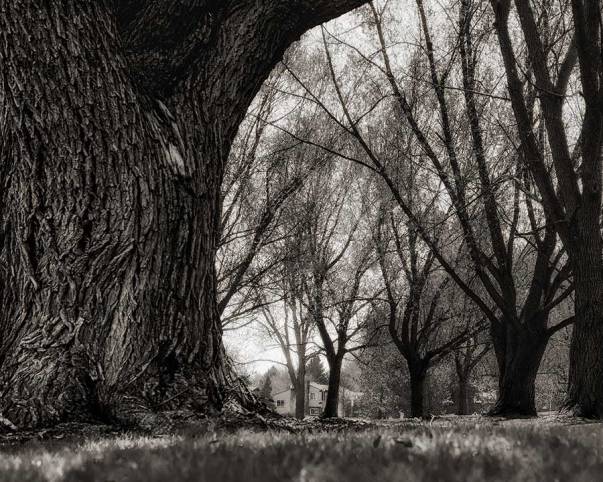
A low angle perspective increases the height of the subject.
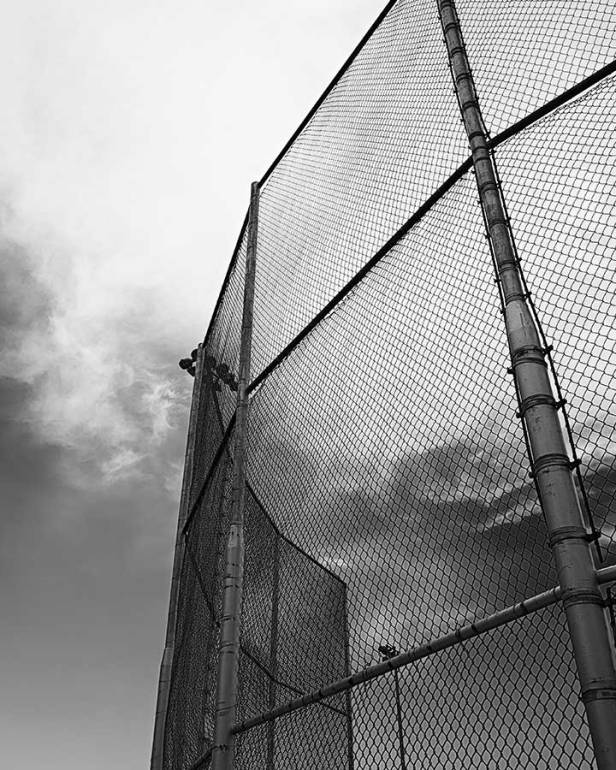
It creates an image where the subject appears more powerful and dramatic.
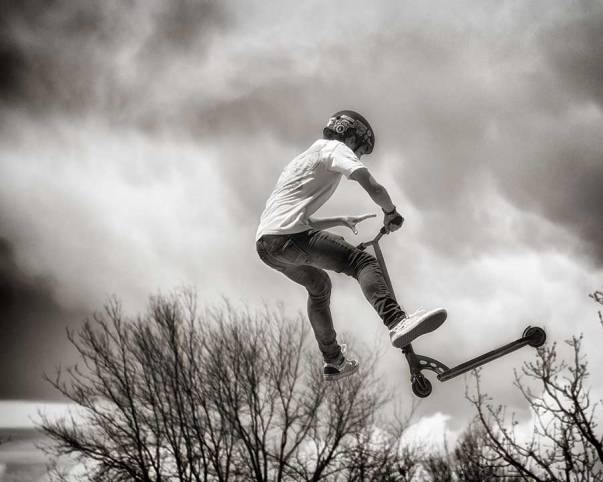
It lends empathy to a viewer as through a shared experience of a toddler’s world within a playground setting or standing before three-feet ocean waves.


This angle is also great when you wish to capture the mood.

I began this photo study project about 18 weeks ago with an intention to develop, expand, and share my understanding of photography throughout 2018. Regrettably, I am finding that this project is being negatively impacted by some vision difficulties which may require eye surgery within the next couple of months. Consequently, I have decided to reblog some photo educational posts from other bloggers…sorta like using blogs as substitute teachers. I hope you will find them as inspiring and informative as I have.
To close this week’s photo study, please enjoy these two Ted Forbes’ videos on low angle photography.
While watching
the long rains falling on this world
my heart, too, fades
with the unseen color
of the spring flowers.
~Ono no Komachi (J Hirshfield & M Aratani, The Ink Dark Moon)
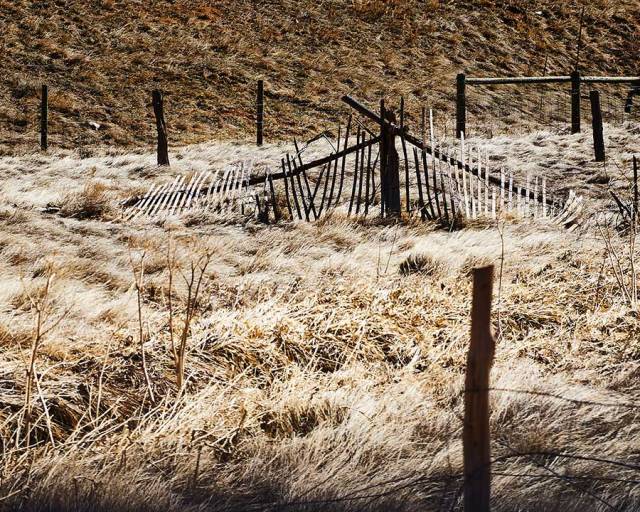
Secretly
I would have you know,
With the mists of spring
Among the haze are
My thoughts of you
~Former Emperor Gosuzak (http://www.wakapoetry.net)

Nikon D750 f/11 1/3,200 52mm 800 ISO
 a meditative journey
You must be logged in to post a comment.