memory

if I go to heaven I will forget you,

and

if I go to hell you will forget me.*
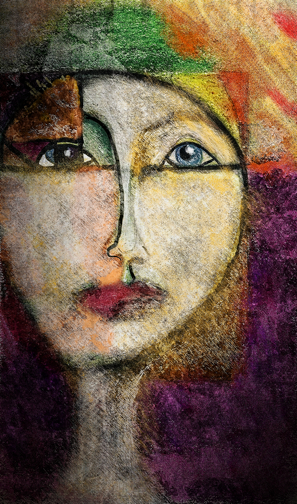
memoryportraiture

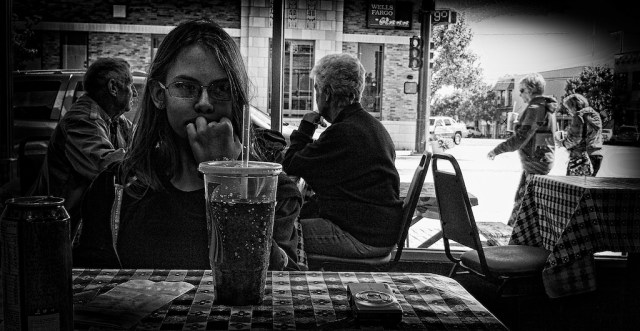
self portraiture created through the use of mixed media

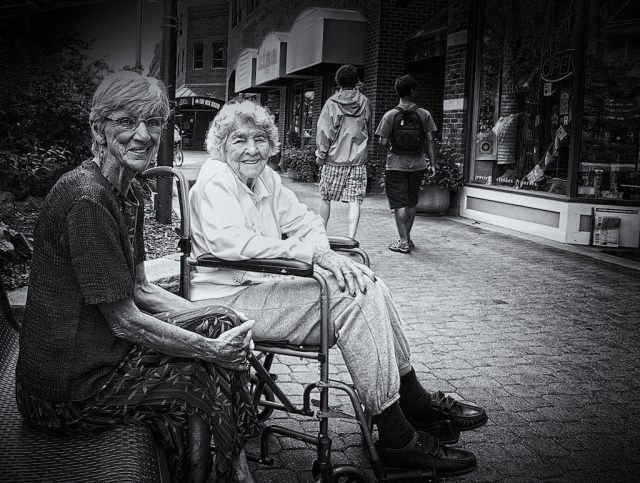
In China a person who will not forget the past is described as ‘one who did not drink Old Lady Meng’s soup.’ Borrowed from Buddhist folklore, Old Lady Meng dispenses the Broth of Oblivion to souls leaving the last realm of the underworld on their way to reincarnation. After drinking her soup, the soul is directed to the Bridge of pain that spans a river of crimson water. There, two demons lie in wait: Life-Is-Not-Long and Death-is-Near. They hurl the soul into waters that will lead to new births.

Old Lady Meng is more than a quaint antidote for the Greeks’ Mnemosyne. She embodies a psychological understanding about the forces that promote, indeed demand, forgetting for the sake of ongoing life.  It is not enough to note that water is linked with amnesia in Chinese folklore as much the same way that the river Lethe is associated with forgetting in Greek mythology. The challenge here is to make sense of the distinctively Chinese attachment to remembrance in spite of the benefits of Old Lady Meng’s soul.

In Jewish tradition, too, the benefits of amnesia were acknowledged along with the sacred commitment to recollection. There is a midrash, or Torah-based story, that teaches us a lesson similar to that of Lady Meng: ‘God granted Adam and Eve an all-important blessing as they were about to leave the Garden of Eden: I give you, He said, ‘the gift of forgetfulness.” What is so precious about amnesia? Why would God, who demands fidelity to memory, offer the relief from recollection? Perhaps it is because without some ability to forgive and forget me might become bound by grudges and hatred. To remember everything may be immobilizing. To flee from memory, however, leads to an ever more debilitating frenzy.(40-41)**

source:

*Arang and the Magistrate

Munhwa broadcasting corporation 

**Bridge Across Broken Time

Vera Schwarcz

weekly photo challenge: the hue of you

if some great idea takes hold of us from outside, we must understand that it takes hold of us only because something in us responds to it, and goes out to meet it. ~C. G. Jung

the hue of you

Visit WordPress Photo Challenge to view additional images submitted for this week’s challenge: SHARE A PHOTO INCLUDING THE HUE(S) OF YOU!

timeless experience

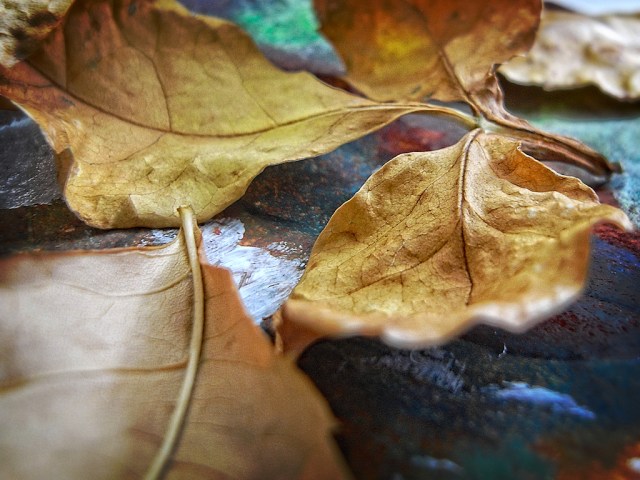
in the cessation of craving, we touch that dimension of experience that is timeless;

the playful, unimpeded contingency of things emerging from conditions only to become conditions for something else. 

Exif_JPEG_PICTURE

…Known as the ‘womb of awakening’ it is the clearing in the still center of being,

the track on which the centered person moves –

it whispers, “Realize me.”  

But no sooner is it glimpsed then it is gone.*

*source:  unknown


weekly photo challenge: inside

Between the slats

of the window

a tiny hand held out

to feel spring rain ~ Torai*

weeklyphotochallengeinside

Since it has now been three days of gray skies, drizzling rain, and no wind, inside is an appropriate description of life within Wyoming.  While the focus is upon the rain drop, inside the image is a not quite ripe plum.

Visit WordPress’ weekly photo challenge to view additional images created specifically for the concept of ‘inside’

*cited in:

The Year of My Life

Trans: Nobuyuki Yuasa

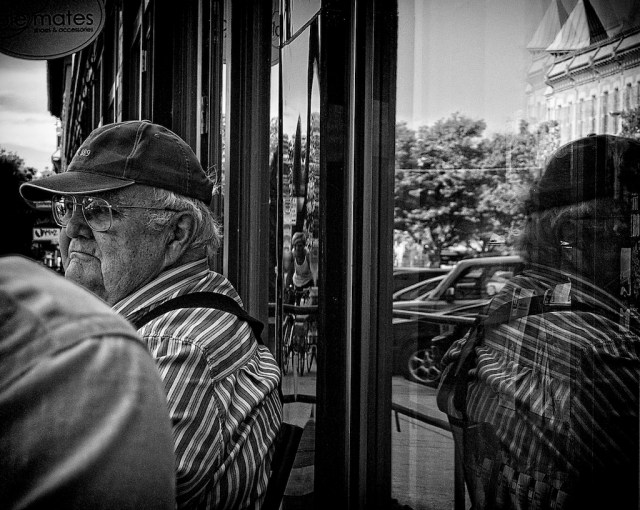
Street Art: I judge that they are men…

streetartftcollins

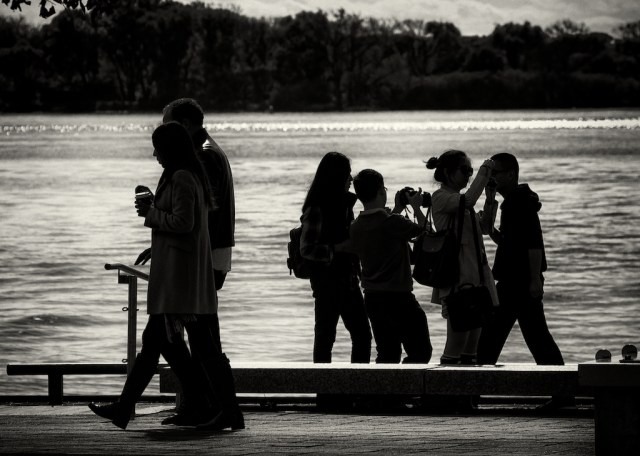
In a famous passage in the Meditations, Descartes speaks of looking from a window and seeing men pass in the street. ‘Yet,’ he reflects, ‘do I see any more than hats and coats which could conceal automations? I judge that they are men.’ …the observer no longer passes through them to see the living person beneath. He no longer sees what is implied.  However, the attention of the right hemisphere, concerned as it is with the being in context, permits us to see through them to the reality that lies around and beyond them. It could not make the mistake of seeing the clothes and hats in isolation.

The illusion that, if we can see something clearly, we see it as it really is, is hugely seductive. …We never see anything clearly…What we call seeing a thing clearly, is only seeing enough of it to make out what it is; this point of intelligibility varying in distance for different magnitudes and kinds of things…” Ruskin, in Modern Painters, makes the point that clarity is bought at the price of limitation…He gives the example of an open book and an embroidered handkerchief on a lawn.  Viewed from a distance of a quarter of a mile, they are indistinguishable; from closer, we can see which is which, but not read the book or trace the embroidery on the handkerchief: as we go nearer, we ‘can now read the text and trace the embroidery but cannot see the [fibers] of the paper, nor the threads of the stuff’; closer still and we can see the watermarks and the threads, ‘but not the hills and dales in the paper’s surface, nor the fine [fibers] which shoot off from every thread’; until we take a microscope to it, and so on, ad infinitum. At which point do we see it clearly? …Clarity, it seems, describes not a degree of perception but a type of knowledge.  To know something clearly is to know it partially only, and to know it, rather than to experience it, in a certain way (pp181-182).


**The Master and his Emissary

The Divided Brain and the Making of the Western World

Iain McGilchrist