early morning readings

contemplative photography 15

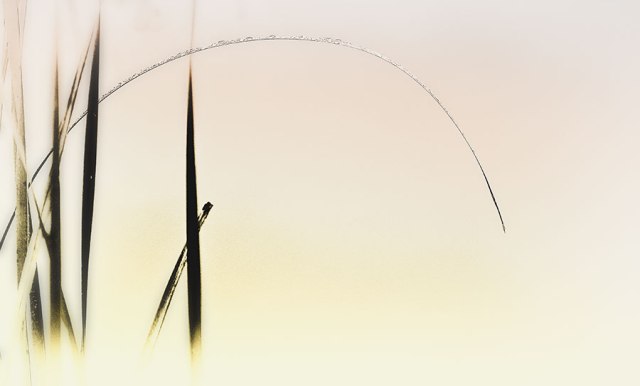
Nikon D750   f/4.5  1/500s   85mm   100 ISO

In a famous passage in the Meditations, Descartes speaks of looking from a window and seeing men pass in the street. ‘Yet,’ he reflects, ‘do I see any more than hats and coats which could conceal automations? I judge that they are men.’ …the observer no longer passes through them to see the living person beneath. He no longer sees what is implied.  However, the attention of the right hemisphere, concerned as it is with the being in context, permits us to see through them to the reality that lies around and beyond them. It could not make the mistake of seeing the clothes and hats in isolation.

The illusion that, if we can see something clearly, we see it as it really is, is hugely seductive. …We never see anything clearly…What we call seeing a thing clearly, is only seeing enough of it to make out what it is; this point of intelligibility varying in distance for different magnitudes and kinds of things…” Ruskin, in Modern Painters, makes the point that clarity is bought at the price of limitationHe gives the example of an open book and an embroidered handkerchief on a lawn.  Viewed from a distance of a quarter of a mile, they are indistinguishable; from closer, we can see which is which, but not read the book or trace the embroidery on the handkerchief: as we go nearer, we ‘can now read the text and trace the embroidery but cannot see the [fibers] of the paper, nor the threads of the stuff’; closer still and we can see the watermarks and the threads, ‘but not the hills and dales in the paper’s surface, nor the fine [fibers] which shoot off from every thread’; until we take a microscope to it, and so on, ad infinitum. At which point do we see it clearly? …Clarity, it seems, describes not a degree of perception but a type of knowledge.  To know something clearly is to know it partially only, and to know it, rather than to experience it, in a certain way ~I McGilchrist, The Master and his Emissary   (pp181-182).

seeking peace

Do not go upon what has been acquired by repeated hearing, nor upon tradition, nor upon rumor, nor upon scripture, nor upon surmise, nor upon axiom, nor upon specious reasoning, nor upon bias towards a notion pondered over, nor upon another’s seeming ability, nor upon the consideration ‘The monk is our teacher.’

When you yourselves know: ‘These things are bad, blamable, censured by the wise; undertaken and observed, these things lead to harm and ill,’ abandon them.

When you yourselves know: ‘These things are good, blameless, praised by the wise; undertaken and observed, these things lead to benefit and happiness,’ enter on and abide in them.   ~ The Buddha (Kalama Sutta)

contemplativephoto-peace

The Kalama Sutta tells us that the Buddha wanted our truths to be known, not through the words of others, but through personal experiences as well as introspection and intuition.  His words suggest that the way in which we comprehend and make sense of this vast and mysterious thing called life brings forth beliefs that have the power to either ease our discontent or intensify our suffering. Yet, to undertake, for one self, the challenge to analyze the mental ground one stands upon is to encounter a time of uncertainty.   This uncertainty is like quicksand: its power to imprison will intensify in association with the struggle to escape the entanglements of concepts that formulate the foundation of one’s life, family, culture.

Therefore, to observe, question, and analyze suffering through Buddhist psychology requires an acknowledgment that this endeavor will be influenced by the myths, beliefs, and expectations within my family of origin, how I understood doctrines within my religious upbringing, and the experience and training I have had as a psychotherapist.

Freud noted that suffering comes from three directions: the feebleness of our bodies, the superior power of nature, and more painful to us than that of any other, our relations with others. He also wrote, “In the last analysis, all suffering is nothing else than sensation; it only exists in so far as we feel it, and we feel it in consequence of certain ways in which our organism is regulated.” The few who possess the ability to experience pleasure through special dispositions and gifts do not have “an impenetrable amour against the arrows of future.”

Those who are most likely to have intimate knowledge of what it means to be fettered to suffering are those who present with a history of chemical use, either personal, that of a significant other, or both.  The dynamics within dependency resemble the autumn leaves traveling upon the surface of a stream; they are overt manifestations of the undercurrent that demonstrates how each of us seeks pleasure and will, in the long run, endure suffering if there is a thread of hope, no matter how short lived, of experiencing remembered pleasure.  As Freud wrote: “The most interesting methods of averting suffering are those which seek to influence our own organism . . . The crudest, but also the most effective method people use to ease their suffering is through “intoxication [to] alter the conditions governing our sensibility so that we become incapable of receiving unpleasureable impulses . . . The service rendered by intoxicating media in the struggle for happiness and in keeping misery at a distance is so highly prized. .  . We owe to such media not merely the immediate yield of pleasure, but also a greatly desired degree of independence from the external world.”

This yield of pleasure and degree of independence that Freud identified creates its own attachment, which is compounded by an aversion to both the impermanence of intoxication and a re-engagement with life’s discontent.  Suffering intensifies as cravings and intrusive thoughts feed a desire to escape discontent.  Therefore, a relentless ruminating and obsessing mind has the power to create as much suffering as physical dependence.

Excerpts from B Koeford, A Meditative Journey with Saldage

a photo study: contemplative photography VIII – texture

contemplativephoto-texture10web

Once we establish the discipline of looking and seeing we are free to explore the open dimensions of the phenomenal world. As this orientation becomes more heartfelt, one becomes more attuned to the intimate qualities of contact, communication and natural expression in clear seeing. This brings relaxation and appreciation: the eye is allowed to fall through the world and celebrate this visual communion.

The discipline of looking and seeing cultivates a subtle and profound aesthetic sensibility. While this quality of seeing is genuine and fulfilling there remains a subtle allegiance to an underlying form of contemplative appreciation. The practice of direct perception undercuts this subtle ground and reference point. By completly trusting the unconditional power of the gap of perception one drops reference points and connects with the phenomenal world on its own terms. In direct perception there is no space for doubt or preference. Seeing is believing. With this confidence one enters the play of form and chaos in pure perception. Nothing added; nothing missing: each perception is an image of itself.

~cited: http://www.miksang.org

contemplativephoto-texturewen11

A Karr & M Wood (The Practice of Contemplative Photography) identify three mind stages of a contemplative photographer:
  1. Connecting with the flash of perspective
  2. Working with visual discernment
  3. Forming the equivalent of what was seen

Forming the equivalent comes into play when one creates an image that reflects what was seen “—nothing more, nothing less.” It requires an intention to remain with the perception connected with as one engages the shutter. Making “sure the choices [depth of field, exposure, and color balance] you make honestly reflect your perception.”

…you have seen the subject clearly, without conceptual filters or discursiveness. You have rested with the perception in visual discernment, without agitation or photographic thinking.

This phase requires the silencing of composition rules/techniques and restraining the impulse to play around with various camera settings. Yes, easier said than done!

contemplativephoto-texture9web

Texture is one of the photo assignments Kerr and Wood invites us to connect with as a means to further our awareness of the “flash of perception.” They noted that when we open ourselves to color the experiences are more sudden and intense than when intentionally photographing texture.

The texture assignment was to:
  1. Establish a firm intention just to look for texture.
  2. Slow down and open yourself to “endless details of the surfaces around you.”
  3. Fill the viewfinder with just the texture that “stopped you.”
  4. Keep in mind that visual patterns are visual while texture is tactile.

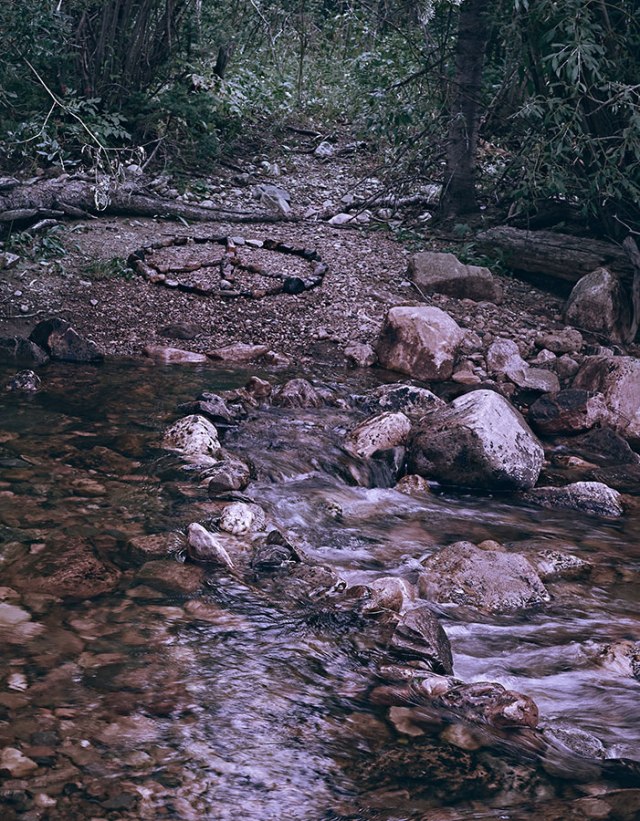
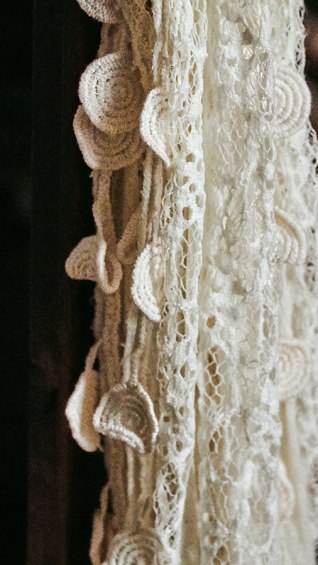
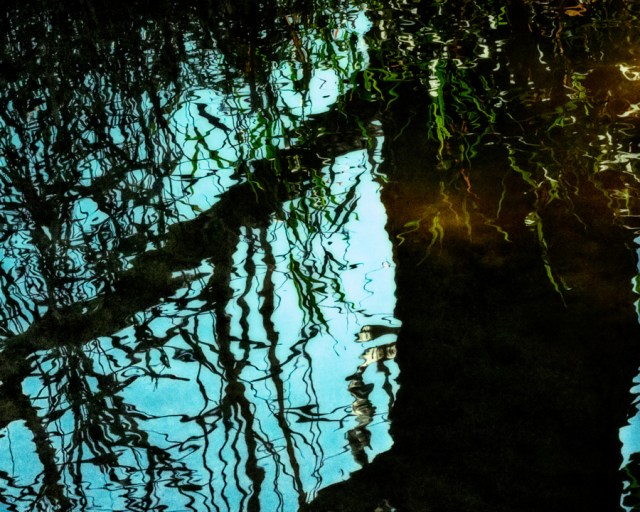
As I set out on this exercise, silencing a tendency to pre-identify objects of texture—grass, tree bark, mirrors—was, at first, a bit of a struggle. Then I found that when I opened myself to be with a consciousness of seeing and feeling…as if the surface quality that I visually connected with also invited me to touch, a combining of a visual and tactile moment…the experience tended towards mental qualifications of: silky, bubbly, prickly, nubby, fluffy, grainy, gritty, etc. A busy mind is indeed difficult to silence.

This slideshow requires JavaScript.

I do enjoy the exchanges of ideas and questions as these exchanges help clarify the nuances of Contemplative Photography. Let’s tag with #aphotostudy.

early morning readings

descendingstreetweb91918

Sony RX100 III   f/9   1/250s   25.7m   800 ISO  

“Man tends to regard the order he lives in as natural. The houses he passes on the his way to work seem more like rocks rising out of the earth than like products of human hands. He considers the work he does in his office or factory as essential to the harmonious functioning of the world. … He respects and envies a minister of state or a bank director, and regards the possession of a considerable amount of money as the main guarantee of peace and security. He cannot believe that one day a rider may appear on a street he knows well, where cats sleep and children play…  He is accustomed to satisfying those of his physiological needs which are considered private as discreetly as possible, without realizing that such a pattern of behavior is not common to all human societies. In a word, he behaves a little like Charlie Chaplin in The Gold Rush, bustling about in a shack poised precariously on the edge of a cliff. 

His first stroll along a street littered with glass from bomb-shattered windows shakes his fate in the ‘naturalness’ of his world. The wind scatters papers from hastily evacuated offices, papers labeled ‘Confidential’ or ‘Top Secret’ that evoke visions of safes, keys, conferences, couriers, and secretaries. Now the wind blows them through the street for anyone to read; yet no one does, for each man is more urgently concerned with finding a loaf of bread.  Strangely enough, the world goes on even though the offices and secret files have lost all meaning. Further down the street, he stops before a house split in half by a bomb, the privacy of people’s homes—the family smells, the warmth of the beehive, life, the furniture preserving the memory of lies and hatreds—cut open to public view. … His walk takes him past a little boy poking a stick into a heap of smoking ruins and whistling a song about the great leader who will preserve the nation against all enemies. The song remains, but the leader of yesterday is already part of the extinct past.

He finds he acquires new habits quickly. Once, had he stumbled upon a corpse on the street, he would have called the police. A crowd would have gathered, and much talk and comment would have ensured. Now he must avoid the dark body lying in the gutter, and refrain from asking unnecessary questions.  The man who fired the gun must have had his reasons…. ”  ~C Milosz, The Captured Mind

myths of suffering

contemplativephoto-reflectionweb9719

Baring the Soul…Nikon D750   f/4.5   1/1,250   85m   100 ISO

Stories, myths, and parables acknowledge and respect the unique individuality of each of us. Myths give voice, through their use of symbols, to what is hidden, unknown, or evasive. Stories that share the dynamics of human interactions silently plant a seed of personal truth in the dark component of each of us, waiting for the appropriate time to bloom and to nourish. They also illustrate the universal theme of suffering and its resolution. Parables, with their multiple levels of meaning, honor the unique perspective and understanding of both listener and speaker.  These multiple layers of meaning touch what is salient to the reader and thus gift all readers with an invitation to define for self their own understanding, interpretation, and application.  

The story of the Veranda provides an example . . .

once upon a time in a peaceful village people would gather during the lunch hour to rest, eat their afternoon meals, and exchange village news and gossip.  In the village square, some people chose to sit on the grass, others rested in the shade of a large tree, while some chose to sit underneath a century-old veranda. One afternoon without warning tragedy came to the village.  Five people died and two were seriously injured when the veranda broke loose and fell to the ground. 

Before the end of the day, rumors, myths, and suppositions began to formulate from questions such as why that particular veranda? Why that particular day? Why that particular time? Why those particular people and not others?  Does the heavens hear the cries of so many suffering souls?  Why does the heavens remain silent as weeping and yearnings fill the universe?  What needs to happen for one to be comforted by heaven’s truth of life and death?  

These universal questions which have failed to ease suffering have given birth to myths of old.

Excerpts from B Koeford, A Meditative Journey with Saldage

a photo study: contemplative photography VII – visual engagement

There are no colors out there in the world, Galileo tells us. They only exist in our heads. In the first of our dialogues about the mind, Riccardo Manzotti and I established that by “consciousness” we mean the feeling that accompanies our being alive, the fact that we experience the world rather than simply interacting with it mechanically. We also touched on the problem that traditional science cannot explain this fact and does not include it in its account of reality. That said, there is a dominant understanding of where consciousness happens: in the brain. This “internalist,” or inside-the-head, approach shares Galileo’s view that color, smell, and sound do not exist in the outside world but only in the brain. “If you could perceive reality as it really is,” says leading neuroscientist David Eagleman, “you would be shocked by its colorless, odorless, tasteless silence.”

…the subject/object divide, not to mention the addition of a feeling or “percept,” is particularly pertinent when we talk about color.

…when scientists look inside the brain to see what’s going on, they find only billions of neurons exchanging electrical impulses and releasing chemical substances. They find what they call correlates of consciousness, not consciousness itself; or in this case, they find correlates of color, but not color itself. There is no yellow banana in the head, just the grey stuff

..the other traditional claim, still widely taught in school, that colors exist in light, or that different colors are different wavelengths of light. And of course the colors of the rainbow immediately come to mind. But that explanation doesn’t work 100 percent either. The same wavelength, for example, will give rise to different colors if the surrounding environment is different.

…Three hundred years on, what and where colors actually are remains a mystery.

~cited:  NYR Daily, The Color of Consciousness by Riccardo Monzotti & Tom Parks

We often take something that is clear to us initially, and we begin to embellish, over-think and romanticize it, and then translate it into the photographic medium all the way through Photoshop and filters and everything. We begin with our original experience, and, when it is done, there is little or no relationship between the original perception and the final result.  This the Miksang version of “lost in translation.”

~M Wood, (Opening the Good Eye)

Contemplative practices cultivate a critical, first-person focus, sometimes with direct experience as the object, while at other times concentrating on complex ideas or situations. The practical, radical, and transformative aspects of this practice is noted to increase a deepening concentration and quieting of the mind.

Mindfulness is:

  • Spacious presence
  • Focused attention
  • Wakefulness
  • Recollecting recognition of experience
  • A presence of being that is:
    • Relaxed
    • Aware
    • Receptive
    • Inclusive

To experience photography as a way of seeing and as a contemplative practice, an attitude of genuine receptivity is required. The absence of expectations and preconceptions opens us to the beauty within the ordinary. We are more able to become engaged with the variables within colors, lines, light, forms, textures, space so that within this silent stillness an intimacy inspires us to pick up our camera in order to see through the viewfinder and then…

…we begin to see the difference between a perception and a conception, and our allegiance begins to align with freshness.

~A Karr & M Wood (The Practice of Contemplative Photography)

Being present with a perception of an object that has visually awakened you allows for what is referred to by M Wood as visual discernment in which the photographer delays picking up her camera and allows a resting in a contemplative state of mind.  Within the stillness of this pausing, it is noted that the relationship between the brain, light, and visual form of the object will silently and visually begin an introduction.  To be relaxed, aware, receptive, and inclusive in these moments is to begin to become acquainted with…the photographer, the external form, eyes, eye consciousness, and the  brain’s processing of light, colors, shapes, lines, texture.

And yes, most likely during this process your discursive mind will interrupt the process, like a jealous child.  So, when you become aware of the dialogue, simply note and smile at the thoughts and return to the silent visual introduction…with a relaxed, letting go, and aware presence.  If, you find that you are unable to return…just let go of the experience…other objects of perception are waiting for a similar moment of connection and introduction.

In the fourth posting of contemplative photography, an exercise, Opening a Door to Sensory Seeing was offered as a way to experientially explore what A Karr and M Wood identify as  “flashes of perception.”   Within The Practice of Contemplative Photography, they offer us a process of discovery, Looking Deeply by which to experience “visual discernment.”

  1. Sit within a room that has at least one window.
  2. Gaze around the room in an relaxed and receptive manner with no intention to see anything in particular.
  3. Gaze at the wall in front of you and allow the qualities of the wall, it’s color, texture,  light, shadows, and changes associated with variations of light to introduce themselves to you.
  4. Gaze at the ceiling and notice the the various qualities of the ceiling and the seam where the wall meets the ceiling.
  5. Move your gaze to the floor open yourself to the qualities  of the floor and the elements within your perceptional field.
  6. Gaze at the furniture in the room and identify their unique qualities and differences; i.e., smooth vs rough, heaviness, reflections, colors.  Allow your gaze to shift between different objects within the room.
  7. Look at the window in a way that you  become acquainted with it’s design, sense of feel, texture.  Extend your gaze beyond the window in a similar manner as you have the room…introduce yourself to the sky, clouds, trees, buildings, quality of light.

This slideshow requires JavaScript.

This is the type of extensive engagement with the world that opens us to the subtleties of perception, of becoming aware of  the meeting of our eyes and eye consciousness as we  silently open ourselves to this amazing world.

I would love to hear about your thoughts about visual discernment and the Looking Deeply exercise.