toddler’s sun hat

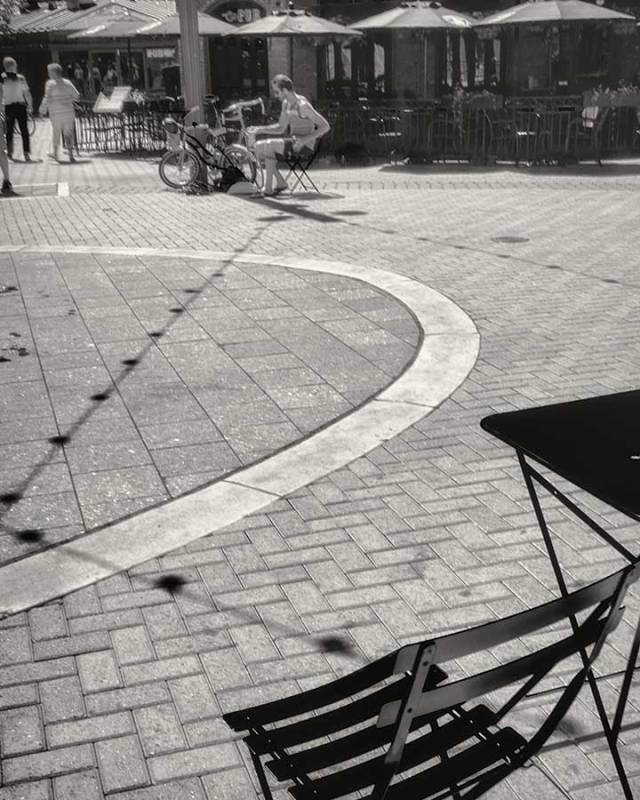
street-9b-web

Nikon D750    f/22     1/25    35mm    800 ISO

“Playing with point of view, with the position of the figures and the wide palette of grays, he proved that photography, like painting, is–to borrow Maurice Denis’ famous dictum–‘essentially a surface plane covered with color in a certain assembled order.'”

cited: C Chérous, aperture masters of photography, Henri Cartier-Bresson, pg. 84

lines & shapes

street-3web

Nikon D750     f/22     1/25     35mm     800 ISO

“…after trying for so long to program computers to make drawings autonomously, I noticed one key factor that distinguished me from the machine: I wanted to make a good drawing. The first step in making a good drawing is recognizing and giving voice to the desire to create. The creative urge is the engine that will drive the great effort it takes to pursue art over the long term, and understanding the nature of this desire will be critical in staying motivated long enough to develop good work.

“…What makes a drawing good? It would be impossible to list all the qualities of a good drawing, and in any case the list would be different for each of us and each artwork we liked. Luckily, we don’t need a precise definition. We understand how to proceed with our creative work by developing our intuition and learning to pay attention to what we value and respond to.”

~J F Simon, Jr (Drawing Your Own Path)

We tend to think…

“We tend to think of human beings as falling into two groups: those who are similar to us and those who are different. We allow political boundaries to obscure our interconnectedness. What we often refer to patriotism is actually a barrier the prevents us from seeing that we’re all children of the same mother. Every country calls its nation a motherland or a fatherland. Every country tries to show how it loves its mother. But in doing so, each country is contributing to the destruction of our larger mother, our collective mother, the Earth. In focusing our human-made boundaries, we forget that we are co-responsible for the whole planet. …

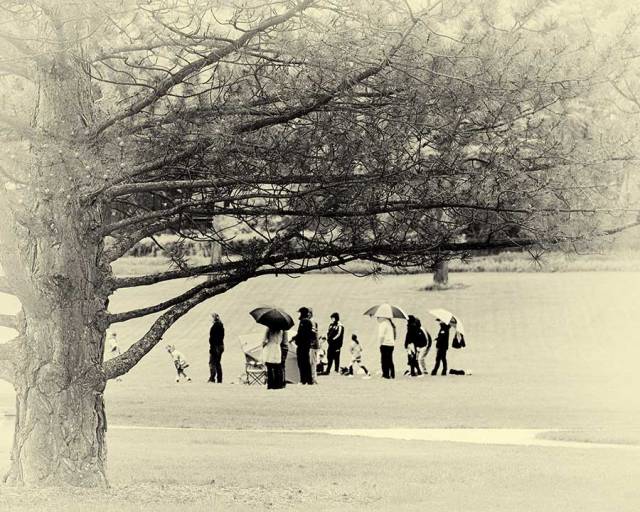
park-1web

Nikon D750   f/4.5   1/200    85mm    100 ISO

“Every one of us, regardless of nationality or religious faith, can experience a feeling of admiration and love when we see the beauty of the Earth and the beauty of the cosmos. This feeling of love and admiration has the power to unite the citizens of the Earth and remove all separation and discrimination. Caring about the the environment is not an obligation, but a matter of personal and collective happiness and survival. We will survive and thrive together with our Mother Earth, or we will not survive at all.”

~Thích Nhát Hanh (Love Letter to the Earth)

a gift from Earth

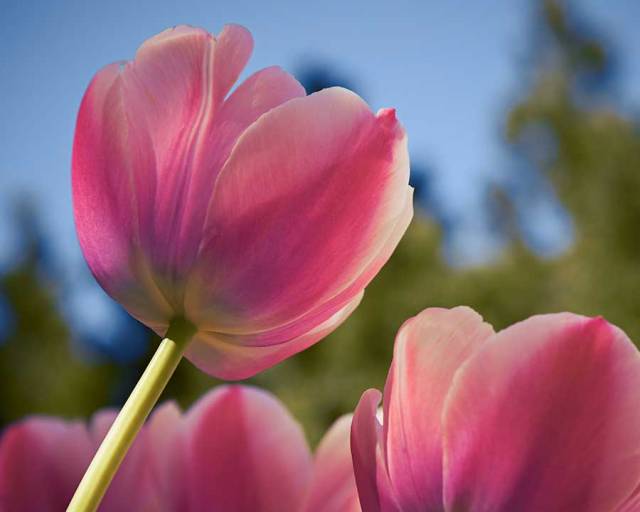
angle-4bweb

Nikon D750   f/7.1   1/800   85mm   100 ISO

…Just as we are made of non-human elements and the flower is full of non-flower elements, the Earth is made of non-Earth elements. Like us, the Earth contains air, fire, and water, as well as the sun and particles from distant stars in faraway galaxies. In fact, we can se that the Earth is made exclusively of non-Earth elements. The whole cosmos has come together to produce the wonder that is this planet…

~Thich Nhát Hanh (Love Letter to the Earth)

a photo study: seeing

This week’s photo study has been inspired by A Cemal Ekin’s article, “Seeing is the Essence of Photography, And You Can Learn to Do It Better.”

Within this article, Ekin wrote, “Photography is an analytic art form. We aim our lenses to specific parts of the world around us to pick a frame because, in our analysis, that particular frame presents the photograph we wish to take. We can certainly raise the camera, lower the camera, rotate it, pitch it, yaw it, aim at a different part and end up photographing something different.

“Seeing is the essence of this process, it is the essence of photography. It is our ability to absorb what lies in our view, process that, and target the frame that is the most compelling; that is the analytical part. Seeing is a mental process, it starts with our eyes capturing some information from our surroundings but continues as a mental activity.

“It requires awareness; and awareness is a state of mind. There are many things in front of you now but you are not necessarily aware of all of them. For instance, you are reading this post on a screen, it feels normal to you. But, are you “aware” of the screen dimensions? Are you aware of the distance between the screen and your eyes?

“Seeing can be improved — you can actually work at it and start seeing things you did not notice before. It requires looking with intention and awareness and learning to appreciate many different things. The movement of the tree branches may create delightful patterns, flight path of a butterfly repeating itself, the huge scissors in front of a tailor shop mimicking the open legs of the pedestrians, there are many, many things to notice and see.

“The result is that you may actually start photographing things that you did not before, partly because you did not see them before and partly because you have come to appreciate them! Seeing is part of your experience, you should feel that you are seeing something as a result of your keen awareness, in that state of mind.

“Here is a simple exercise you can try. Take your camera, any camera and go down to your basement. If you don’t have a basement, go to your garage. If you don’t have a garage, go to your bedroom. You have 15 minutes to produce 30 photographs in that space with the following requirements:

  • Need to stay in the same space
  • Your images will be cropped to leave the square area in the center, frame height determining the size of the crop, no cheating!
  • If your camera allows setting the image ratio, you may set it to square or 1:1
  • Don’t get into serious editing, the idea is seeing with limits (the square crop in the center), just crop the images as promised

“Try to focus on things that normally escape your attention, like the folds of the bedspreads (if you are in the bedroom), the way the stairs may be worn going down to the basement, the stains on the garage floor, etc., etc. Look for texture, lines, shapes, forms rather than “things” to photograph.

“You also need to limit your vision to the center square section of the viewfinder, this makes you truly aware of what is outside your frame, because you actually see them knowing that they will be cropped. Why are you leaving those things outside the frame? Why are you including the others you include within?

“Now look at the cropped images, they are probably not your typical photographs. Do you find any that you would like to share with friends? What appeals to your sensibilities in them? What about those that did not work? Why do they not work?”

Erkin ended his article with an introduction to Inge Druckrey: Teaching to See

To learn more about Cemal Erkin’s, visit his website  https://www.keptlight.com

Would love to read your thoughts and see some of the images you created during Erkin’s 15 minute exercise.  Thanks for taking the time to visit.

earth

angle-2

Nikon D750      f/7.1    1/500    85mm   100 ISO

Suddenly, from behind the rim of the moon, in long, slow-motion moments of immense majesty, there emerges a sparkling blue and white jewel, a light, delicate sky-blue sphere laced with slowly swirling veils of white, rising gradually like a small pearl in a thick sea of black mystery. It takes more than a moment to fully realize this is earth…home.
~Edgar Mitchell, Apollo 14 Astronaut (cited: Thich Nhát Hanh, Love Letter to the Earth)


Earth Day

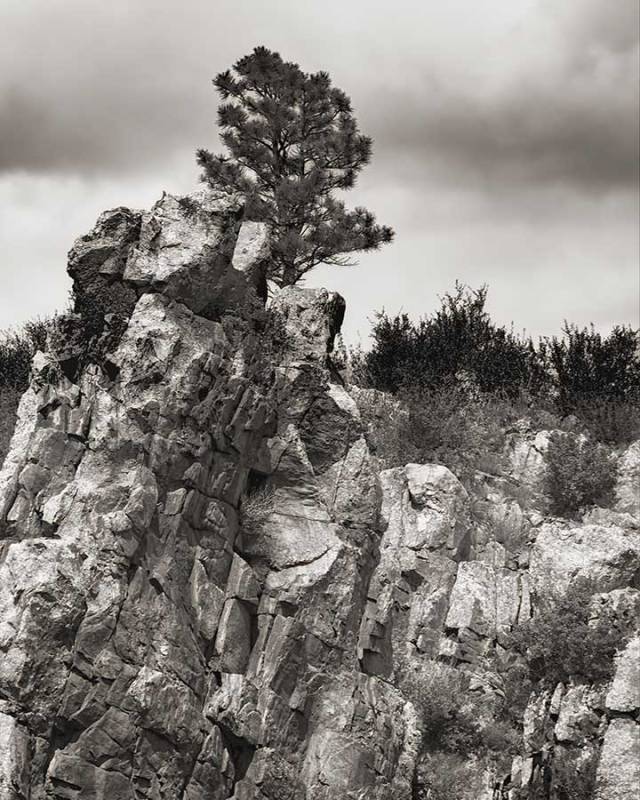
landscape3web

Nikon D750   f/8  1/50s  300 mm  100 ISO  

We Are Not Separate From the Earth

We think that the earth is the earth and we are something outside of the earth. But in fact we are inside of the earth. Imagine that the earth is the tree and we are a leaf. The earth is not the environment, something outside of us that we need to care for. The earth is us. Just as your parents, ancestors, and teachers are inside you, the earth is in you. Taking care of the earth, we take care of ourselves.

When we see that the earth is not just the environment, that the earth is in us, at that moment you can have real communion with the earth. But if we see the earth as only the environment, with ourselves in the center, then we only want to do something for the earth in order for us to survive. But it is not enough to take care of the earth. That is a dualistic way of seeing.

We have to practice looking at our planet not just as matter, but as a living and sentient being. The universe, the sun, and the stars have contributed many elements to the earth, and when we look into the earth we see that it’s a very beautiful flower containing the presence of the whole universe. When we look into our own bodily formation, we are made of the same elements as the planet. It has made us. The earth and the universe are inside of us.

~Thich Nhat Hanh (https://earthholder.org/walking-with-earth/)

we never just ‘see’…

reflections-4web

Spring Creek…Nikon D750    f/4.5   1/2,000    85mm   100 ISO

“…we never just ‘see’ something in the sense that a photographic plate receives rays of light.  In the real world we bring a lot of our selves to the party. And that means gaze alters what it finds.”

cited: Iain McGilchrist, The Master and his Emissary

a sundowner

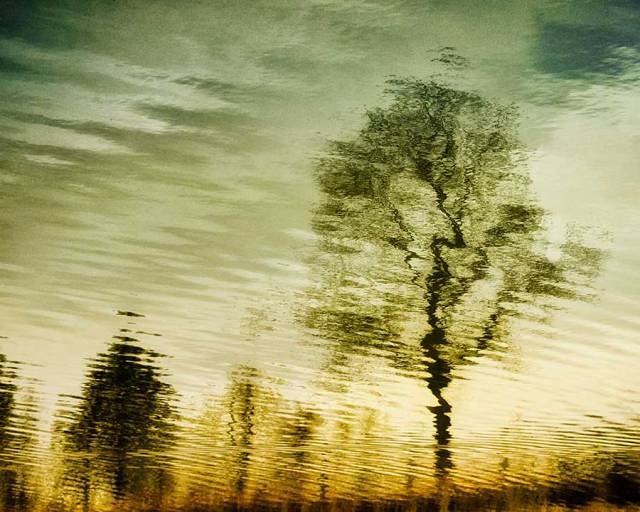
reflectionsweb

Nikon D750   f/4.5   1/3,200   48mm   100 ISO

“About twelve years ago, I met a homeless woman who identified herself as a sundowner.   She described how each evening’s sun invited her to settle down along the side of her life’s path so that her journey could begin afresh in the morning sun.  She eloquently described an undercurrent of yearning that ebbed and flowed throughout her soul and how, in her past days, she found herself at the mercy of private memories, thoughts, and imaginations and had encountered, time and time again, various degree of discontent despite the seemingly fulfilling qualities of her life.

As I hear the suffering within women who story their lives through the multi-colored threads of substance use, I find myself acknowledging a similarity within each of these unique stories with my own metaphysical search for someone, something, or some place that remains beyond the forever next horizon.  Each of our unique narratives reveal an unending wandering with satchels of discontent that tell of a spiritual emptiness and an emotional intimacy with a homesickness for a place one knows cannot be.”

~B Catherine Koeford (A Meditative Journey with Saldage)

beginning anew

tree-4web

Although we think the past is gone and the future is not yet here, if we look deeply we see that reality is more than that. The past exists in the guise of the present because the present is made from the past. In this teaching, if we establish ourselves firmly in the present and touch the present moment deeply, we also touch the past and have the power to repair it. That is a wonderful teaching and practice. We don’t have to bear our wound forever. We are all unmindful at times; we have made mistakes in the past. It does not mean that we have to always carry that guilt without transforming it. Touch the present deeply and you touch the past. Take care of the present and you can repair the past. The practice of beginning anew is a practice of the mind. Once you realize what mistake you made in the past, you are determined never to do it again. Then the wound is healed. It is a wonderful practice.

~Thich Nhat Hanh & Melvin McLeod (The Pocket Thich Nhat Hanh)

sending messages


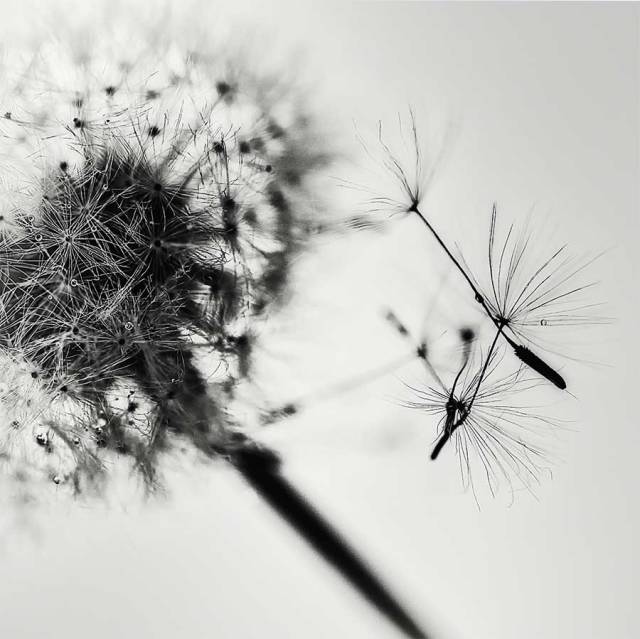
brendakofforddandelionproject121317bweb

Nikon D750     f/3.5     1/1.250s   40mm   100 ISO

Your Highness,

It is said that an education is a 1000-year worth thing. But a learning institute responsible for that education has forgotten its role already and children are becoming tired each day with the violence and irrationalities inside.

Your Highness, please settle this educational environment that has taken a wrong path and restrengthen the foundation of the nation.

~Jeong Yak Yong, “Korean Mystery Detective”