Sitting quietly, doing nothing,
Spring comes, and the grass grows by itself. Zenrin Kushû (The Way of Zen)

Sitting quietly, doing nothing,
Spring comes, and the grass grows by itself. Zenrin Kushû (The Way of Zen)
time, an illusion
of fragmented memories
pursuing refuge

Who would fare better in the world of fitful time? Those who have seen the future and live only one life? Or those who have not seen the future and wait to live life? Or those who deny the future and live two lives?
~Alan Lightman, Einstein’s Dreams, pg. 68
…If we don’t have journalism, we don’t have democracy. ~Barbie Zelizer, director of Penn’s Center for Media at Risk
The fabric of press freedom in the US has been frayed and weakened by political stigmatisation of journalists and cries of “fake news”, but it risks much greater, and more permanent, damage from other forces, including harassment, detention and criminalisation. (cited: The Guardian The biggest risk to American journalism isn’t posed by Trump)
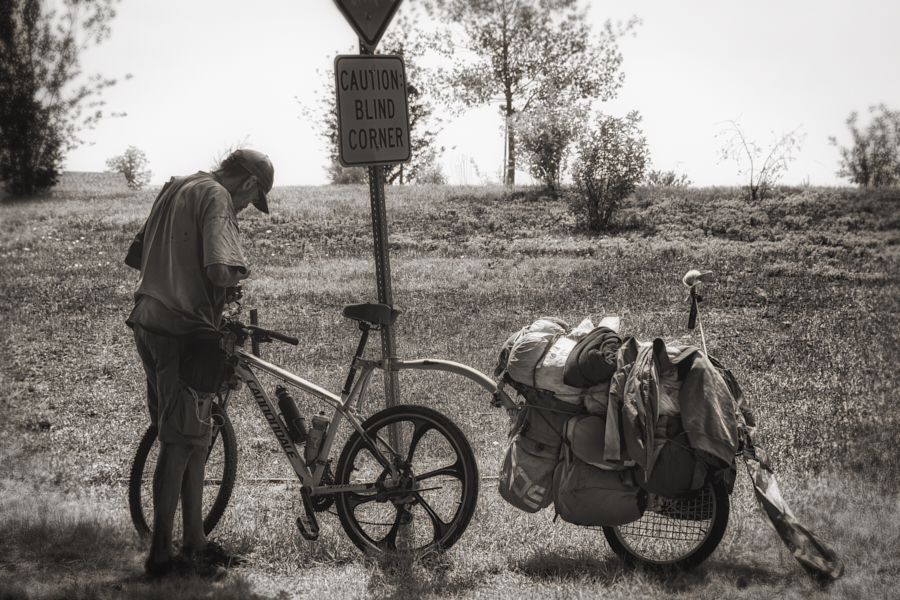
In the context of this new world order of dramatic political, social, and unparalleled technological change, the role of media has never been more important, and it’s also never been more dangerous…Foreign reporters in war zones, as well as domestic reporters and journalists like me in war zones of our own here at home, are facing angry people and the threats of violence.” (cited: Multichannel Don Lemon: Role of Journalists Vitally Important in Today’s Divisive Political Environment.)
In November 1940, days after the Nazis sealed 450,000 Jews in the Warsaw Ghetto, a secret band of journalists, scholars and community leaders decided to fight back. Led by historian Emanuel Ringelblum and known by the code name Oyneg Shabes, this clandestine group vowed to defeat Nazi lies and propaganda not with guns or fists but with pen and paper. Now, for the first time, their story is told as a feature documentary. Written, produced and directed by Roberta Grossman and executive produced by Nancy Spielberg, Who Will Write Our History mixes the writings of the Oyneg Shabes archive with new interviews, rarely seen footage and stunning dramatizations to transport us inside the Ghetto and the lives of these courageous resistance fighters. They defied their murderous enemy with the ultimate weapon – the truth – and risked everything so that their archive would survive the war, even if they did not.
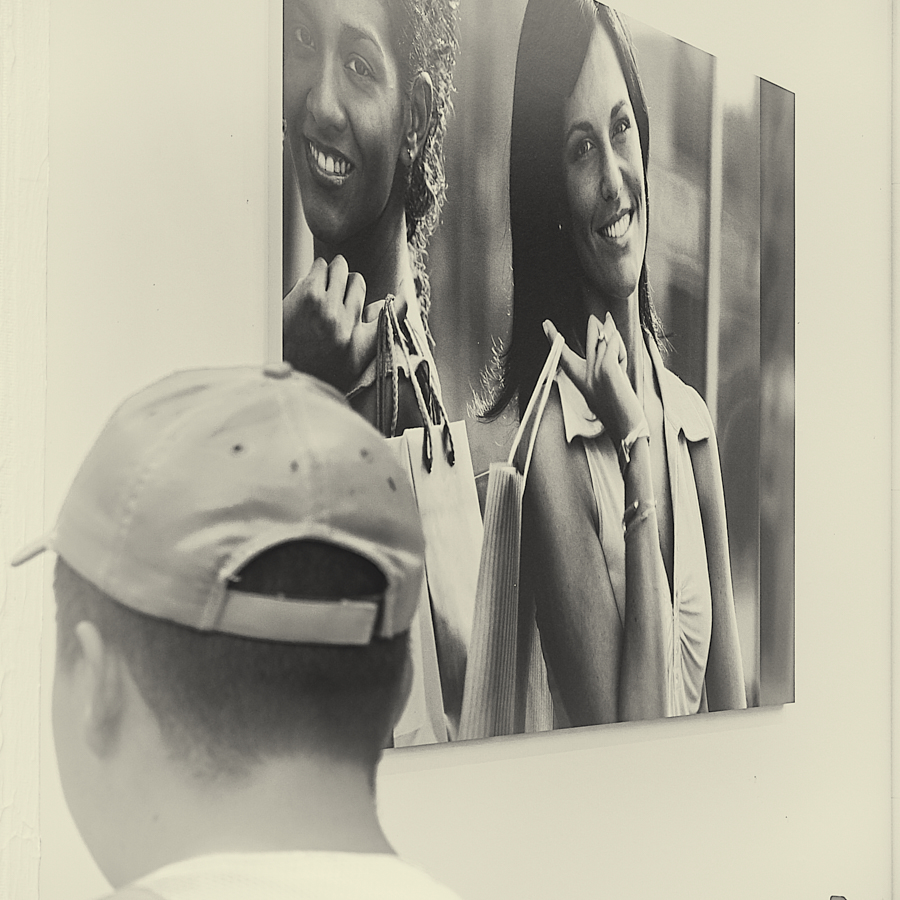
The name of [Wall Street] originates from an actual wall that was built in the 17th century by the Dutch, who were living in what was then called New Amsterdam. The 12-foot (4 meter) wall was built to protect the Dutch against attacks from pirates and various Native American tribes, and to keep other potential dangers out of the establishment.
The area near the wall became known as Wall Street. Because of its prime location running the width of Manhattan between the East River and the Hudson River the road developed into one of the busiest trading areas in the entire city. Later, in 1699, the wall was dismantled by the British colonial government, but the name of the street stuck.
The financial industry got its official start on Wall Street on May 17, 1792. On that day, New York’s first official stock exchange was established by the signing of the Buttonwood Agreement. The agreement, so-called because it was signed under a buttonwood tree that early traders and speculators had previously gathered around to trade informally, gave birth to what is now the modern-day New York Stock Exchange NYSE.
Today, …in some circles, the term “Wall Street” has become a metaphor for corporate greed and financial mismanagement
cited: LiveScience : Denise Chow, Assistant Managing Editor | May 3, 2010 01:04pm ET
“…memory can take refuge in silence…”*
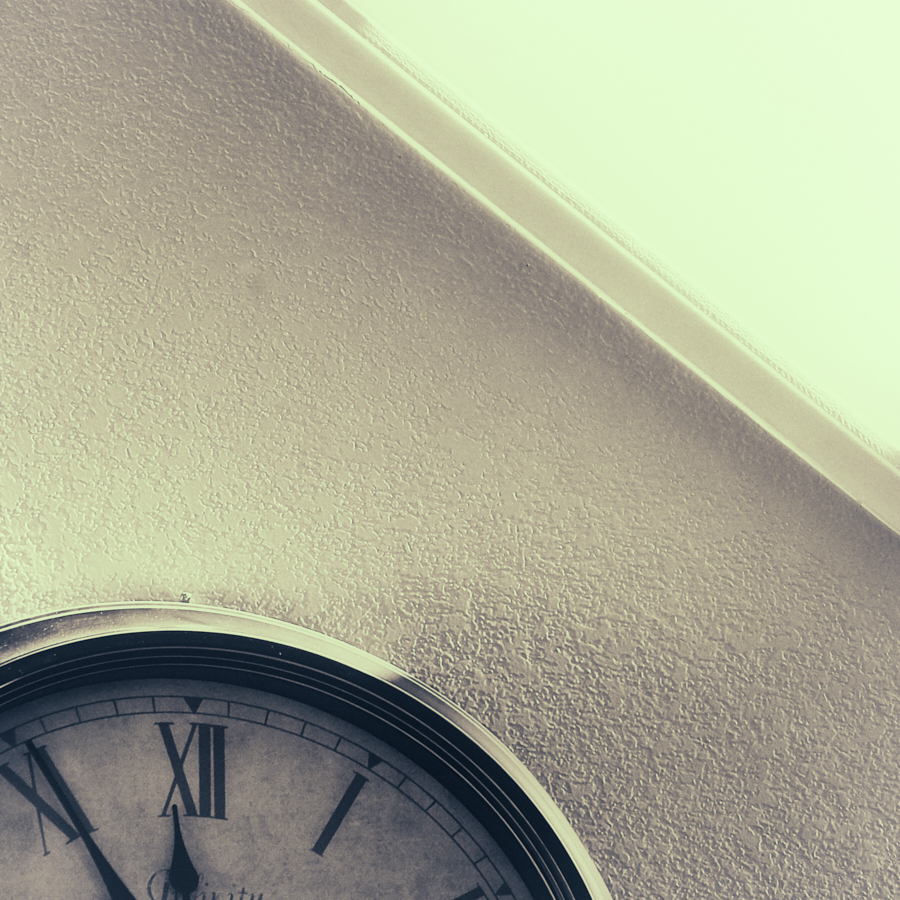
Nikon D750 f/7.1 1/400s 135mm 3200 ISO
*cited: Vera Schwarcz, Bridge Across Broken Time
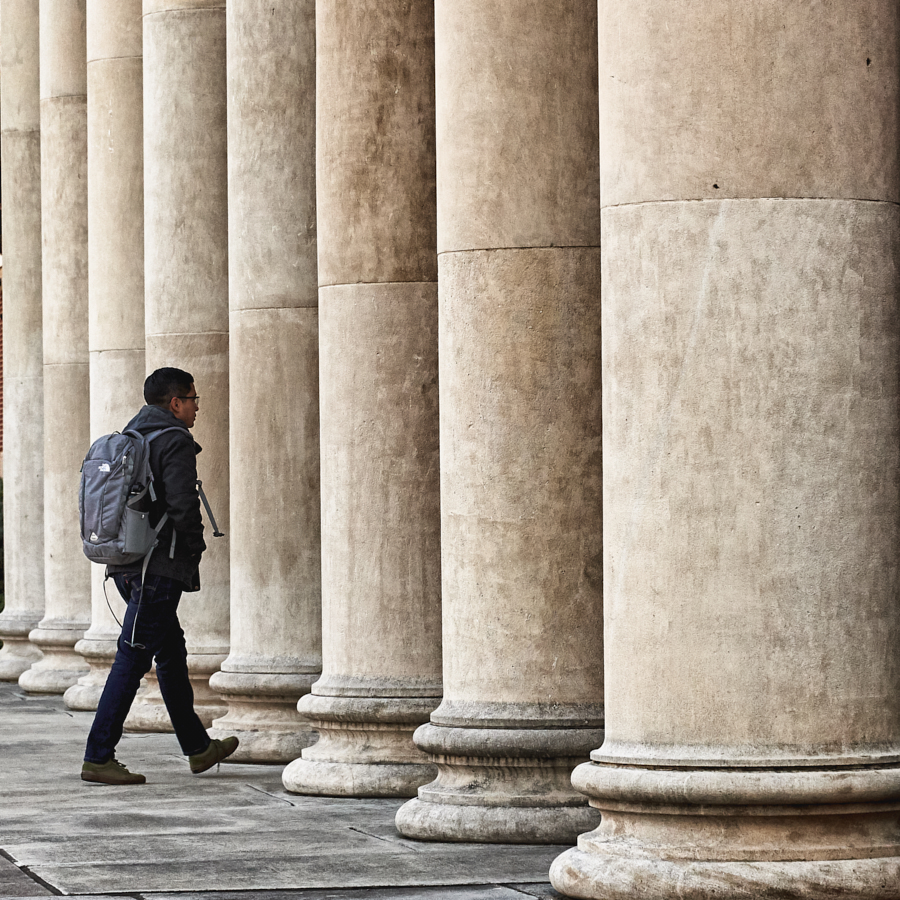
Nikon D750 f/7.1 1/400s 85mm 1250 ISO
“Why should you care so much for Christminster?” she said, pensively. “Christminster cares nothing for you, poor dear!”
“Well, I do; I can’t help it. I love the place–although I know how it hates all men like me–the so-called Self-taught–how it scorns our labored acquisitions, when it should be the first to respect them; how it sneers at our false quantities and mispronunciations, when it should say, I see you want help, my poor friend!. . . Nevertheless, it is the centre of the universe to me, because of my early dream: and nothing can alter it. Perhaps it will soon wake up, and be generous. I pray so! . . . I should like to go back to live there–perhaps to die there! … ~Thomas Hardy (Jude the Obscure)

“The fact that one may misunderstand the content of a picture is of no concern to the picture, which leads its own life independent of our interpretations. For some years the writer thought that the tree in Edouard Boubat’s picture grew on the top of a hill… What he finally realized that the tree stands not against the sky but against a wall, it was a momentary shock. But the picture refused to adapt itself for the sake of the new interpretation. It remained precisely as it had been before. …A picture is what it looks like. ~J Szarkowski, Looking at Photographs
The last part of the Diary [Sarashina Diary] is concerned chiefly with accounts of pilgrimages and dreams. She married, who and when is not recorded, and bore children. Her husband dies, and with his death the spring of her life seems to have run down. Her last entry is very sad: “My people went to live elsewhere and I lived alone in my solitary home.” So we leave her “a beautiful, shy spirit whose life had known much sorrow.” ~Diaries of Court Ladies of Old Japan

Image and excerpt from Diaries of Court Ladies of Old Japan submitted in response to Traveling at Wits End’s photo challenge: the journey home.

You can learn about the pine only from the pine, or about the bamboo only from bamboo. When you see an object, you must leave your subjective pre-occupation with yourself; otherwise you impose yourself on the object, and do not learn. The object and yourself must become one, and from that feeling of oneness issues your poetry. However well phrased it may be, if your feeling is not natural—if the object and our self are separate—then your poetry is not true poetry but merely your subjective counterfeit. ~ Basho

“…is it the wish—the dreamlike, bombastic wish—to stand once again at that point in my life and be able to take a completely different direction than the one that has made me who I am now?
“There is something peculiar about this wish, it smacks of paradox and logical peculiarity. Because the one who wishes it—isn’t the one who, still untouched by the future, stands at the crossroads. Instead, it is, the one marked by the future become past who wants to go back to the past, to revoke the irrevocable. And would he want to revoke it if he hadn’t suffered it. …it’s the absurd wish to go back behind myself in time and take myself—the one marked by events—along on this journey.” ~P Mercier (Night Train to Lisbon, pp. 51-54)
“No man ever steps in the same river twice, for it’s not the same river and he’s not the same man.” ~ Heraclitus
When my heart came to rule
in the world of love,
it was freed
from both belief
and from disbelief.
On this journey,
I found the problem
to be myself.
When I went beyond myself,
the pathway finally opened. ~Mahsati Ganjavi

“When others make us angry at them–at their shamelessness, injustice, inconsideration–they exercise power over us, they proliferate and gnaw at our soul, then anger is like a white-hot poison that corrodes all mild, noble, and balanced feelings and robs us of sleep. Sleepless, we turn on the light and are angry at the anger that has lodged like a succubus who sucks us dry and debilitates us. We are not only furious at the damage, but also that it develops in us all by itself, for while we sit on the edge of the bed with aching temples, the distant catalyst remains untouched by the corrosive force of the anger the eats at us. On the empty internal stage bathed in the harsh light of mute rage, we perform all by ourselves a drama with shadow figures and shadow words we hurl against enemies in helpless range… And the greater our despair that it is only a shadow play and not a real discussion with the possibility of hurting the other and producing a balance of suffering, the wilder the poisonous shadows dance and haunt us even in the darkest catacombs our dreams. (We will turn the tables, we think grimly, and all night long forge words that will produce in the other the effect of a fire bombs that now he will be the one with the flames of indignation raging inside while we, sooth by schadenfreude, will drink our coffee in cheerful calm.)
What could it mean to deal appropriately with anger? We really do’t want to be soulless creatures who remain thoroughly indifferent to what they come across, creatures who appraisals consist only of cool, anemic judgments and nothing can shake them up because nothing really bothers them. Therefore, we can’t seriously wish not to know the experience of anger and instead persist in an equanimity that wouldn’t be distinguished from tedious insensibility. Anger also teaches something about who we are. Therefore this what I ‘d like to know: What can it mean to train ourselves in anger and imagine that we take advance of its knowledge without being addicted to its poison?
We can be sure that we will hold on to the deathbed a part of the last balance sheet–and this part will taste bitter as cyanide–that we have wasted too much, much too much strength and time on getting angry and getting even with other in a helpless shadow theater, which only we, who suffered in impotently, knew anything about. Why did our parents, teachers and other instructors…Not give us in this case any compass that could have helped us avoid wasting our soul on useless, self-destructive anger.” ~Pascal Mercier, Night Train to Lisbon (pp.377-378)

“…It was a dazzling morning in June, the morning brightness flooded unmoving through the streets—I was standing in the Rua Garrett at a display widow where the blinding light made me look at my reflection instead of the merchandise. …I was about to make my way inside through the shadowy funnels of my hands, when behind my reflection—it reminded me of a threatening storm shadow that changed the world—the figure of a tall man emerged. He stood still…his look strayed and finally fixed on me. We humans: what do we know of one another? …The stranger saw a gaunt man with graying hair, a narrow, stern face and dark eyes behind round lenses in gold frames. I cast a searching place at my reflection. …I looked like an arrogant misanthrope who looked down on everything human, a misanthrope with a mocking comment ready for every thing and everyone. That was the impression the smoking man must have gotten.
How wrong he was!” ~ Pascal Mercier, Night Train to Lisbon (77-78)
 a meditative journey
You must be logged in to post a comment.