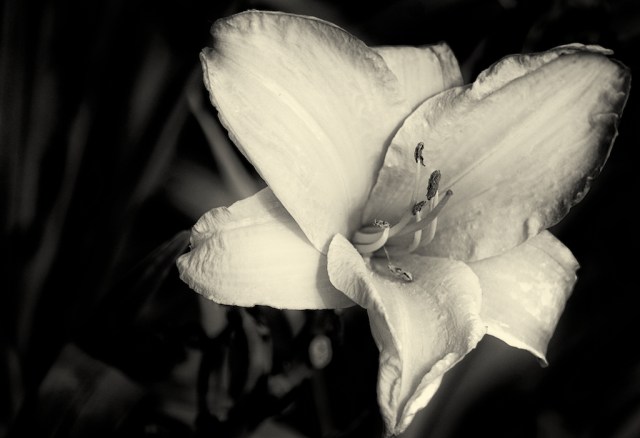
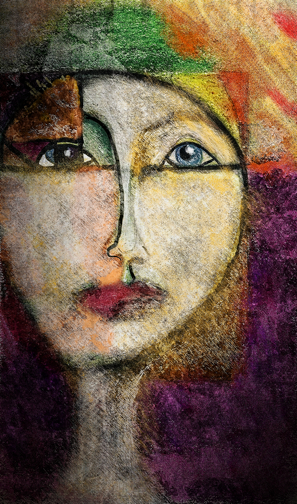
Mountain temple:
far as the pillow where I lie
the willow sheds its flowers.
~Horoku*
to participate in or view additional images submitted for John Godley’s photo challenge visit The Daily Post.
*cited:
Japanese Death Poems
Yoel Hoffmann
Mountain temple:
far as the pillow where I lie
the willow sheds its flowers.
~Horoku*
to participate in or view additional images submitted for John Godley’s photo challenge visit The Daily Post.
*cited:
Japanese Death Poems
Yoel Hoffmann
My happiness
I find
In filling my emptiness.
My emptiness
I create
In seeking happiness.
~Gopal Honnalgere*
Visit The Daily Post @WordPress.com to view this week’s challenge: Split-Second Story…become “a documentary photographer and attempt to capture a candid moment of a person, place, or thing. Put your National Geographic hat on and tell a story by documenting a moment in time through a single image. Capture the thrill of a skate park, or the calmness of a café patio. Let your imagination inspire and guide you.”
cited:
fire in the sea
An Anthology of Poetry and Art
Sue Cowing
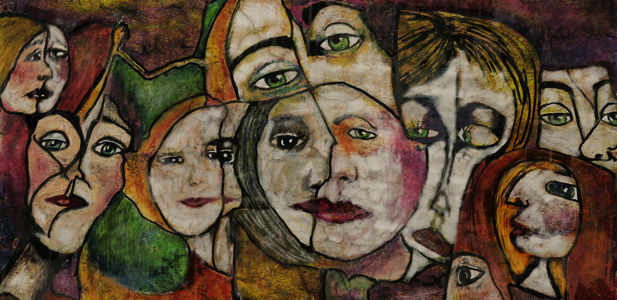
OLD FORM
Did Chuang Chou dream
he was a butterfly,
Or the butterfly
that it was Chuang Chou?
In one body’s
metamorphoses,
All is present,
infinite virtue!
You surely know
Fairlyland’s oceans
Were made again
a limpid brooklet,
Down at Green Gate
the melon gardener
Once used to be
Marquis of Tung-ling?
Wealth and honour
were always like this:
You strive and strive,
but what do you seek?
~Li Po*
Visit Dailypost at WordPress.com to view additional images
submitted for this week’s photo challenge: Work of Art.
cited:
*Li Po and Tu Fu
Trans:Arthur Cooper
Standing at the Threshold
With uncertainty, I question
What is it that I seek?
Who is it that I beckon?
A father? A mother? A sister? A brother? A companion? A child? A god?
An intentional presence that is drawn upon
A place and time of shadows, myths, and dreams?
Birthed within a family?
Matured within a relationship?
Nourished within a community?
Where the Stillness within Silence,
Affirms the exchange of life’s giving and taking,
Embraces the connection of life’s emotional threads, and
Observes the interdependence of life with non-judgmental awareness,
Yet, knows of a united oneness with another that can not be?
Since it can not be, do I yearn
To know integration through the formation of thought;
To see clarity through the flowing of ink; and
To feel completion through the act of creating?
And then, finally, within the stillness of silence,
I befriend
An internal companion with whom
There is an honoring of the who and what of which I am;
A woman, a daughter, a sister, a niece, a wife, a mother, an aunt, a grandmother.
I touch
With reverence the presence of all that was, is, and will be.
I release
The seeking, the beckoning, the yearning to the Winds of Change.
I with uncertainty, Step over the Threshold
Foreseeing the return.*
*source
A Meditative Journey with Saldage
B Catherine Koeford
There was a man who was so disturbed by the sight of his own shadow and so displeased with his own footsteps that he determined to get rid of both. The method he hit upon was to run away from them.
So he got up and ran. But every time he put his foot down there was another step, while his shadow kept up with him without the slightest difficulty.
He attributed his failure to the fact that the was not running fast enough. So he ran faster and faster, without stropping, until he finally dropped dead.
He failed to realize that if he merely stepped into the shade, his shadow would vanish, and if he sat down and stayed still, there would be no more footsteps.*
*cited:
The Way of Chuang Tzu
Thomas Merton
…We just find our selves here.
With our individual birth we just ‘wake up’ and discover ourselves in the midst of an extraordinary world of beauty and sorrow.
All around us we see exquisite and exquisitely subtle orders played out effortlessly. …it is all just here and we are just here to see it…*
a broad photo of angel-wing begonia blossoms placed with a coffee cup with a book making up the background.
various elements of each blossom interacting within as well as with the other blossoms
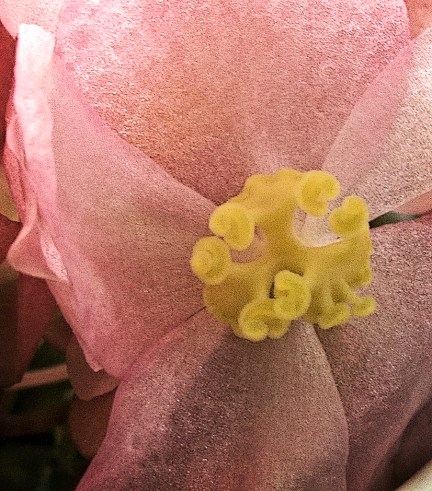
close up of an angel-wing begonia blossom
To view additional images submitted for this week’s theme – threes- visit The Daily Press at WordPress.com
*source:
The Mystery I’m Thankful for
Adam Frank
NPR, 12.22.2112
Insight is awareness and oneness, the openness itself, without concepts or a separation between a ‘self’ and the object being experienced…at first, our minds can seem like such a ragged and disorderly place, disturbed by the slightest sound, thought or impulse. Seeing the moving, restless character of the mind is the first step toward concentration…Concentration on an object without any wavering is the training of tranquillity…Again and again, gently but firmly bring your awareness to…without being rigid or aggressive, we should come back to…*
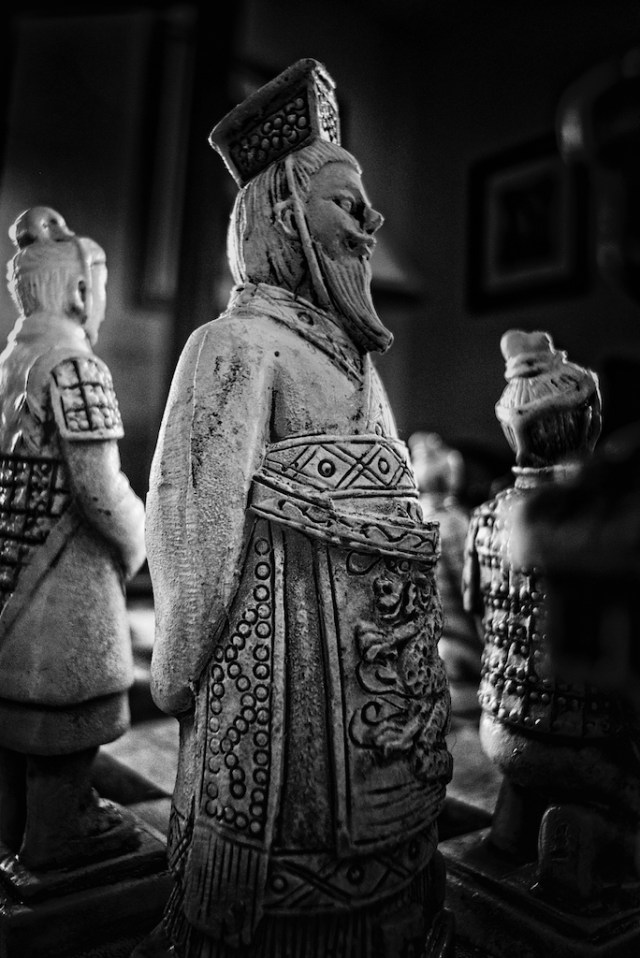
To view additional images submitted for this week’s photo challenge: object visit The Daily Post @ WordPress.com
*cited source: unknown
if I go to heaven I will forget you,
and
if I go to hell you will forget me.*
In China a person who will not forget the past is described as ‘one who did not drink Old Lady Meng’s soup.’ Borrowed from Buddhist folklore, Old Lady Meng dispenses the Broth of Oblivion to souls leaving the last realm of the underworld on their way to reincarnation. After drinking her soup, the soul is directed to the Bridge of pain that spans a river of crimson water. There, two demons lie in wait: Life-Is-Not-Long and Death-is-Near. They hurl the soul into waters that will lead to new births.
Old Lady Meng is more than a quaint antidote for the Greeks’ Mnemosyne. She embodies a psychological understanding about the forces that promote, indeed demand, forgetting for the sake of ongoing life. It is not enough to note that water is linked with amnesia in Chinese folklore as much the same way that the river Lethe is associated with forgetting in Greek mythology. The challenge here is to make sense of the distinctively Chinese attachment to remembrance in spite of the benefits of Old Lady Meng’s soul.
In Jewish tradition, too, the benefits of amnesia were acknowledged along with the sacred commitment to recollection. There is a midrash, or Torah-based story, that teaches us a lesson similar to that of Lady Meng: ‘God granted Adam and Eve an all-important blessing as they were about to leave the Garden of Eden: I give you, He said, ‘the gift of forgetfulness.” What is so precious about amnesia? Why would God, who demands fidelity to memory, offer the relief from recollection? Perhaps it is because without some ability to forgive and forget me might become bound by grudges and hatred. To remember everything may be immobilizing. To flee from memory, however, leads to an ever more debilitating frenzy.(40-41)**
source:
*Arang and the Magistrate
Munhwa broadcasting corporation
**Bridge Across Broken Time
Vera Schwarcz
in the cessation of craving, we touch that dimension of experience that is timeless;
the playful, unimpeded contingency of things emerging from conditions only to become conditions for something else.
…Known as the ‘womb of awakening’ it is the clearing in the still center of being,
the track on which the centered person moves –
it whispers, “Realize me.”
But no sooner is it glimpsed then it is gone.*
*source: unknown
You must be logged in to post a comment.