Tempo as a composition element within photography is an extension of Ted Forbes’ discussion of rhythm…the beat…the pulse within images. He notes that tempo is the means by which we display speed, movement, as well as the passing of time all within a frozen moment.
Within the comment section of the YouTube video , Tempo in Visual Composition and Photography, Ted Forbes furthers his discussion by noting that
tempo is different than the ‘rule of xxx’ stuff. Every photo has a tempo—a pace at which the elements relate to one another. This is simply becoming conscious of these relationships and learning how to vary the pace of the images you create.
Speaking of music within composition, here is a blog by Moss and Fog who offers us a video that is “a fascinating experimental film by Marcin Nowrotek [who] combines 3D footage of jazz musicians and 3D animations to create a video that brings amazing depth and physicality to the screen.” Enjoy.
As always, I would love hearing your thoughts and seeing how you understand Ted Forbes’ discussion of tempo within photography.
Visual Rhythm brings to mind that moment in elementary school during a lecture on diagramming sentences in which I found myself totally confused. It was as if I had missed school for an extended period of time and now being back I am way, way behind the rest of the class…their eyes shining with understanding, their quick responses to questions…expanding the abyss between grammar and I.
Then there were those nightmares where I suddenly found myself wandering the school halls, lost and unable to locate my classroom, no one apparently seeing or hearing me, the anxiety intensifying because there is an exam scheduled on a topic that I had either totally forgot to study or simply couldn’t understand. All of this begs the question, “how does one study what one cannot understand?”
This past week my “focus” on rhythm has had me revisit those school memories of struggling to understand, to perceive, to apply…I have come to equate visual rhythm with English grammar and Mathematical imaginary numbers. And to even muddy my comprehension even more, my research through various websites found variations on this theme:
1) Sae Alumi notes that we always search for rhythm, balance, and harmony in photography and that the effort to master these three will make us more conscious and aid in creating more appealing images.
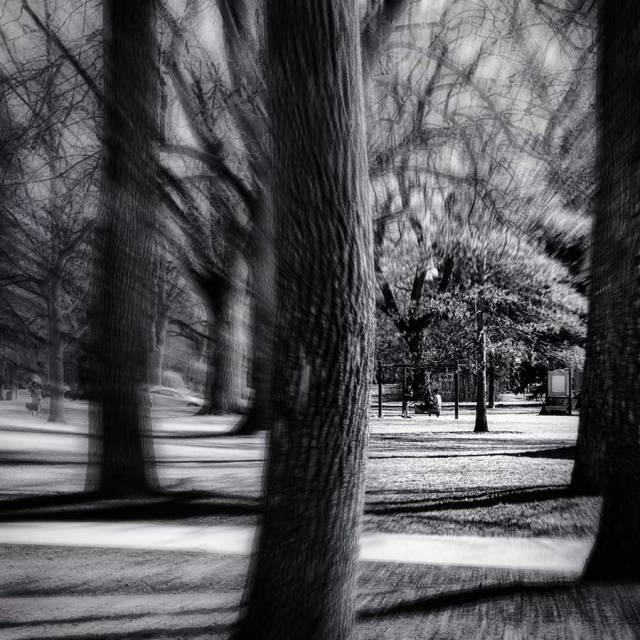
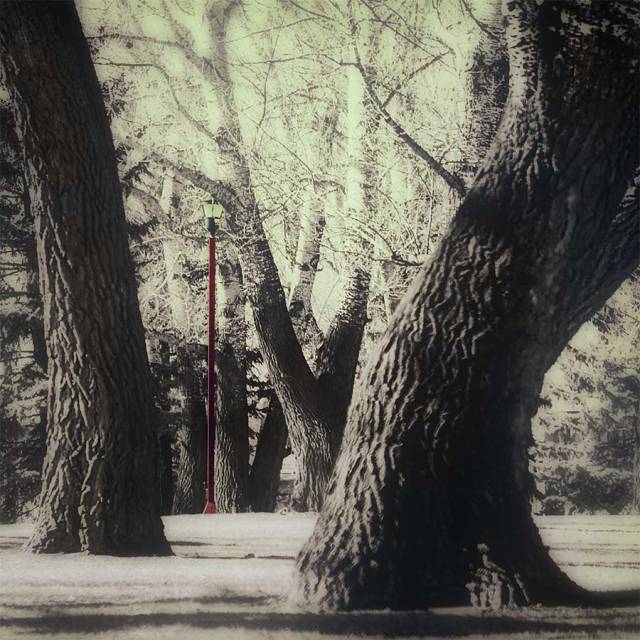
The repetition of forms is easy to find … Everything around us is built out of shapes that are pretty basic and often similar to each other. Look at trees: their forms could be closed in imaginary triangles, rectangles or circles. Start to observe shapes repeating in nature and the city space, within your body. Photograph structures of windows in skyscrapers or lines painted on a road.
The primary characteristic of rhythm is its predictability and order. For example, day and night and the pattern of seasons are predictable and follow a particular movement along a connected path to exhibit a sense of rhythm. Rhythm is as important in photography as it is in music. Music when not in rhythm can be categorized as noise. But when it attains a timed beat at regular intervals, it turns pleasant to the ears. … Similarly, rhythm in photography renders a pleasant sensation to the eyes.
Repetition refers to one object or shape repeated; pattern is a combination of elements or shapes repeated in a recurring and regular arrangement; rhythm is a combination of elements repeated but with variations.
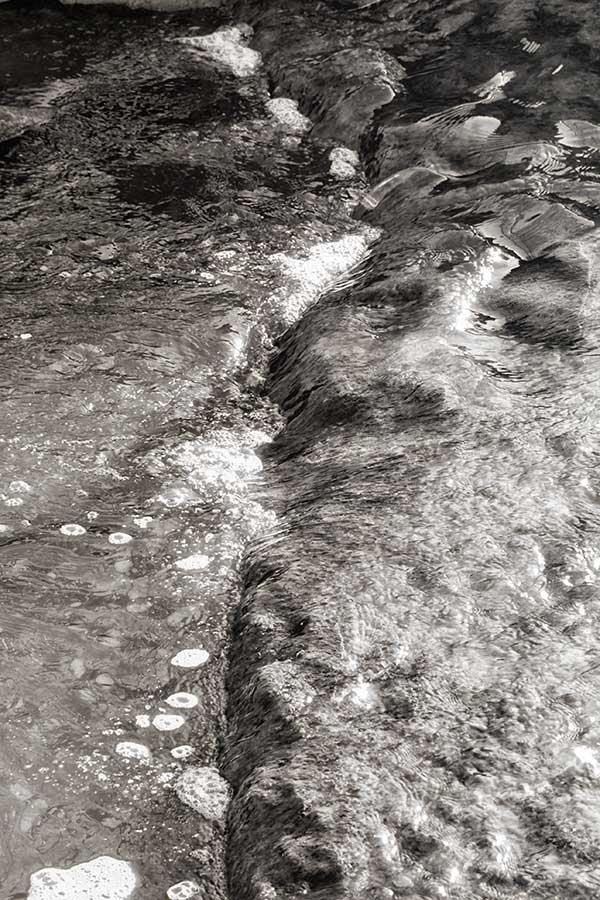
Rhythm is like pattern, in that the same elements (i.e. shape, line) are repeated; however, with rhythm there are slight variations in the pattern. Rhythm is easily perceived but complex and subtle. Think of water on a beach; it continually breaks on the shore in lines that are repeated, yet each one is different.
Rhythm is a repeating pattern through time (in music) or in space (more useful for our purposes). Whether you have a repeating individual element, such as the lines in the sand…or repeating groups such as the rows of magnets… (and remember, our brains will create groups, even if we didn’t intend them to be there), it’s important to think about the energy that this repetition adds to an image. Rhythm can be used to add peace and regularity to an image, and it can also be used to help a subject that interrupts the rhythm stand out
Rhythm is a regular and repeated pattern, usually of sound or movement. …How do we define rhythm visually? As a design principle we can say rhythm is the patterned repetition of elements in space. We place elements on the page and experience the intervals between them. Time enters as our eye moves from one element to the next and through this rhythm in space and time we can create a sense of organized movement similar to a musical beat.
There are a variety of places where you can find rhythm.
• music — patterns of sound over timed intervals
• dance — patterns of movement and gesture through physical space
• speech — patterns of cadence in spoken words
• writing — patterns of cadence written words
• painting — patterns of brush stroke, color, shape, on a canvas
Notice the repetition of the word “patterns” in the list above. Pattern is essential to rhythm. So is repetition. The list above creates a rhythm though repetition. Visually each list item begins with a bullet. The bullet is then followed by a single bolded word, an mdash, and the words “patterns of.” Were I to add another item to the list you would expect it to follow the same predictable pattern.
Notice too, the slight variations created with the length of each line and by the links in a couple of the list items. These variations help break the monotony and add surprise and interest to the rhythm.
To add to this conversation there are different types of rhythm:
regular rhythm
alternating rhythm
flowing rhythm
random rhythm
progressive rhythm
symmetry rhythm
undulating rhythm, and (breaking this repetition)
rhythm sensation
Now I have a clearer understanding as to why, despite my continued efforts, I could never draw random v-shaped birds in my childhood drawings. While I may stumble in my attempts to comprehend rhythm, I have come to understand that all of us are hard wired to see and create patterns.
I would love to hear your thoughts about visual rhythm and to see how you incorporate this composition element within your own photography. Also…does anyone know of an elementary article about visual rhythm?
My mother once described a job interview for a dietary postion within a small community hospital in which she was asked if she could cook. She described how she directed the woman’s gaze to the various pictures of her children that were placed about her living room and invited the woman into her kitchen to show her that she, indeed, as a mother did and could cook.
This question, was experienced by my mother as an example of discrimination…a prejudice of deafness. As I listened to my mother’s story, I understood the question as appropriate to the job. What I interpreted to be discrimination came from the environment in which the interview occurred…not at the hospital, but within the privacy of her own home.
How many job interviews take place within a job applicant’s home?
Being a child of my mother’s and a female, I believed I came to understand discrimination, oppression, and marginalization, both personally and through my mother’s life stories. As a child, she was required by state law to attend a deaf school and initially attended a school that was close enough to the family home to allow for weekends with the family. Yet, because the school was located out of state, she had to enroll in a state school much further away, Consequently, she was then only able to be with family during specific holidays. This is of a time when letters were her only course of connection with her family.
Also, the school she attended had a policy prohibiting communication through the use of sign language as a means to assist the students to fit in with the “hearing world.” I smile today, remembering her pride as she described the opposition to this policy. She and her classmates would gather together in an attic, at night, to teach one another how to speak in sign.
The events of today have invited me to reflect upon my own behaviors — and even my reaction to my mother’s job interview experience — and to see them as being influenced by discrimination, marginalization, and oppression especially in light of my understanding of “microaggression.”
Microaggressions are the everyday verbal, nonverbal, and environmental slights, snubs, or insults, whether intentional or unintentional, which communicate hostile, derogatory, or negative messages to target persons based solely upon their marginalized group membership. In many cases, these hidden messages may invalidate the group identity or experiential reality of target persons, demean them on a personal or group level, communicate they are lesser human beings, suggest they do not belong with the majority group, threaten and intimidate, or relegate them to inferior status and treatment.
…microaggressions are active manifestations and/or a reflection of our worldviews of inclusion/exclusion, superiority/inferiority, normality/abnormality, and desirability/undesirability. Microaggressions reflect the active manifestation of oppressive worldviews that create, foster, and enforce marginalization. Because most of us consciously experience ourselves as good, moral and decent human beings, the realization that we hold a biased worldview is very disturbing; thus we prefer to deny, diminish or avoid looking at ourselves honestly. Yet, research suggests that none of us are immune from inheriting the racial, gender, and sexual orientation biases of our society. We have been socialized into racist, sexist and heterosexist attitudes, beliefs and behaviors. Much of this is outside the level of conscious awareness, thus we engage in actions that unintentionally oppress and discriminate against others.
I have come to realize that to there are no benign questions…and that a small section of my indignities towards another arise, in part, from my own denial and ignorance. Awakening to the suffering of others and to the unintentional harm I have caused others brings tears to my eyes as well as leaves me floundering in how to apologize.
It is my hope this sharing of Br Phap Man’s video, “Inclusivity and Justice”, is a small step that brings about a healing awakening that overcomes walls of various shapes, formations, and sizes.
 Tempo as a composition element within photography is an extension of Ted Forbes’ discussion of rhythm…the beat…the pulse within images. He notes that tempo is the means by which we display speed, movement, as well as the passing of time all within a frozen moment.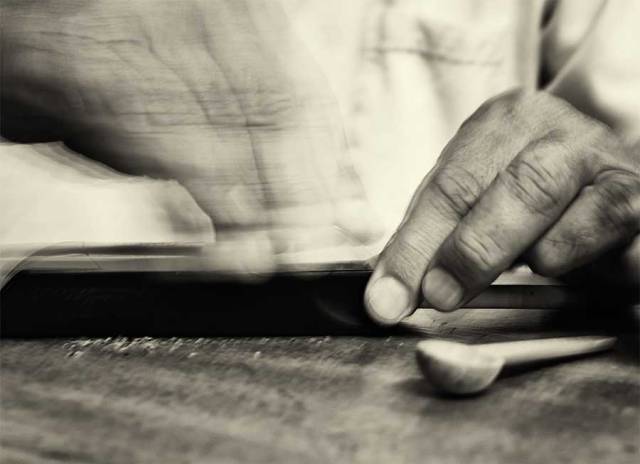








 a meditative journey
You must be logged in to post a comment.