xdrive photography learning – 19 – high speed photography

Raj (XDrive ) writes that high speed photography allows the photographer to freeze motion as it permits “only a fraction of a second for the sensor to ‘see’ the scene” and the sensor “is going to record things at standstill even though they are moving.”

I set out yesterday with my camera set on autofocus with continuous focusing and the ISO at 800.  After coming home and doing a bit of deleting, I still have heaps of images…412.   Regrettably, most of them will be tossed into the trash because I assumed that setting my camera on manual and using the highest f-stop that the shutter speed would automatically record at 1/4000 to 1/8000 seconds.

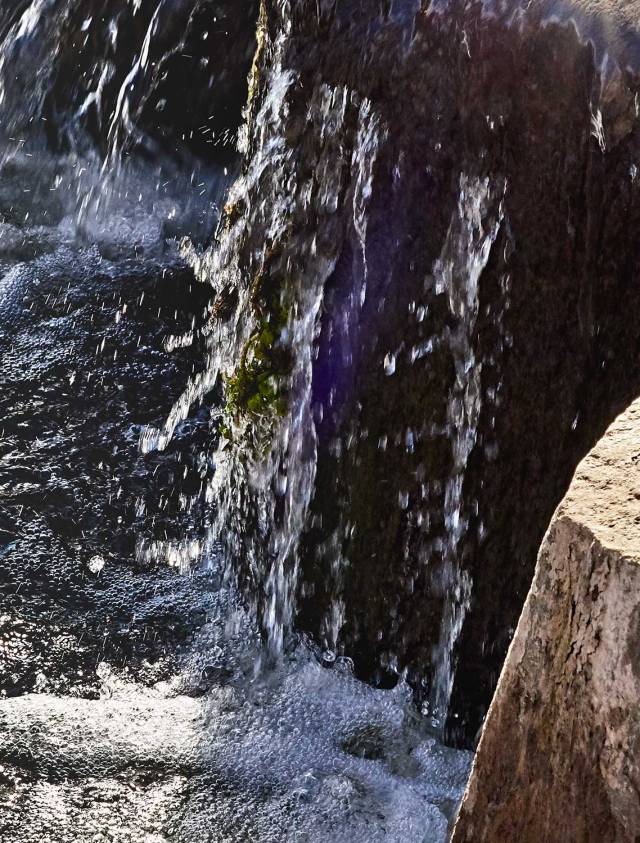
Why did I chose manual…well, before leaving home I initally set my camera on shutter speed priory mode and saw that the camera seemed to prefer lower f-stops.  So, my first  mistake came with the assumption that there is a correlation between high f-stops and shutter speeds.  I also failed to set the camera on center focus and was not able to correct this decision as I left my glasses at home…sigh. Also, I did not pay attention to the shutter speed throughout the walk…and as you can see in the image below there are no frozen water drops…just a bit of blur, bubbles, and tiny pellets as well as a rock (lower right) in focus.
xdriveshutterspeed-9web

Nikon D750   f/22   1/250s   85mm  ISO 800

The rain and snow last night left a bit of ice under a layer of snow…so will have to delay my return to the creek, when it is a bit warmer, to create motion frozen water drops with more attentive intention.

Yet, not all was lost…

xdriveshutterspeed-4web

Nikon D750   f/22   1/640s   85mm   ISO 800

xdriveshutterspeed-8web

Nikon D750   f/16   1/1000s  85mm   ISO 800

xdriveshutterspeed-3web

Nikon D750   f/16   1/500s   85mm   ISO 800

xdriveshutterspeed-2web

Nikon D750   f/22   1/500s   80mm   ISO 800

Thank you Raj…I appreciate these lessons and your feedback.
trees talk to…

Though we are parted,
If on Mount Inaba’s peak
I should hear the sound
Of the pine trees growing there,
I’ll come back again to you.

~Ariwara no Yukihira

linesweb

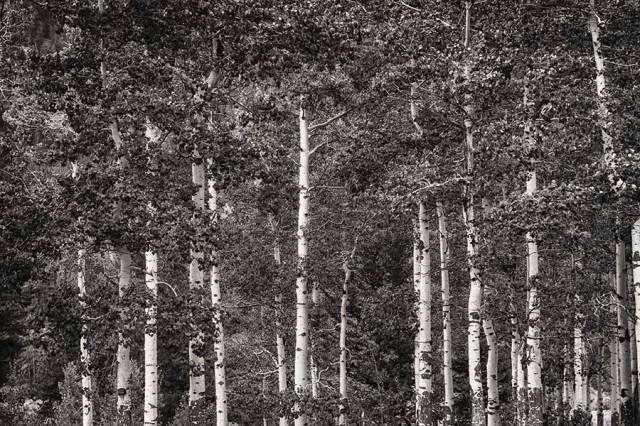
Nikon D750   f/4.5   1/40   56mm

The National Forest Foundation will plant a tree for every $1 you give to their tree-planting programs. Their website notes a goal of planting 50 million trees by 2023.

Suzanne Simard’s research has given us insight into how trees communicate their needs and send each other nutrients through an elaborate system which she has compared to neural networks in the human brain.

I hope you enjoy this TED Talk, How Trees Talk to Each Other

a photo study: composition

The fourth week of this journey exploring a particular element of photography invited me to open my eyes to triangles.  It is easy for the eye to see triangles and they are often created through the use of three prominent points of interest, particularly if they are similar in content and size.

The first time I was introduced to triangles in photography was through the writings of Eric Kim who noted, “Triangles are one of the best compositional techniques you can use in your street photography to fill your frame, add balance, and add movement in your images.”

Within an image, you may notice three variations of triangular compositions: real triangles (actual triangles, triangles formed by perspective, inverted triangles formed by perspective) and implied triangles through the use of people.

triangleweb

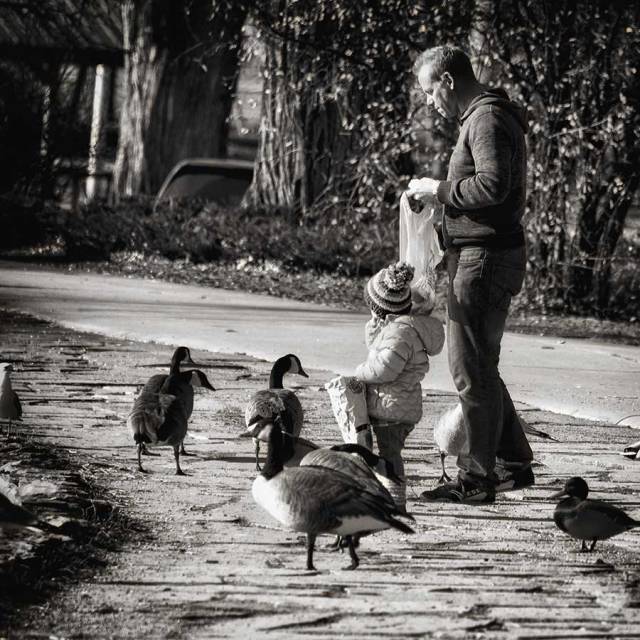
Within street photography, implied triangles are often created by the direction of the subjects’ eyes. Within the first image below, both subjects are looking to the left creating a triangle that extends outside the photograph. In the second, the gaze of the father, daughter, and two geese create an implied triangle.

If you wish to join this learning journey at any time, please do so.

Please enjoy this educational video, Composition in Photography (Ted Forbes, The Art of Photography)

wpc: silence

There is a profound moment…just a second or so before the sun’s light peeks above the horizon…when it feels as if a stilled hush has silenced all of nature.  And then, a bird’s singsong welcoming a new day and the distant sound of the coffee maker, releases me once again from the imprisonment of a sleepless night.

silencewebsilenceweb2

Silence

tethered

compositionweb

Nikon D750  f/5.6   1/100   62 mm

Sutcliffe rarely left Whitby [a port and resort community on the Yorkshire coast], where his portrait studio kept him busy, and said that he was ‘tethered for the greater part of each year by a chain, at most only a mile or two long.’  To most modern photographers this would seem a crippling restriction, but Sutcliffe gradually realized that it was an asset to him as a photographer since it forced him to concentrate on the transitory effects that could transform familiar scenes. …photographers should always aim for something more than ‘mere postcard records of facts.’ ‘By waiting and watching for accidental effects of fog, sunshine or cloud,’ he advised, ‘it is generally possible to get an original rendering of any place.  If we only get what any one can get at any time, our labour is wasted; a mere record of facts should never satisfy us.’

cited: Frank Meadow Sutcliffe, The History of Photography Series, p 8

beyond the entanglement of perception


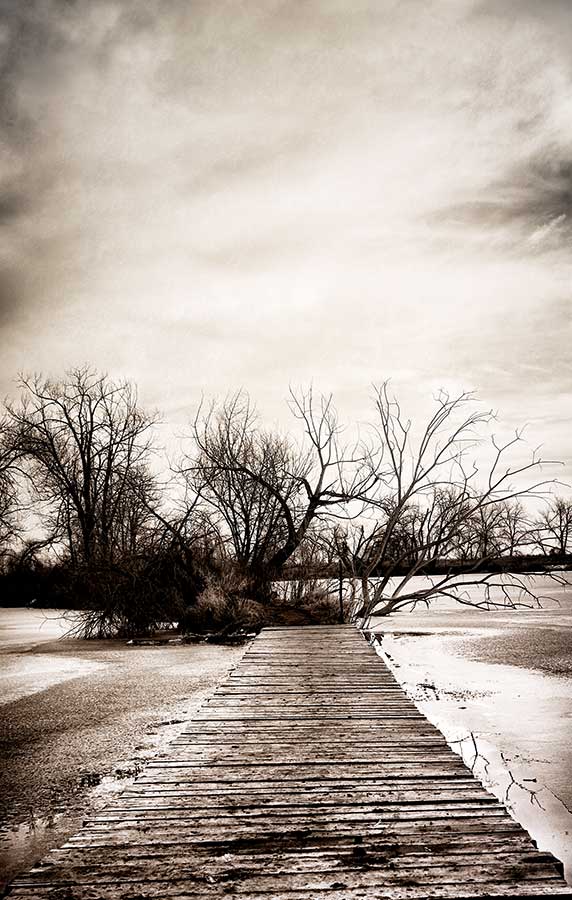
pondwalkwayweb

Nikon D750  f/7.1   1/400s  28mm   

Sometimes Providence interferes and saves the beginner from all trouble with his stops. It did so with me. I had a dog which took a great interest in my first camera from the very beginning. There is, perhaps, something about morocco leather which reminds a dog of the Elysian fields. It was a lens-cap, morocco bound outside, velvet inside, which Charlie devoured first. A cork out of a pyro bottle fortunately fitted the lens-hood exactly. Then, after eating the cap, while my head was under the focusing cloth, Charlie devoured the leather case, with all the stops in it. This was an insurmountable difficulty. I know I wrote to the maker of the lens to ask what a new set would cost, but as the amount was more than I possessed, I determined to do without. That is why I was saved from under-exposure, with I should surely have been led into with a multitude of stops.

~Frank Meadow Sutcliffe (cited: Frank Meadow Sutcliffe, The History of Photography Series, p.6)

manifest


goatsbeard-2web

Before its so-called birth, this goats beard already existed in other forms – clouds, sunshine, seeds, soil, and many other elements. Rather than birth and rebirth it is more accurate to say, “manifestation and re-manifestation”.  It’s  so-called birthday is really a day of its re-manifestation. It has already been here in various forms, and now it has made an effort to re-manifest.

When conditions are no longer sufficient and a plant ceases to manifest, we say it has died, but that is not correct either. Its constituents have merely transformed themselves into other elements.


a photo study: simplification and negative space

Someone once shared with me her personal goal of reading one book of child psychology for a week over the course of a year.  She then asked, “Would that result in me becoming an expert?”

Off and on over the years, I have found myself pondering this exchange.  About three weeks ago, while watching a Ted Forbes YouTube video I wondered, “how would my photography change if I was to “focus” on a particular element of photography each week for a year while also including various past lessons into my images throughout that week?

Well…I’m into my third week of this journey,  The first week was exploring focusing techniques; the second, rule of odds; and this week, simplification and negative space.

dandelionproject1918simplicity-1webstreesimplicityweb

At this time, it is my intention to review my journey and share a photo video each Saturday.  If you wish to join me, I would enjoy hearing and seeing your photo journey.

Simplification and Negative Space (Ted Forbes, The Art of Photography)