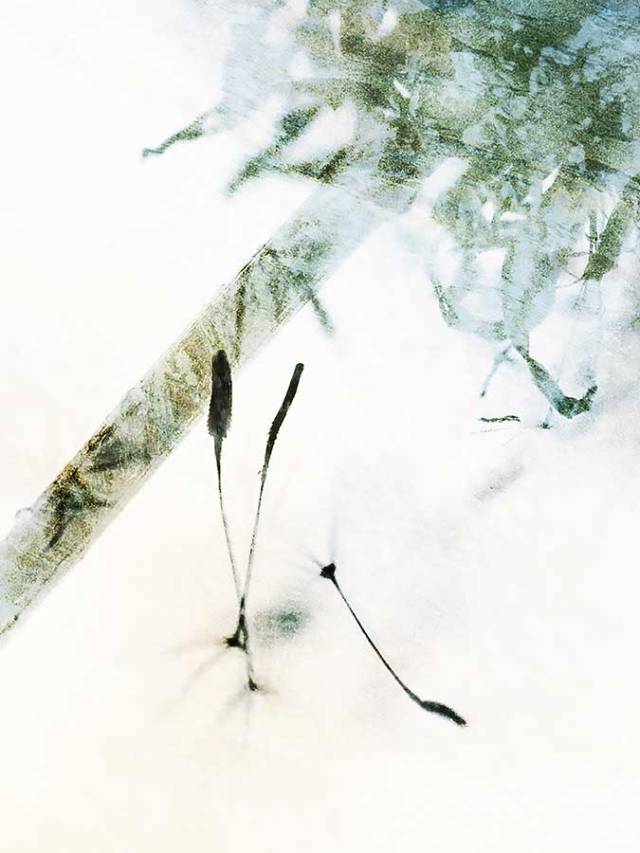
When we touch one wave, we are in touch with all the other waves. This wave is continued by the next wave. A wave pretends to appear, it pretends to dwell, it pretends disintegrate, and it pretends to disappear.
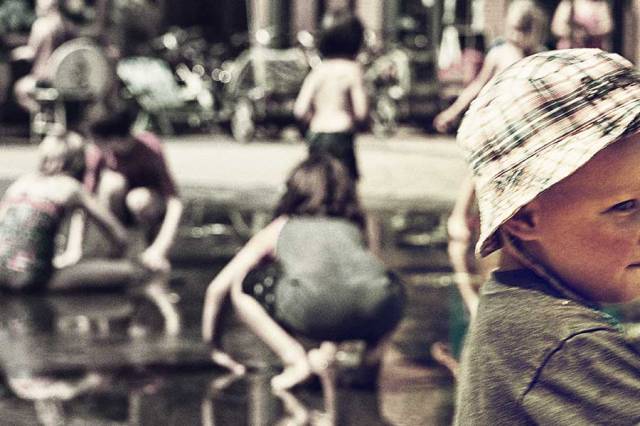
The pictures produced [in the 1950’s] were especially useful to the magazines, which were meant to be flipped through rather than lived with, and in which a picture’s first impact was seen as more important than its staying power.
Cited: J Szarkowski, Looking at Photographs, p. 180
~Ono no Komachi (J Hirshfield & M Aratani, The Ink Dark Moon)
Lumix GX85 f/5.6 1/400 s 32 mm 200 ISO
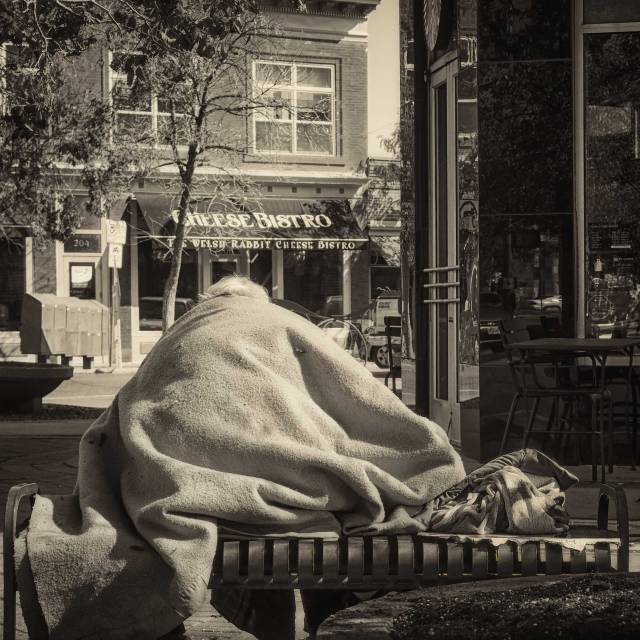
Just a few words about today’s homelessness from the AP:
A homeless crisis of unprecedented proportions is rocking the West Coast, and its victims are being left behind by the very things that mark the region’s success: soaring housing costs, rock-bottom vacancy rates and a roaring economy that waits for no one. All along the coast, elected officials are scrambling for solutions.
“I’ve got economically zero unemployment in my city, and I’ve got thousands of homeless people that actually are working and just can’t afford housing,” said Seattle City Councilman Mike O’Brien.
Homeless advocates and city officials say it’s outrageous that in the shadow of a booming tech economy – where young millionaires dine on $15 wood-grilled avocado and think nothing of paying $1,000 for an iPhone X – thousands of families can’t afford a home. Many of the homeless work regular jobs, in some cases serving the very people whose sky-high net worth is the reason housing has become unaffordable for so many.
And in the shadow of homelessness, tax havens for the wealthy:
The fundamental lesson of the Panama and Paradise Papers is twofold. First, the people everywhere, regardless of whether they live in Russia or America, are being oppressed by the same minuscule social circle of wealthy elites who unduly control our governments, corporations, universities and culture.
We now know without a doubt – thanks to the incontrovertible evidence provided by the Panama and Paradise Papers – that there is a global plutocracy who employ the same handful of companies to hide their money and share more in common with each other than with the citizens of their countries. This sets the stage for a global social movement.
Second, and most importantly, these leaks indicate that our earth has bifurcated into two separate and unequal worlds: one inhabited by 200,000 ultra high-net-worth individuals and the other by the 7 billion left behind.
and…continued denial of basic human needs over political and corporate greed
… over the past few weeks, several Republicans have indicated that the tax bill would boost the wealth of the already rich and ensure that their political donations keep flowing to help the GOP hold power in 2018.
“My donors are basically saying, ‘Get it done or don’t ever call me again,’” Rep. Chris Collins (R-N.Y.), himself a millionaire,
Sen. Lindsey Graham (R-S.C.) told reporters on Thursday that a failure to pass tax reform would fracture the Republican Party and lead to more far-right wing primary challengers. “The financial contributions will stop,” he added.
Little is known about Ono no Komachi’s life, “and the stories about her are drawn from a blending of historic fact and suppositions drawn from her writings. In The Dark Moon, Hirshfield and Aratani noted that historians believe she was the daughter of the lord of Dewa and served the court in the middle of the ninth century. Legends, folktales, and songs paint her as the outstanding woman poet of her time and the most beautiful and desirable of woman. Legend also tells us that towards the end of her life, she lived “in anonymity, isolation, and poverty, an ancient, half-mad hag living outside the city walls, though still writing poetry and possessing a deep understanding of Buddhist teachings.
Can we look at each other and recognize ourselves in each other?
This youtube video is drawn upon Thich Nhat Hanh’s poem Please Call Me By My True Names.
Raj’s xdrive photography lesson lesson for November explored 10 edits that photographers should know about prior to publishing images. My initial submission was of a family walking on a bike path during the golden hour.
Nikon D750 f/7.1 1/160 s 35 mm 400 ISO
Taking a few minutes to review this image in response to Raj’s feedback, I found that it is a bit of a challenge for me to notice the tilting due to 1) the curvature of the pathway as it moves my eyes to the background and 2) the presence of the trees hinders a clear view of the horizon.
In the markup below, my initial horizontal adjustment was the rooftop of the building in the background. Raj noted in his feedback, “we can’t rely on anything man-made as it all depends on the orientation of these things.” The areas I have circled were noted as over and underexposed by Capture One’s high exposure warning.
raw image with markup
adjusted image
first edited image with markup
Raj noted that the image stilled seemed a bit tilted in the image above. He also noted that the edited image is “kind of overexposed” and recommended that I “carefully check woman’s jacket, it looks kind of overexposed.” Also my editing seemed need a bit more saturation.
The image below was cropped with Raj’s recommendation in mind and I find it to be more focused upon the family dynamics. It also brings attention to Raj’s observation regarding the closeness of mother and daughter in comparison to the actions of the two boys. I also did not attempt to lighten the shadow element of the boys as I wanted the image to be about the family.
While the image below seems to address the overexposure Raj noted in the above image, I’m still struggling with this as the histogram (within both Capture One and Photoshop) as well as the Capture One exposure warning does not indicate an overexposure. So do I rely too much on technological guidelines over my vision?
It took me several tries to address the titling…sigh…
In regards to saturation, could the specifications of computer design as well as color calibration variances result in visual differences between what I see–or think I see–on my computer and what other bloggers see? If so, is there a way to address this? Also, I found that I needed to be very careful in regards to saturation as the image tended towards having a yellowish sheen.
All in all I the second edit does seem to be better.
second edit
monochrome images
first monochrome image with markup
When I compare the above initial monochrome image with the one below, I’m able to more easily see areas that may be a bit overexposed. The woman’s jacket has a burned appearance. The detail in the woman’s jacket below offers a bit of resolution to my question above regarding overexposure…it’s about the detail in the woman’s jacket and the girl’s top.
Since the young boy looking towards the camera suggests a message of interaction, I find that I prefer the lightening in the above image when compared to the one below.
second edit
Again, I wish to express my gratitude to Raj and to all those wonderful bloggers who stop by and visit.
Henri Cartier-Bresson said that photographers deal in things which are continually vanishing, and which no contrivance on earth can bring back again. Not even photography can bring these things back, except in the memory of those who knew them, or in the imagination those who did not.
(cited: J. Szarkowski, Looking at Photographs, pg. 124)
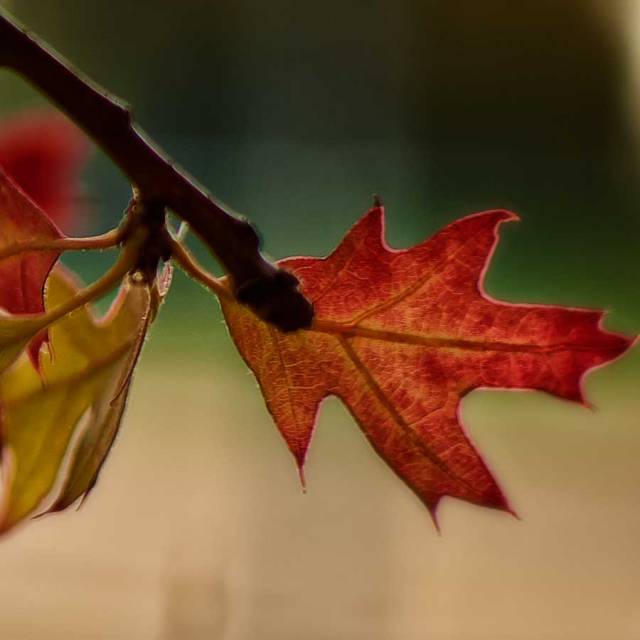
Lumix GX85 f/7/1 1/640s 32 mm 200 ISO
Ólafur Arnalds is a BAFTA-winning multi-instrumentalist and producer from Mosfellsbær, Iceland. Ólafur Arnalds mixes strings and piano with loops and beats crossing over from ambient/electronic to pop.
The faculty of voluntarily bringing back a wandering attention, over and over again, is the very root of judgment, character, and will. No one is [master of himself] if he have it not. An education which should improve this faculty would be the education par excellence. But it is easier to define this ideal than to give practical instruction for bringing it about. ~ William James
The rules of this three-day quote challenge are to post a favourite quote every day for three days, and pass on the challenge to three other bloggers. You can do this at any time you like – even next year – and you can also say, “No thanks.”
While I’ve enjoyed being challenged by others, I find it difficult to invite one blogger over another, so if you would like to join in please accept this invitation to share your favorite quotes. Thank you Amy at The World is a Book for extending an invitation. It eases all those times in the playground when I was among the last to be chosen to be on a team. _()_
Memory bridges our past with the present and awakens us to an awareness that life is created by minute moments that often go unnoticed as our minds are frequently elsewhere. Photography offers us a means to awaken to these temporary moments and to create priceless keepsakes of our yesterdays.
This original raw image was created during the golden hour. It was my intention during this photo walk to photograph with a 35 mm prime lens and practice being inconspicuous as I photograph people.
Raw image
Nikon D750 f/7.1 1/160 s 35 mm 400 ISO
The post processing of the above raw image included adjusting the white balance, contrast, sharpening, shadows, and highlights as well as tweaking the exposure warnings, saturation, clarity, and structure. I also used Nik Effects Dfine to address noise and Vivezaz to lesson the shadow of the two young men. The horizontal field was slightly adjusted using the building in the background before cropping. I thought that including the path’s curve would be more likely to allow the image to breathe and to invite an imaged story about the family.
I have found that adjusting for sharpness, clarity, and structure requires a bit of attention to highlight and shadow adjustments. When I read Raj’s explanation, “the white balance of a camera is a setting where you tell the camera what actually white color” reminded me about past tutorials that have recommended using the color picker to set the white balance from a grey color or color natural area. Grey to create white?
The cropped monochrome image (processed within Nik’s Color Efex Pro 4) below is an example of the sharpness of the 35 mm lens. I found that the closer cropped image invites me to image a story more about the two young boys than the family and reminded how I found myself smiling as I watched them engaging life as the sun settled in the west.
Thank you Raj for this amazing opportunity to explore and expand my understanding of photography.
~Basho (F. Bowers, The Classic Traditions of Haiku)
I felt compelled to update this earlier post to invite you to visit LdG luciledegodoy who earlier noted my image inspired her to post a photograph she created a few days ago. I invite you to hop on over to visit her post and while there listen to Eva Cassidy’s wondrous voice and the story of her life.








 a meditative journey
You must be logged in to post a comment.