Nikon D750 f/7.1 1/400s 85mm 900 ISO

Nikon D750 f/7.1 1/400s 85mm 900 ISO
mountain’s red leaves
the setting sun returns
to the sky ~Issa (www.haikuguy.com)
This week’s photo challenge offered by Jenn at Traveling at Wits End is to photograph the color red.
Yesterday I woke to snow that was hiding a layer of ice. A few weeks ago I realized that one of the identifications of aging is when the presence of ice is less and less seen as an opportunity to enjoy the excitement of ice sledding and more and more of a “danger, danger” message.
So instead of undertaking a photo walk this weekend, I decided to take this time to wander about my photo library to find photos that have a “pop of red” to share this winterly weekend.


Sony RX100 III f/2.8 1/400s 2.8mm 800 ISO

Another amazing Candid Camera educational video!
I’m continuing this series of contemplative photography with an exploration of the element of space. Andy Kerr and Michael Wood at Seeing Fresh note that the challenge in their space assignment is to shift our intention from seeing forms in space to seeing visual space itself; that is, the space that surrounds things and space that is between things.
Opening myself to seeing space as around and between objects
John McQuade and Miriam Hall invited me to drop my orientation to things by introducing dot-in-space. My understanding of dot-in-space began with a review of a previous post a photo study: negative space in which I wrote:
In photography negative space is perhaps the most important element as it embraces the subject within your image — the element of interest — helping it stand out and inviting the viewer’s attention. It is the aspect within a photograph that generally doesn’t attract much attention. It is sometimes referred to as white space and has the potential to change what appears to be an average subject into an outstanding image.
It is easy to focus our attention on the subject, on what we see as the most important element of the photograph. Adding to or taking away negative space affects the subject within an image as they effectively become smaller or larger within the frame of your image.

simplification and negative space
McQuade and Hall write:
When we see, we always see something. … Seeing something means that we see a foreground dot against a background space…you cannot simply see or make an image of space. An image of the clear, blue sky would not likely be a perception or an image of space. It might look somewhat blank and not very dynamic, but perception is always dynamic… A cloud in the sky would cause the sky itself to fall into the background of the cloud, which then becomes the foreground (the dot.)

dot in foreground

space in foreground
In photographing space, McQuade and Hall suggest that I invert the relationship between the dot and the space so that the dot becomes a supportive element for dynamic space. When the dot recedes to the visual background, the space element assumes the function of the foreground. The dot (which often occupies an edge or corner of an image) then, serves as an anchor.
McQuade and Hall furthers their discussion of space by encouraging the photographer to open the self to the subtlety of space which moves beyond the dot and to the experience of space. Within this level, a trace element of the dot within these images are always present, but it is not the focus.
…the main quality of visual space is that it is pervasive…it is a feature of the whole perception.
…pay attention to how your eye and mind react. If one, your eye doesn’t land somewhere, but instead, is buoyed by an overall space; and if two, your mind does not fixate somewhere but, at least initially, rests in a sense of expanse, then this is an equivalent image of space.
As with all mind shifts this aspect of contemplative photography has nudged me outside my usual way of seeing the world. Negative space in other photographic genres is a means to embrace the subject within your image — the element of interest — helping it stand out. In contrast, contemplative photography invites the subject to move into the background so that space becomes the element of interest.
As always I would love to read your comments and view your images. Let’s tag with #aphotostudy.
Within the website Seeing Fresh, visitors will find an introduction to Karr and Wood’s discussion of contemplative photography as well as a series of photographic assignments on color, texture, simplicity, light, and space that include representative images.
looking at the mountain
looking at the sea…
autumn evening
~Issa (www.haikuguy.com)

Nikon D750 f/4.5 1/400s 58mm 250 ISO
spurting
image submitted in response to Lost in Translation’s pick a word challenge.

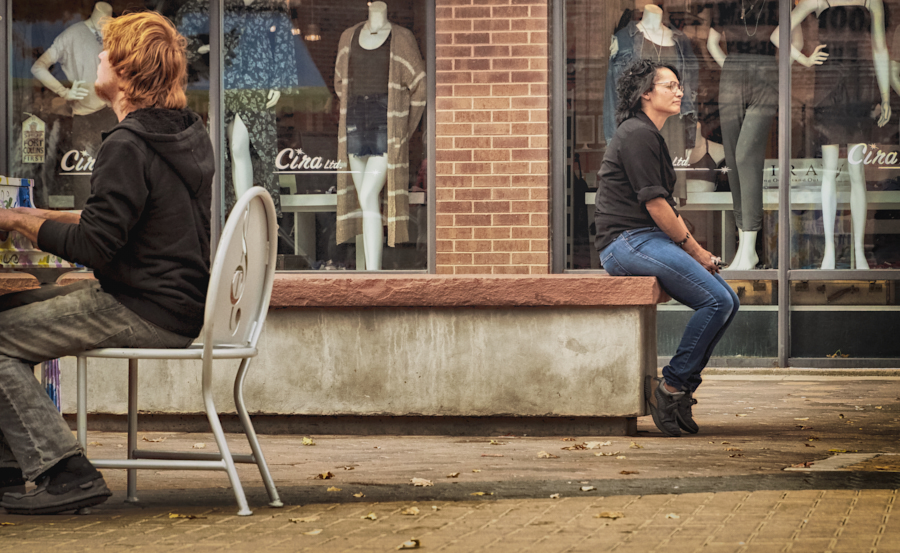
“…It was a dazzling morning in June, the morning brightness flooded unmoving through the streets—I was standing in the Rua Garrett at a display widow where the blinding light made me look at my reflection instead of the merchandise. …I was about to make my way inside through the shadowy funnels of my hands, when behind my reflection—it reminded me of a threatening storm shadow that changed the world—the figure of a tall man emerged. He stood still…his look strayed and finally fixed on me. We humans: what do we know of one another? …The stranger saw a gaunt man with graying hair, a narrow, stern face and dark eyes behind round lenses in gold frames. I cast a searching place at my reflection. …I looked like an arrogant misanthrope who looked down on everything human, a misanthrope with a mocking comment ready for every thing and everyone. That was the impression the smoking man must have gotten.
How wrong he was!” ~ Pascal Mercier, Night Train to Lisbon (77-78)

Nikon D750 f/7.1 1/400s 55mm 1800 ISO
Image submitted in response to Ryan Photography’s weekly monochrome challenge.

None calls upon me, or remembers me in my mountain village.
On the reeds by the thin hedge, the Autumn winds are sighing.
~The Sarashina Diary, A.D. 1009-1059 (Diaries of Old Japan)

May I find the Equanimity that will lift a veil of shamed despair and acquaint me to the perceived and perceiver absent of greed, anger, and ignorance.

This journey with saldage has brought me to a place and time in which to unweave and sort through the pseudo-beliefs I have simply, without question, absorbed through the lens of childhood fantasy and comprehension. To begin this process is to reformulate beliefs through a process of mindfulness and analysis and then to know for myself, “These things are bad, blamable, censured by the wise; undertaken and observed, these things lead to harm and ill… These things are good, blameless, praised by the wise… These things lead to benefit and happiness.”
It is not an easy undertaking to not simply believe what has been learned within family, school and church as well as conclusions reached through readings. The invitation to not simply follow tradition brings to the surface conflicts with compliance and opposition that come from an avalanche of values and guiding principles that outlines how I understand the roles and expectations of women.
To not adhere to that which was surmised within family stories about an ancestor, who upon seeing a swarm of locust “knelt in his patch of grain and pleaded with his Maker to spare his wheat” and then saw them divide and not damage his remaining crops. Or within the story about the ancestor, who during a trip from New York to England, calmed the seas with a prayer, and while in England, after much fasting and prayer administered to a deaf and dumb boy who was subsequently healed. To not simply believe opens a door of pondering about generations of family members who intimately knew powerlessness and insecurity, who eased their feelings of incompetence through prayer, and whose conceptions blinded them to their neighbors’ plight.

To not simply believe that I must endure suffering is to reject the axiom that there is an absence of fundamental faith and goodness. To not adhere to the assumed abilities of ancestors frees me from the belief that a sincere act of making amends for my sins will open the doors to Shangri-La. To not simply draw upon scripture unbinds me to the shame that I don’t have the faith – even of the size of a mustard seed – to be deeded as “good and without sin” so what I wish for, even that which goes counter to nature’s laws, will be granted. To ease the suffering within discontent is to not simply hold to be true that I am to acquiesce to pain until the final judgment of death, and only then will I be forever at peace, or forever condemned to an existence of even greater suffering.
To not simply believe opens my ears to the incongruence within a belief in an all-knowing presence who, if not validated, punishes, absent of the grace within loving-kindness. To not simply believe brings a compassionate acknowledgment to the painful efforts to sway God into granting me my desires through bargaining, sacrifice, negation, and suffering, and to finally surrender with acceptance to “Thy will be done on earth as it is in heaven.” To not simply believe sheds light upon the greed, aversion, and delusions that are intertwined into my conception of and relationship with life.
I do hold that my beliefs and the subsequent desire for their illusive promises of validation, forgiveness, or reunification have set me upon an unending path of suffering. These beliefs lead to harm and ill as they are like thorns that tear into my heart. This searing pain releases resentment intertwined with envy, awakens alienation, and denies me the essence of Christ’s wisdom and loving compassion.

Christ stood before self-righteous anger and commanded that only the one without sin was to cast the first stone of punishment and, at another time and in the midst of his own suffering, sought forgiveness for those who “know not what they do.” Within these written words, I hear compassion speaking for the suffering intertwined within anger ungoverned by moral shame and moral dread. Compassion is telling us how suffering, entangled into knots of mental, emotional, and social turmoil, deafens us to our guiding principles and blinds us to the horrors our moral shame will witness as it awakens from darkened ignorance.
The practice of the presence of God as being comparable to that of consciousness finally makes possible “full awareness” applied to every thought, world, and deed. ~ Unknown
Excerpts from B Koeford, A Meditative Journey with Saldage
You must be logged in to post a comment.