Shinrin-yoku…forest bathing

You didn’t come into this world.

You came out of it, like a wave from the ocean.

You are not a stranger here.

~Alan Watts

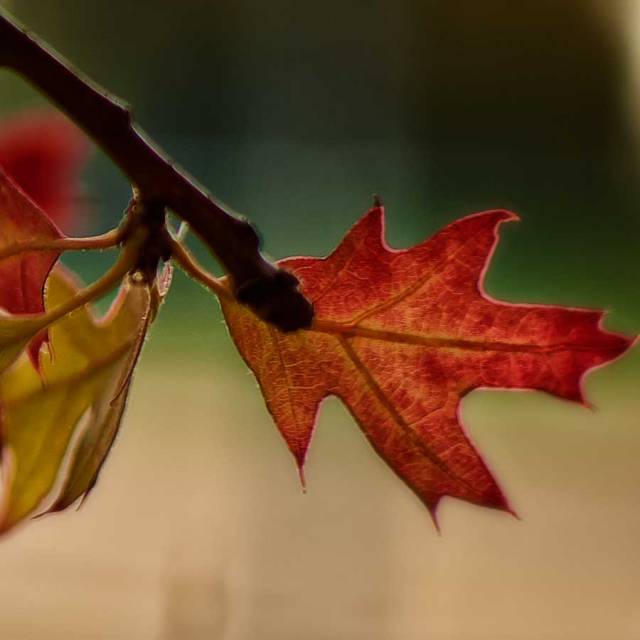
autumn102417web

The healing way of Shinrin-yoku is through the medicine of simply being in the forest.  A gentle path to wellness accessible to almost everybody.  Studies have found that the benefits of forest bathing include:

  • Boosted immune system functioning, with an increase in the count of the body’s Natural Killer (NK) cells.
  • Reduced blood pressure
  • Reduced stress
  • Improved mood
  • Increased ability to focus, even in children with ADHD
  • Accelerated recovery from surgery or illness
  • Increased energy level
  • Improved sleep

I’m hoping that the Youtube video below motivates you to kick off your house slippers and rummage through closets for your long-forgotten hiking boots…

_()_

xdrive photography learning – raw vs jpg

In Raj’s latest xdrive photo lesson he continues the discussion of setting the camera to raw by comparing the differences of raw and jpg images that are produced within the camera at the exact moment with the same camera settings.

Below you will see comparison of a raw image of apples and their reflections edited in Capture One with the exact jpg images created within the Nikon D750.  I chose to have the aperture set at f/1.8 as a means to expand my understanding of the complexities of focal plane, sharpness, depth of field, and aperture settings.  There were a series of images created using manual focus that were discarded as the sharpness and detail were a bit fuzzy.

I generally photograph with the camera set to raw with a black and white setting as a means to encourage a greater awareness of the range of white to black.  When the raw images are transferred to Capture One for raw editing they are in color.

  1. Edited raw image after contrast, white balance, saturation, light and shadow, structure, clarity, sharpness, exposure, and crop adjustments.
7371f_1.81_3s35mmiso100

Nikon D750   f1.8   1.3s   35 mm   ISO 100

2.   When I opened up the jpg images from the Nikon, I found that they remained in black and white; therefore, I went back into Capture One and created a black and white version of the above image to use as a comparison to the Nikon’s jpg.

7371web

Nikon D750   f1.8   1.3s   35 mm   ISO 100

The Nikon jpg image below seems to keep the reflected apples in greater shadow.  Also the variations of the texture and appearance of the apples and their reflections are less apparent than in the image above.

DSC_7371

Nikon D750   f1.8   1.3s   35 mm   ISO 100  JPG

A cropped comparison of one apple and its shadow.

At the beginning of this project, I found myself acknowledging a need for a basic understanding of editing pros and cons; for example, it is very easy for me to over sharpen images that result in haloes.

In closing, I’m also including two additional apple images in which I moved the camera closer as part of my open aperture setting and focal plane study.

7372f_1.81_3s35mmiso100-1

Nikon D750   f/1.8   1.3s   35mm  ISO 100


7373f_1.80.435mmiso100

Nikon D750   f/1.8  0.4s  35mm   ISO 100

The right apple and it’s reflection appear to be less sharp than in the other images; whereas, the first apple’s reflection is in less shadow.  My initial understanding of focal plane tells me that the right apple must have been placed a bit further back than the  other two.

Over to you Raj.

xdrive photography lesson – 11 – lenses

Over the past couple of months I’ve found that postings of bloggers I follow are not always coming up in my WordPress Reader.  One of those missed postings is Raj’s photo lesson on lenses.   In that xdrive photo lesson Raj invited us to “really access the capabilities of your camera and find out what exactly is your stumbling block, is it a camera or a lens?”

So with this lesson in mind along with the recent discussions about photographing in  raw, I set out on three separate nature walks with a different lens on each occasion.

On the first day of this assignment I used a Nikon 28-300mm f/3.5-5.6G ED VR lens with a Tiffen 0.6 neutral density lens.

This first image is a representation of the raw image.  I see this image as a bit underexposed.

28-300mmraw

Nikon D750   f/9   1/40s   55mm   ISO 100

This second image was created with Raj’s discussion regarding the consideration of sharpening and color saturation within the initial editing of raw images in mind.

24-85mmf9

Nikon D750   f/9   1/40s   55mm   ISO 100

While I love bokeh – the way the lens renders out-of-focus points of light – I experimented with opening up the f-stop to explore Raj’s recommendation that an “open aperture would have created better isolation of leaves.”

28-300mmf4.5

Nikon D750   f/4.5   1/100s   55mm   ISO100

During the second day of this assignment I used a Nikon AF-S DX 35mm f/1.8G lens with a Platinum natural density lens.

The first image is a raw representation prior to any editing. This image seems a bit muted.

35mmraw

Nikon D750   f/1.8   1/1000s   35mm   ISO 100

This second image was again edited with the intentional inclusion of sharpening and color saturation.   As Raj noted an open aperture does allow for a greater isolation of the leaves.  The f/1.8 setting also seems to offer a softness to the image as well as gentle depth of field.

35mmf1

Nikon D750   f/1.8   1/1000s   35mm   ISO 100

In my limited experience and knowledge I find that a prime lens invites me to zoom in using my legs which is okay when photographing leaves…but not so much during street photography.

35mmf7.1

Nikon D750   f/7.1   1/60s   35mm   ISO 100

On the third day, I set out with a Nikon AF-S 24-85mm f/3.5-4.5 G ED VR lens.

A raw representation prior to editing.  Again, muted.

24-85mmraw

Nikon D750   f/4.2   1/125s   56mm   ISO 100

In the edited f/4.2 image the shadows on the leaves are brought out; yet, I find the background a bit distracting.   Sharpening and color saturation was also intentionally included in the editing process.

24-85mmf4.2

Nikon D750   f/4.2   1/125s   56mm   ISO 100

In the f/7.1 image below the detail and sharpness of the leaves seems to offer a greater isolation of the leaves and isn’t as distracting as in the f/4.2 image.  Also, it is interesting to note that both images have a bit of bokeh.

24-85mmf7.1web

Nikon D750   f/7.1   1/80s   56mm   ISO 100

Over to you Raj…I am finding great value in your lessons and feedback.  Thank you for expanding my understanding of this never-ending learning experience.