sunday morning with freud

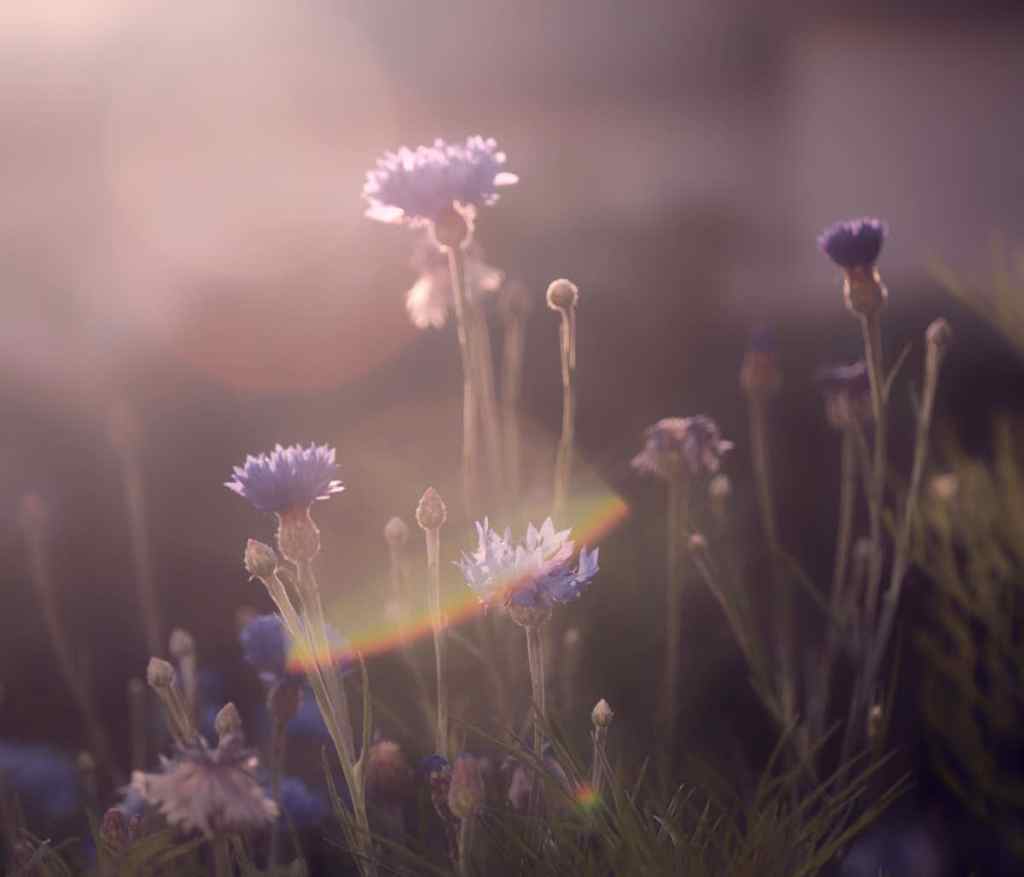
In a tiny grove with flowers everywhere, young girls of days gone by sit looking in their mirrors.

They say: “Sometimes we think that we have grown old. That our hair is white and our eyes no longer clear as the new moon … but it is not true! Our mirrors are bewitched with winter, and they lie! It is the mirrors that make our hair like snow and wrinkle our young faces! But wicked winter can bewitch our mirrors only, not ourselves … Forever we are unchanged.” ~Wang Chang-ling*

Freud noted that suffering comes from three directions: the feebleness of our bodies, the superior power of nature, and more painful to us than that of any other, our relations with others. He also wrote, “In the last analysis, all suffering is nothing else than sensation; it only exists in so far as we feel it, and we feel it in consequence of certain ways in which our organism is regulated.” The few who possess the ability to experience pleasure through special dispositions and gifts do not have “an impenetrable amour against the arrows of future.”**

*Trans Anonymous. The Jade Flute by various authors. The Project Gutenberg eBook of the Jade Flute

** source: Peter Gray, ed., The Freud Reader  (New York, 1998)

dawn

does the red dawn
delight you…
snail?
~Issa (www.haikuguy.com)

Every life is a point of view directed upon the universe. Strictly speaking, what one life sees no other can. Every individual, . . . is an organ, for which there can be no substitute, constructed for the apprehension of truth . . . Without the development, the perpetual change and the inexhaustible series of adventures which constitute life, the universe, or absolutely valid truth, would remain unknown . . . Reality happens to be like a landscape, possessed of an infinite number of perspectives, all equally veracious and authentic. The sole false perspective is that which claims to be the only one there is. ~José Ortega y Gasset

looking back

“Do not observe yourself too much. Do not draw too hasty conclusions from what happens to you; let it simply happen to you. Otherwise you will too easily look with reproach (that is, morally) upon your past, which naturally has its share in all that you are now meeting.”*

“… every action has an equal and opposite reaction. This simple concept is fundamental. You can extend it to our lives, our actions and their consequences.

“So when we do something we should always expect a reaction even when we think no one has seen us?

“When we are part of a complex whole; if you move one thing, you affect everything else. And somewhere, without knowing it was you, someone is affect by your action and reacts, striking when you least expect it.”*

*cited in Trans. M D Herter Norton, Letters to a Young Poet. Rainer Maria Rilke

**unknown source

rain drops

Hidden among the roots

of grass I hear

a cuckoo ~ Otsuin*

Today my memory invites me to that time…the time my grandparents invited me to go with them to visit family. Sitting in Great Aunt Ida’s living room with her siblings and their spouses listening to shared stories of unknown family and friends, a adolescent’s sudden insight, “that is what being old is….sharing stores of those who died in one’s yesterdays.”

Today as a great grandmother, I find myself wandering through recalled memories with yearnings to visit past times colored by gratitude and secret desires to resolve moments of disconnect.  

Seeking moments of my mom and dad, sisters and brothers, friends, extended family, and teachers and imagining us all sitting together around a table of trust, the trust that evaporates caution, sharing yesterday’s stories of being.

*cited in Y Hoffmann, Japanese Death Poems

an early morning with Etty

“…Woke up in the middle of the night. And suddenly remembered my important dream. A few minutes of intense effort to bring it back. Gluttonous. Greedy. Had the feeling that the dream was part of my personality, that I had the right to hang on to it, that I must not let it escape me, that I had to be certain of it if I am to be a rounded and whole person.*

Cee’s Photo Challenges: FOTD

*Trans, Arno Pomerans. An Interrupted Life. Lester & Oren Dennys Limited. 1983. pg.58

lens-artists: fragments

Within the field of applied cognitive psychology it is noted that memory fragments are components of our autobiographical knowledge. It is noted that some autobiographical memories may be stand-alone snippets of one’s past, ‘fragment memories’ or memories of particular moments, ‘free fragments’.

I am acquainted with a mind filled with multiple crosscurrents of unfinished thoughts, stifled emotions, and passing moods. There is also a growing recognition that at times I am overwhelmed by discursive thoughts that are formed by habitual ways of thinking, led by my own various prejudices, impacted by personal preferences or aversions, colored by laziness or selfishness, and intensified by faulty or superficial observations. Sometimes I awaken to myself to find that while engaged in a behavior, my mind has entered a dreamlike state, and therefore events and conversations are vague and fragmentary. 

The feeling of an “I” emerges from a reflection of the stream of experiential consciousness that awakens when I becomes aware of being observed by an internalized watcher or seer who is felt but never known.   Therefore, there is no denying that there is a wavering consciousness, an “I”, that knits together streams of memories, thoughts, feelings, and interactions in such a manner that I am able to formulate an awareness of identity, continuity, striving, as well as an sense of myself and others.

… when we hold a flower we see that it is composed of multiple elements, some tangible – leaves, stem, thorns, petals, stamens – and others intangible – scent, color, memories.   If you were to remove any of these constituent parts, would you find a known entity? As we are unable to find the flower in the absence of any one of these parts, we are also unable to find an enduring solid flower in any one of these elements.   Hence the belief in a permanent solid self proves to be a mere illusion as we find a self riddled with gaps and ambiguities that appear coherent because of the monologue we keep repeating, editing, censoring, and embellishing in our minds.

This week’s lens-artists’ photo challenge – bushboys world – is indeed a challenge as I found myself tossed back into a couple of graduate school psych classes.

spring mist III

… we stand without talking, we stand with tears … to think that I must travel a thousand miles of mist and rain and water! The evening clouds are gathering again, and the sky widens to the south. It is an old story: parting from [loved ones is] full of pain … ~Li Yung

See the mist around my pavilion: before my eyes there is mist all about. It is the image of my sadness, the reflection of my dull, still eyes. Forever will my dull eyes stare at you, pale mist, my eyes that never will light up again. ~Li Yi-hang*

*cited: The Project Gutenberg eBook of The Jade Flute, by Various

image and poetry submitted in response to Paula’s (Lost in Translation) Words of Wisdom challenge.