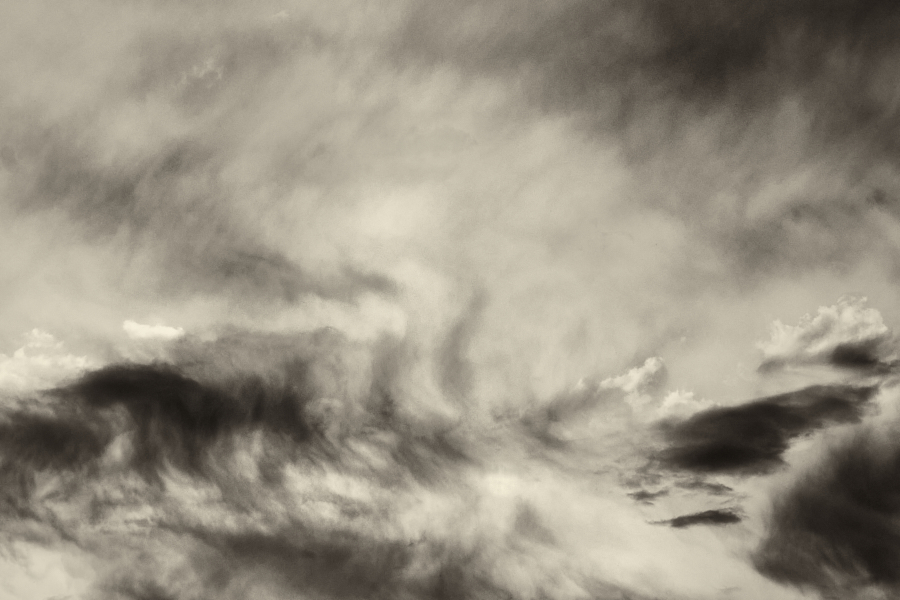
isolation retreat 71st day

skycape photography: silence Nikon D750 f/8 1/20s 112mm 400 ISO edited in Capture One
isolation retreat 71st day
skycape photography: silence Nikon D750 f/8 1/20s 112mm 400 ISO edited in Capture One
self isolation 70th day

skycape photography: stairway to heaven Nikon D750 f/8 1/25s 36mm 400 ISO edited in Capture One
Led Zeppelin live … “The song remains the same” … Madison Square Garden, New York City, 1973
self isolation 69th day

excerpt from Plato’s Phaedo
“… We have found, they will say, a path of speculation which
seems to bring us and the argument to the conclusion that while we
are in the body, and while the soul is mingled with this mass of evil, our desire will not be satisfied, and our desire is of the truth.
For the body is a source of endless trouble to us by reason of the
mere requirement of food; and also is liable to diseases which overtake
and impede us in the search after truth: and by filling us so full
of loves, and lusts, and fears, and fancies, and idols, and every
sort of folly, prevents our ever having, as people say, so much as
a thought. For whence come wars, and fightings, and factions? whence
but from the body and the lusts of the body? For wars are occasioned
by the love of money, and money has to be acquired for the sake and
in the service of the body; and in consequence of all these things
the time which ought to be given to philosophy is lost. Moreover,
if there is time and an inclination toward philosophy, yet the body introduces a turmoil and confusion and fear into the course of speculation, and hinders us from seeing the truth: and all experience shows that
if we would have pure knowledge of anything we must be quit of the
body, and the soul in herself must behold all things in themselves:
then I suppose that we shall attain that which we desire, and of which
we say that we are lovers, and that is wisdom, not while we live,
but after death, as the argument shows; for if while in company with
the body the soul cannot have pure knowledge, one of two things seems
to follow-either knowledge is not to be attained at all, or, if at
all, after death. For then, and not till then, the soul will be in
herself alone and without the body. In this present life, I reckon
that we make the nearest approach to knowledge when we have the least possible concern or interest in the body, and are not saturated with
the bodily nature, but remain pure until the hour when God himself
is pleased to release us. And then the foolishness of the body will
be cleared away and we shall be pure and hold converse with other
pure souls, and know of ourselves the clear light everywhere; and
this is surely the light of truth. For no impure thing is allowed
to approach the pure. These are the sort of words, Simmias, which
the true lovers of wisdom cannot help saying to one another, and thinking.
You will agree with me in that?”
cited: Phaedo by Plato Trans: Benjamin Jowett. The Internet Classics Archive
skycape photography: contemplating sunset with…plato Nikon D750 f/8 1/50s 200mm 400 ISO edited in Capture One and Color Efex Pro 4
Phaedo by Plato copyright information available online at
http://classics.mit.edu//Plato/phaedo.html
“He fell asleep, and this is what he dreamed.

“The long golden rays seemed to turn into the bars of a cage. Yes, he was in a huge cage! He tried frantically to get out! He beat against the bars! Then he saw what looked like the roots of trees, and brown tree trunks, a grove all around the cage. But the trees moved and stepped about, and, looking up the trunks, instead of leaves he saw feathers, and still farther, sharp beaks, and then bright eyes looking at him. They were birds!
“What he had thought were the roots of trees were their claws, and the trunks of the trees were their legs. But what enormous birds! They were as big as men, while he was as small as a bird.
“‘Let me out!’ he shouted. ‘Don’t you know I am the Emperor, and every one must obey me? Let me out, I say!’
“‘Ah, he is beginning to sing,'” said one bird to another.
“‘Not a very musical song. Too shrill by far! Take my advice, wring his neck and roast him. He would make a tender, juicy morsel for our supper.’
“‘Oh, let me out! Please, please let me out!’ cried the poor Little Emperor in terror.
“He is singing more sweetly now,” remarked one of the birds.
“‘Too loud! Quite ear-splitting!’ said a lady bird, fluffing out her breast feathers and lifting her wings to show how sensitive she was.
“‘If he were mine I should pluck him. His little yellow silk trousers would line my nest so softly.’
“‘Oh, please, please set me free!’
“‘Really, his song is growing quite charming! But one can’t stand listening to it all day.’
“And with a great whir and flap and rustle of wings the birds flew away and left him in his cage, alone.
“He called for help and threw himself against the bars until he was exhausted. Then bruised, panting, his heart nearly breaking out of his body, he lay on the floor of the cage. Finally, growing hungry and thirsty, he looked in his seed and water cups, drank a little lukewarm water, and ate a dry bread crumb. Now and then birds came and looked at him. Some of them tried to catch his pigtail with their beaks or claws.
“Next day the Little Emperor was thoughtful. Could it be, he wondered, that a little bird’s nest was as dear to it as his own bed with its rainbow coverlets and its moon and stars was to him? That a little bird liked ripe berries and cold brook water as much as he liked ripe peaches and tea with jasmine flowers? That a little bird was as frightened when he tried to catch its tail in his fingers as he was when the birds tried to catch his pigtail?
“And then he thought of how he had felt when the lady bird had wanted his pantaloons to line her nest, and, hot with shame, he remembered his glistening jewel-bright blue cloak made of thousands of kingfishers’ feathers. It had made him miserable to think of their taking his clothes, but suppose his clothes grew on him as their feathers did on them? How would he have felt then, hearing the bird say: “I should pluck him. His little silk trousers would line my nest so softly’?”
“He went to bed thinking about his little brown bird, and before he shut his eyes he made up his mind to set it free in the morning.
“Then he fell asleep, and once again he dreamed that he was in the golden cage.
“Whir-rr! One of the great birds flew down by the cage door. With his claw he unfastened it – opened it!
“Oh, how exciting! The Little Emperor tore out, so afraid he would be stopped and put back in the cage!
“Oh, how he ran across the room and through the open door! Free! He was free! Tears rushed to his eyes, and his heart felt as if it would burst with happiness.
“But it was winter…”
cited: The Dream Coach
by Anne Parrish, 1888-1957 and Dillwyn Parrish, 1894-1941.
New York: The Macmillan company, 1924. Copyright not renewed.
68th day of self isolation
Skyscape photograph Nikon D750 f/8 1/400s 135 mm 400 ISO edited: Capture One 20

67th day of self isolation
Skyscape photograph Nikon D750 f/8 1/80s 100 mm 400 ISO edited: Capture One 20 and Color Efex Pro 4

…In infinite succession light and darkness shift,
And years vanish like the morning dew.
Man’s life is like a sojourning,
His longevity lacks the firmness of stone and metal.
For ever it has been that mourners in their turn were mourned,
Saint and Sage,—all alike are trapped.
Seeking by food to obtain Immortality
Many have been the dupe of strange drugs.
Better far to drink good wine
And clothe our bodies in robes of satin and silk. …
The above 12th poem is from a series known as the Nineteen Pieces of Old Poetry. Some have been attributed to Mei Shēng (first century b.c.), and one to Fu I (first century a.d.). They are manifestly not all by the same hand nor of the same date. Internal evidence shows that No. 3 at least was written after the date of Mei Shēng’s death. These poems had an enormous influence on all subsequent poetry, and many of the habitual clichés of Chinese verse are taken from them.
cited: Trans: Arthur Waley, A hundred and Seventy Chinese Poems. Project Gutenberg. This ebook is made available at no cost and with almost no restrictions whatsoever. You may copy it, give it away or re-use it under the terms of the Project Gutenberg of Australia License which may be viewed online at http://gutenberg.net.au/license.html.
66th day of self isolation
Skyscape photograph Nikon D750 f/8 1/25s 32 mm 400 ISO edited: Capture One 20 and Photoshop

There was once a man who dreamt he went to Heaven:
His dream-body soared aloft through space.
He rode on the back of a white-plumed crane,
And was led on his flight by two crimson banners.
Whirring of wings and flapping of coat tails!
Jade bells suddenly all a-tinkle!
Half way to Heaven, he looked down beneath him,
Down on the dark turmoil of the World.
Gradually he lost the place of his native town…
~Po Chü
cited: Trans: Arthur Waley, A hundred and Seventy Chinese Poems. Project Gutenberg. This ebook is made available at no cost and with almost no restrictions whatsoever. You may copy it, give it away or re-use it under the terms of the Project Gutenberg of Australia License which may be viewed online at http://gutenberg.net.au/license.html.
65th day of self isolation
Skyscape photograph Nikon D750 f/8 1/80s 92 mm 400 ISO edited: Capture One 20
*Po Chü’s (AD 772-846) poem is an attack on the Emperor Hsien-tsung, a.d. 806-820, who “was devoted to magic.” A Taoist wizard told him that herbs of longevity grew near the city of T’ai-chou. The Emperor at once appointed him prefect of the place, “pour lui permettre d’herboriser plus à son aise” (Wieger, Textes III, 1723). When the censors protested, the Emperor replied: “The ruin of a single district would be a small price to pay, if it could procure longevity for the Lord of Men.”
sunset–
tears shine in a frog’s eyes
too
~Issa (cited: www.haikuguy.com)

David G. Lanoue writes
The most important word in this haiku is “too” (mo). The frog’s eyes look shiny, as if filled with tears. The “too” suggests someone else in the scene, and that someone else has to be Issa. Why are there tears in the poet’s eyes? He doesn’t say. Instead, he shows us, simply, a sunset and a frog. The day is over. Is the frog sad about this? Regretful? And what if the whole scene is symbolic, sunset suggesting death and the day that is almost gone, a lifetime? Then, the frog’s and Issa’s tears become even more significant and poignant. Together they weep for what has been and will never be again.
64th day of self isolation
Skyscape photograph Nikon D750 f/8 1/100s 190 mm 400 ISO edited: Capture One 20 & Photoshop

(Part of a Poem in Irregular Metre.)
On through the night I flew, high over the Mirror Lake. The lake-moon cast my shadow on the waves and travelled with me to the stream of Shan. The Lord Hsieh’s* lodging-place was still there. The blue waters rippled; the cry of the apes was shrill. I shod my feet with the shoes of the Lord Hsieh and “climbed to Heaven on a ladder of dark clouds.”** Half-way up, I saw the unrisen sun hiding behind the sea and heard the Cock of Heaven crowing in the sky. By a thousand broken paths I twisted and turned from crag to crag. My eyes grew dim. I clutched at the rocks, and all was dark.
The roaring of bears and the singing of dragons echoed amid the stones and streams. The darkness of deep woods made me afraid. I trembled at the storied cliffs.
The clouds hung dark, as though they would rain; the air was dim with the spray of rushing waters.
Lightning flashed: thunder roared. Peaks and ridges tottered and broke. Suddenly the walls of the hollow where I stood sundered with a crash, and I looked down on a bottomless void of blue, where the sun and moon gleamed on a terrace of silver and gold.
A host of Beings descended—Cloud-spirits, whose coats were made of rainbow and the horses they rode on were the winds.
Skyscape photography at sunset on 63rd day of self isolation Nikon D750 f/8 1/100s 190 mm 400 ISO edited: Capture One 20 & Photoshop
cited:
The Poet Li Po, by Arthur Waley and Bai Li The Project Gutenberg ebook
This eBook is for the use of anyone anywhere at no cost and with almost no restrictions whatsoever. You may copy it, give it away or re-use it under the terms of the Project Gutenberg License included with this eBook or online at http://www.gutenberg.org
Note:
*Hsieh Ling-yün (circa a.d. 400) was a famous mountain-climber who invented special mountain-climbing shoes.
**A quotation from one of Hsieh’s poems.
“Long ago there were two queens* called Huang and Ying. And they stood on the shores of the Hsiao-hsiang, to the south of Lake Tung-t’ing. Their sorrow was deep as the waters of the Lake that go straight down a thousand miles. Dark clouds blackened the sun. Shōjō** howled in the mist and ghosts whistled in the rain. The queens said, ‘Though we speak of it we cannot mend it. High Heaven is secretly afraid to shine on our loyalty. But the thunder crashes and bellows its anger, that while Yao and Shun are here they should also be crowning Yü. When a prince loses his servants, the dragon turns into a minnow. When power goes to slaves, mice change to tigers.
“’Some say that Yao is shackled and hidden away, and that Shun has died in the fields.
“’But the Nine Hills of Deceit stand there in a row, each like each; and which of them covers the lonely bones of the Double-eyed One, our Master?’
“So the royal ladies wept, standing amid yellow clouds. Their tears followed the winds and waves, that never return. And while they wept, they looked out into the distance and saw the deep mountain of Tsang-wu.
“’The mountain of Tsang-wu shall fall and the waters of the Hsiang shall cease, sooner than the marks of our tears shall fade from these bamboo-leaves.’”
Cited:
The Project Gutenberg EBook of The Poet Li Po, by Arthur Waley and Bai Li This eBook is for the use of anyone anywhere at no cost and with almost no restrictions whatsoever. You may copy it, give it away or re-use it under the terms of the Project Gutenberg License included with this eBook or online at http://www.gutenberg.org
Notes:
*These queens were the daughters of the Emperor Yao, who gave them in marriage to Shun, and abdicated in his favour. Shun’s ministers conspired against him and set “the Great Yü” on the throne. A legend says that the spots on the bamboo-leaves which grow on the Hsiang River were caused by the tears of these two queens
**A kind of demon-monkey
Skyscape photography at sunset on 62nd day of self isolation – Nikon D750 f/8 1/640 90mm 400 ISO edited Capture One 20

Generally my editing begins with cropping an image with a “focus” on the points of interest using a crop tool set for either a golden ratio, rectangular, or fibonacci spiral grid. The times when there is a pesky “thing” poking in from the edge(s) which somehow was either ignored or not seen in the camera lens, I will either crop or use a software program to removed the unwanted object.

I like the composition of the first image so kept the image at the original aspect ratio and cropped with a fibonacci spiral grid.

The above image was cropped with a ratio of 6×7 which seemed to invite me to move from a stilled contemplative mood to a sense of an ocean’s dynamic energy.
The monochrome cloud images were created with a Nikon D750 (f/8 1/500s 190mm 400 ISO ) and edited in Silver Efex Pro 2.
This week’s Lens-Artists photo challenge is offered by Patti who discussed the photo editing technique and benefits of cropping the shot followed by, “Show us how cropping helped to improve an image and create a desired effect. Include the shot ‘before’ and ‘after’ so we can see the difference.

Nikon D750 f/8 1/25s 35mm 400 ISO, edited Capture One 20
 a meditative journey
You must be logged in to post a comment.