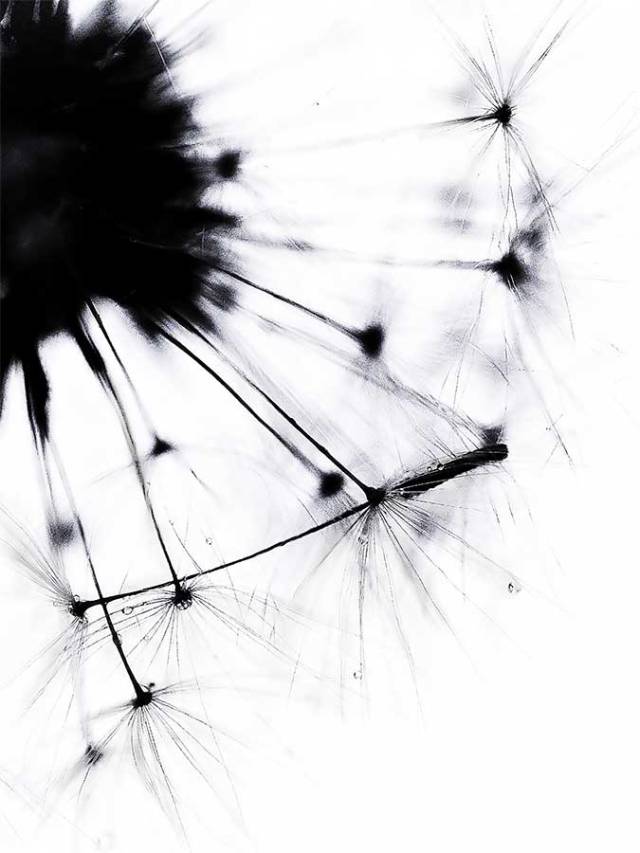
digital fine art
why cling to…
We live
in a tide-swept inlet,
floating, flung.
In such a world, why cling to
collections of poems?
~Izumi Shikibu, (J Hirshfield & M Aratani, The Ink Dark Moon)

changing color
How invisibly
it changes color
in this world,
the flower
of the human heart.
~Ono No Komachi (J Hirshfield & M Aratani, The Ink Dark Moon)

autumn with Buson
Being alone
may also be pleasant –
autumn dusk.
~Buson (Y Sawa, Haiku Master Buson)

the journey begins

You can learn about the pine only from the pine, or about the bamboo only from bamboo. When you see an object, you must leave your subjective pre-occupation with yourself; otherwise you impose yourself on the object, and do not learn. The object and yourself must become one, and from that feeling of oneness issues your poetry. However well phrased it may be, if your feeling is not natural—if the object and our self are separate—then your poetry is not true poetry but merely your subjective counterfeit.
~ Basho*
Keith Kenniff is an American composer, multi-instrumentalist, and electronic music producer. He composes ambient/electronic music under the moniker Helios and post-classical piano music under Goldmund.
tiny whispered wishes

Year by year, season by season, day by day
quietly in the memories of children I live.
In my sleeves, drifting in peaceful slumber
tiny whispered wishes, two or three.
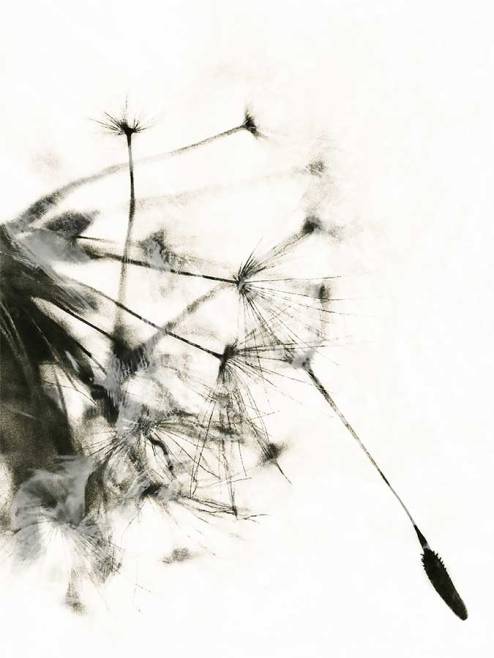
everyman’s artist…consciousness

He saw that his own mind was present in every phenomenon in the universe. …Our own mind is the source of all phenomena. Form, sound, smell, taste, and tactile perception such as hot and cold, hard and soft – these are all creations of our mind. They do not exist as we usually think they do. Our consciousness is like an artist, painting every phenomenon into being.
Thich Nhat Hanh, Old Path White Clouds

wandering
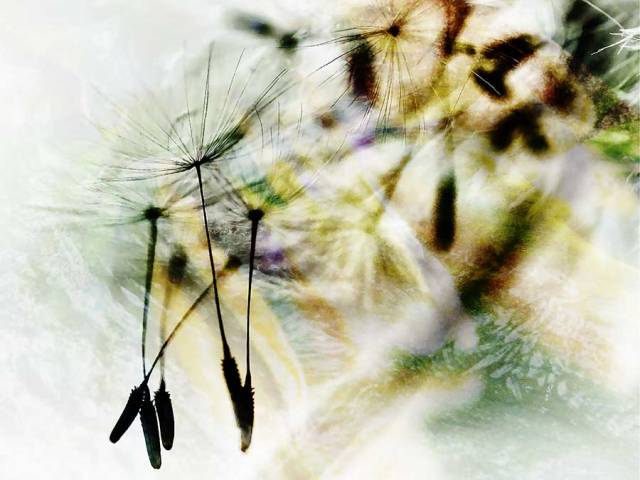
dandelion project
“Bodhi means being awake, and satttva means a living being, so bodhisattva means an awakened being. All of us are sometimes bodhisattvas, and sometimes not.

“Understanding is like water flowing in a stream. Wisdom and knowledge are solid and can block our understanding. In Buddhism, knowledge is regarded as an obstacle for understanding. If we take something to be the truth, we may cling to it so much that even if the truth comes and knocks at our door, we won’t want to let it in.”
Thich Nhat Hanh, The Heart of Understanding
dandelion project

wandering
A stick of incense stands by my pillow.
When the lantern dims, I pour some oil.
I add more clothes as the night deepens.
If you don’t mind my bare hospitality,
please keep wandering in.
~Ryokan (K Tanahashi, Sky Above, Great Wind)

objectification

My eye for me is a certain power of making contact with things, and not a screen on which they are projected … The other’s gaze transforms me into an object, and mine, him, only if both of us withdraw into the core of our thinking nature [left hemisphere], if we both make ourselves into an inhuman gaze, if each of us feels his actions to be not taken up as understood, but observed as if they were an insect’s. This is what happens, for instance, when I fall under the eyes of a stranger. But even then the objectification of each by the other’s gaze is felt as unbearable only because it takes the place of a possible communication.
~Maurice Merleau-Pontry (cited: Iain McGilchrist, The Master and his Emmissary, p.166)
 a meditative journey
You must be logged in to post a comment.