May is the month of my youngest sister’s birthday. Within memory, it is also the month of promised freedom…freedom from winter’s bone-chilling cold and freedom to escape the confines of home and school as jump ropes, marbles, chalk, and baseballs emerged from dark musty closets. Its promise was the promise of summer which held the yearning for freedom from school; and thus, the freedom to swim in the Yampa River, to ride the train to Steamboat Springs, to lose myself in a stack of library books, and to explore a backyard that had no fence barriers.
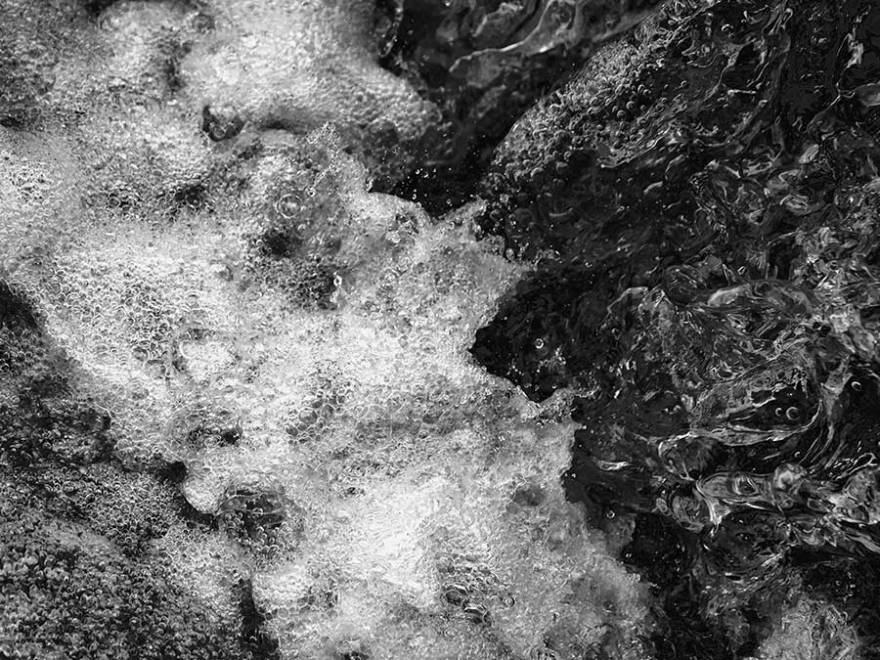
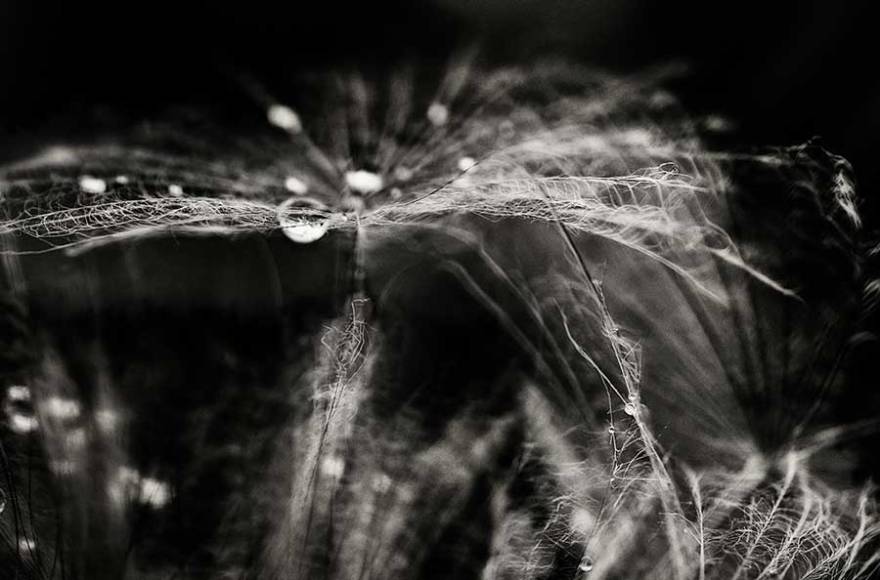
The photo study project during last May was inspired by my initial reading of Bruce Percy’s ebook, “The Art of Tonal Adjustment.” and Ted Forbes’ educational video in which he reviewed low angle photography.
What childhood memories does May awaken for you? Over the past year have you been inspired by a blogger, a photographer, a writer?
I am grateful for all of those who, in a role of teacher–intentional and unintentional, were an inspiration and within the listening and processing of their worldview a new window to my world opened. One window was opened this morning with this very interesting educational video about frames of reference which I will need to replay a number of times in order ease my mental fog.
For this week’s photo study, I decided to continue with Ian’s creative composition posts as they seem to be an ideal way to revisit basic elements of composition and explore how to incorporate them into street photography. He begins the second positing with noting the importance of slowing down with intentional “seeing” as a foundation to finding the ideal background and good light and then deciding to or not to press the shutter.
Photography is not what’s important. It’s seeing. The camera, film, even pictures, are not important. ~Algimantas Kezys (cited: H Zehr, The Little Book of Contemplative Photography)
Setting the Stage, Timing the Steps (fishing) Ian writes, “The key concept for this approach is to establish the static elements in your frame first (i.e. background and light), then patiently work to add interesting dynamic elements by moving close and far, exploring various angles, adjusting the camera’s settings, and finally with patience waiting for the person who fits into your story to walk on your stage.
Frame within a Frame Create a frame within the image through the use of doorways, windows, window displays, trees, or any object that creates a frame around your subject.
Leading Lines Drawing the viewer’s eye is an important compositional element especially when lines converge toward each other and draw the eye to the subject. I found that the gaze of both the man and the dog create an implied line as well as invite a story.
JuxtapositionIan describes juxtaposition is where two adjacent objects appear to contrast with each other, as within the image below. The person in the foreground leans to the left opening us to the elderly man in the midground who is leading left. The Starbucks coffee cup in the center adds a social justice element as well as a contrast to both men.
Perspective – create high-angle images by standing on stairs, platforms, balconies or low-angle photos by getting close to the ground and shooting upwards.
ScaleImages where the subject is dwarfed by the environment seems to be a way of introducing feeling into the image and drawing the eye to the person within the frame.
ColorColor intermixed with light, shadows, and silhouettes have the potential to create unique photographs that nudge images away from the photojournalism and documentary genre.
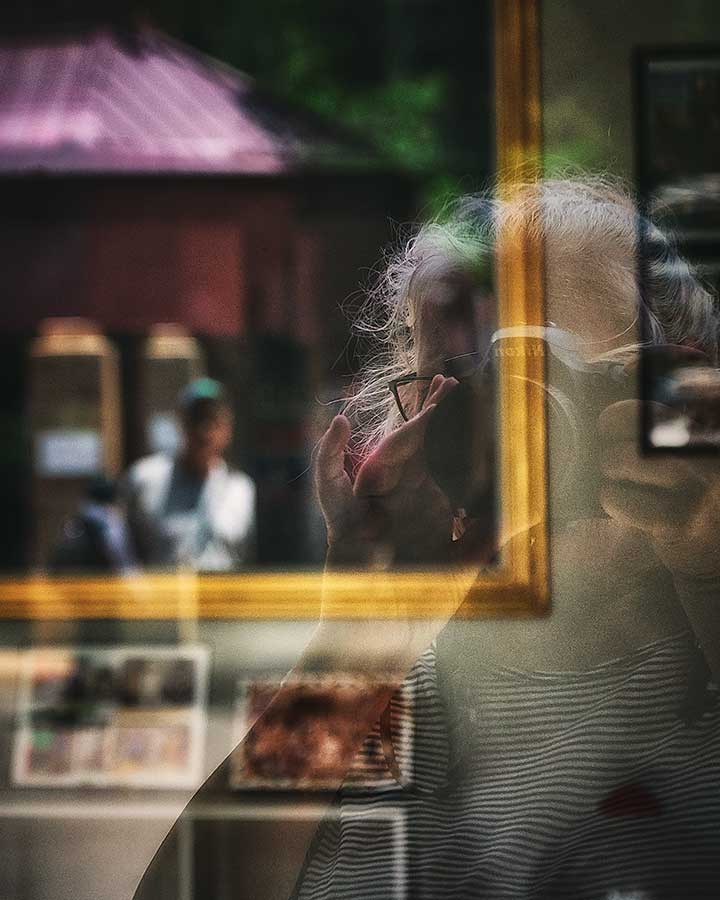
ReflectionsEntire stories can be created through the layers that are created when photographing through glass.
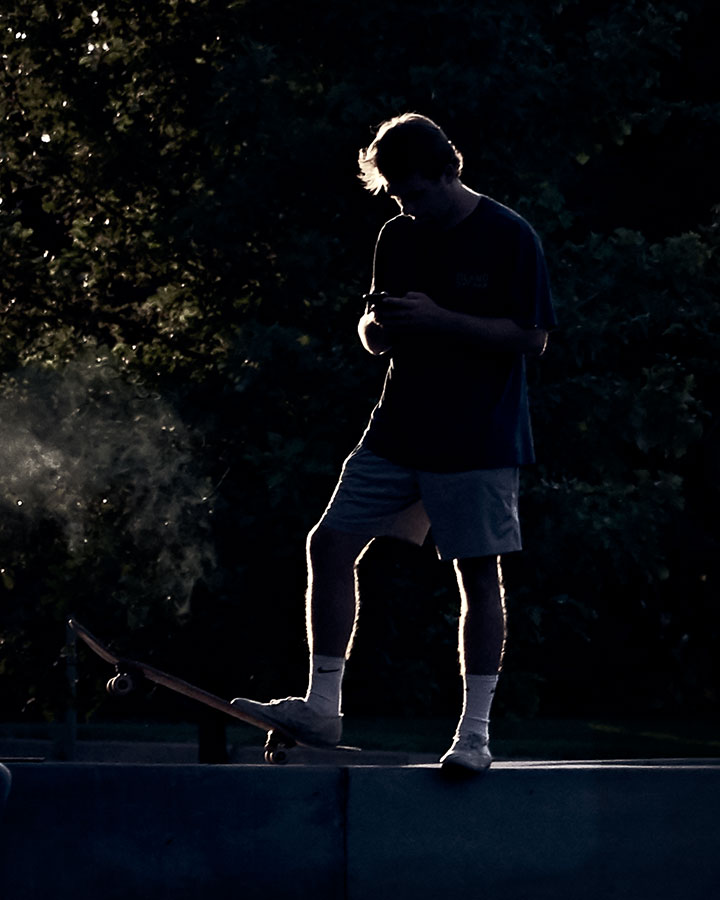
Light and ShadowsUsing your exposure compensation to drop the exposure on the frame (which protects the highlights while creating wonderful deep shadows) will create amazing interactions of shadows, light, and silhouettes.
The Candid Frame Within “Less than Obvious”, Ibarionex encourages us to open ourselves to “seeing” the world’s amazing detail and “being” intentional before we press the shutter.
I hope you find Ian’s educational blog and the Candid Frame to be an invaluable sources of information as well as doorways to a world of creative possibilities. I’m looking forward to seeing your creative work as well as reading your throughs about the use of basic composition elements into street photograph. Let’s tag with #aphotostudy. Until next week…
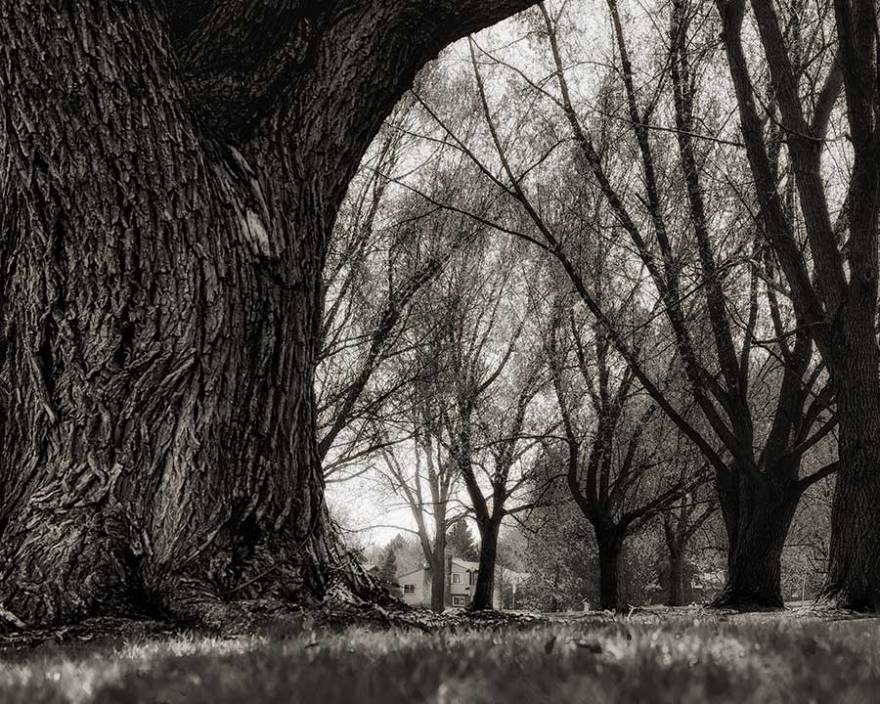
This week’s photo challenge has been inspired by Ted Forbes’ Using Low Angle video. Low-angle composition invites the photographer to create images with different and unique perspectives.
Enya
Enya
We generally experience our daily lives at eye level and often feel more comfortable photographing at eye level. Low angle photography invites us to look up…to create images from any point below eye level which gives the effect of looking up at an object or person. Also you can go to the extreme and show a worm’s eye view of the world.
A worm’s-eye view is a view of an object from below, as though the observer were a worm; the opposite of a bird’s-eye view. It can be used to look up to something to make an object look tall, strong, and mighty while the viewer feels child-like or powerless. A worm’s eye view commonly uses three-point perspective, with one vanishing point on top, one on the left, and one on the right.
To photograph low angle composition, you will need to crouch, bend, or get down onto the floor.A personal note ― have found that when crouching I need to find a way to brace myself as without there often is a slight tremble which, sigh, results in a blurred image.
A low angle perspective increases the height of the subject.
It creates an image where the subject appears more powerful and dramatic.
It lends empathy to a viewer as through a shared experience of a toddler’s world within a playground setting or standing before three-feet ocean waves.
This angle is also great when you wish to capture the mood.
I began this photo study project about 18 weeks ago with an intention to develop, expand, and share my understanding of photography throughout 2018. Regrettably, I am finding that this project is being negatively impacted by some vision difficulties which may require eye surgery within the next couple of months. Consequently, I have decided to reblog some photo educational posts from other bloggers…sorta like using blogs as substitute teachers. I hope you will find them as inspiring and informative as I have.
To close this week’s photo study, please enjoy these two Ted Forbes’ videos on low angle photography.








 a meditative journey
You must be logged in to post a comment.