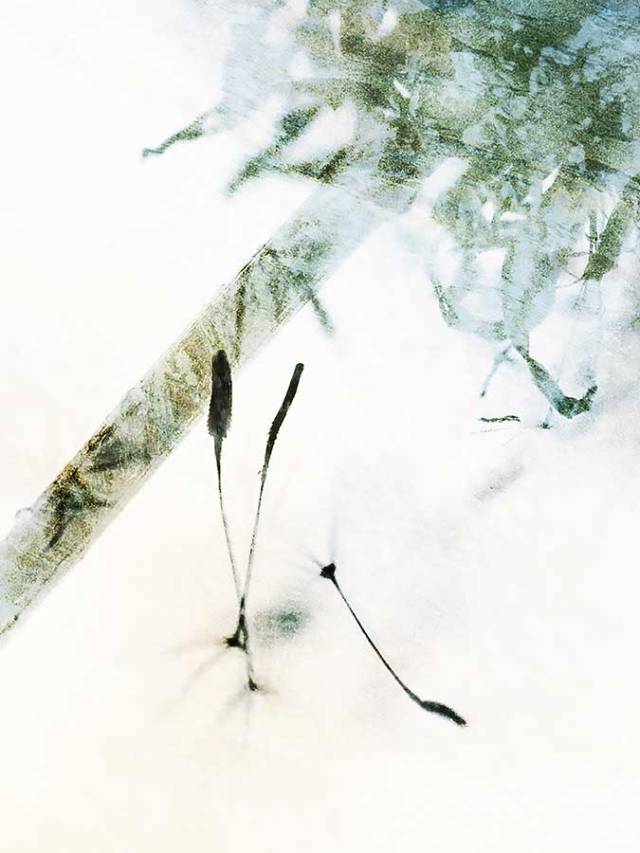
a photo study: contemplative photography VII – visual engagement

There are no colors out there in the world, Galileo tells us. They only exist in our heads. In the first of our dialogues about the mind, Riccardo Manzotti and I established that by “consciousness” we mean the feeling that accompanies our being alive, the fact that we experience the world rather than simply interacting with it mechanically. We also touched on the problem that traditional science cannot explain this fact and does not include it in its account of reality. That said, there is a dominant understanding of where consciousness happens: in the brain. This “internalist,” or inside-the-head, approach shares Galileo’s view that color, smell, and sound do not exist in the outside world but only in the brain. “If you could perceive reality as it really is,” says leading neuroscientist David Eagleman, “you would be shocked by its colorless, odorless, tasteless silence.”

…the subject/object divide, not to mention the addition of a feeling or “percept,” is particularly pertinent when we talk about color.

…when scientists look inside the brain to see what’s going on, they find only billions of neurons exchanging electrical impulses and releasing chemical substances. They find what they call correlates of consciousness, not consciousness itself; or in this case, they find correlates of color, but not color itself. There is no yellow banana in the head, just the grey stuff

..the other traditional claim, still widely taught in school, that colors exist in light, or that different colors are different wavelengths of light. And of course the colors of the rainbow immediately come to mind. But that explanation doesn’t work 100 percent either. The same wavelength, for example, will give rise to different colors if the surrounding environment is different.

…Three hundred years on, what and where colors actually are remains a mystery.

~cited:  NYR Daily, The Color of Consciousness by Riccardo Monzotti & Tom Parks

We often take something that is clear to us initially, and we begin to embellish, over-think and romanticize it, and then translate it into the photographic medium all the way through Photoshop and filters and everything. We begin with our original experience, and, when it is done, there is little or no relationship between the original perception and the final result.  This the Miksang version of “lost in translation.”

~M Wood, (Opening the Good Eye)

Contemplative practices cultivate a critical, first-person focus, sometimes with direct experience as the object, while at other times concentrating on complex ideas or situations. The practical, radical, and transformative aspects of this practice is noted to increase a deepening concentration and quieting of the mind.

Mindfulness is:

  • Spacious presence
  • Focused attention
  • Wakefulness
  • Recollecting recognition of experience
  • A presence of being that is:
    • Relaxed
    • Aware
    • Receptive
    • Inclusive

To experience photography as a way of seeing and as a contemplative practice, an attitude of genuine receptivity is required. The absence of expectations and preconceptions opens us to the beauty within the ordinary. We are more able to become engaged with the variables within colors, lines, light, forms, textures, space so that within this silent stillness an intimacy inspires us to pick up our camera in order to see through the viewfinder and then…

…we begin to see the difference between a perception and a conception, and our allegiance begins to align with freshness.

~A Karr & M Wood (The Practice of Contemplative Photography)

Being present with a perception of an object that has visually awakened you allows for what is referred to by M Wood as visual discernment in which the photographer delays picking up her camera and allows a resting in a contemplative state of mind.  Within the stillness of this pausing, it is noted that the relationship between the brain, light, and visual form of the object will silently and visually begin an introduction.  To be relaxed, aware, receptive, and inclusive in these moments is to begin to become acquainted with…the photographer, the external form, eyes, eye consciousness, and the  brain’s processing of light, colors, shapes, lines, texture.

And yes, most likely during this process your discursive mind will interrupt the process, like a jealous child.  So, when you become aware of the dialogue, simply note and smile at the thoughts and return to the silent visual introduction…with a relaxed, letting go, and aware presence.  If, you find that you are unable to return…just let go of the experience…other objects of perception are waiting for a similar moment of connection and introduction.

In the fourth posting of contemplative photography, an exercise, Opening a Door to Sensory Seeing was offered as a way to experientially explore what A Karr and M Wood identify as  “flashes of perception.”   Within The Practice of Contemplative Photography, they offer us a process of discovery, Looking Deeply by which to experience “visual discernment.”

  1. Sit within a room that has at least one window.
  2. Gaze around the room in an relaxed and receptive manner with no intention to see anything in particular.
  3. Gaze at the wall in front of you and allow the qualities of the wall, it’s color, texture,  light, shadows, and changes associated with variations of light to introduce themselves to you.
  4. Gaze at the ceiling and notice the the various qualities of the ceiling and the seam where the wall meets the ceiling.
  5. Move your gaze to the floor open yourself to the qualities  of the floor and the elements within your perceptional field.
  6. Gaze at the furniture in the room and identify their unique qualities and differences; i.e., smooth vs rough, heaviness, reflections, colors.  Allow your gaze to shift between different objects within the room.
  7. Look at the window in a way that you  become acquainted with it’s design, sense of feel, texture.  Extend your gaze beyond the window in a similar manner as you have the room…introduce yourself to the sky, clouds, trees, buildings, quality of light.

This slideshow requires JavaScript.

This is the type of extensive engagement with the world that opens us to the subtleties of perception, of becoming aware of  the meeting of our eyes and eye consciousness as we  silently open ourselves to this amazing world.

I would love to hear about your thoughts about visual discernment and the Looking Deeply exercise.
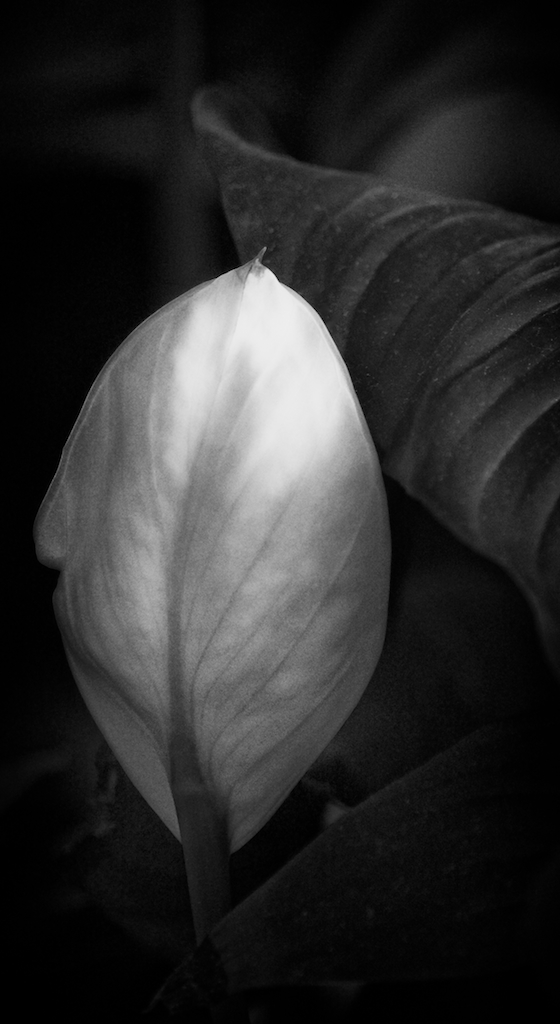
autopilot

contemplative photography 2

Nikon D750   f/5.6   1/400   300mm   100 ISO

When I was 14 I realized that a yucky, repetitive chore like mowing the lawn would end so much more quickly if I just allowed my mind to wander. In time I realized I could escape pain (physical and emotional) by shifting focus into an internal place of imaginative wanderings.  As I write this it seems as if I chose to function in a vague dissociative dimension that is commonly referred to as autopilot.  This mindless functioning is similar to how many people go through their daily lives, unaware of their unawareness. 

To me this choice to go into autopilot is a stress management tool and can be an effective way to mange difficult moments; e.g., a root canal.  The downsides of living life mindlessly by shifting focus to a place or time that is other than the present moment are: 

1) life passes us by and we’ve miss wondrous moments – infant smiles, sun rises, bubble rainbows, falling stars, eye contact

2) we interact with others more from an imagined place, conversation, or  conclusion than from reality itself

3) physical pain becomes chronic due to muscular tension that builds up from internal rehearsed arguments, speeches.   

I have come to realize there is a physical tightening or bracing that unconsciously occurs while we are in our head.  It is as if the brain senses the danger that comes from inattention and thus braces for an imagined attack from a saber tooth tiger or the possible fall that could occur while reading and walking.

 4) we respond to life’s challenges from places of learned conditioning and imagined possibilities.  For example, I have found  myself grieving the ending of a Mozart piece while in the middle of the music.  Thus sadness created from an expected outcome deafens me to the moment by moment experience. I call this personal crazy making. 

So to pause in the middle of these emotional and mental rapids is to intentionally bring a roaming mind into the present. This intentional returning to self is to experience the refreshing flow of the breath; the movement of music as it travels throughout our soul (and to be with the music until it is no more and ask of ourselves, “where did the music go?”). 

To quiet the ongoing ramblings within the mind and bring oneself into the present environment is to witness the dance of light and shadow upon a wall or the flow of steam above a cup of coffee.  This stilled silence allows us to emotionally connect with another through the art of listening that guards us from injecting ourselves into their story.

When I do this I find that that these moment gift me with peaceful bliss as yesterday is not here and the next second has paused. In truth, despite all the worldly worries, possibilities, have tos, and shoulds this moment of non- judgmental awareness is life.

My awareness of this brings me to an intention.  An intention that when doing yucky chores I will bring my focus to the sensual experience – the various sights, sounds, tastes, sensations, scents associated with dusting, washing dishes, sweeping, ect.  Yet, I soon realize I unwittingly traveling through a land of Oz. So I non-judgmentally smile to myself in greeting and return to the moment, knowing and accepting that I’ll soon realize my mind has taken me elsewhere once again.

Research has found that mindfulness is associated with improved stress management, health, pain management, and problem solving. So to identify a event in one’s life — listening to music, bathing, walking, eating, knitting, writing in which to set out to be intentionally present is the door by which to learn how to be with oneself and to become aware when we have slipped away into a realm of mind making.

A daily formal meditative practice is good but most people struggle with setting aside 10 – 15 minutes for themselves (even though they will set aside hours watching TV).

So periodically throughout a day, I recommend a returning to the moment for a few minutes by asking oneself: 

What am I thinking?

What physical sensations am I aware of in this moment?

What feeling am I feeling?

Where in my body do I feel this?

Shift your attention to the physical sensations of your breath.  Be present with your breath for 3 cycles of in-breath, pause, out- breath, pause.

Ask yourself, “are my thoughts and/or feelings asking me to do something?” Listen to yourself for an answer.

End this mindful practice by bringing your awareness once again to your in-breath and with the out-breath release with a sigh.  Gift yourself with a smile.  

On a personal note, when I ask myself, “what am I thinking?” I often find that I can’t recall my thoughts.    

May I welcome the peace within my in-breath.  May I smile with the flow of peace within my out-breath.  May all living beings know peace. 

with each breath…

impliedlines-2web

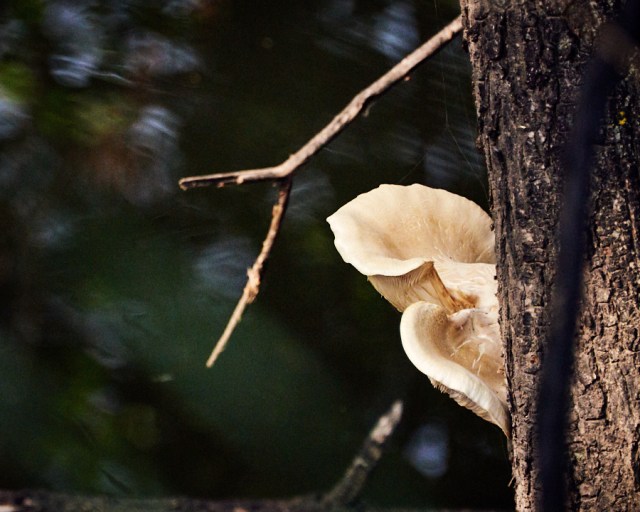
Spring Creek         Nikon D750   f/2   1/40s   35mm   100 ISO

The foundation of all mindfulness practice is awareness of the breath. There is no mindfulness without awareness of our in-breath and out-breath. Mindful breathing unites the body and mind and helps us to become aware of what is going on inside us and around us. In our daily life, we often forget that mind and body are connected. Our bodies are here but our minds are not. Sometimes we lose ourselves in a book, a film, the internet or an electronic game, and we’re carried off, far away from our body and the reality of where we are. Then, when we lift our head out of the book or look up from the screen, we may be confronted with feelings of anxiety, guilt, fear, or irritation. We rarely go back to our inner peace, to our inner island of calm and clarity, to be in touch with Mother Earth.

We can get so caught up in our plans, fears, agitations, and dreams that we aren’t living in our bodies anymore and we’re not in touch with our real mother, the Earth, either. We can’t see the miraculous beauty and magnificence that our planet offers to us. We are living more and more in the world of our minds and becoming increasingly alienated from the physical world. Returning to our breathing brings body and mind back together and reminds us of the miracle of the present moment. Our planet is rich here, powerful, generous, and supportive at every moment. Once we recognize these qualities in the Earth, we can take refuge in her in our difficult moments, making it easier for us to embrace our fear and suffering and to transform it.

Awareness of the in-breath and out-breath first of all calms us down. By paying attention to your breathing, without judgment, you bring peace back to your body, and release the pain and tension. …

When our minds and bodies have calmed down, we begin to see more clearly. When we see more clearly, we feel more connected to ourselves and to the Earth and we have more understanding. When there is clarity and understanding, love can bloom because true love is based on understanding.

…Each breath contains nitrogen, oxygen, and water vapor as well as other trace elements, so each breath that we inhale contains the Earth. With each breath, we’re reminded that we are part of this beautiful life-giving planet.

~Thich Nhát Hahn, (Love Letter to the Earth)


three day quote challenge: 3rd day

The faculty of voluntarily bringing back a wandering attention, over and over again, is the very root of judgment, character, and will. No one is [master of himself] if he have it not. An education which should improve this faculty would be the education par excellence. But it is easier to define this ideal than to give practical instruction for bringing it about.  ~ William James


brendakofford_sojournIIweb

The rules of this three-day quote challenge are to post a favourite quote every day for three days, and pass on the challenge to three other bloggers. You can do this at any time you like – even next year – and you can also say, “No thanks.”

While I’ve enjoyed being challenged by others, I find it difficult to invite one blogger over another, so if you would like to join in please accept this invitation to share your favorite quotes.  Thank you Amy at The World is a Book for extending an invitation.  It eases all those times in the playground when I was among the last to be chosen to be on a team.  _()_

hungry ghosts

hungry-ghost

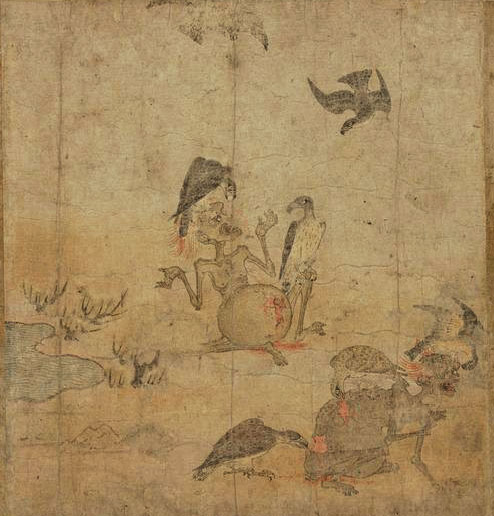
“,,,when we offer food to the hungry ghost, the ceremony always begins with a dharani for the hungry ghost to help increase the size of their throats so that they can receive our offerings. In classical Buddhist literature, hungry ghosts are described as having a big belly but a very tiny throat–so even though they are always very hungry they are never able to take in enough nourishment. There are many kinds of hungry ghosts that need our help to transform their suffering. They are hungry for love and understanding but because they are so suspicious, because their hearts are not open enough, they cannot receive our love and compassion.

“All the hungry ghost bear great injustices in themselves and that is why they have become hungry ghosts. Many of us are victims of injustice, and if there is no compassion and understanding there is no way we can undo the knot of injustice within ourselves and become free. We still continue to suffer if no one can help us undo the knot of injustice in our heart.
art-eater_asuras_wrath_pretas_hungry_ghosts_05
“There are so many hungry ghosts in the world. Many of them are caught in their situation and have no opportunity to experience the kind of safe, calm, stable space that will allow them to get in touch with what is nourishing and healing…they will be hungry ghosts all their lives, wandering aimlessly in suffering, destroying themselves physically and mentally.

“Hungry ghosts are drive by the habit energy in themselves. They may want to tear up the new roots, they may not be able to feel peace, they may not be capable of establishing themselves in the here and now. …it is important for us to become aware of the habit energy in ourselves. It is always pushing us to tear up our roots, to play the role of a wandering soul, a hungry ghost. We can become so used to being a hungry ghost that staying in one place becomes very difficult.  So we practice mindful breathing and recognize that the habit energy of being a hungry ghost is still very strong in us.

aaa_gakizoshi_1-0

“All of us who are the friends of the Earth-Store Bodhisattva must pool our ideas and energies to help the many hungry ghosts in our family, community, and society…

~Thich Nhat Hanh, Opening the Heart of the Cosmos

The images within this posting were drawn from the internet and reflect historical representations of hungry ghosts.

New on 500px : Salivating Over her Cake by blindmanshooting by blindmanshooting

from the shadow
of food offerings
the God of Wealth peeks out
~Issa

sharulhafiz's avatarSharul Hafiz Feed Blog

You can tell how much she likes her sweet cake during her sweet attack by how she holds both pieces in her hand as she savors the flavor in her mouth and last eyes the hand which holds her future bite all at the same time. The joy of food for some is very rewarding. because its where they have the most nerve endings attached to taste buds.
via 500px http://ift.tt/1mPXmux

View original post

pathways

…our minds can seem like such a ragged and disorderly place, disturbed by the slightest sound, thought, or impulse. Seeing the moving, restless character of the mind is the first step toward…concentration, mindfulness, tranquillity, insight, oneness.

Source:

Tulku Thondup, The Healing Power of Mind