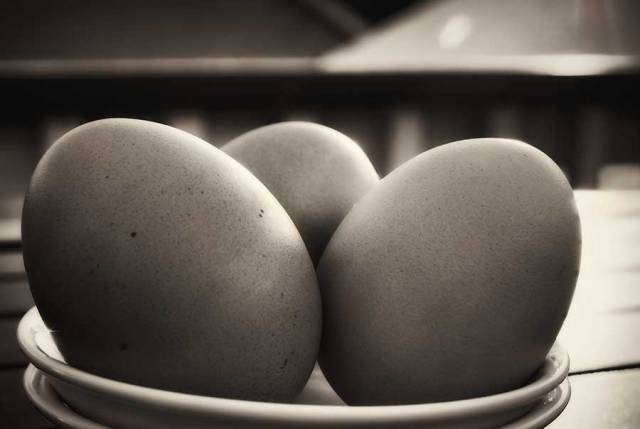
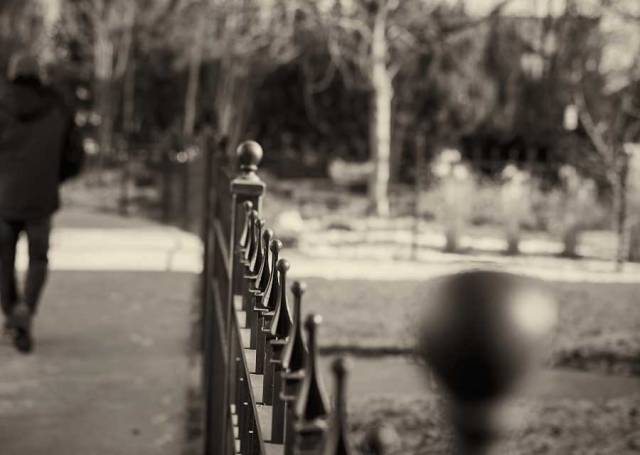
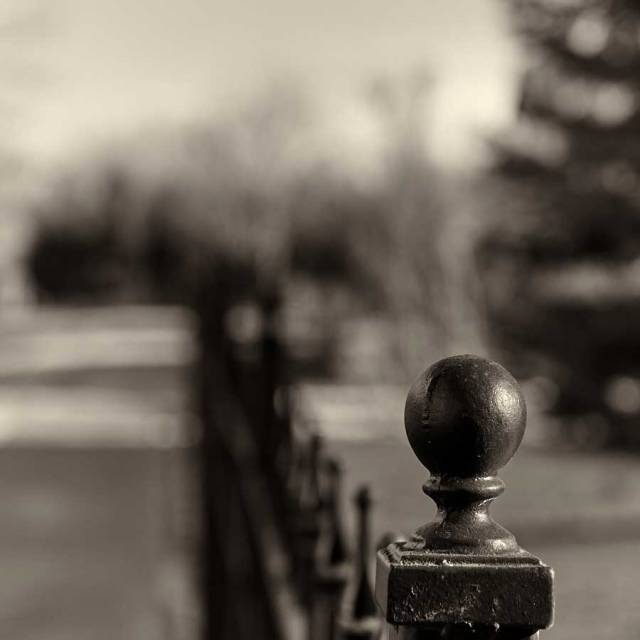
a photo study: negative space

Photography, in a nut shell, is lines, shapes, colors, and feelings

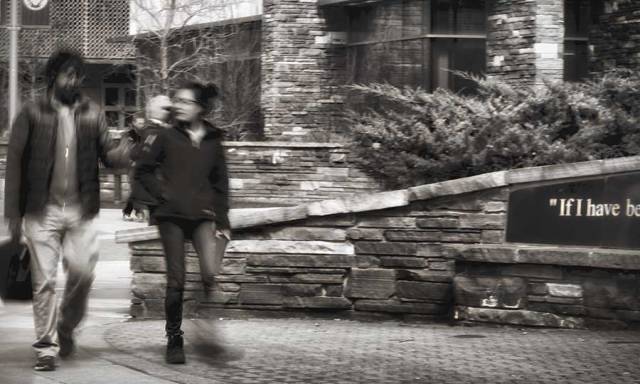
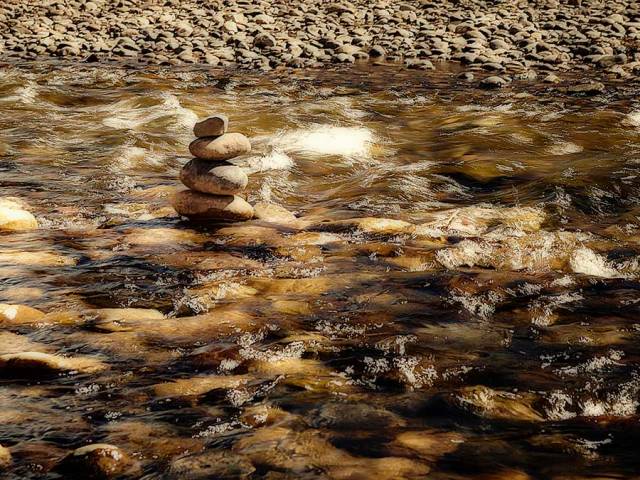
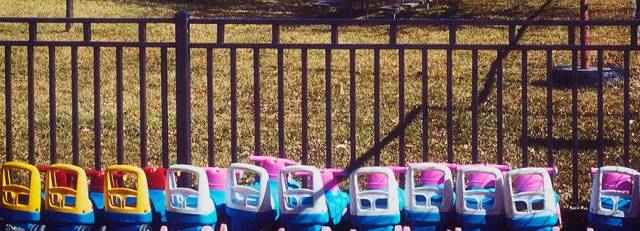
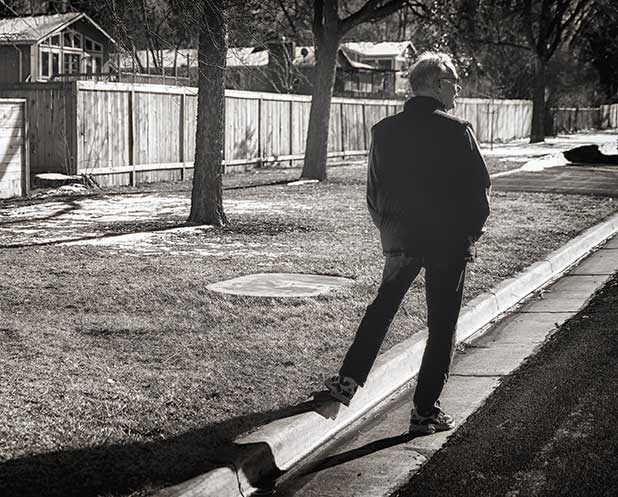
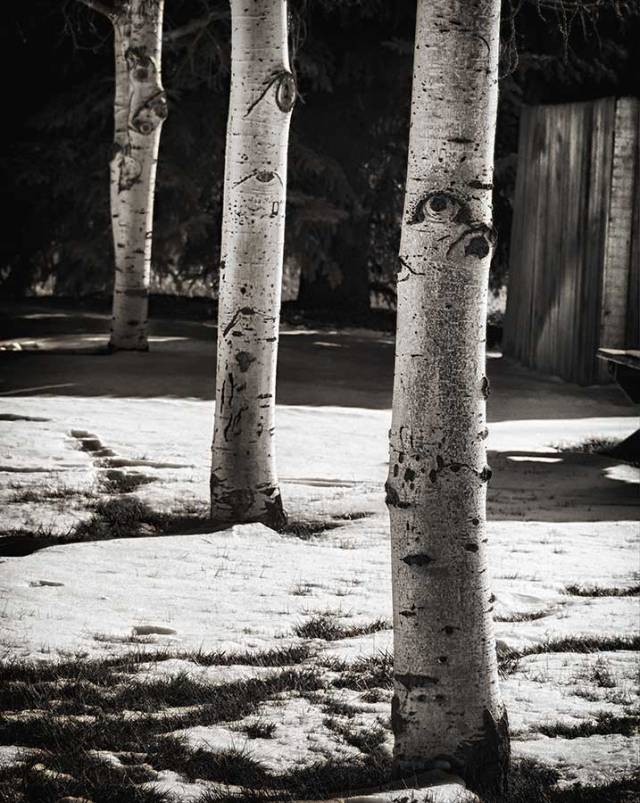
In photography negative space is perhaps the most important element as it embraces the subject within your image — the element of interest — helping it stand out and inviting the viewer’s attention.  It is the aspect within a photograph that generally doesn’t attract much attention.  It is sometimes referred to as white space and has the potential to change what appears to be an average subject into an outstanding image.

shapes-24web

The simplest example of positive and negative are the words in this blog.  These words draw your attention while the background doesn’t.  The words are positive space, and the white background is negative space

Some images have high amounts of positive space creating what some identify as busy, cluttered, crowded creative works. These types of images generally reflect the busy nature of the scene being photographed.
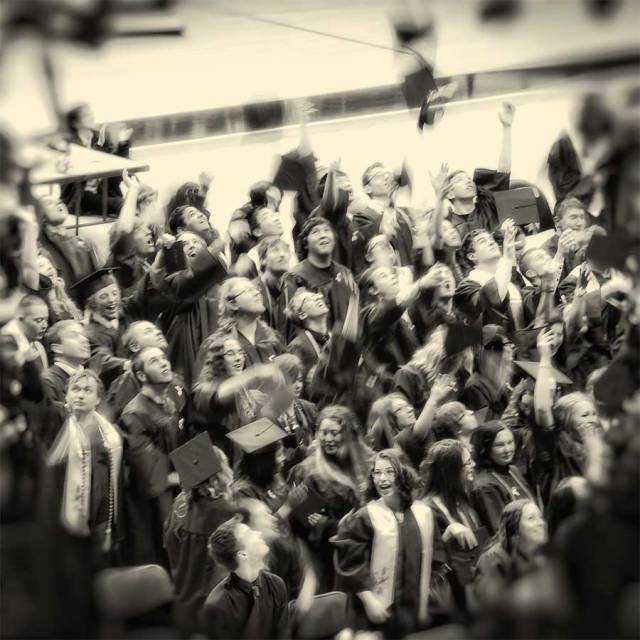
studyofrhythumtone

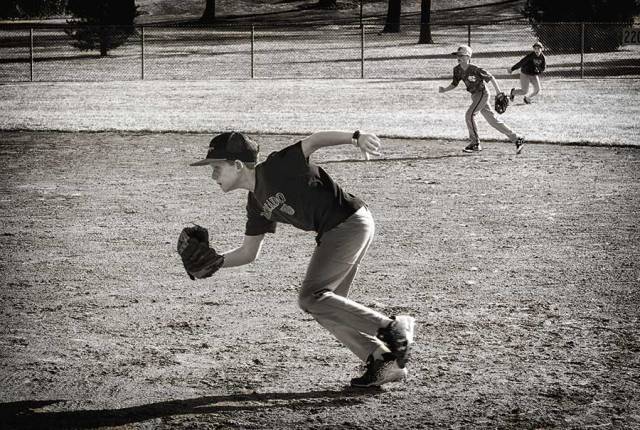
The elements of positive and negative space are two elements of photography that are important because of the emotions they evoke. Images created with high amounts of positive space have the potential to evoke feelings of power, strength, action, chaos,  busyness, or…as in the image above…anticipation.

Negative space, in contrast, awakens feelings of peace, calm, quiet, loneliness, isolation. It is less about the subject within a photograph and more about awakening a feeling in the viewer.

shapesoddtrianglesweb

Negative space can create a sense of lightness, airiness…it can strengthen the positive emotions in a photography, emphasize the feelings of your subject, conveying whatever story you as a photographer wishes to evoke in your viewer.
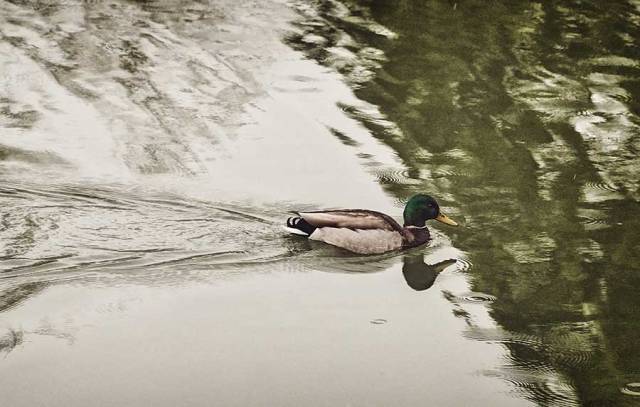
duckswebNegative space provides “breathing room” giving the viewer’s eyes a place to rest and preventing an image from appearing too cluttered…creating a more engaging composition.

branchweb

Negative space generally mutes detail or color; yet, in some cases well-defined buildings and people can act as negative space as it conveys a story or evokes feelings.

rhythumweb

It is easy to focus our attention on the subject, on what we see as most important element of the photograph. Adding to or taking away negative space affects the subject within an image as they effectively become smaller or larger within the frame of your image.

negativespace-1web

At first, it seems that to set out to find empty space may be a difficult undertaking; yet, searching for elements that don’t stand out becomes more natural over time…try including the sky in your composition…it is expansive, everywhere, and often filled with negative space.

negativespace3web

Our mind formulates ideas about how objects in our world look and that is the reason an art instructor may invite her class to draw an object upside down. This engages the eye to see as opposed to allowing the mind to impose a preconceived idea into a drawing.
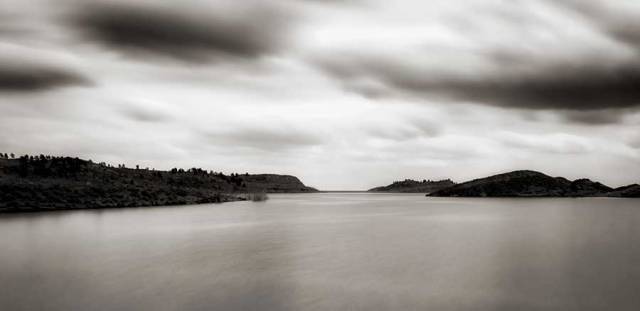
longexposurehorsetoothweb copy

Unfortunately these preconceptions distort the way we see a scene, and this can lead to photographs that we see as good, but not so in reality. My readings noted that a way to step out of the boundary of our minds is to ignore the objects in the scene altogether and instead concentrate on the gaps between and around them. This also aids in giving more attention to composition and seeing sizes and shapes in a more accurate manner.

Negative space, in the world of photography, may be more important especially if the photographer tends towards creating images that are simple; yet effective. Michael Kenna, Bruce Percy, and Masao Yamamoto are three artists known for their minimalistic images.

Examples of images that “focuses” on specific compositional tools are an invaluable learning tool. I hope you enjoy seeing these amazing images offered through Ted Forbes.

In closing, I’m deeply grateful for the exchange of ideas and images that I have experienced thus far in this photo study project and am looking forward to reading your thoughts and seeing your images.

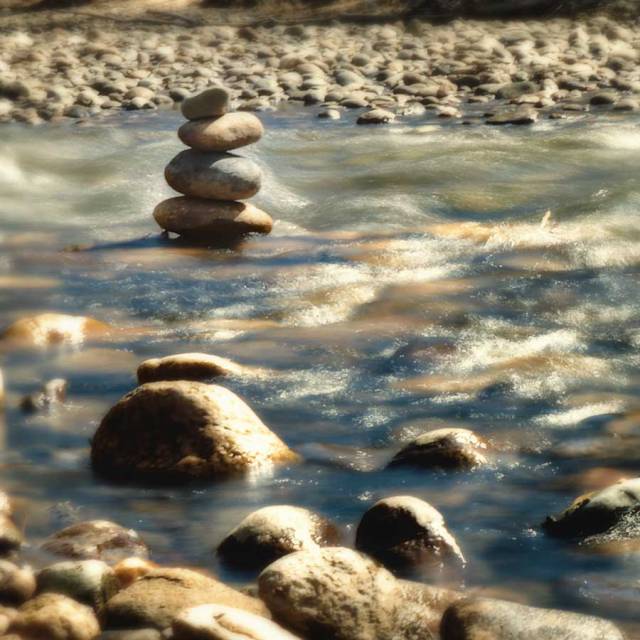
photo study: shutter speed

This week’s photo study is an exploration of shutter speed.  Shutter speed, a basic photographic component, is defined as the amount of time your camera allows light to enter your camera.  The variables of a scene being photographed together with the size of aperture and the shutter speed have the potential to create unique images.

A fast shutter speed will freeze moving objects.

prayerflagsweb

Nikon D750     f/5.6   1/2,500  300mm   100 ISO

While fast shutter speeds create crisp and sharp images, slow shutter speeds — open for half a second or longer – extends the length of time light is entering your camera.  This light is continuously  being influenced by the motion within the scene and thus creating blurry, foggy, silky, or milky elements within an image.

shutterspeed-3web

Nikon D750    f/22    1s    35mm    100 ISO

longexposurehorsetoothweb

Nikon D750    f/8   241s   24mm   100 ISO

The shutter speed in panning photography can be as low as 1/20 or as fast as 1/125.  The trick is to match the speed of the subject with your speed of panning.  The inclusion of motion blur within street photography is often created with a high aperture setting, a low as possible ISO, and a low shutter speed.

shutterspeedweb

Nikon D750   f/29   1/6s  75mm  100 ISO

tourdefatweb

Nikon D750   f/9    1/20s     85mm     320 ISO

The images below are examples of various shutter speeds with the same aperture and ISO settings.

shutterspeed-2web

Nikon D750     f/7.1    1/60s   35mm    100 ISO

shutterspeed-7web

Nikon D750     f/7.1    1/30s    35mm    100 ISO

shutterspeed-6web

Nikon D750     f/7.1   1/20s    35mm    100 ISO

Thank you for taking the time to visit.  I hope you enjoy Ted Forbes’ discussion of shutter speed and his nighttime images.  Would love to hear your thoughts and see your creative work.
a photo study: rule of space

ruleofspaceweb copy 2

Nikon D750   f/4   1/160    190 mm   I00 ISO

Ted Forbes notes that the rule of space offers the photographer a way to create a sense of motion, activity or conclusion within one’s composition and that it simply involves creating negative space that relates to the subject within the image.

For example, if you place negative space outside your subjects head in a portrait, you imply maybe there is thought going on – particularly if you direct your subject’s eyes toward the negative space.

Or if you have a picture of a motorcycle zooming across the desert. Placing the negative space in front of the motorcycle creates a sense of direction or implication of eventual destination

ruleofspace2web

Nikon D750  f/4.2   1/400   45mm  100 ISO

It is my thinking that Ted Forbes’ discussion dovetails nicely with Raj’s Xdrive photography lesson about a photograph speaking.

a “good picture always speaks out its story…The story the picture is trying to broadcast is nothing but your vision or an intent or a message you are trying to convey to the viewers.

ruleofspace3web

Nikon D750   f/14   1/80   32mm   100 ISO

Thank you for taking the time to visit; and as always, I would love to read your thoughts about the interconnection between story and space as photography composition tools and any images you would like to share.

Hope you enjoy Ted Forbes’ Rule of Space video.

a photo study: rhythm I

Rhythm, a vital element within music, dance, and poetry, is also important in photography. Ted Forbes writes that visual pulses are within all visual compositions.

EmptyName-203_HDR

Repetition is easy to find…all around us are shapes that are pretty basic and similar to each other. We will see them repeating at regular intervals within nature, design, works of art, architecture, and photography.

rythum-7kittyparkingweb

Standard rhythm involves the same or similar elements repeating at regular intervals — think of equally spaced light posts extending from left to right across the frame, the slats of a crib, or a series of windows on the side of a city apartment building. These patterns can be thought of as a subset of rhythm in that patterns always have rhythm, but rhythm doesn’t always have patterns.

rhythumweb

Rhythm affects the quality of our viewing experience and helps draw and keep the observer’s eye within the frame. Visual rhythm is often most powerfully used as a vehicle for or backdrop to your central story or primary subject.

rythumtrioweb

After a week of studying rhythm, I’m finding a need to stay with this topic as the extension of rhythm within sound and physical sensations to a visual format is like…hmm…sitting in an introduction to physics class. Well, maybe not exactly like a physics class…maybe more like an introduction to “imaginary numbers.”

compositionbwebwy

In the meanwhile, I’ve concluded this week’s photo study blog with a Ted Forbes’ video rhythm in visual composition.   I would enjoy hearing your thoughts and understanding about rhythm as well as seeing some of your creative use of repeating patterns.

a photo study: the photographer

During this week a memory came to mind a number of times in which a classmate, who was doing an internship in an adolescent treatment program, shared her understanding of the process of reflective listening within a therapeutic session. She ended her narrative with the teen’s response, “duh.”

The photographer, the basic third element in photography who stands on one side of the camera, looking through the view finder, seeing and focusing.  Her personality as a photographer — motivation, interest, patience, attitude, etc. all require attention and adjusting…”duh,” Brenda.

This moment of enlightenment that shed awareness on the fact that I am mostly ignorant about one important aspect of photography, me. Thus far, my photography journey has included an investment in learning about various components of the camera as well as exploring basic elements of composition. Beyond a moment or two about how to manage anxiety within street photography or the motivation to get out of a warm bed at predawn to photograph the golden light not much attention has been given to…me, the photographer.

I have to give credit to Ted Forbes’ video, Three Tips to Improve Your Photography for this “duh” moment as he described improving one’s photography.

  1. Narrow the focus – a) Determine what it is that you want to get better at. b) What kind of styles of photography interest you – still life, portraiture, improvisation, head shots, street photography, landscapes? c) Study those photographers that inspire and challenge you.
  2. Shoot less, Think more or Think more, Shoot Less. a) Strive for quality over quantity. b) be less involved in the viewfinder and open yourself to the environment. c) Ask yourself if is this the right time…golden hour, decisive moment, what would happen if….
  3. Understand improvisation. a) Photographing in the moment relies on the foundation of: understanding theory, past experiences, knowing what will work…an accumulation of what happened before. b) Gift yourself with experience by going out and photographing.  c) Accept making mistakes…practice…to create something that is happening in the moment – the decisive moment – is sum of all one’s past photographs. d) Understand what you don’t like and apply what you do like.

So this week, my photo study assignment was to explore

  1. Identify one photographer that inspires and study their work.
  2. Explore my history – where have I’ve been?
  3. Find one element to photography during the week to build upon.
  4. Remember that it is not the camera I own or the camera’s settings, it is transcending the moment and taking it beyond.

Identifying Photographers that inspire (street photographers, minimalist, long exposure)

When exposures last hours rather than fractions of a second, there is much time for watching.  Sometimes it is a basic concern for security but at others it is a more meditational activity. I watch the sky and imagine what patterns the clouds and stars will make on my film. I watch the water, the leaves on the trees, passing cars, changing shadows, smoke from chimneys, whatever is around. Wind, rain, mist, etc., all have effects on the eventual image. …Nothing is the same twice and every moment in time is unique. ~Michael Kenna (Photo Review interview, January 2003 with Carole Glauber)

Michael Kenna’s work can been seen at Supervision

Studying his images as suggested by Howard Becker:

Take some genuinely good picture… Using a watch with a second hand, look at the photograph intently for two minutes. Don’t stare and thus stop looking; look actively. It will be hard to do, and you’ll find it useful to take up the time by naming everything in the picture to yourself: this is a man, this is his arm, this is the finger on his hand, this is the shadow his hand makes, this is the cloth of his sleeve , and so on. Once you have done this for two minutes, build it up to five, following the naming of things with a period of fantasy, telling yourself a story about the people and things in the picture. The story needn’t be true; it’s just a device for externalizing and making clear to yourself the emotion and mood the picture has evoked, both part of its statement

When you have done this exercise many times, a more careful way of looking will become habitual. Two things result. You will realize that ordinarily you have not consciously seen most of what is in an image even though you have been responding to it You will also find that you can now remember the photographs you have studied much as you can remember a book you have taken careful notes on. They become part of a mental collection available for further work. (When you do this exercise a number of times you will acquire new habits of seeing and won’t have to spend as much time looking at a new print).

Photographer’s past journey As I reviewed this week’s photo study, I realized that I’m a photographer who enjoys being engaged by spontaneous moments.   The images below are a review of past images that I chose to “re-see” as part of my study of Kenna’s work.

Patience…mindfulness…characteristics which are extremely useful and priceless tools for me, the photographer.

One element to develop this week –   This week as I am out and about – walking as prescribed by my doctor – my intention is to scan my environment from right-to-left.  I’ve read that this way of “seeing” will gradually become an intuitive process and I’ll see more than I ever imaged.  Seeing is the gateway.

streetwevthataway

Lumix DMC GX85   f/7.1   1/250   43mm

I would love to hear your thoughts about yourself as the photographer and to see where you have been and one element you are invested in developing.

a photo study: shape

This week my topic of study was shape.  Shape, the basic two-dimensional element within composition, is defined by line, space, color, and contrast of differing light areas. There are three basic shapes – square, triangle, circle.  There are also combinations of basic shapes, organic – leaves, trees, people, flowers – and abstract configuations.

Ted Forbes noted that abstract shapes can often have

…phycological associations with the viewer on various levels of depth. At their most obvious they tend to be object identification. A silhouette of a chair can be identified as a chair because its an object just about everyone can identify. Same with any other subject or shape of familiarity. Shapes that are abstracted either by blur, shadow, distance or scale begin to have a more dramatic effect as they might hit the viewer on a more subconscious level. In other words they might not be the first thing the viewer sees or recognizes on first glance. This can often create interest and a stronger visual impact.

Shapes can be made more dominant by placing them against a plain contrasting background. The greater emphasis of shape is achieved when the shape is silhouetted thus eliminating other qualities of the shape, such as texture and roundness, or the illusion of form.

backlit2

Shape is the foundation of  form.

shapesoddtrianglesweb

Form is the three-dimensional counterpart to shape. Shape is to form as a square is to a cube.  Form is shape with dimension or volume. To change a shape to a form, dimension must be created by the addition of tone or color transitions within the shape. This results is the illusion of three-dimensions in a two-dimensional space. With the proper application of light and tonal range, shape will transform into a three-dimensional quality of form. Lightening can also subdue or even destroy form by causing dark shadows that cause several shapes to merge into one.

photographer'ssilhouette_b_kofford

To apply this understanding of shapes and form in composition, I set out to complete an assignment outlined by Ted Forbes creating images in a studio type environment with oranges as a subject and using the techniques of: cropping, scale, fragmentation, focus, lightening, metaphor, and implied.

I found that this assignment to create images in a studio type environment to be a challenge as I tend to be more “improvisational” and thus the use of flames and goslings within the last two images (metaphor and implied).

Thank you for visiting.  As I noted before I would love to have you join me in this learning journey and to read your thoughts.  I hope you find this Ted Forbes Youtube video informative:

a photo study: lines

This week my year-long commitment to study various elements of photography composition introduced me to lines: horizontal, vertical, diagonal, organic, and implied. Ted Forbes  (The Art of Photography) wrote that while lines don’t actually exist in nature they are most likely the most basic element of visual composition. He further noted:

Lines serve many purposes in visual composition. They can divide the composition, they can direct the viewers eye, they can define shapes and they can make a statement to the feel or interpretation of the image by the viewer. Line’s speaking to the feel of a composition is extremely important.

horizontal

procycle-(2)web

vertical

horizonaloddweb


diagonal

brenakofford_dandleionprojectsunweb

organic

impliedlines-4web

implied

impliedlines-1webredo

After this week, I am finding myself wondering about leading and curving lines as well  finding myself in a bit of muddy water in regards to the differences between lines and shapes.  Am I overthinking?

Would love to hear your thoughts and please feel free to join in.

To sum up this week here is Ted Forbes’,  Photography Composition: Line.

a photo study: composition

The fourth week of this journey exploring a particular element of photography invited me to open my eyes to triangles.  It is easy for the eye to see triangles and they are often created through the use of three prominent points of interest, particularly if they are similar in content and size.

The first time I was introduced to triangles in photography was through the writings of Eric Kim who noted, “Triangles are one of the best compositional techniques you can use in your street photography to fill your frame, add balance, and add movement in your images.”

Within an image, you may notice three variations of triangular compositions: real triangles (actual triangles, triangles formed by perspective, inverted triangles formed by perspective) and implied triangles through the use of people.

triangleweb

Within street photography, implied triangles are often created by the direction of the subjects’ eyes. Within the first image below, both subjects are looking to the left creating a triangle that extends outside the photograph. In the second, the gaze of the father, daughter, and two geese create an implied triangle.

If you wish to join this learning journey at any time, please do so.

Please enjoy this educational video, Composition in Photography (Ted Forbes, The Art of Photography)

a photo study: simplification and negative space

Someone once shared with me her personal goal of reading one book of child psychology for a week over the course of a year.  She then asked, “Would that result in me becoming an expert?”

Off and on over the years, I have found myself pondering this exchange.  About three weeks ago, while watching a Ted Forbes YouTube video I wondered, “how would my photography change if I was to “focus” on a particular element of photography each week for a year while also including various past lessons into my images throughout that week?

Well…I’m into my third week of this journey,  The first week was exploring focusing techniques; the second, rule of odds; and this week, simplification and negative space.

dandelionproject1918simplicity-1webstreesimplicityweb

At this time, it is my intention to review my journey and share a photo video each Saturday.  If you wish to join me, I would enjoy hearing and seeing your photo journey.

Simplification and Negative Space (Ted Forbes, The Art of Photography)

a photo study of the rule of odds

Nothing is hidden;
It has always been clear as day.
For divine wisdom; look at the old pine tree;
For eternal truth; listen to the birds sing.
Seeking the mind; there is no place to look;
Can you see the footprints of flying birds?
Above, not a single tile to shelter under;
Below, not a morsel of ground for support. ~Zenrin

Rule of Odds…not a rule, law, or expectation.  A guideline created by how the composition within an image may gift us with the balance we unconsciously seek.

ruleofodds-6webruleofodds-5webruleofodds1118webruleofodds3ruleofodds4

memory1118web
The youtube episode below is an introduction to the rule of odds hosted by Ted Forbes, a photographer and filmmaker. He started producing the Art of Photography as a podcast in 2008 and the show has since grown into a popular YouTube channel and resource website providing a 360° view of photography to a global audience. Enjoy
https://youtu.be/n-1tq0FEBV4