wpc: structure

sunburstintree83017web

If you are…someone who enjoys the countryside, or the green forest, you know that the forests are our lungs outside our bodies. Yet, we have been acting in a way that has allowed two million square miles of forest land to be destroyed by acid rain. We are imprisoned in our small selves, thinking only of the comfortable conditions for this small self, while we destroy our large self. One day I suddenly saw that the sun is my heart, my heart outside of this body. If my body’s heart ceases to function I cannot survive; but if the sun, my other heart, ceases to function, I will also die immediately… (Thich Nhat Hanh, Being Peace)

via Photo Challenge: Structure

I am them, they are me

EmptyName-219web

The awareness of “I” emerges from a reflection of the stream of experiential consciousness that awakens when one becomes aware of being observed by an internalized watcher or seer who is felt but never known. This wavering consciousness, an “I”, knits together streams of memories, thoughts, feelings, and interactions in such a manner that formulates an awareness of continuity, striving, identity, as well as an sense of other.

Buddhist psychology suggests that the personal self that we experience, perceive, and conceive arises from five material and non-material elements: our bodies, feelings, perceptions, thoughts, and consciousness. These five categories of self introduce us to the nature of our being. We are the five and the five are us. Whatever we identify with, whatever we hold to as our self, falls within this collection. Together they generate the whole array of thoughts, emotions, ideas, and dispositions in which we dwell, “our world.”

Buddhism notes that these five elements, neither singly or collectively, constitute any permanent unchanging self, nor is there to be found any self apart from them. Hence the belief in a permanent solid self proves to be a mere illusion as we find a self riddled with gaps and ambiguities that appear coherent because of the monologue we keep repeating, editing, censoring, and embellishing in our minds.

Taking this discussion further, when we hold a rose we see that it also is composed of multiple elements, some tangible – leaves, stem, thorns, petals, stamens – and others intangible – scent, color, memories.  If you were to remove any of these constituent parts, would you find an consistent, unchanging entity know as “rose”? As we are unable to find a permanent rose in the absence of any one of these parts, we are also unable to find an enduring rose in any one of these elements.

deconstruction2

Contemplating the absence of an enduring and solid rose, is the mental “knowing” of the rose within the dynamics of I, the subject, and the rose, the object. To hold a rose is also to hold in your hand all the elements that make up both the tangible and intangible: the sun, rain, soil, eyes, nose, touch, consciousness, etc.

Thich Nhat Hanh tells us, “When we look at a chair, we see the wood, but we fail to observe the tree, the forest, the carpenter, or our own mind. When we meditate on it, we can see the entire universe in all its inter-woven and interdependent relations in the chair. The presence of the wood reveals the presence of the tree. The presence of the leaf reveals the presence of the sun. The presence of the apple blossoms reveals the presence of the apple. Meditators can see the one in the many, and the many in the one. Even before they can see the chair, they can see its presence in the heart of living reality. The chair is not separate. It exits only in its interdependent relations with everything else in the universe. It is because all other things are. It is is not, then all other things are not either.”

sunbursttree2web

The words of Thich Nhat Hanh invites me to imagine the multiple phenomena present within both the rose and chair—sun, earth, rain, bacteria, worms, horticulturist, carpenter—to list a few. When I explore the elements within the horticulturist, my mind visualizes parents, doctors, teachers, grocery clerks, farmers, machinists, seamstress, etc. To extend this contemplation to the seamstress brings me to consider what elements are within designer labels: silk, bombyx mori, Chinese sericulture, organic nutrients, incubators, glass containers, designers, paper, sewing machines, laborers, mulberry trees, and the person who identifies herself with designer labels.

So…what elements are within a person who has an interdependent relationship with the phenomena of designer labels? If we were to remove all of the elements within labels what or who would actually be removed and what sense of “I” would remain?

What kind of world would it be if she and I came to honor and respect our interdependence with the seamstress, migrant worker, sales clerk, janitor, secretary, unemployed, homeless, negated other, rose and chair? If she and I saw that “I am them, and they are me?”

In summary, I draw upon Thich Nhat Hanh’s writing, “…An awakened individual vividly sees the non-chair elements when looking at the chair, and realizes that the chair has no boundaries, no beginning, and no end.

” …To deny the existence of a chair is to end the presence of the whole universe.

sources:
Thich Nhat Hanh, The Sun, My Heart
B Catherine Koeford, A Meditative Journey with Saldage
dandelion project

“Bodhi means being awake, and satttva means a living being, so bodhisattva means an awakened being.  All of us are sometimes bodhisattvas, and sometimes not.

dandelionproject_dandelionwindiiiweb

“Understanding is like water flowing in a stream. Wisdom and knowledge are solid and can block our understanding. In Buddhism, knowledge is regarded as an obstacle for understanding. If we take something to be the truth, we may cling to it so much that even if the truth comes and knocks at our door, we won’t want to let it in.”

Thich Nhat Hanh, The Heart of Understanding

discrimination…

“Further, O Mahamasti, the five categories are: Appearance, Name, Discrimination, Suchness, and Right Knowledge.

“O Mahamati, what is Appearance? Appearance is what is seen in colors, forms, figures, which are distinctive and not alike, –this is what is called Appearance.

summeriii

“O Mahamati, depending upon this appearing of things, there arises Discrimination, saying that ‘this is a jar’, ‘this is a horse, a cow, a sheep, etc.,’ that ‘this is such and such’, ‘this is no other things’ –this, O Mahamati, is called Name.

“O Mahamati, depending upon these objects thus named, their characteristics are distinguished and made manifest, whereby such various names are set up as cow, sheep, horse, etc. This is called the Discriminating of mind and objects belonging to mind.

“O Mahamaati, when one surveys names and appearances even down to atoms, one never sees a single reality, all things are unreal; for they are due to the Discrimination stirred up in one’s deceiving mind.

“O Mahamati, when is known as Suchness is non-emptiness, exactness, ultimate end, self nature, self-substance, right seeing, –these are the characteristics of Suchness.

“By myself and the Bodhisattvas and [other] Buddhas who are Tathagatas, Arhats, and All-knonwing Ones, it is said that though names differ the sense is one.”

An English translation of an excerpt of Bodhiruci’s translation cited in, Daisetz Teitaro Suzuki, Studies in the Lankavatara Sutra, pp 26-28.

vulgar songs fill the days…

dandelionproject729bweb

Customs become diluted year after year.

Both the noble and the common decline.

The human mind grows fragile with time;

the ancestral way becomes fainter day by day.

Teachers can’t see past the name of their school;

students enable their teachers’ narrow-mindedness.

They are glued to each other,

unwilling to change.

Thornbushes grow around high halls,

fragrant flowers wither in the weeds.

Vulgar songs fill the days.

Who will expound the luminous teaching?

Ah, I, a humble one,

have encountered this era.

When a great house is about to crumble,

a stick cannot keep it from falling.

Unable to sleep on a clear night,

I toss in bed, …

~Ryokan, 1796-1816 (K Tanahashi, Sky Above, Great Wind)

sliver of perspective

blindsmonochromeweb

“…thoughts of the past, fantasies about the future, judgements and evaluations concerning…work itself–what are these but shadows and ghosts flickering about in our minds, preventing us from entering fully into life itself.”

~Philip Kapleau (Thich Nhat Hanh, Zen Keys,  Introduction)

blindsweb

awakening

awakening“Suppose I invite you to join me for a cup of tea. You receive your cup, taste the tea, and then drink a little more…
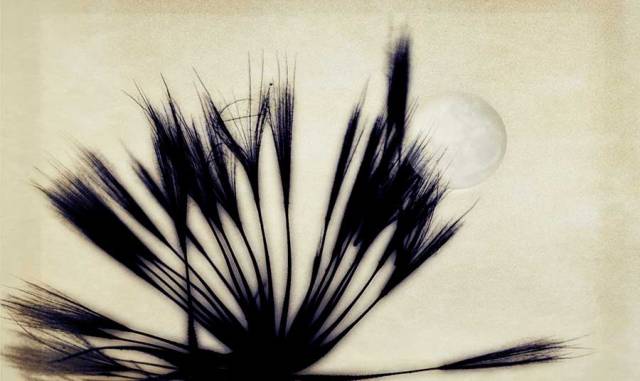
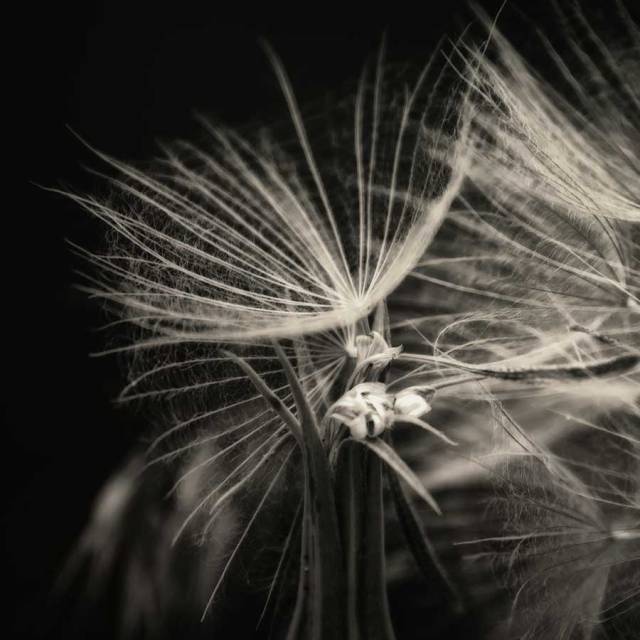

“Now suppose I ask you to describe the tea. You use your memory, your concepts, and your vocabulary to describe the sensations. …concepts and words describe your direct experience of the tea, they are not the experience itself. Indeed, in the direct experience of the tea, you do not make the distinction that you are the subject of the experience and that the tea is its object, you do not think that the tea is the best, or the worst…There is no concept or word that can frame this pure sensation resulting from experience. You can offer as many descriptions as you like, but only you have had a direct experience of the tea. …And you yourself, when you are describing the experience, are no longer in it.  In the experience you were one with the tea. There was no distinction between subject and object, no evaluation, and no discrimination. That pure sensation is an example of non-discriminative wisdom, which introduces us to the heart of reality.

“To reach truth is not to accumulate knowledge, but to awaken to the heart of reality. Reality reveals itself complete and whole at the moment of awakening. In the light of awakening, nothing is added and nothing is lost. …The moment of awakening may be marked by an outburst of laughter, but this is not the laughter of someone who has won the lottery or some kind of victory. It is the laughter of one who, after searching for something for a long time, suddenly finds it in the pocket of his coat.”

~Thich Nhat Hanh ( Zen Keys, pp.43-44)

the sunflower…manifesting

sunflowerladybugsmall

“Look at the sunflower growing in the garden. The sunflower relies on so many elements in order to manifest itself. There is a cloud inside of the flower because if there were no cloud there would be no rain, and no sunflower could grow. There is the sunshine in the sunflower. We know that without sunshine nothing can grow; there would be no sunflowers. We see the earth, we see the minerals, we see the farmer, we see the gardener, and we see time, space, ideas, the willingness to grow and many other elements. So, sunflowers depend on many conditions in order to manifest, not just once.

sunflowerladybug2

I like to use the word ‘manifestation’ instead of ‘birth,’ and I also like to use it instead of ‘creation.’ In our minds, ‘to create’ also means from nothing something is brought forth. The farmer who grows sunflowers does not create the sunflowers. If you look deeply, you see that the farmer is only one of the conditions that can bring sunflowers into being. There are seeds of sunflowers stored in the barn, there are fields outside where you can plan sunflowers, there are the clouds in the sky to make rain, there are fertilizers, there is sunshine to help the sunflowers to grow. You, the farmer, are not really the creator of the sunflower. You are just one of the conditions. Without you the sunflowers cannot manifest. But the same is true of other conditions. All are equally important to the manifestation of the sunflower.” ~Thich Nhat Hanh (No Death, No Fear, pp 87-88)