the bright moon in raindrops
from the eaves…
the geese depart
~Issa (www.haikuguy.com)

Nikon D750 f/4.5 1/1.280 85mm 800 ISO
the bright moon in raindrops
from the eaves…
the geese depart
~Issa (www.haikuguy.com)
Nikon D750 f/4.5 1/1.280 85mm 800 ISO
Clear waters unchanged
in a meadow
I saw once long ago,
will you remember
this face of mine?
~Saigyo (B Watson, Poems of a Mountain Home)

Nikon D750 f/4.5 1/3,200 85mm 800 ISO

Spring Creek…Nikon D750 f/4.5 1/2,000 85mm 100 ISO
“…we never just ‘see’ something in the sense that a photographic plate receives rays of light. In the real world we bring a lot of our selves to the party. And that means gaze alters what it finds.”
cited: Iain McGilchrist, The Master and his Emissary
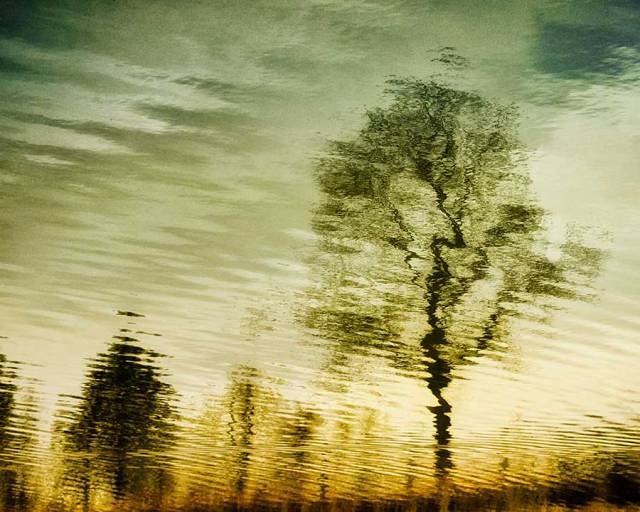
Nikon D750 f/4.5 1/3,200 48mm 100 ISO
“About twelve years ago, I met a homeless woman who identified herself as a sundowner. She described how each evening’s sun invited her to settle down along the side of her life’s path so that her journey could begin afresh in the morning sun. She eloquently described an undercurrent of yearning that ebbed and flowed throughout her soul and how, in her past days, she found herself at the mercy of private memories, thoughts, and imaginations and had encountered, time and time again, various degree of discontent despite the seemingly fulfilling qualities of her life.
As I hear the suffering within women who story their lives through the multi-colored threads of substance use, I find myself acknowledging a similarity within each of these unique stories with my own metaphysical search for someone, something, or some place that remains beyond the forever next horizon. Each of our unique narratives reveal an unending wandering with satchels of discontent that tell of a spiritual emptiness and an emotional intimacy with a homesickness for a place one knows cannot be.”
~B Catherine Koeford (A Meditative Journey with Saldage)
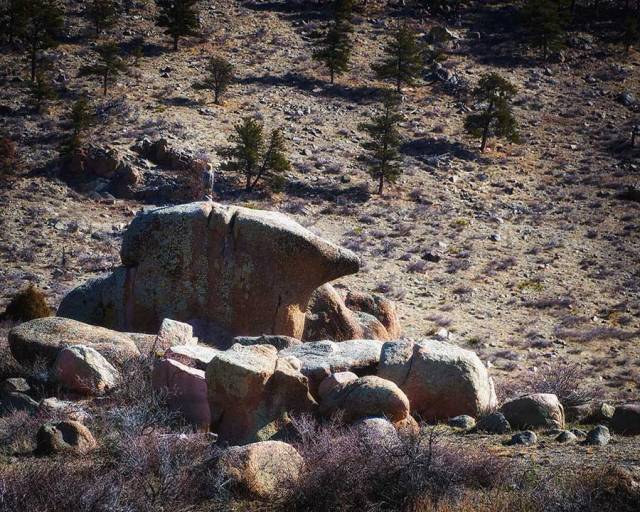

Last Sunday while searching for possible summer camping sites, we found a bit of landscape art…a sculptured hawk perched upon a rock.
Submitted in response to Lost in Translation’s photo challenge: zoom in, zoom out
What is it
about this twilight hour?
Even the sound
of a barely perceptible breeze
pierces the heart.
~Izumi Shikibu (J Hirshfield & M Aralani, The Ink Dark Moon)

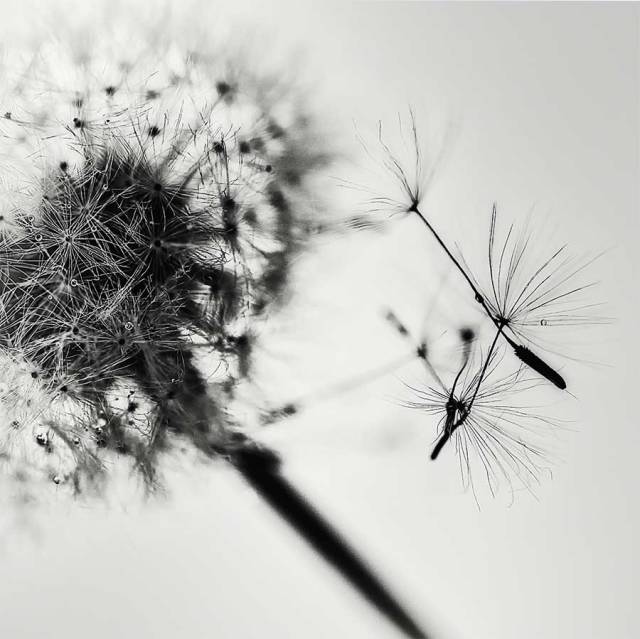
Nikon D750 f/3.5 1/1.250s 40mm 100 ISO
Your Highness,
It is said that an education is a 1000-year worth thing. But a learning institute responsible for that education has forgotten its role already and children are becoming tired each day with the violence and irrationalities inside.
Your Highness, please settle this educational environment that has taken a wrong path and restrengthen the foundation of the nation.
~Jeong Yak Yong, “Korean Mystery Detective”
Smile: merriment, joy, glee, vitality, cheerful, merry, gladden, spirited, happy, humor, high spirits, perky, and zest

tapping..Nikon D750 f/1.8 1/10 35mm 100 ISO
Submitted in response to Ben’s photo challenge: Smile
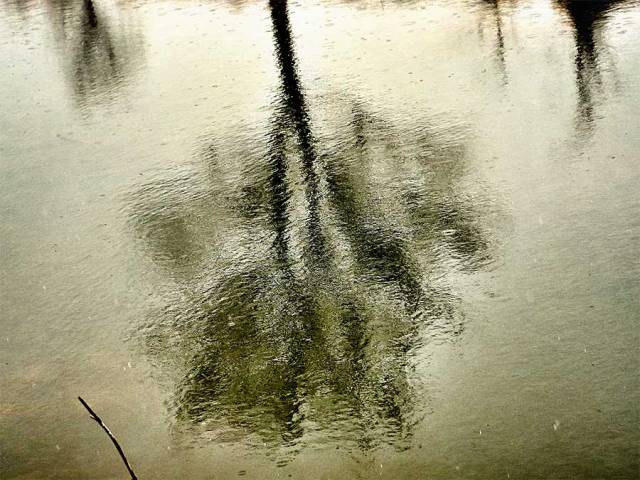
rippling reflections….Nikon D750 f/4.8 1/250 62mm 800 ISO
The weeping willows stand east of the curtained bowers;
Orioles and butterflies pass through the faded flowers.
But peach blossoms on Cold Food Day are beautified
By beauties living or buried by the lakeside.
~Liu Rushi
The other day, while wandering about YouTube, I stumble upon a Chinese movie, “Liu Ru Shi,” and was memorized by the story of her life’s journey within the Ming and Qing Dynasties.
The amazing cinematography that went into the telling of Liu Rushi’s life introduced me to a woman who is known as one of the “Eight Beauties of Qinhuai.” She was celebrated in her time for her beauty and talents and later appreciated and cherished for her integrity and patriotism.
Liu Rushi was not her original name, but a name she gave herself from one of her favorite poems written by Xin Qiji of the Song Dynasty (960-1279).
The movie begins at the time she was sold by her family to a prostitute as a stepdaughter and then, as a maidservant, to a rich scholar family. During the time in the Zhou household, she was educated in literature, poetry, music, calligraphy and painting. When Zhou died, she returned to a brothel when his wife and concubines threw her out of the home.
Liu often dressed as man, writing poems and discussing current affairs with scholars. She developed close relationships with a number of scholars such as Li Daiwen, Zong Zhengyu and Chen Zilong. She and Chen Zilong became romantically close; yet, when she learned that marriage was not an option he could consider she ended the relationship.
Years later, Liu introduced herself at home of Qian Qianyi, a well-known scholar and retired official, dressed in men’s clothing. Three years after their initial meeting Qian, in his late 50s, chose to disregard social norms and they married. The movie illustrates a close and supportive marriage, the events that occurred during her pregnancy with their daughter, and the struggles they experienced as the rebels entered Beijing and the Qing Dynasty took control.
Liu committed suicided a few months after Qian, 83 years of age, passed away.
Willow feathers fly into dream
Smoky moon brings out sorrow
From the moment I was thrown into the dusty world
I have experienced so many things and met so many people
So many crossroads
So much helplessness
Now I know that we will never understand
All the things happening around
Therefore I spent my whole life
To clean up the dusts my desires collected
Then I can be worry free and back to calmness.
Note: While trying to find published works of Liu Rushi’s poems I learned that she had some of her writings published alongside her husband’s. Yet, my research has not been very fruitful. If you know of any English translations, I would appreciate hearing from you.
Photography is representational by nature in that the subject(s) within most images depict the real world and usually are easily recognizable; for example, a photograph of tree generally looks very much like a tree.

Ted Forbes notes that abstract photography within the art world is drawn from skills that are different from other forms of art and, “It is something that we are not used to seeing in every day life…When it is done well, it stands out and it’s really exciting. When it is not done well, it is weird.”

Fundamentally, abstract art is a visual form that does not convey a realistic depiction of the world. This departure from reality can be partial or complete; therefore, we are often uncertain about the identification of the subject. Photographs within this genre diverge from a realist depiction of the world through the use of form, color, and lines.
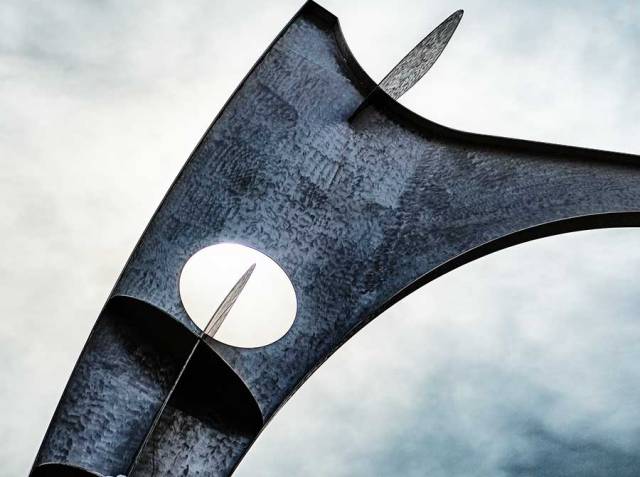
Form is the shape of the elements within the image and is the foundation of an abstract image. When creating abstract photography, ask yourself, “is there an interesting form/shape with this image?”

The variations and contrast of colors within art create interesting images and evoke feelings within the viewer.

Lines within the image directs the viewer’s eye and creates a dynamic image by emphasizing movement.
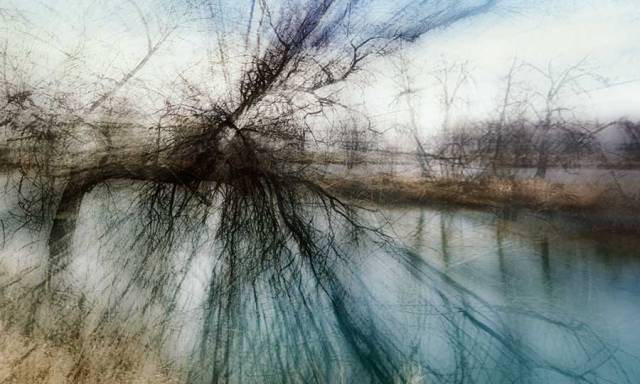
There are different techniques photographers use to create abstract image: 1) selective focus, 2) light and shadow, 3) lines and textures, 4) blur, 5) zooming, 6) moving the camera or subject, 7) double exposure, and 8) moving in close or standing far away.

I’ve come to understand abstract/non-representational imagery as an absence of the type of discrimination and labeling process that seeks an answer to, “what is that?” to one that invites the viewer to explore, “what feelings does this image evoke?”
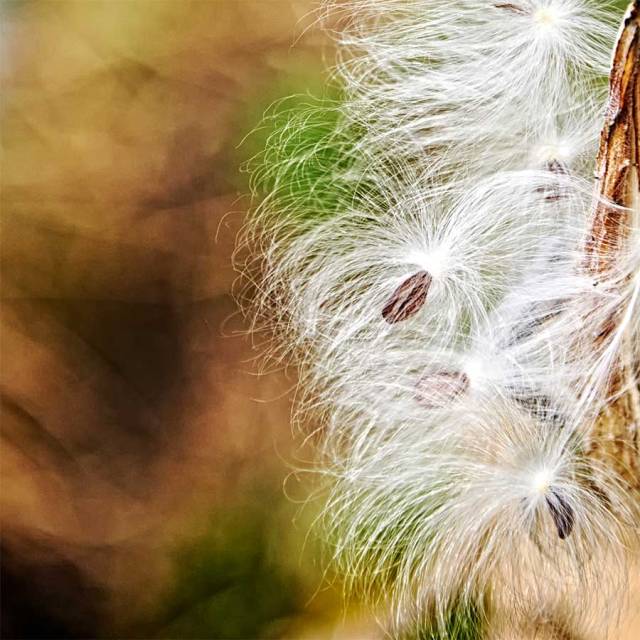
Thank you for taking the time to visit my blog and for the exchange of ideas and photographs. I am inspired by the process of viewing and exchanging ideas with other bloggers and am excited about walking through your galleries of abstract/nonrepresentational photographs. I hope you find Ted Forbes’ video interesting.
Clear waters unchanged
in a meadow
I saw once long ago
will you remember
this face of mine?
~Saigyō (B Watson, Poems of a Mountain Home)

Don’t dye it, don’t pull it out,
let it grow all over your head.
No medicine can stop the whiteness,
the blackness won’t last out the fall.
Lay your head on a quiet pillow, hear the cicadas,
idly incline it to watch the waters flow.
The reason we can’t rise to this broader view of life
is because, white hair, you grieve us so!
~Ch’i-chi (864-937) Translation: Burton Watson
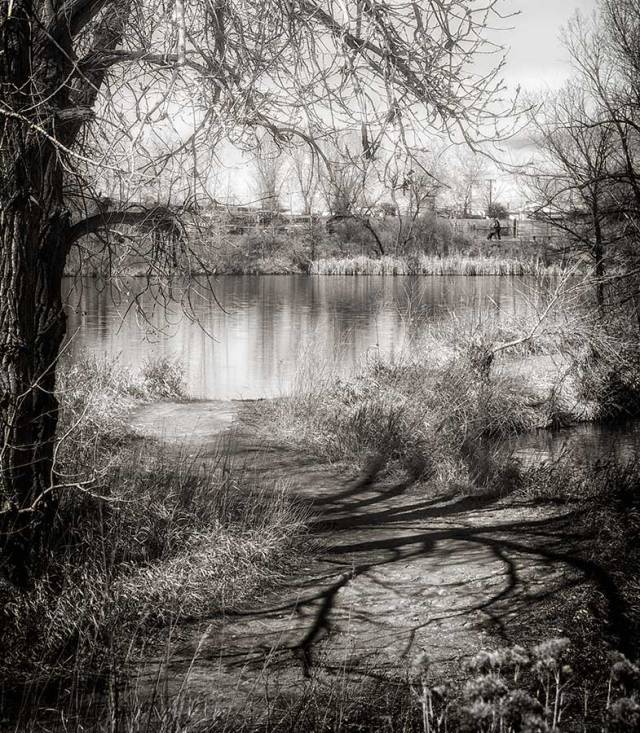
Nikon D750 f/7.1 1/320 44mm 100 ISO (neutral density lens)
 a meditative journey
You must be logged in to post a comment.