attachment to memory

orchids… Sony RX100-3 f/2.8 1/640s 14.9mm 800 ISO

“…to remain alive is to be subject to the grinding force of memory. Day and night the millstone turns, shaping the soul and softening the heart. To some, this going around and around the same subject may seem like emotional paralysis. But there is also something freeing about this attachment to remembrance. One day, one hour, one child, keep cutting through to the present. All other days take shape around this circle of emptiness.” ~V Schwarcz (Bridge Across Broken Time)

Xiangchou (Nostalgia)

Orchid… Sony RX100-3 f/2.8 1/640 25.7 800 ISO

I was a child,
Nostalgia seemed a small stamp:
I was here…
My mother was there.

When I grew up
Nostalgia became a ticket:
I was here…
My bride was there.

Years later,
Nostalgia was a little tomb:
I was outside…
My mother was inside.

And now,
My nostalgia is a shallow strait:
I am at here…
The mainland is there.

~ Yu Guang Zhong

“The Chinese expression for “nostalgia” is xiangchou, literally “village sadness.” …xiangchou describes the grief that accompanies the traveler who cannot find a way back to the home village…[it] is not a geographical predicament but a spiritual state of being. First he finds himself outside the mother as a tiny emblem of apartness, then he is the man who contemplates her tomb. The shallow waters of the Taiwan straits are, similarly, not only a spatial divide between the island and the mainland but a reminder of the longing for, and the impossibility of going back to, ancestral roots.” *

*cited: V Schwarcz (Bridge Across Broken Time)

rememberers

To be human was to be a sentient being who remembers.*

“The third-century classic Jinshu summarized the paradox of memory: ‘Qing you yi sheng, bu yi ze wu qing.’ No words in English can capture the condensed reservations expressed in nine simple characters. The first four summarize ancient psychology: emotion is born out of remembrance. The next five advise the wise to stem this process of arousal altogether: where there is no remembrance, emotion will dissolve as well. The point, simply put, is that distress causes memory. To be sure, it is human to have feelings, but this can be curbed by a willful quieting of the emotional upheaval caused by remembrance.

“Simcha, the Hebrew word for ‘joy,’ has as its root macha, meaning ‘to remove’ or ‘wipe away.’ To be joyful, in this sense, is to be free of the tearful weight of the past.

“In the end, however, neither Chinese or Jewish rememberers settled for the peace of a memoryless world.

“The opposite of quietude can be found in the story of Lot’s wife… Here, a woman who refuses to walk away from history is turned into salt–a concrete symbol of endless weeping. Lot’s wife captures the need to remain connected to the past and dares to stand still when the known world is about to crumble. Although some might argue that Lot’s wife looked back with nostalgic regret for past pleasures, Anna Akhmatova, in the poem, ‘Lot’s Wife,’ suggest she did so out of her refusal to become deaf to the grief embedded in the past.”*

*Vera Schwarcz, Bridge Across Broken Time

memory

Metaphor ferries memory across time. It allows us to enter worlds of imagination and feeling that might otherwise be closed to us …

Ricoh f/10 1/24s 7.3mm 80 ISO

… memory can take refuge in silence…*

The rememberer … is a person who defies the natural laws of decay, one who makes of the heart a more hospitable ground for traces of the past… The rememberer might also be a lonely rebel against the passage of time. To resist the erasers occasioned by this passage, memories have to be written down.

Although yi (memory) brings up unsettling emotions, and simcha (joy) depends on wiping away old aches, remembrance remains the only way not to betray the past.

V Schwarcz, Bridge Across Broken Times

solitary

“Reachable, near and not lost, those remained amid the losses this one thing: language.

horsetooth reservoir… Nikon D750 f/7.1 1/25s 85mm 100 ISO

“It, the language remained, not lost, yes in spite of everything. But it had to pass through its wounded wordlessness, pass through frightful muting, pass through the thousand darknesses of deathbringing speech. It passed through and giveback no words for that which happened.” ~Paul Celan* (cited: V. Schwarcz, Bridge Across Broken Time p. 85)

*Poet, translator, essayist, and lecturer, influenced by French Surrealism and Symbolism. Celan was born in Cernăuţi, at the time Romania, now Ukraine, he lived in France, and wrote in German. His parents were killed in the Holocaust; the author himself escaped death by working in a Nazi labor camp. “Death is a Master from Germany”, Celan’s most quoted words, translated into English in different ways, are from the poem ‘Todesfuge’ (Death Fugue). Celan’s body was found in the Seine river in late April 1970, he had committed suicide.

2018 photography review, november

November is about Thanksgiving, a celebration within the United States in which people gather around a table of abundance and give thanks (or not) before engaging in one of the seven sins…gluttony.

“The Tibetan Wheel of Suffering illustrates how our psychological patterns — our unconscious drives and needs, impulsive and reactive responses, learned and conditioned habits, and obsessions and compulsions – serve to keep us locked in self-defeating or misguided mental formations.

“Within the lower section of the wheel is the realm of the hungry ghost…beings with long, extremely slender necks, needle mouths, and bloated stomachs.  They are characterized by their infinite emptiness and eternal starvation that drives addictive and compulsive behaviors. When they do obtain what they crave, their achieved desires turn into swords and knives in their bellies. Their unfulfilled longings and cravings torture them through unending grief, rejection, bargaining, and anger. They remain insatiably obsessed with the fantasy of achieving complete release from their past.  Their efforts to undo the past remain unproductive as they layer past memories onto the present and thus respond to present occurrences as if they were suddenly transported into their past.  While they are aware of the suffering within their misery, they are unaware of how their confusion and delusion comes from their transpositions and subsequent mistaken attributions. 

“Introduced in this realm is a bodhisattva holding a bowl filled with spiritual nourishment.  These spiritual morsels: grace, faith, mindfulness, centeredness, compassion, loving-kindness, and equanimity, all contain the nutrients of wisdom to ease their torments.” ~B Koeford

contemplative photography – seeing space

feelings

Gratitude is a spiritual morsel that awakens us from being overwhelmed in the darkness of resentment to the spontaneous and wondrous moments gifted us through nature’s grace.


early morning reading

ponder

“When others make us angry at them–at their shamelessness, injustice, inconsideration–they exercise power over us, they proliferate and gnaw at our soul, then anger is like a white-hot poison that corrodes all mild, noble, and balanced feelings and robs us of sleep. Sleepless, we turn on the light and are angry at the anger that has lodged like a succubus who sucks us dry and debilitates us. We are not only furious at the damage, but also that it develops in us all by itself, for while we sit on the edge of the bed with aching temples, the distant catalyst remains untouched by the corrosive force of the anger the eats at us.  On the empty internal stage bathed in the harsh light of mute rage, we perform all by ourselves a drama with shadow figures and shadow words we hurl against enemies in helpless range… And the greater our despair that it is only a shadow play and not a real discussion with the possibility of hurting the other and producing a balance of suffering, the wilder the poisonous shadows dance and haunt us even in the darkest catacombs our dreams. (We will turn the tables, we think grimly, and all night long forge words that will produce in the other the effect of a fire bombs that now he will be the one with the flames of indignation raging inside while we, sooth by schadenfreude, will drink our coffee in cheerful calm.)

What could it mean to deal appropriately with anger?  We really do’t want to be soulless creatures who remain thoroughly indifferent to what they come across, creatures who appraisals consist only of cool, anemic judgments and nothing can shake them up because nothing really bothers them. Therefore, we can’t seriously wish not to know the experience of anger and instead persist in an equanimity that wouldn’t be distinguished from tedious insensibility.  Anger also teaches something about who we are. Therefore this what I ‘d like to know: What can it mean to train ourselves in anger and imagine that we take advance of its knowledge without being addicted to its poison?

We can be sure that we will hold on to the deathbed a part of the last balance sheet–and this part will taste bitter as cyanide–that we have wasted too much, much too much strength and time on getting angry and getting even with other in a helpless shadow theater, which only we, who suffered in impotently, knew anything about. Why did our parents, teachers and other instructors…Not give us in this case any compass that could have helped us avoid wasting our soul on useless, self-destructive anger.” ~Pascal Mercier, Night Train to Lisbon (pp.377-378)

early morning reading

contemplative photography 3

“…It was a dazzling morning in June, the morning brightness flooded unmoving through the streets—I was standing in the Rua Garrett at a display widow where the blinding light made me look at my reflection instead of the merchandise. …I was about to make my way inside through the shadowy funnels of my hands, when behind my reflection—it reminded me of a threatening storm shadow that changed the world—the figure of a tall man emerged. He stood still…his look strayed and finally fixed on me. We humans: what do we know of one another? …The stranger saw a gaunt man with graying hair, a narrow, stern face and dark eyes behind round lenses in gold frames. I cast a searching place at my reflection. …I looked like an arrogant misanthrope who looked down on everything human, a misanthrope with a mocking comment ready for every thing and everyone. That was the impression the smoking man must have gotten.

How wrong he was!” ~ Pascal Mercier, Night Train to Lisbon (77-78)

the threshold of stillness

May I find the Equanimity that will lift a veil of shamed despair and acquaint me to the perceived and perceiver absent of greed, anger, and ignorance.


wyominglandscape-8web

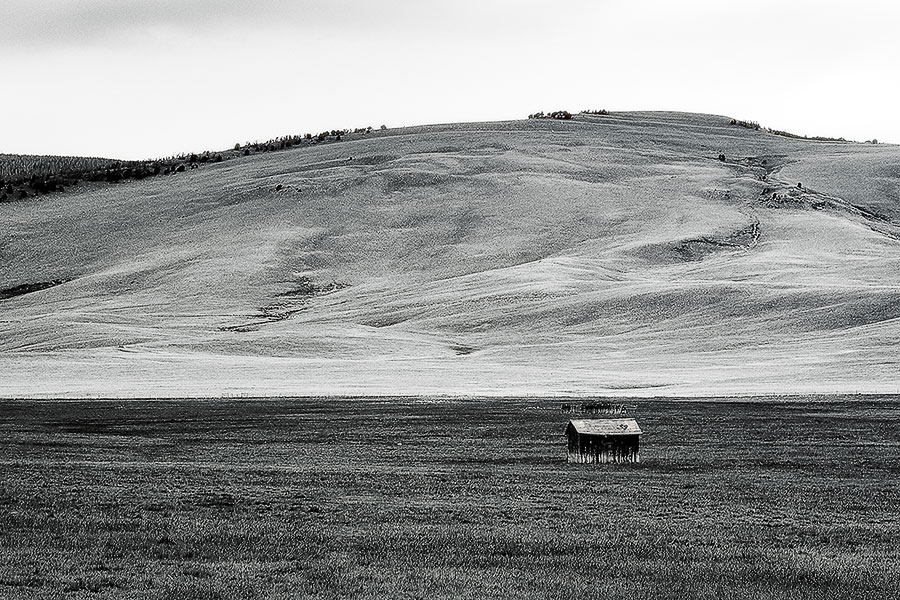
This journey with saldage has brought me to a place and time in which to unweave and sort through the pseudo-beliefs I have simply, without question, absorbed through the lens of childhood fantasy and comprehension.  To begin this process is to reformulate beliefs through a process of mindfulness and analysis and then to know for myself, “These things are bad, blamable, censured by the wise; undertaken and observed, these things lead to harm and ill… These things are good, blameless, praised by the wise… These things lead to benefit and happiness.”

It is not an easy undertaking to not simply believe what has been learned within family, school and church as well as conclusions reached through readings. The invitation to not simply follow tradition brings to the surface conflicts with compliance and opposition that come from an avalanche of values and guiding principles that outlines how I understand the roles and expectations of women.

To not adhere to that which was surmised within family stories about an ancestor, who upon seeing a swarm of locust “knelt in his patch of grain and pleaded with his Maker to spare his wheat” and then saw them divide and not damage his remaining crops. Or within the story about the ancestor, who during a trip from New York to England, calmed the seas with a prayer, and while in England, after much fasting and prayer administered to a deaf and dumb boy who was subsequently healed. To not simply believe opens a door of pondering about generations of family members who intimately knew powerlessness and insecurity, who eased their feelings of incompetence through prayer, and whose conceptions blinded them to their neighbors’ plight.
wyominglandscape-6a-web


To not simply believe that I must endure suffering is to reject the axiom that there is an absence of fundamental faith and goodness. To not adhere to the assumed abilities of ancestors frees me from the belief that a sincere act of making amends for my sins will open the doors to Shangri-La.  To not simply draw upon scripture unbinds me to the shame that I don’t have the faith – even of the size of a mustard seed – to be deeded as “good and without sin” so what I wish for, even that which goes counter to nature’s laws, will be granted.  To ease the suffering within discontent is to not simply hold to be true that I am to acquiesce to pain until the final judgment of death, and only then will I be forever at peace, or forever condemned to an existence of even greater suffering.

To not simply believe opens my ears to the incongruence within a belief in an all-knowing presence who, if not validated, punishes, absent of the grace within loving-kindness.  To not simply believe brings a compassionate acknowledgment to the painful efforts to sway God into granting me my desires through bargaining, sacrifice, negation, and suffering, and to finally surrender with acceptance to “Thy will be done on earth as it is in heaven.”  To not simply believe sheds light upon the greed, aversion, and delusions that are intertwined into my conception of and relationship with life.

I do hold that my beliefs and the subsequent desire for their illusive promises of validation, forgiveness, or reunification have set me upon an unending path of suffering.  These beliefs lead to harm and ill as they are like thorns that tear into my heart.  This searing pain releases resentment intertwined with envy, awakens alienation, and denies me the essence of Christ’s wisdom and loving compassion.

wyominglandscape-7web

Christ stood before self-righteous anger and commanded that only the one without sin was to cast the first stone of punishment and, at another time and in the midst of his own suffering, sought forgiveness for those who “know not what they do.”   Within these written words, I hear compassion speaking for the suffering intertwined within anger ungoverned by moral shame and moral dread.  Compassion is telling us how suffering, entangled into knots of mental, emotional, and social turmoil, deafens us to our guiding principles and blinds us to the horrors our moral shame will witness as it awakens from darkened ignorance.


The practice of the presence of God as being comparable to that of consciousness finally makes possible “full awareness” applied to every thought, world, and deed.   ~ Unknown

Excerpts from B Koeford, A Meditative Journey with Saldage

early morning readings

photostudystreetcomp7web

“I suggest that… Although healthy persons communicate and enjoy communicating, the other fact is equally true, that ‘each individual is an isolate, permanently non- communicating, permanently unknown, in fact, unfound.’” ~ Winnicott, The Holding Environment

“…What was really incomprehensible was the discussion, as it was called. Cast into and enclosed in the gray lead frame of polite empty British phrases, the people spoke perfectly past one another. Constantly they said they understood each other, answered each other. But it wasn’t so. No one, not a single one of the discussants, showed the slightest indication of a change of mind in view of the reasons presented. And suddenly, with a fear I felt even in my body; I realized that’s how it always is.  Saying something to another, how can we expect it to affect anything? The current of thoughts, images and feelings that flows through us on every side, has such force, this torrential current, that it would be a miracle it it didn’t simply sweep away and consign to oblivion all words anyone else says to us, if they didn’t by accident, sheer accident, suit our own words. Is it different with me? I thought. Did I really listen to anybody else? Let him into me with his words so that my internal current would be diverted.” ~ Pascal Mercier, Night Train to Lisbon (pg 136-137)

“…It is a joy to be hidden but disaster not to be found.” ~ Winnicott, The Maturational Processes and the Facilitating Environment : Studies in the Theory of Emotional Development