Then a peaceful sensation came over me, a sense that I didn’t have to do anything, that nature was taking care of itself. …The forest grew itself in the same way that my body breathed. What are Earth’s natural systems, living systems, always up to? Growing and reproducing. The living world is a creative place, because living things are always creating. Humans are not separate from this creation… We are creating our lives, while all around us the world is a creative place. …when I sit and draw, I am expressing that same creative energy. I open and let the drawings emerge.
“…Visual transmission through images speaks directly to intuition and feelings, circumventing the verbal mind. Drawings offer spaces for imagination to wander, evoking meanings too complex or subtle to know intellectually. This state of mind, in which one can receive information through images, points to one of the closest parallels between the contemplative and creative paths. Aesthetic appreciation and receptivity to spiritual teachings are both practiced with an open-ended state of mind, a state of comfortable not-knowing. We draw and meditate in heightened awareness of what is happening in the moment, opening the space for new ideas, and allowing change to happen.”
Who on earth was she when when no one knew she was Hanna…
“But what made the greatest impression during those early days was the man who employed her at the bakery. ‘What’s your name?’ Hanna hesitated for a while before answering, ‘Hanna, Lovisa, Greta . . . Broman.’ ‘Married?’
Sony RX1003 f/2.8 1/250 25.7mm 800 ISO
“‘Yes, but my husband’s dead.”’ “’Now, then,’ said the man, noting it down. ‘Date of birth?’ She was silent. She’d never heard anything so silly. He had to repeat it. ‘”When and where were you born, woman?’ She stated both year and parish, got the job . . . she never forgot the foreman’s questions and repeated themselves to herself every evening for a long time afterwards. Name, married, born? To her it was if she’d fallen into a gigantic hollow on Wolf Mountain. Who on earth was she when no one knew she was Hanna Augustdotter from Braten, granddaughter of the rich Erik of Framgarden, and who become the miller’s wife at Norakvattnet? Fortunately she wasn’t given to brooding. But many a time over the next few years she had to fend off the feeling of having lost her foothold.”
[Fredriksson, M. (1994). Hanna’s Daughters. The Ballantine Publishing Group: New York]
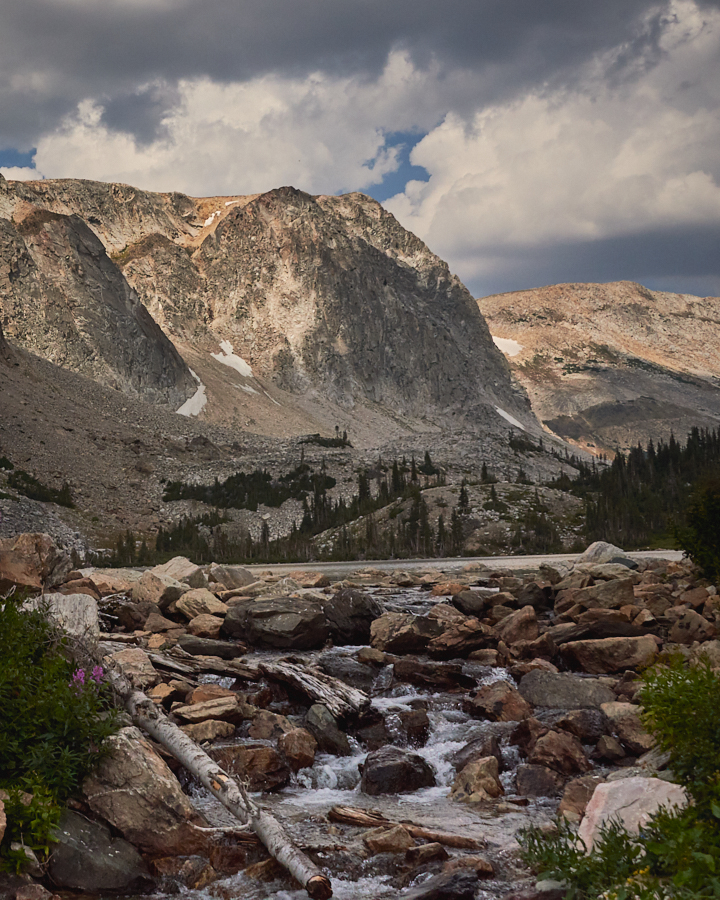
Riverbend Pond… Nikon D750 f/4.5 1/125s 85mm 100 ISO
Wabi-sabi is a beauty of things imperfect, impermanent, and incomplete. It is a beauty of things modest and humble. It is a beauty of things unconventional…
Koren, Leonard, Wabi-Sabi for artists, designers, poets, & philosophers. Stone Bridge Press, Berkeley, CA
“…to remain alive is to be subject to the grinding force of memory. Day and night the millstone turns, shaping the soul and softening the heart. To some, this going around and around the same subject may seem like emotional paralysis. But there is also something freeing about this attachment to remembrance. One day, one hour, one child, keep cutting through to the present. All other days take shape around this circle of emptiness.” ~V Schwarcz (Bridge Across Broken Time)
I was a child, Nostalgia seemed a small stamp: I was here… My mother was there.
When I grew up Nostalgia became a ticket: I was here… My bride was there.
Years later, Nostalgia was a little tomb: I was outside… My mother was inside.
And now, My nostalgia is a shallow strait: I am at here… The mainland is there.
~ Yu Guang Zhong
“The Chinese expression for “nostalgia” is xiangchou, literally “village sadness.” …xiangchou describes the grief that accompanies the traveler who cannot find a way back to the home village…[it] is not a geographical predicament but a spiritual state of being. First he finds himself outside the mother as a tiny emblem of apartness, then he is the man who contemplates her tomb. The shallow waters of the Taiwan straits are, similarly, not only a spatial divide between the island and the mainland but a reminder of the longing for, and the impossibility of going back to, ancestral roots.” *
To be human was to be a sentient being who remembers.*
“The third-century classic Jinshu summarized the paradox of memory: ‘Qing you yi sheng, bu yi ze wu qing.’ No words in English can capture the condensed reservations expressed in nine simple characters. The first four summarize ancient psychology: emotion is born out of remembrance. The next five advise the wise to stem this process of arousal altogether: where there is no remembrance, emotion will dissolve as well. The point, simply put, is that distress causes memory. To be sure, it is human to have feelings, but this can be curbed by a willful quieting of the emotional upheaval caused by remembrance.
“Simcha, the Hebrew word for ‘joy,’ has as its root macha, meaning ‘to remove’ or ‘wipe away.’ To be joyful, in this sense, is to be free of the tearful weight of the past.
“In the end, however, neither Chinese or Jewish rememberers settled for the peace of a memoryless world.
“The opposite of quietude can be found in the story of Lot’s wife… Here, a woman who refuses to walk away from history is turned into salt–a concrete symbol of endless weeping. Lot’s wife captures the need to remain connected to the past and dares to stand still when the known world is about to crumble. Although some might argue that Lot’s wife looked back with nostalgic regret for past pleasures, Anna Akhmatova, in the poem, ‘Lot’s Wife,’ suggest she did so out of her refusal to become deaf to the grief embedded in the past.”*
Metaphor ferries memory across time. It allows us to enter worlds of imagination and feeling that might otherwise be closed to us …
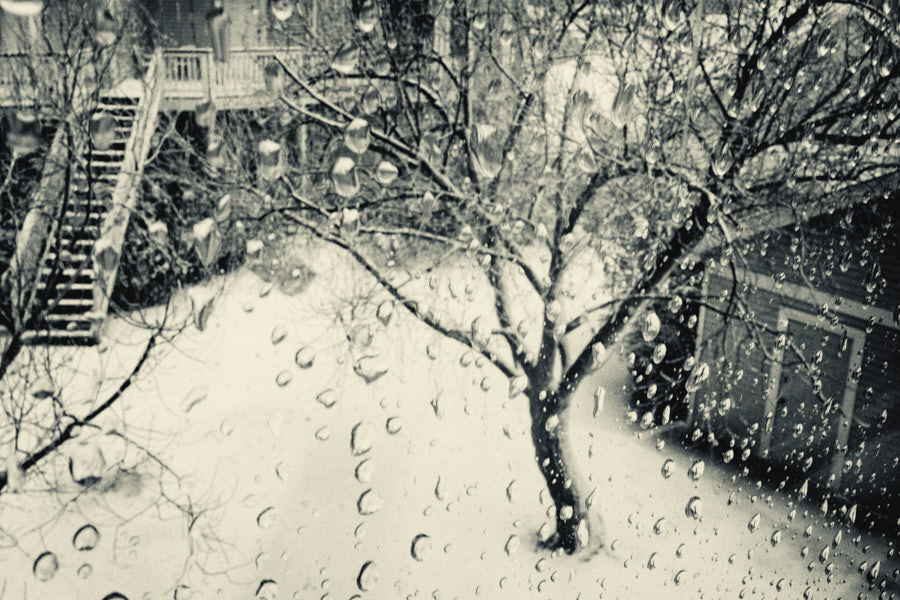
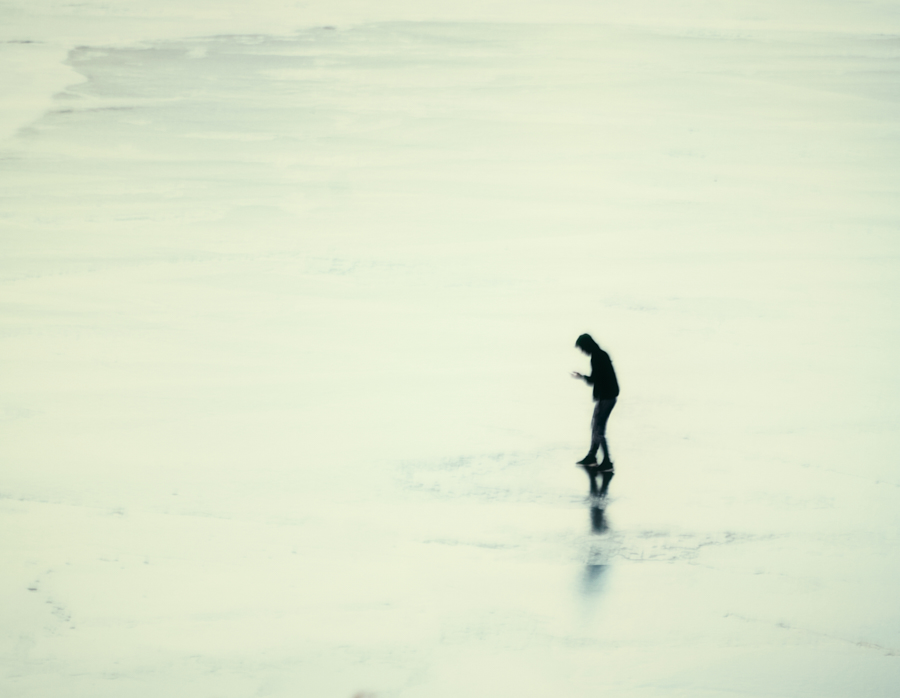
Ricoh f/10 1/24s 7.3mm 80 ISO
… memory can take refuge in silence…*
The rememberer … is a person who defies the natural laws of decay, one who makes of the heart a more hospitable ground for traces of the past… The rememberer might also be a lonely rebel against the passage of time. To resist the erasers occasioned by this passage, memories have to be written down.
Although yi (memory) brings up unsettling emotions, and simcha (joy) depends on wiping away old aches, remembrance remains the only way not to betray the past.
“There was a single likeness, a small sketch that he kept inside a gold locket, …the locket disappeared to the rag-and-bone man. I do not know where the likeness went. It slipped through the cracks of time and went to where the lost things are.”
“There was no such thing as the right time, he explained. Time was an idea, it had no end and no beginning, it could not be seen or heard or smelled. It could be measured, sure enough, but no words had been found to explain precisely what it was.”
“Reachable, near and not lost, those remained amid the losses this one thing: language.
horsetooth reservoir… Nikon D750 f/7.1 1/25s 85mm 100 ISO
“It, the language remained, not lost, yes in spite of everything. But it had to pass through its wounded wordlessness, pass through frightful muting, pass through the thousand darknesses of deathbringing speech. It passed through and giveback no words for that which happened.” ~Paul Celan* (cited: V. Schwarcz, Bridge Across Broken Time p. 85)
*Poet, translator, essayist, and lecturer, influenced by French Surrealism and Symbolism. Celan was born in Cernăuţi, at the time Romania, now Ukraine, he lived in France, and wrote in German. His parents were killed in the Holocaust; the author himself escaped death by working in a Nazi labor camp. “Death is a Master from Germany”, Celan’s most quoted words, translated into English in different ways, are from the poem ‘Todesfuge’ (Death Fugue). Celan’s body was found in the Seine river in late April 1970, he had committed suicide.





 a meditative journey
You must be logged in to post a comment.