earth, a closed or open system

swingweb

After reading the below except from Thich Nhat Hanh’s Being Peace,

“…The human species is a very young species–we appeared on the Earth only recently. Before that, we were rock, we were gas, we were minerals, we were single-celled beings. We were plants, we were trees, and now we have become humans…”

I found myself pondering, “is life today the outcome of a recycling process of matter within a closed system?”

In a quick Goggle search (The earth a closed system) I found OERu, an amazing open educational site which offers a course, The Inspiring Challenge of Sustainable Development.  One of the lesson plans, CSF101, notes:

The Earth is a closed system for matter

The Earth is made up of chemical elements – think of the periodic table. That is a list of all basic elemental materials on our planet. Because of gravity, matter (comprising all solids, liquids and gases) does not leave the system. It is a closed box. And, the laws of thermodynamics, long agreed by scientists, tell us that it’s impossible to destroy matter. So the chemical matter we have on Earth will always be here. The important question is, how are those chemicals organised?

The Earth is an open system for energy

It is accepted science that the Earth is an open system for energy. Energy radiates into the Earth’s system, mainly from the sun. Energy is then radiated back into space from the Earth, with the flows being regulated by the Earth’s atmosphere and ozone layer. This delicate balanced transfer of energy maintains the surface temperature at a level that is suited to the forms of life that have evolved and currently exist.

While the course CSF101’s discussion centers on global warming and climate change it seems to correspond with Thich Nhat Hanh’s writings that at one time I was a tree, a rain drop, a cloud, a dandelion.

Today, a participant in Debbie’s Six Word Saturday.

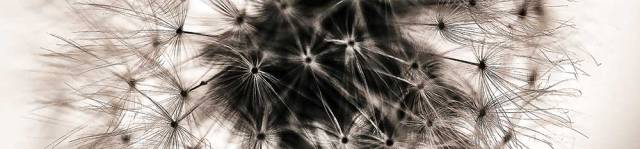
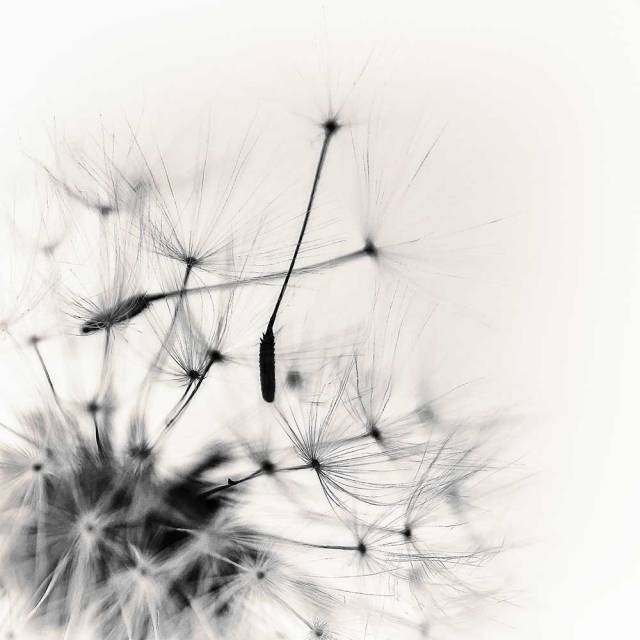
dandelion project

“Bodhi means being awake, and satttva means a living being, so bodhisattva means an awakened being.  All of us are sometimes bodhisattvas, and sometimes not.

dandelionproject_dandelionwindiiiweb

“Understanding is like water flowing in a stream. Wisdom and knowledge are solid and can block our understanding. In Buddhism, knowledge is regarded as an obstacle for understanding. If we take something to be the truth, we may cling to it so much that even if the truth comes and knocks at our door, we won’t want to let it in.”

Thich Nhat Hanh, The Heart of Understanding

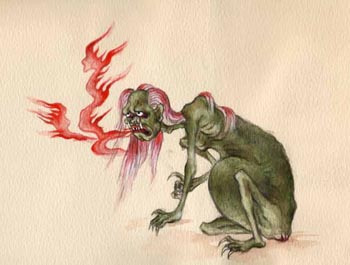
hungry ghosts

hungry-ghost

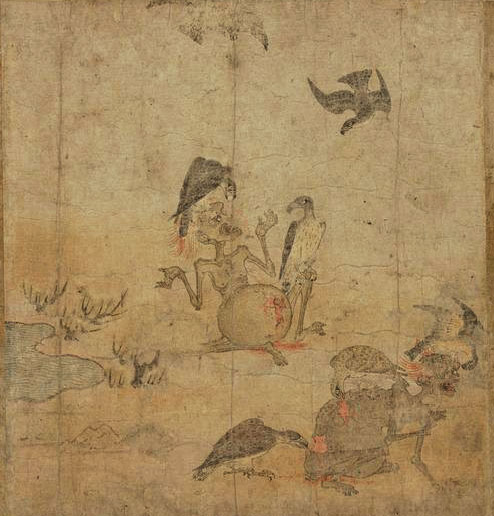
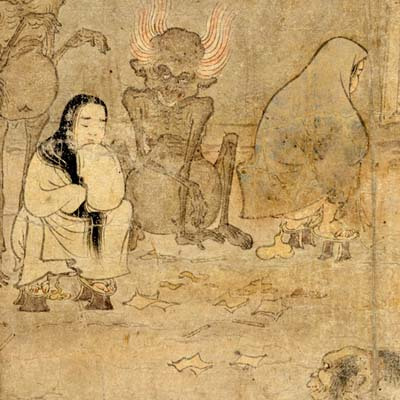
“,,,when we offer food to the hungry ghost, the ceremony always begins with a dharani for the hungry ghost to help increase the size of their throats so that they can receive our offerings. In classical Buddhist literature, hungry ghosts are described as having a big belly but a very tiny throat–so even though they are always very hungry they are never able to take in enough nourishment. There are many kinds of hungry ghosts that need our help to transform their suffering. They are hungry for love and understanding but because they are so suspicious, because their hearts are not open enough, they cannot receive our love and compassion.

“All the hungry ghost bear great injustices in themselves and that is why they have become hungry ghosts. Many of us are victims of injustice, and if there is no compassion and understanding there is no way we can undo the knot of injustice within ourselves and become free. We still continue to suffer if no one can help us undo the knot of injustice in our heart.
art-eater_asuras_wrath_pretas_hungry_ghosts_05
“There are so many hungry ghosts in the world. Many of them are caught in their situation and have no opportunity to experience the kind of safe, calm, stable space that will allow them to get in touch with what is nourishing and healing…they will be hungry ghosts all their lives, wandering aimlessly in suffering, destroying themselves physically and mentally.

“Hungry ghosts are drive by the habit energy in themselves. They may want to tear up the new roots, they may not be able to feel peace, they may not be capable of establishing themselves in the here and now. …it is important for us to become aware of the habit energy in ourselves. It is always pushing us to tear up our roots, to play the role of a wandering soul, a hungry ghost. We can become so used to being a hungry ghost that staying in one place becomes very difficult.  So we practice mindful breathing and recognize that the habit energy of being a hungry ghost is still very strong in us.

aaa_gakizoshi_1-0

“All of us who are the friends of the Earth-Store Bodhisattva must pool our ideas and energies to help the many hungry ghosts in our family, community, and society…

~Thich Nhat Hanh, Opening the Heart of the Cosmos

The images within this posting were drawn from the internet and reflect historical representations of hungry ghosts.

discrimination…

“Further, O Mahamasti, the five categories are: Appearance, Name, Discrimination, Suchness, and Right Knowledge.

“O Mahamati, what is Appearance? Appearance is what is seen in colors, forms, figures, which are distinctive and not alike, –this is what is called Appearance.

summeriii

“O Mahamati, depending upon this appearing of things, there arises Discrimination, saying that ‘this is a jar’, ‘this is a horse, a cow, a sheep, etc.,’ that ‘this is such and such’, ‘this is no other things’ –this, O Mahamati, is called Name.

“O Mahamati, depending upon these objects thus named, their characteristics are distinguished and made manifest, whereby such various names are set up as cow, sheep, horse, etc. This is called the Discriminating of mind and objects belonging to mind.

“O Mahamaati, when one surveys names and appearances even down to atoms, one never sees a single reality, all things are unreal; for they are due to the Discrimination stirred up in one’s deceiving mind.

“O Mahamati, when is known as Suchness is non-emptiness, exactness, ultimate end, self nature, self-substance, right seeing, –these are the characteristics of Suchness.

“By myself and the Bodhisattvas and [other] Buddhas who are Tathagatas, Arhats, and All-knonwing Ones, it is said that though names differ the sense is one.”

An English translation of an excerpt of Bodhiruci’s translation cited in, Daisetz Teitaro Suzuki, Studies in the Lankavatara Sutra, pp 26-28.

dandelion project

dandelionproject730bweb

All phenomena of being, since time memorial, are independent of concepts and words. Concepts and words cannot transform them or separate them from their true nature.

~The Awakening of Faith in the Mahayana  (cited: Thich Nhat Hanh, Zen Keys, pg. 81)

vulgar songs fill the days…

dandelionproject729bweb

Customs become diluted year after year.

Both the noble and the common decline.

The human mind grows fragile with time;

the ancestral way becomes fainter day by day.

Teachers can’t see past the name of their school;

students enable their teachers’ narrow-mindedness.

They are glued to each other,

unwilling to change.

Thornbushes grow around high halls,

fragrant flowers wither in the weeds.

Vulgar songs fill the days.

Who will expound the luminous teaching?

Ah, I, a humble one,

have encountered this era.

When a great house is about to crumble,

a stick cannot keep it from falling.

Unable to sleep on a clear night,

I toss in bed, …

~Ryokan, 1796-1816 (K Tanahashi, Sky Above, Great Wind)

sliver of perspective

blindsmonochromeweb

“…thoughts of the past, fantasies about the future, judgements and evaluations concerning…work itself–what are these but shadows and ghosts flickering about in our minds, preventing us from entering fully into life itself.”

~Philip Kapleau (Thich Nhat Hanh, Zen Keys,  Introduction)

blindsweb

awakening

awakening“Suppose I invite you to join me for a cup of tea. You receive your cup, taste the tea, and then drink a little more…

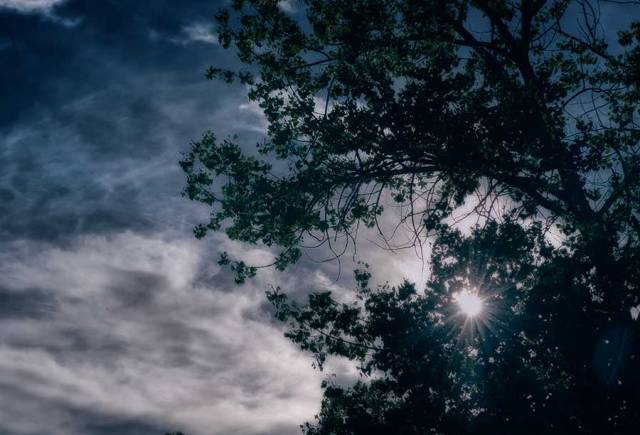
“Now suppose I ask you to describe the tea. You use your memory, your concepts, and your vocabulary to describe the sensations. …concepts and words describe your direct experience of the tea, they are not the experience itself. Indeed, in the direct experience of the tea, you do not make the distinction that you are the subject of the experience and that the tea is its object, you do not think that the tea is the best, or the worst…There is no concept or word that can frame this pure sensation resulting from experience. You can offer as many descriptions as you like, but only you have had a direct experience of the tea. …And you yourself, when you are describing the experience, are no longer in it.  In the experience you were one with the tea. There was no distinction between subject and object, no evaluation, and no discrimination. That pure sensation is an example of non-discriminative wisdom, which introduces us to the heart of reality.

“To reach truth is not to accumulate knowledge, but to awaken to the heart of reality. Reality reveals itself complete and whole at the moment of awakening. In the light of awakening, nothing is added and nothing is lost. …The moment of awakening may be marked by an outburst of laughter, but this is not the laughter of someone who has won the lottery or some kind of victory. It is the laughter of one who, after searching for something for a long time, suddenly finds it in the pocket of his coat.”

~Thich Nhat Hanh ( Zen Keys, pp.43-44)

nondiscrimination

“My right hand does a lot of things–it creates calligraphy and writes poems. Nearly all my poems have been written with my right hand because I don’t use a typewriter. There was only one time when I wrote a poem on a typewriter. When inspiration came to me, I did not have a pen at hand so I just put an envelope into the typewriter, and at that time my left hand participated. All the rest of my poems were written with my right hand alone, yet my right hand never says to the left hand, ‘You, you are good for nothing! You don’t do calligraphy, you don’t write poems. I do all the work, you never do anything!’

whitewaterraftingweb

“The body never discriminates in this way. Don’t think that this is because our bodies do not possess any inherent intelligence. While trying to hang a picture on the wall, I held the nail in my left hand and hammered with the right. But instead of hitting the nail I hit a finger on my left hand. That happens from time to time, especially if you are high up on a ladder. Immediately the right hand put down the hammer and reached over to take care of the left hand, very naturally. The feet began to move to look for a bandage. Everything worked together very smoothly. Later the right hand did not say, “Hay left hand, remember how I helped you? Next time I need something you have to come and help me.’ Our innately wise bodies do not act in that way. So the wisdom of nondiscrimination is present in us as a living bodily reality. We have to train our minds to see in this way.

whitewaterraftingbweb

We form one reality. We exist in interbeing with all of life. When we understand this fundamental truth, our acts of giving will be made in the spirit of nondiscrimination. …we can offer a smile or a loving compassionate gaze. We can give the gift of calm, concentrated presence to help someone who is fearful or anxious. We can make an offering of our time and energy and work with the homeless, or with those who are prisoners or who are addicted to different substances, or to work on helping the environment. We have plenty of gifts to offer; we are far wealthier than we may imagine. We can help secure the happiness of many people even if we don’t have a single penny in our pocket.”

~Thich Nhat Hanh, Opening the Heart of the Cosmos

morning sky

Chat about the snow

on Fuji’s peak–

and summer is no more

~Sanjonishi Sanetaka (S Carter, Haiku before Haiku)
mindforest“When I look at the trees in front of me, my mind does not go outside of me into the forest, nor does it open a door to let the trees in. My mind fixes on the trees, but they are not a distant object. My mind and trees are one. The trees are only one of the miraculous manifestations of the mind.”
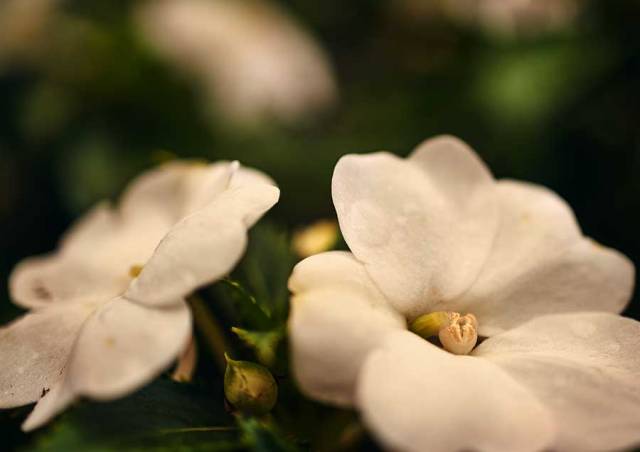
~Thich Nhat Hanh (The Sun My Heart)

thursday’s special: vision

Vision:  Unable to see things clearly unless they are relatively close to the eyes, owing to the focusing of rays of light by the eye at a point in front of the retina; myopic

visionwebvisionbwebvisoncweb

The Six Blind Men & the Elephant, a famous Hindu fable that tells the story of six blind sojourners that come across different parts of an elephant. In turn, each blind man creates his own version of reality from that limited experience and perspective. The video below is a illustrated version sharing an aged truth about our human condition and the relation between relative and absolute truth.

Jump on over to Lost in Translation to join this week’s Thursday’s Special.