hungry ghosts

May I find the Loving Compassion that will soften the shield embracing my heart so that I may love absent of greed, anger, and ignorance.

contemplative photography 11


I find myself standing on a dry dirt road with two deep parallel ruts cutting winding dark ribbons into the road until they unite and disappear in the horizon.  The sun greets me with the same dry warmth that soothingly penetrates my skin as I wrap around me a towel just pulled from a tumbling clothes dryer. The air messages that it is a time of transition and I see the slight touch of autumn’s mustard yellows and crimson reds upon the tips of trees lining a distant hill.  Before me stands a child of about twelve years of age.  Her head is bent down with absorbed attention upon the small puffs of dust clouds her bare feet stirs up before her.

She looks up at me with expectant eyes that suddenly overfill with tears. “I don’t remember who or what I’m looking for,” she says, as miniature rivulets begin to flow down her cheek.

Then I notice a three-year-old boy with wispy blonde hair and mesmerizing oxen-eyes as he emerges from his hiding place behind the girl. As he takes hold of her right index finger, he reaches up with his left hand and touches a teardrop that is forming along the girl’s chin, asking “Find mummy?”

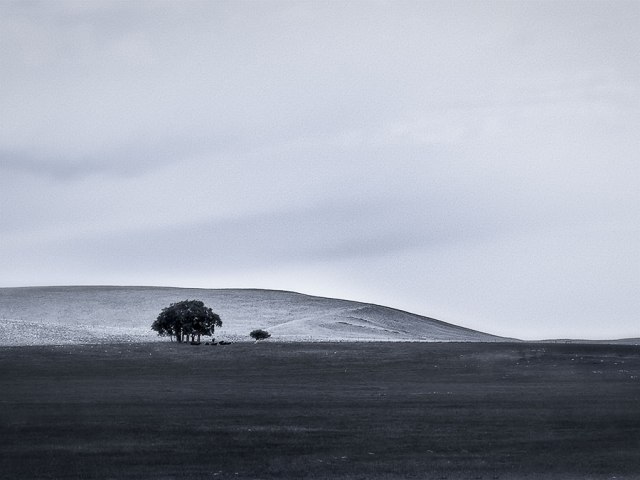
landscape-3web

Nikon D750 f/7.1 1/500 50

Suddenly, as if a whirlwind came down from the heavens in response to the boy’s voice, I come to myself standing in the center of a frozen lake. I am shivering and see nothing more than a dark and shadowy forest surrounding me.  I hear in the distance the sound of children’s voices repeating a refrain with a haunting tone, “Broken hearts, frozen hearts, shattered hearts.” And then I see them: four–no, five.  Five hungry, child-like, ghosts with needle mouths, long twisted thin necks, and bloated stomachs.

They come out of the forest and stand along the lake’s shoreline, repeating their refrain, “Broken hearts, frozen hearts, shattered hearts.” Their words travel across the surface of the frozen lake and encircle me with the sounds of unfilled longings and infinite emptiness.

Then I awaken to my own craving for those who have been lost to me, those who have died.  Within the darkness of this forest memories of past days rise and intermingle to become a swirling chaos within the image of emptiness where there once was a home, a family.  Confusion, anger, and loneliness flash within as these memories incite feelings and memories that pummel upon me, one frozen memory after another.


I hear questions from a child.  Confused, they come as fragments: “His heart was broken? Why did I have to go? They moved?” The sound of adolescent angst intertwined with arrogance swirls around me, as the questions become assertions: “I won’t be here if he comes back! I’ll do as I please.” The mist in the air surrounds me with the chilling voice of others, accusing: “If you had faith, she could hear. You were her companion. It is you that must leave. It does not matter, it is over. I cannot help you.”  Then, “There was an accident.”  I feel myself falling upon the ice as I have fallen before with broken promises, beliefs, and dreams shattered all around me. I feel the layers of iced grief, anger, sadness, confusion shielding my heart. Again, the refrain, “Broken hearts, frozen hearts, shattered hearts.”
wyominglandscapeweb

The night cloud’s fingertips drift away from the moon. In the silvery light I see visions of a small child, alone in the gray-toned shadows, planting seeds in the moist soil of despair.    Her sob-filled voice fills the night’s emptiness, “You are too stupid to understand. I don’t need you.  I’m special.  I’ll hide my tears.  I won’t tell you anything. I won’t need you.  I’ll show you that I don’t need you.”

A veil lifts and my observing mind sees a raging powerless ego annihilating self-in-relationship, suppressing feelings; and all the while, unknowingly creating her shadowy forest of worthlessness, hopelessness, alienation, and pseudo-independence.

Anger tells me that I am nothing;
love tells me I am everything.
Between the two, my life flows.

I feel a golden-toned voice, vibrating the soft and gentle touch of loving-kindness.  “These hungry ghosts are visions that arise from years of tears closeted within your soul. Is it now time to cut this intertwining craving and clinging to your yesterdays?”  She encourages a thought that to be freed from this frozen place and time begins with a true comprehension of the refrain, “Broken hearts, frozen hearts, shattered hearts.”

This voice says, “Call forth these five hungry ghosts, one by one, by their true given names and see each true ‘I’-in-self hidden behind veils of greed, anger, and ignorance.  Ask what it is that will cease their yearning and release them from this frozen forest so that they may finally rest in peace. As you hear their request touch your heart, open yourself to share with each that which will release you from this bondage.  Melt this chain with loving-kindness and forge the golden key that gives admission to a room of healing serenity.”

contemplative photography 7

In a clearing I find myself slowly warmed by the autumn sun as I return to the two children I met earlier on a dry, dusty road. Behind me is the forest I have just emerged from; before me is a field of yellowed wheat.   Just beyond the field is a house weathered gray by the seasons and weakened by the stresses of time.  In the golden rays of the morning light, the young girl is kicking up clouds, searching through the barren soil for seeds of her past, and desiring to be freed from yesterday’s delusions.  She walks over to the side of the road and bends over; as she stands, I see three keys, dangling from her left hand. One key is silver, another is gold, and the third is made of diamonds. I feel the pain of fear awaken as the warmth of this early autumn day touches the frozen shield that embraces her heart.

The air is filled with sounds of a new refrain, “May I be happy.  May I be free from pain.   May I feel emotionally connected with others. May I be at peace.

 “May these children be happy.  May they be freed from pain.  May they feel emotionally connected with others.  May they be at peace.

“May those hungry ghosts be happy.  May they be freed from pain.  May they feel emotionally connected with others.  May they be at peace.”

Excerpts from B Koeford, A Meditative Journey with Saldage

the petrified forest

May I find the Wisdom that silences the fortress of my mind’s discontent so I may hear with understanding teachings absent of greed, anger, and ignorance.

forest4

I often feel as though I am an old blind woman walking through a petrified forest with only a staff to ensure that my steps find solid ground.  I remain ignorant, as I unconsciously look away from that which will break my heart and seek stability through the creation of and attachment to ideas, beliefs, principles, and concepts.  I yearn for certainty; anger erupts each time I stumble and fall and forges a dogmatic fortress that encircles my heart and mind. The desire to hear with understanding teachings absent of greed, anger, and ignorance speaks of an awareness of how this protective barrier deafens me to words of wisdom that shed light into the shrouded mysteries of life.  During those moments when I find myself attempting to engage the unknown, I ask of myself, “What energies would flow into a life emptied of greed, anger, and ignorance?”

As I reflect upon the fortress of my mind’s discontent, an imagined stained and scratched door opens before me as if to invite me into a dark and musty attic.  As my eyes scan beyond the entrance, I see streaks of yellowed sun beams, weakened by dust laden drapes; a scuffed wooden floor, covered by a bare-thread carpet of muted colors; and wall paper, grayed and yellowed, tugged away at the top most of a corner by the collected weight of long ago wisps of cigarette smoke.

My observing mind notices that there is no other furniture other than two rocking chairs placed facing each other in the center of the room.  Sitting in one is a slender child.  She seems to be no older than four years old.  A slight musty scent of aged vanilla greets me as I enter the room with a request that the child not be disturbed. The sound of her voice, which I first heard as a distant mumble, intensifies into an animated stream of words.  The words seem to rush from her with such passion that a focused listener would surrender to an impulse to talk over the justifying, rationalizing, point–counter-point, argumentative, single-person monologue.

I stand quietly at the edge of the room listening not to the words but to the power within her words and note to myself, “Her words are gushing out from a center of guilt, shame, remorse.”

I again return to her words and listen so deeply that a crinkle forms on my forehead as I wonder, “Is there anxiety about a deed so wrong it is punishable by banishment?”

I quiet my distracting thoughts and listen even more deeply and then I acknowledge a profound sadness in the threads of defensive anger that is begging to be heard and understood.

If one comes across a person who has been shot by an arrow, one does not spend time wondering about where the arrow came from, or the caste of the individual who shot it, or analyzing what type of wood the shaft is made of, or the manner in which the arrowhead was fashioned.  Rather, one should focus on immediately pulling out the arrow.  

~ The Buddha

My compassionate self moves to the young child.  As she embraces the young child, she begins to rock and whisper, gently, softly, “How long have you been here?”  The young child tells of wakening to this room after a night of hiding under blankets trying to be unseen, holding her breath trying to be unheard, swallowing her fear trying to be still as the sounds of distant shattering glass and disembodied voices crashed and stumbled upon and into each other.

My compassionate self hears of the homesickness that emerged with such intensity that it overflowed her soul and traveled across rivers, over mountains, and through valleys searching for someone to bring her home. The yearning returned from its fruitless travels and surrounded her as if it were the voice of an unseen other.  In a painfully frustrated response, anger roused within the child an intention to destroy this other’s yearning that come in the place of her heart’s desire.

My compassionate self awakens to the realization that this young child is ignorant of the fact that the chair opposite her is empty and that she is being persecuted by a phantom of her own creation. Slowly my compassionate self understands how this young child’s powerlessness created not a monologue but an internal dialogue between a phantom, lost within her homesickness, and a child, lost within her wounds.  My mind recalls the story of Narcissus who believed that the image in his reflection was a water spirit with the same characteristics as Apollo, and hears how this child’s unproductive attempts to be heard and understood by her own echo has condemned her to remain forever alone in this shadowy dust-filled room.   Narcissus clung to the image of his love; she clings to the sound of her anger.

Touching the present moment, we come to know the past created the present and together the future is being created.

Shu-shu“, my compassionate self whispers as she rocks the small child with the sound of ancient mother’s loving-kindness. “Shu-shu, feel the sadness within you, hear its voice, be with it’s tone and texture, and release this caged discontent with the outward flow of my breath. Shu-shu. Silence your thoughts and listen only for the sounds within this room.”  And together, they rocked back and forth, listening to the sounds in the room.

My compassionate self moves to the empty chair opposite the small child. I begin the practice of ‘Giving and Taking’ by first resting my thoughts and opening myself to silence. I then imagine a small black cloud filled with the child’s aloneness, anger, sadness, and anxiety surround her heart.  I feel the inky dark cloud move away from her heart and leave her body as it rides upon the gentle wind of my in-breath.  It enters my body; it touches my heart, and a sudden sensation of wondrous energy spreads throughout my body.

forest2

A tiny silvery whisper emerges, “It is your wish to be released from this room so that you may walk with the summer sun and feel its warmth touch your face.  You wish to see the multiple colored leaves blanket the sidewalk and hear them crackle as their scent is released into the autumn air. You wish to feel the tingle of the first winter’s snow upon your tongue.  You wish to release all that is frozen as the spring wind awakens mother earth. You wish to look into the eyes of others and see the reflection of love.”

On my exhalation, I release to her those wishes on a white cloud knowing they will give her the courage to leave this room, to open her door to life.

Silently, the sun’s rays departed to the west and unveiled the moon’s spherical disk. A pause fills the room with stilled silence as if time paused to honor this universal transition. My compassionate self inquires, “Where in this moment is the voice of your phantom?   How will you allow yourself to hear the emptiness within this room and then know the other chair holds no one?  What will you do with this absence? When will you give yourself permission to greet this absence, acquaint yourself with it, feel it, know it in its entirety, and allow it to settle within? I wonder what will open your mind to see that what your words attempt to harm, silence, or destroy is but a memory and thus you are in a perpetual state of cyclical suffering.

“Your desire to be heard and understood can be heard and understood only by you, not this phantom of a memory.  I appeal to your imaginative skills to see and hear how you, as this phantom and small child, wish to be free from suffering, wish to be happy.

“Each time you become aware that you once again have entered this room and are engaged in a confrontation with your phantom, trust in the freedom that accompanies the awareness that both you and this transitory memory wish to be free from suffering.  Breathe in with your whole body an image of your phantom’s pain; on your out breath release to your memory the happiness, joy, and calmness of mind that will bring an end to it’s suffering. This practice of ‘Giving and Taking’ is the silver key that opens a door to a space of tranquil abiding.”

forest

The Buddha suggested that whatever it is that we reflect upon frequently becomes the inclination of our mind.  If one recurrently thinks greedy, hostile, or harmful thoughts, desire, ill will, and harmfulness shape the mind. If one repeatedly thinks in the opposite way, compassion, loving-kindness, sympathetic joy, and equanimity become the preference of the mind.  The direction we take always comes back to ourselves, to the intentions we generate moment by moment in the course of our lives.

Excerpts from B Koeford, A Meditative Journey with Saldage

bare attention

Just as a solid rock is not shaken by the storm, even so the wise are not affected by praise or blame.  ~The Buddha

bareattention

Bare attention flows in opposition to a life guided by streams of unconscious habit patterns and emotional reactivity.  Bare attention awakens us to the stones we stumble over due to the blindness of confusion or ignorance.  It shines a light into the shadows of confusion and ignorance and finds our frustrated desires and suppressed resentments. Bare attention identifies and pursues the single threads of the closely interwoven threads of our thoughts, feelings, and actions, which have over the years formulated the tapestry of our life story.

Bare attention is the clear and single-minded awareness of what actually happens to us and in us at each successive moment of perception.  It is the forerunner of insight.  It is a way of being that is counter to the general manner by which we briefly and fleetingly know or experience the events or people within our daily schedules. Bare attention trains the mind to be detached, open, silent, and alert within the framework of the present moment.  It is an intention to suspend all judgments and interpretations, and to simply note and dismiss them if and when they do occur.

The task within bare attention is to simply acknowledge what occurs just as it occurs.  It is a process of inviting one’s self back into the present, of being mindful of the moment, with the realization that our minds have taken us into an imaginative realm of fantasy, recollections, or discursive thoughts.  It is a means by which to acquaint our selves with an object before our minds alter its presence through conceptual paint overlaid with interpretations.

Bare attention is undertaken with an intention to undo our general ways of being in the world, it is an intention of simply noting and not thinking, not judging, not associating, not planning, not imagining, not wishing.  It notes each occasion of experience as it arises, reaches its peak and then fades away.  It is a sustained mindfulness of experience in its bare immediacy, carefully and precisely and persistently.

bareattention10

Bare attention awakens me to the relationship I have formed with this world through the untested foundations of beliefs, values, guiding principles, and morals. To attend to what formulated these foundations I have found seeds of misconstrued concepts built out of my childhood fears and fantasies.  I have seen a blind faith to family customs, rituals, and cultures.  I have come to understand how some of the holy of holy concepts within my “absolute truths” are unquestioned beliefs which perpetuate suffering.

Excerpts from B Koeford, A Meditative Journey with Saldage

seeking peace

Do not go upon what has been acquired by repeated hearing, nor upon tradition, nor upon rumor, nor upon scripture, nor upon surmise, nor upon axiom, nor upon specious reasoning, nor upon bias towards a notion pondered over, nor upon another’s seeming ability, nor upon the consideration ‘The monk is our teacher.’

When you yourselves know: ‘These things are bad, blamable, censured by the wise; undertaken and observed, these things lead to harm and ill,’ abandon them.

When you yourselves know: ‘These things are good, blameless, praised by the wise; undertaken and observed, these things lead to benefit and happiness,’ enter on and abide in them.   ~ The Buddha (Kalama Sutta)

contemplativephoto-peace

The Kalama Sutta tells us that the Buddha wanted our truths to be known, not through the words of others, but through personal experiences as well as introspection and intuition.  His words suggest that the way in which we comprehend and make sense of this vast and mysterious thing called life brings forth beliefs that have the power to either ease our discontent or intensify our suffering. Yet, to undertake, for one self, the challenge to analyze the mental ground one stands upon is to encounter a time of uncertainty.   This uncertainty is like quicksand: its power to imprison will intensify in association with the struggle to escape the entanglements of concepts that formulate the foundation of one’s life, family, culture.

Therefore, to observe, question, and analyze suffering through Buddhist psychology requires an acknowledgment that this endeavor will be influenced by the myths, beliefs, and expectations within my family of origin, how I understood doctrines within my religious upbringing, and the experience and training I have had as a psychotherapist.

Freud noted that suffering comes from three directions: the feebleness of our bodies, the superior power of nature, and more painful to us than that of any other, our relations with others. He also wrote, “In the last analysis, all suffering is nothing else than sensation; it only exists in so far as we feel it, and we feel it in consequence of certain ways in which our organism is regulated.” The few who possess the ability to experience pleasure through special dispositions and gifts do not have “an impenetrable amour against the arrows of future.”

Those who are most likely to have intimate knowledge of what it means to be fettered to suffering are those who present with a history of chemical use, either personal, that of a significant other, or both.  The dynamics within dependency resemble the autumn leaves traveling upon the surface of a stream; they are overt manifestations of the undercurrent that demonstrates how each of us seeks pleasure and will, in the long run, endure suffering if there is a thread of hope, no matter how short lived, of experiencing remembered pleasure.  As Freud wrote: “The most interesting methods of averting suffering are those which seek to influence our own organism . . . The crudest, but also the most effective method people use to ease their suffering is through “intoxication [to] alter the conditions governing our sensibility so that we become incapable of receiving unpleasureable impulses . . . The service rendered by intoxicating media in the struggle for happiness and in keeping misery at a distance is so highly prized. .  . We owe to such media not merely the immediate yield of pleasure, but also a greatly desired degree of independence from the external world.”

This yield of pleasure and degree of independence that Freud identified creates its own attachment, which is compounded by an aversion to both the impermanence of intoxication and a re-engagement with life’s discontent.  Suffering intensifies as cravings and intrusive thoughts feed a desire to escape discontent.  Therefore, a relentless ruminating and obsessing mind has the power to create as much suffering as physical dependence.

Excerpts from B Koeford, A Meditative Journey with Saldage

entrusted…

…the scent of mothballs signals the opening of a small steamboat trunk entrusted with long-forgotten memorabilia. Carefully placed upon a layer of women’s 1930 era clothing are three stacks of yellow ribbon-tied envelopes. Within each are hand-written letters reminiscent of second grade penmanship inquiring, “Dear Mother, how are you? Fine I hope.” brendamilyOn the left side is a stationery box filled with certificates of marriage, birth, baptism, and death intermingled with a child’s brilliantly colored drawings.

Beneath the box is a small silk sachet holding a solitary diamond engagement ring and an ivory locket. At the bottom of the trunk, children’s books and wooden blocks with carved letters surround a miniature wooden rocking chair and a one-button eyed velvety-patched teddy bear. I become distracted from the remaining contents as black and white photograph images softly held within the folds of a woman’s garnet silk dress glide in the air and scatter on the floor.
The photographic images are a visual memoir of a young family where trust once allowed two young sisters to roam free throughout a field of tall, yellowed grass. “How many dad3-copydays,” my questioning mind wonders, “how many days were left before the decline of my father’s health shifted the lights of a colorful present into the gray-shaded time of waiting?” Within this stillness of waiting, memory tells of a young child seeking solace through repetitive rocking behaviors and of a father’s fragile heart enduring a turbulent wait for a donated aorta.

I hear compassion speak to my heart and I begin to feel how my father intuitively knew of my inner turmoil and of the tranquil stillness within rhythmic repetition. His gift of a rocking chair tells me some fifty years after his death of the multiple emotional and physical sufferings within his suffering, the interconnectedness of the suffering within the family, and of his wish to ease our suffering.

As the fabric of the dress glides between my fingertips, the shadow of grief that holds the memories of my son emerges from a compartment hidden within the trunk. An old fear dustin20awakens as the image of grief’s blackened shadow looms over me with its death-filled abyss of intermingled condemnation, uncertainty, and emptiness. I feel the void that will consume me if I were to release the eternal care of my son to its embrace. I come to know that I hold no trust  that within death is compassionate loving-kindness. Awareness arises to tell me that as I run from grief with the anguish of powerlessness to protect the heart of my soul, like an addict running from her addiction, grief becomes even more insidious. In this undifferentiated chaos of anguish, fear, and mistrust there is hope [larger than a mustard seed] which seeks for the magical garment when donned will transform me into the Great Mother. It is childhood faith that clings to the belief that as God witnesses this transformation, absolution and reconciliation would simultaneously subdue this impenetrable monster and return my son, whole with the spirit of life, to…*

cited:  B Koeford, A Mediative Journey with Saldage

autopilot

contemplative photography 2

Nikon D750   f/5.6   1/400   300mm   100 ISO

When I was 14 I realized that a yucky, repetitive chore like mowing the lawn would end so much more quickly if I just allowed my mind to wander. In time I realized I could escape pain (physical and emotional) by shifting focus into an internal place of imaginative wanderings.  As I write this it seems as if I chose to function in a vague dissociative dimension that is commonly referred to as autopilot.  This mindless functioning is similar to how many people go through their daily lives, unaware of their unawareness. 

To me this choice to go into autopilot is a stress management tool and can be an effective way to mange difficult moments; e.g., a root canal.  The downsides of living life mindlessly by shifting focus to a place or time that is other than the present moment are: 

1) life passes us by and we’ve miss wondrous moments – infant smiles, sun rises, bubble rainbows, falling stars, eye contact

2) we interact with others more from an imagined place, conversation, or  conclusion than from reality itself

3) physical pain becomes chronic due to muscular tension that builds up from internal rehearsed arguments, speeches.   

I have come to realize there is a physical tightening or bracing that unconsciously occurs while we are in our head.  It is as if the brain senses the danger that comes from inattention and thus braces for an imagined attack from a saber tooth tiger or the possible fall that could occur while reading and walking.

 4) we respond to life’s challenges from places of learned conditioning and imagined possibilities.  For example, I have found  myself grieving the ending of a Mozart piece while in the middle of the music.  Thus sadness created from an expected outcome deafens me to the moment by moment experience. I call this personal crazy making. 

So to pause in the middle of these emotional and mental rapids is to intentionally bring a roaming mind into the present. This intentional returning to self is to experience the refreshing flow of the breath; the movement of music as it travels throughout our soul (and to be with the music until it is no more and ask of ourselves, “where did the music go?”). 

To quiet the ongoing ramblings within the mind and bring oneself into the present environment is to witness the dance of light and shadow upon a wall or the flow of steam above a cup of coffee.  This stilled silence allows us to emotionally connect with another through the art of listening that guards us from injecting ourselves into their story.

When I do this I find that that these moment gift me with peaceful bliss as yesterday is not here and the next second has paused. In truth, despite all the worldly worries, possibilities, have tos, and shoulds this moment of non- judgmental awareness is life.

My awareness of this brings me to an intention.  An intention that when doing yucky chores I will bring my focus to the sensual experience – the various sights, sounds, tastes, sensations, scents associated with dusting, washing dishes, sweeping, ect.  Yet, I soon realize I unwittingly traveling through a land of Oz. So I non-judgmentally smile to myself in greeting and return to the moment, knowing and accepting that I’ll soon realize my mind has taken me elsewhere once again.

Research has found that mindfulness is associated with improved stress management, health, pain management, and problem solving. So to identify a event in one’s life — listening to music, bathing, walking, eating, knitting, writing in which to set out to be intentionally present is the door by which to learn how to be with oneself and to become aware when we have slipped away into a realm of mind making.

A daily formal meditative practice is good but most people struggle with setting aside 10 – 15 minutes for themselves (even though they will set aside hours watching TV).

So periodically throughout a day, I recommend a returning to the moment for a few minutes by asking oneself: 

What am I thinking?

What physical sensations am I aware of in this moment?

What feeling am I feeling?

Where in my body do I feel this?

Shift your attention to the physical sensations of your breath.  Be present with your breath for 3 cycles of in-breath, pause, out- breath, pause.

Ask yourself, “are my thoughts and/or feelings asking me to do something?” Listen to yourself for an answer.

End this mindful practice by bringing your awareness once again to your in-breath and with the out-breath release with a sigh.  Gift yourself with a smile.  

On a personal note, when I ask myself, “what am I thinking?” I often find that I can’t recall my thoughts.    

May I welcome the peace within my in-breath.  May I smile with the flow of peace within my out-breath.  May all living beings know peace. 

the stories we weave

This slideshow requires JavaScript.

Individuals have within themselves vast resources for self understanding and for altering their self concepts, basic attitudes, and self directed behavior; these resources can be tapped if a definable climate of facilitative psychological attitudes can be provided.   ~ Carl Rogers

I am acquainted with a mind filled with multiple crosscurrents of unfinished thoughts, stifled emotions, and passing moods. There is also a growing recognition that at times I am overwhelmed by discursive thoughts that are formed by habitual ways of thinking, led by my own various prejudices, impacted by personal preferences or aversions, colored by laziness or selfishness, and intensified by faulty or superficial observations. Sometimes I awaken to myself to find that while engaged in a behavior, my mind has entered a dreamlike state, and therefore events and conversations are vague and fragmentary.  Sometimes I acknowledge this process or attribute it to boredom, anxiety, doubt, impatience, exhaustion, misjudgments, and self-salient triggers.

Protecting oneself, one protects others; protecting others, one protects oneself . . . And how does one, in protecting oneself, protect others? By the repeated and frequent practice of meditation.

And how does one, in protecting others, protect oneself? By patience and forbearance, by a non-violent and harmless life, by loving kindness and compassion.” But self-protection is not selfish protection. It is self-control, ethical and spiritual self-development.  ~ The Buddha

springcreekbnwreflections2web

Every healing intervention is motivated by suffering and hope – be it of the individual, family, friends, or a community agency.  The value within suffering is that it contains a message of incongruence that awakens the motivation to heal. William James wrote that life is the manifestation of behaviors that attempt to avoid, overcome, or remove that which is seen to block us from that which we desire.

The personal story is a narrative of our unique sense of identity.  We create our identities through the stories we weave onto a tapestry that is formed against the background of our family mythologies. We pull threads from of an assemblage of recalled details from our pasts and weaved them into images that cast us in whatever role corresponds with our current situations, feelings, thoughts, or actions. The colored threads of this tapestry are often re-embroidered to reflect the creative and dynamic process of our perspectives as we shift in, out, and between various roles, feeling states, and cognitions.  As we reflect on our self-created images we are in turn affected by them; therefore, there is an unconscious re-weaving of our tapestries.

 Our self-stories as well as our family mythologies create and maintain our identities and thus influence how we anticipate experiences, act, and subsequently interpret our situation.  Becoming aware of the tapestry and images we are creating frees us to review patterned behaviors, reframe our story through different colored concepts, and to release rigid interpretations.

landscape 1

While a person sits in a recovery group and labels her struggle with drug and alcohol as an “addiction”, she has begun to free herself from the power inherent in long-held secrets.   As she tells her story she is weaving a tapestry of images that validates the hidden stories within others and thus invites listeners to abandon their alienated shame, anxieties, confusion, and anger. When she labels the various demons within addiction she dwindles their power as she un-shields their false promises.  At the same time, the power of detrimental thinking begins to dwindle as its unsubstantiated lies are confirmed within the stories of others.

Within such a supportive and non-judgmental environment, each is invited into a process of bare attention that is non-coercive as they uncover the seeds of their suffering and thus begin to strengthen their recovery with renewed energy.  It is after a meeting during the quiet of one’s alone time that each attendee begins a process of dismissing what is personally invalid, questioning harmful behavioral patterns, or replacing painful concepts with constructive meanings.  They, through their own individual reflection, take what is helpful for them at the moment and let the rest flow away.

contemplativephoto-peace

Through this process of externalization, validation, and reformation an individual is being invited to become other to herself as if she were the audience in a movie theatre watching her life story being retold on a screen.  Consequently, a new relationship with the self is formed that lessens the suffering that comes out of subjective rigidity, alienation of self as “the only one”, and attachment to shame and guilt.

Excerpts: Koeford, B., A Meditative Journey with Saldage

early morning readings

contemplative photography 5

Sony RX100 III  f/4  1/80s  23.9m  250 ISO

“This LeWitt drawing [All Two-Part Combinations of Arcs from Corners and Sides, Wall, Drawing #842, white crayons, black pencil, grid, 14×18 ft.], white lines on a large black field, created a strong presence in the gallery. That presence was beautifully offset by the simplicity of the system it described. Until that show, I believed that conceptual art was about the idea-the concept–and thus that the drawing on the wall was only there to display the idea. I believed this until one day during the show, when I found myself alone in the gallery in front of the wall and my vision was filled with black paint and the pebbly, waxy marks of the white crayon. At that moment the piece seemed to open a door in my mind. Rather than the concept being processed like art in my brain, I felt a sense of integration–my eyes and body were involved, a union between the concept and the materials, neither standing alone. My view transitioned from an analytical appreciation of a system called ‘art’ into an utter, complete presence with an artwork…” ~J F Simon, Jr., Drawing Your Own Path

“Observe the changes that take place in your mind under the light of awareness. Even your breathing has changed and become ‘not-two’ (I don’t want to say ‘one’) with your observing self. This is also true of your thoughts and feelings, which, together with their effects, are suddenly transformed. When you do not try to judge or suppress them, they become intertwined with the observing mind.” ~Thich Nhat Hanh, The Sun My Heart

a photo study: contemplative photography V – things in themselves

conttemplative 7

Seeing begins with respect, but wonder is the fuel which sustains vision.~Steven J Meyers

I believe we all intimately know of that moment…the moment, an early morning moment, that occurs just as we lift a window frame.  That fleeting moment as morning awakens us…before the mind discriminates, defines, labels, associates, and tucks away into memory…the moment of awareness to, awakening to the touching, the greeting..our vulnerability to morning’s sensual presence…That’s magic, the “things in themselves.”

our eye consciousness and ear consciousness can touch the world of suchness without distorting it.  With mind consciousness, we tend to distort…

Thich Nhat Hanh (Understanding the Mind) writes that there are three fields of perception: perception of things-in-themselves, as presentation, and as mere images, and that the way we perceive reality has everything to do with our happiness and suffering.

The perception of things-in-themselves is when we are perceiving directly without distortion or delusions. This is the only one of the three modes of perception that is direct. This way of perceiving is in the stream of…suchness; that is, “reality as it is.”  … Everything—a leaf, a pebble, you, me—comes from suchness. Suchness is the ground of our being, just as water is the ground of being of a wave.  

Are we capable of touching reality-in-itself? … A flower can be the manifestation of the world of suchness, if we perceive it directly.  It all depends on our mode of perception whether we touch the suchness of a flower or only an image of it that our minds have created. Our perceptions rarely reach the mode of things-in-themselves, however.  We usually perceive things in the other two modes, as representations or mere images. 

The first five consciousness-the sense consciousness of eye, ear, nose, tongue, and body—are capable of touching the realm of things-in-themselves, especially when they contact their objects of perception without the participation and intervention of mind consciousness.  When mind consciousness gets involved, however, there will always be some thinking and imagination, and the image brought to it by one of the sense consciousnesses will become distorted. 

We are capable of reaching the field of things-in-themselves, the world of suchness, but because we think and discriminate we don’t usually perceive things as they truly are.  The nature of our mind is obstructed.  This means that we build a world full of illusions for ourselves because of the distorted way we perceive reality.  Meditation is to look deeply in order to arrive at reality—first the reality of ourselves and then the reality of the world.  To get to that reality, we have to let go of the images we create in our consciousness… Our practice is to correct this tendency to discriminate and think dualistically, so that reality will have a chance to reveal itself. (pp 65-71)  

This slideshow requires JavaScript.

Miksang, a Tibetan word, has been translated to ‘Good Eye.’ Miksang photographers write that when we see with/through a Good Eye we see the world as it is for the first time.  This is because this way of seeing is absent of memory and association.  The world is manifesting to us, as it is out of nowhere.

Julie DuBose wrote (Shambhala Times, April 7, 2017, “What is Miksang Really?”) that the basis of Miksang photography

…is the open space of availability in our minds. When our mind and eye connect directly with a visual perception, it is like a flash of lightening arising from this empty open space. Without the voltage, the electric presence of the flash of contact inherent in the image, it is flat and lifeless, somebody’s idea. This is the juice of direct perception. If we can maintain our connection to this raw energy of perception through to our expression of the perception with our camera, then it will be completely expressed in our image. 

There is no halfway, half a flash of perception. The perception and the resulting image either does, or does not, have the living, raw experience of that moment of voltage embedded in it. There is no in between. This is the joy of “fresh” seeing.

A. Karr and M. Wood (The Practice of Contemplative Photography) notes that contemplative photography begins with “the flash of perception.”  

In the flash of perception…there is a space for things to come to you. Experience is definite, because there is no doubt about what you are seeing… Whatever it is, it is here, and there is no doubt involved, no shakiness.  The nature of perception is sharp, with a brilliant, clear quality.  The flash of perception is a moment of seeing that is one-pointed, stable, and free from distraction.  Experience is not diffused or scattered or moving. It is direct and in focus. It is stable because it is not tossed about by winds of thought or emotion. There is a stillness and roundedness as awareness remains with perception.

W. Rowe (Zen and the Magic of Photography) introduces the reader to Roland Barthes’ description of the essence of photography, the “punctum”,a small, distinct point.  

The punctum, “will break (or punctuate) the studium*…photographs that are “in effect punctuated, sometimes even speckled with these sensitive points; precisely, these marks, these wounds, are so many points.”  Punctual rises out of the scene, seeks out the viewer, disturbs the studio, wounds, cuts, pricks, and stings the viewer…also has the power to provide sudden enlightenment… a tiny shock, is usually found in the detail bringing “certain photographs very close to haiku.”

Only the moon

and I, on our meeting-bridge

alone, growing cold ~Teiga (S. Hill, The Sound of Water)

contemplationcolor5web

Torsten Andreas Hoffmann (Photography as Meditation: Tap into the Source of Your Creativity) indicated that within:  

the context of photography and shooting images, the photographer must be at the right place, with the right lens and the right aperture, at exactly the right moment to capture the picture.  Successful images, however, are not guaranteed based solely on having the correct posture and intent. However, by letting go of intent, the stillness of the mind can take over and you can attain oneness with your surroundings. Barthes refers to this concept using the term “satori,” which describes the highest state of enlightenment and comprehension in Zen. I prefer to use the term “Samadhi,” which indicates a state of utmost vigilance and attention. Photographs taken while in this state may achieve the quality of puncture.

As I was pondering my understanding of “the flash of perspective”, as an experience of a shock that is like being awakened from sleep by a loud noise and Barthes’ punctual that “disturbs, wounds, cuts, picks, and stings the viewer to an haiku moment, images of Buddhist masters who drop a book or strike with a stick as a means of wakening wandered into my thoughts.  As a therapist, I came to understand that there is an immediate response to “shock” that may be expressed as denial, laughter, tears, shaking, screaming, or tears that occurs as a way for the body/mind to re-establish a state of equilibrium.  Also, my own personal life experiences have taught me that expected moments of “shock” (as opposed to those horrid moments that come out of the blue) are more likely to be responded to with a more grounded and contemplative state of being. 

“Wounds, cuts, shocks, picks, stings…are not these words of violence incongruent to a contemplative state?  With all this said, I find myself wondering if these “shock” elements identified by contemplative photographers may have, even the smallest tendency, to blur and distract me from those now moments of “things in themselves.”  If so, then how could I open myself to being a photographer who receives and shares the gift that awaits my awareness? To lessen the tendency to shift away from an “awakening?”  What are they ways to cultivate an attitude of receptivity, an openness to what might be given to me?  To engage in a photo walk that is more like meditation or a spiritual discipline than a search or a hunt?  

aloneweb82518

I have come to a place of consideration that one small way in which to become acquainted with underlying attitudes and be in a more graceful receptive place to receive “things in themselves” is to begin to become aware of the words/attitudes that have the potential to define the process by which I photograph. 

I ask myself will I be more able to see with respect, as noted by Steven J Meyers, if I intentionally silence the words “shoot,” “capture,” “frame,” “take,”  “exposed,” “cover,” “take the shot,” in order to open myself to  “receive,” “connect with,” “create,” “be present with,” “wonder,” “surprise,” “reveal.”

And then, will I be more able to open myself to the expression of a temporary enlightenment, in which I see into the life of things.”

*studium…

the intention of the photographer…the elements of an image rather than the sum of the image’s information and meaning.  …the elements of the punctum penetrate the studium—they have the ability to move the viewer in a deep and emotional way.  

early morning readings II

In this world, time is like a flow of water, occasionally displaced by a bit of debris, a passing breeze.  Now and then, some cosmic disturbance will cause a rivulet of time to turn away from the mainstream, to make connection back stream. When this happens, birds, soil, people caught in the branching tributary find themselves suddenly carried to the past.   ~A Lightman, Einstein’s Dreams

Reality in itself is a stream of life, always moving.  ~Thich Nhat Hanh, The Sun My Heart

Cartier-Bresson’s photograph of children playing in the rubble of war…may become a metaphor or symbol of hope. The image over my desk of a grieving mother and child after an earthquake in Armenia, made by my photographer friend Mark Beach, symbolized for me the sorrow and tragedy that is part of life.  An image I once made of the source of the mighty Susquehanna River–a spring flowing into a bathtub in a field that serves as a water tank for cows, then spilling over to begin a stream–reminds me that the restorative juice “river,” with which I am associated, has many small sources.  ~H Zehr, The Little Book of Contemplative Photography

contemplating the leaf

https://vimeo.com/285926090

One autumn day while walking in a park, I became absorbed in the contemplation of a very small and beautiful leaf in the shape of a heart. It was turning red and barely hanging on to the branch, about to fall. I spent a long time with this leaf …. Usually we think of the tree as the mother and the leaves as its children. But contemplating the leaf, I could see that the leaf was also a mother to the tree. The sap that the tree’s roots take up, called xylem sap, is only water, amino acids, and minerals, not rich enough to nourish the tree. So the tree distributes that sap to the leaves, which, with the help of the sun and carbon dioxide, transform it into phloem sap, rich in sugars, which the leaves send back to nourish the tree. So the leaves are also a mother to the tree. …

“We are like that leaf. When we were in our mother’s womb, we were also linked to her by a stem, an umbilical cord. All our nourishment came through the umbilical cord. Our mother breathed for us, ate for us, drank for us, did everything for us. Then one day that cord was cut, and we started to think of our mother and ourself as two different entities. In fact, our mother continued to nourish us like before. Our parents are present in every cell of our body. We continue to receive nourishment from our mother, as well as the suffering and the troubles of our mother, which continue to influence us, as they did when we were in the womb. That cord is still there, not just until we turn eighteen, but for our whole life.

”When we can see the umbilical cord, we can start to see the countless umbilical cords that link us to life all around us. There is an umbilical cord that exists between us and the river…. So the river is also a mother and there is an invisible umbilical cord between us. … There is another umbilical cord betweens and the clouds, between us and the forests, and another between us and the sun. The sun is like a parent to us. Without our link we to the sun we could not live, and neither could anything else. We are nourished and sustained by countless parents….

Excerpt From
The Other Shore
Thích Nhất Hạnh