What is it
about this twilight hour?
Even the sound
of a barely perceptible breeze
pierces the heart.
~Izumi Shikibu (J Hirshfield & M Aralani, The Ink Dark Moon)

What is it
about this twilight hour?
Even the sound
of a barely perceptible breeze
pierces the heart.
~Izumi Shikibu (J Hirshfield & M Aralani, The Ink Dark Moon)

Although we think the past is gone and the future is not yet here, if we look deeply we see that reality is more than that. The past exists in the guise of the present because the present is made from the past. In this teaching, if we establish ourselves firmly in the present and touch the present moment deeply, we also touch the past and have the power to repair it. That is a wonderful teaching and practice. We don’t have to bear our wound forever. We are all unmindful at times; we have made mistakes in the past. It does not mean that we have to always carry that guilt without transforming it. Touch the present deeply and you touch the past. Take care of the present and you can repair the past. The practice of beginning anew is a practice of the mind. Once you realize what mistake you made in the past, you are determined never to do it again. Then the wound is healed. It is a wonderful practice.
~Thich Nhat Hanh & Melvin McLeod (The Pocket Thich Nhat Hanh)
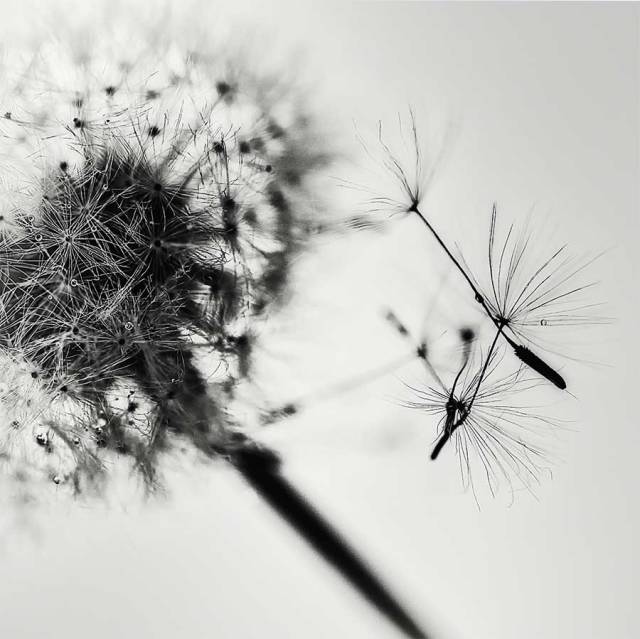
Nikon D750 f/3.5 1/1.250s 40mm 100 ISO
Your Highness,
It is said that an education is a 1000-year worth thing. But a learning institute responsible for that education has forgotten its role already and children are becoming tired each day with the violence and irrationalities inside.
Your Highness, please settle this educational environment that has taken a wrong path and restrengthen the foundation of the nation.
~Jeong Yak Yong, “Korean Mystery Detective”

Nikon D750 f/5 1/30 32mm 100 ISO
Photography, in a nut shell, is lines, shapes, colors, and feelings
In photography negative space is perhaps the most important element as it embraces the subject within your image — the element of interest — helping it stand out and inviting the viewer’s attention. It is the aspect within a photograph that generally doesn’t attract much attention. It is sometimes referred to as white space and has the potential to change what appears to be an average subject into an outstanding image.

The simplest example of positive and negative are the words in this blog. These words draw your attention while the background doesn’t. The words are positive space, and the white background is negative space
Some images have high amounts of positive space creating what some identify as busy, cluttered, crowded creative works. These types of images generally reflect the busy nature of the scene being photographed.
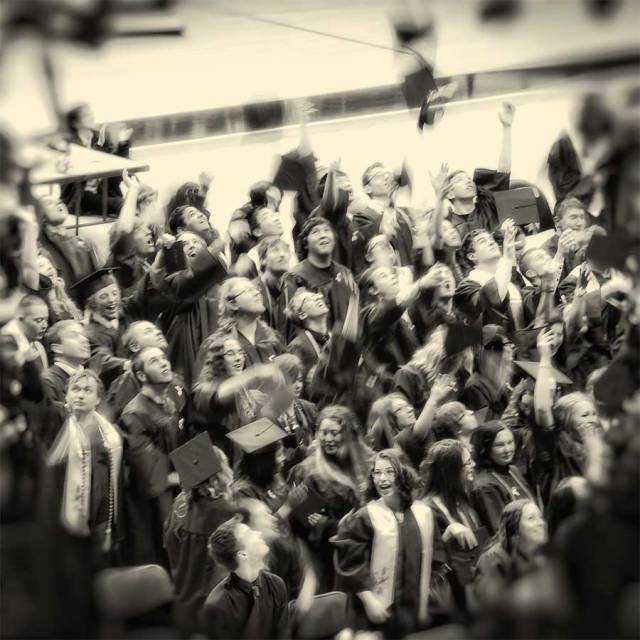
The elements of positive and negative space are two elements of photography that are important because of the emotions they evoke. Images created with high amounts of positive space have the potential to evoke feelings of power, strength, action, chaos, busyness, or…as in the image above…anticipation.
Negative space, in contrast, awakens feelings of peace, calm, quiet, loneliness, isolation. It is less about the subject within a photograph and more about awakening a feeling in the viewer.

Negative space can create a sense of lightness, airiness…it can strengthen the positive emotions in a photography, emphasize the feelings of your subject, conveying whatever story you as a photographer wishes to evoke in your viewer.
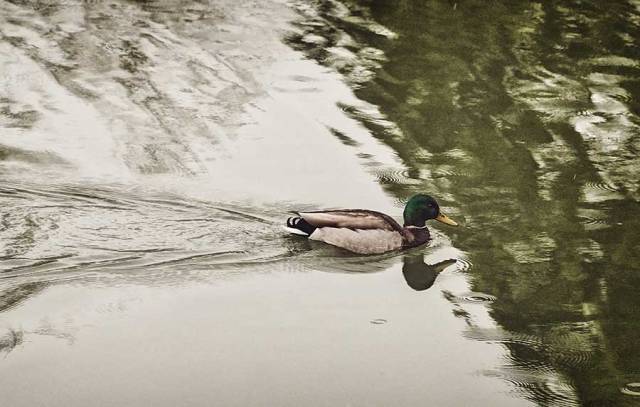 Negative space provides “breathing room” giving the viewer’s eyes a place to rest and preventing an image from appearing too cluttered…creating a more engaging composition.

Negative space generally mutes detail or color; yet, in some cases well-defined buildings and people can act as negative space as it conveys a story or evokes feelings.

It is easy to focus our attention on the subject, on what we see as most important element of the photograph. Adding to or taking away negative space affects the subject within an image as they effectively become smaller or larger within the frame of your image.

At first, it seems that to set out to find empty space may be a difficult undertaking; yet, searching for elements that don’t stand out becomes more natural over time…try including the sky in your composition…it is expansive, everywhere, and often filled with negative space.

Our mind formulates ideas about how objects in our world look and that is the reason an art instructor may invite her class to draw an object upside down. This engages the eye to see as opposed to allowing the mind to impose a preconceived idea into a drawing.
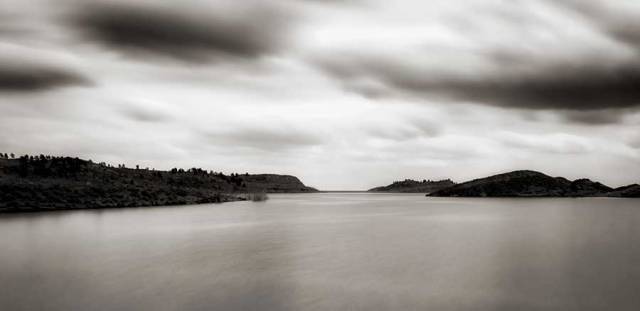
Unfortunately these preconceptions distort the way we see a scene, and this can lead to photographs that we see as good, but not so in reality. My readings noted that a way to step out of the boundary of our minds is to ignore the objects in the scene altogether and instead concentrate on the gaps between and around them. This also aids in giving more attention to composition and seeing sizes and shapes in a more accurate manner.
Negative space, in the world of photography, may be more important especially if the photographer tends towards creating images that are simple; yet effective. Michael Kenna, Bruce Percy, and Masao Yamamoto are three artists known for their minimalistic images.
Examples of images that “focuses” on specific compositional tools are an invaluable learning tool. I hope you enjoy seeing these amazing images offered through Ted Forbes.
In closing, I’m deeply grateful for the exchange of ideas and images that I have experienced thus far in this photo study project and am looking forward to reading your thoughts and seeing your images.


Images submitted in response to Lost in Translation’s Thursday’s Special photo…word…challenge
Smile: merriment, joy, glee, vitality, cheerful, merry, gladden, spirited, happy, humor, high spirits, perky, and zest

tapping..Nikon D750 f/1.8 1/10 35mm 100 ISO
Submitted in response to Ben’s photo challenge: Smile
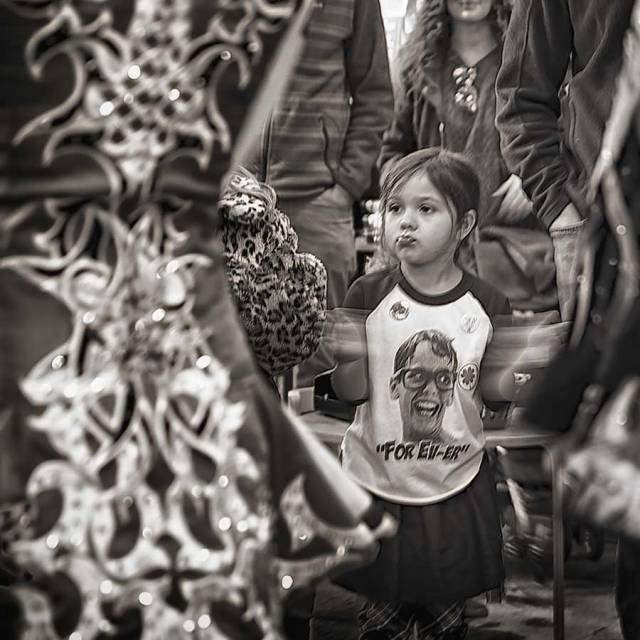
Nikon D750 f/4 1/8s 35mm 100 ISO
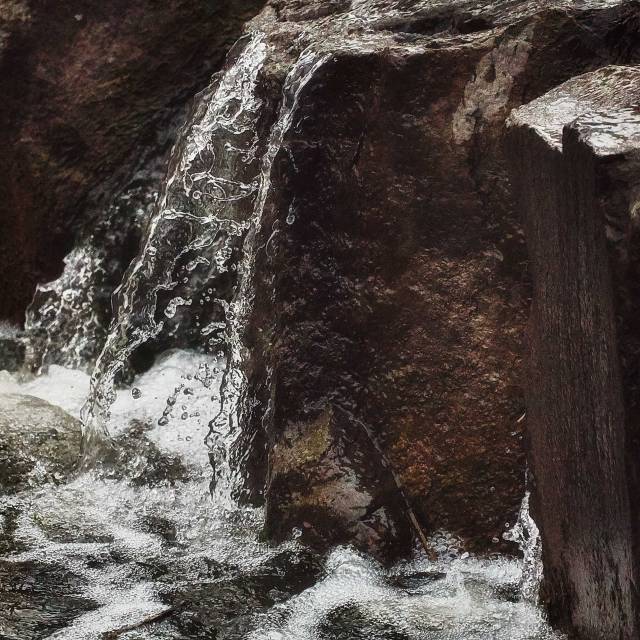
Spring Creek … f/5.6 1/4,000s 300mm 800 ISO
Choose one subject, anything will do — your own house, or the house opposite, or the next house — and in place of a tripod, drive a stake into the ground, nail a board on top of this, and make a screw hole in the board for the screw of your camera . . . Photograph your subject at every hour of the day, on fine days, and at intervals on dull days, photograph it after it has been rained on for weeks, and after it has been sun-dried for months.
~Frank Meadow Sutcliffe (cited: The Aperture History of Photography Series)
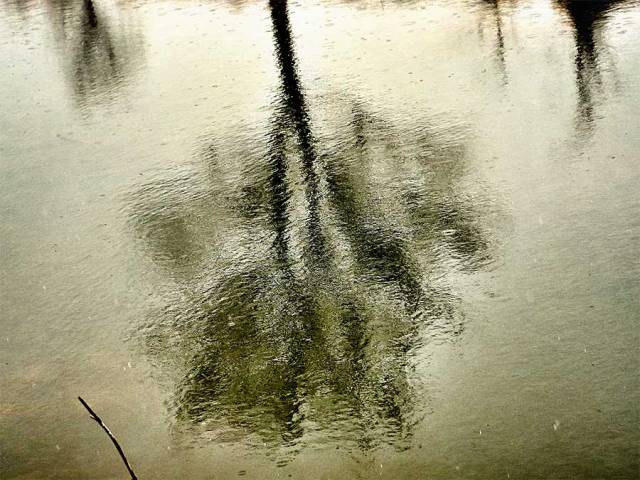
rippling reflections….Nikon D750 f/4.8 1/250 62mm 800 ISO
The weeping willows stand east of the curtained bowers;
Orioles and butterflies pass through the faded flowers.
But peach blossoms on Cold Food Day are beautified
By beauties living or buried by the lakeside.
~Liu Rushi
The other day, while wandering about YouTube, I stumble upon a Chinese movie, “Liu Ru Shi,” and was memorized by the story of her life’s journey within the Ming and Qing Dynasties.
The amazing cinematography that went into the telling of Liu Rushi’s life introduced me to a woman who is known as one of the “Eight Beauties of Qinhuai.” She was celebrated in her time for her beauty and talents and later appreciated and cherished for her integrity and patriotism.
Liu Rushi was not her original name, but a name she gave herself from one of her favorite poems written by Xin Qiji of the Song Dynasty (960-1279).
The movie begins at the time she was sold by her family to a prostitute as a stepdaughter and then, as a maidservant, to a rich scholar family. During the time in the Zhou household, she was educated in literature, poetry, music, calligraphy and painting. When Zhou died, she returned to a brothel when his wife and concubines threw her out of the home.
Liu often dressed as man, writing poems and discussing current affairs with scholars. She developed close relationships with a number of scholars such as Li Daiwen, Zong Zhengyu and Chen Zilong. She and Chen Zilong became romantically close; yet, when she learned that marriage was not an option he could consider she ended the relationship.
Years later, Liu introduced herself at home of Qian Qianyi, a well-known scholar and retired official, dressed in men’s clothing. Three years after their initial meeting Qian, in his late 50s, chose to disregard social norms and they married. The movie illustrates a close and supportive marriage, the events that occurred during her pregnancy with their daughter, and the struggles they experienced as the rebels entered Beijing and the Qing Dynasty took control.
Liu committed suicided a few months after Qian, 83 years of age, passed away.
Willow feathers fly into dream
Smoky moon brings out sorrow
From the moment I was thrown into the dusty world
I have experienced so many things and met so many people
So many crossroads
So much helplessness
Now I know that we will never understand
All the things happening around
Therefore I spent my whole life
To clean up the dusts my desires collected
Then I can be worry free and back to calmness.
Note: While trying to find published works of Liu Rushi’s poems I learned that she had some of her writings published alongside her husband’s. Yet, my research has not been very fruitful. If you know of any English translations, I would appreciate hearing from you.

reflections… Nikon D750 f/4.5 1/250 45mm 800 ISO
Photography is representational by nature in that the subject(s) within most images depict the real world and usually are easily recognizable; for example, a photograph of tree generally looks very much like a tree.

Ted Forbes notes that abstract photography within the art world is drawn from skills that are different from other forms of art and, “It is something that we are not used to seeing in every day life…When it is done well, it stands out and it’s really exciting. When it is not done well, it is weird.”

Fundamentally, abstract art is a visual form that does not convey a realistic depiction of the world. This departure from reality can be partial or complete; therefore, we are often uncertain about the identification of the subject. Photographs within this genre diverge from a realist depiction of the world through the use of form, color, and lines.
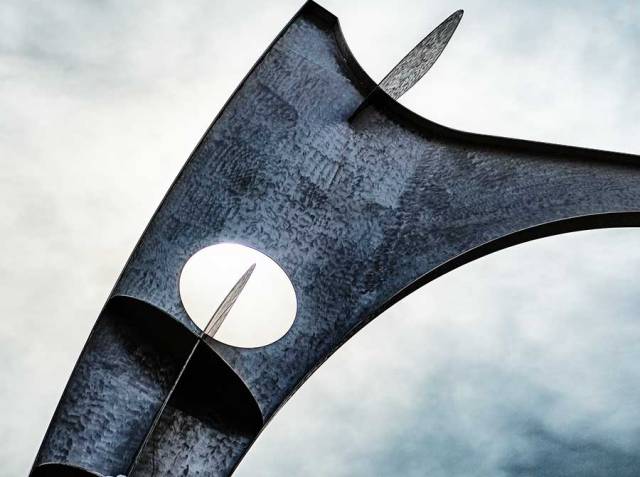
Form is the shape of the elements within the image and is the foundation of an abstract image. When creating abstract photography, ask yourself, “is there an interesting form/shape with this image?”

The variations and contrast of colors within art create interesting images and evoke feelings within the viewer.

Lines within the image directs the viewer’s eye and creates a dynamic image by emphasizing movement.
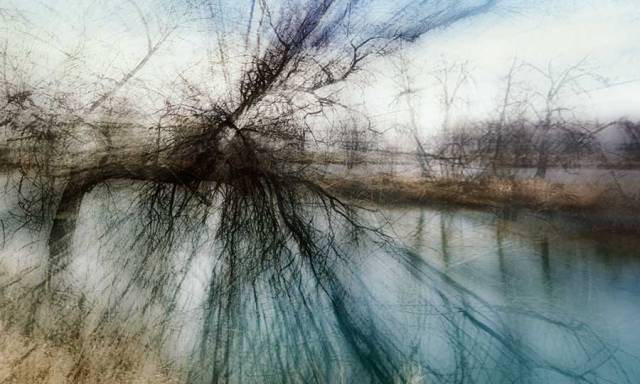
There are different techniques photographers use to create abstract image: 1) selective focus, 2) light and shadow, 3) lines and textures, 4) blur, 5) zooming, 6) moving the camera or subject, 7) double exposure, and 8) moving in close or standing far away.

I’ve come to understand abstract/non-representational imagery as an absence of the type of discrimination and labeling process that seeks an answer to, “what is that?” to one that invites the viewer to explore, “what feelings does this image evoke?”

Thank you for taking the time to visit my blog and for the exchange of ideas and photographs. I am inspired by the process of viewing and exchanging ideas with other bloggers and am excited about walking through your galleries of abstract/nonrepresentational photographs. I hope you find Ted Forbes’ video interesting.
 a meditative journey
You must be logged in to post a comment.