


The question, “Is the centered eye more likely to follow the viewer?” drew me to the above piece of art while walking across the Colorado State University campus.
The question, “Is the centered eye more likely to follow the viewer?” drew me to the above piece of art while walking across the Colorado State University campus.
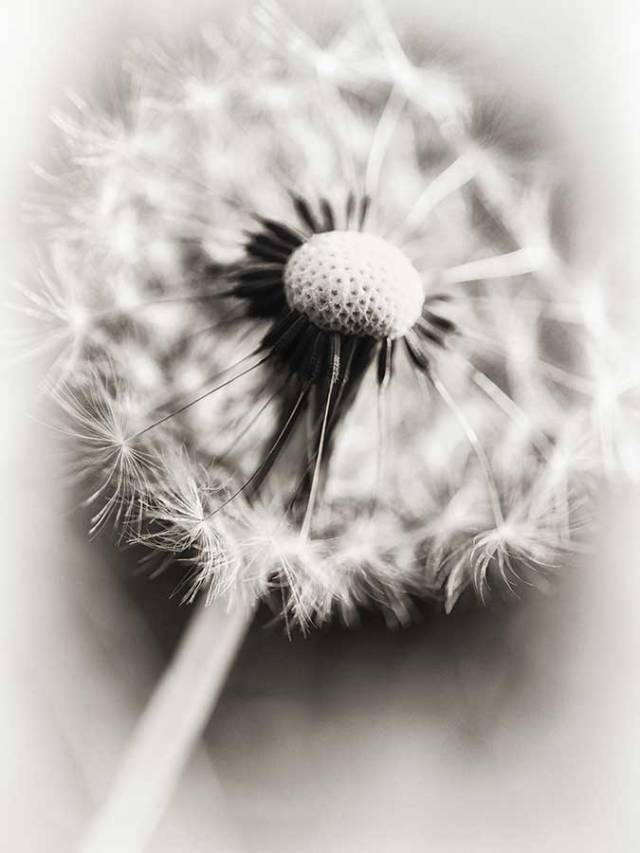
Nikon D750 f/3.3 1/1.250 40 mm 100 ISO

Seven years later, civil war continues to loom in Syria destroying the world they once knew and tearing families apart. Millions of Syrians are living amidst unimaginable violence and uncertainty. 12 million people, over half of the pre-war Syrian population, are either internally displaced or have had to flee the country in search of safety.…
via How to Help Syrian Children From Losing Their Childhood — Thirdeyemom
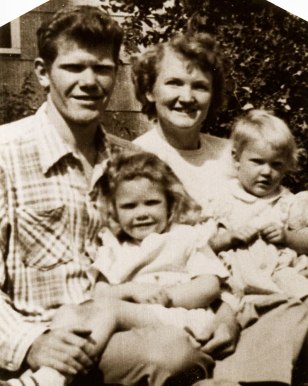
Closed minds and hearts are the result of a failure of trust.
In response to a slight tugging at my shirtsleeve, my attention is redirected away from this search for answers within the words of others and into the eyes of a three-year-old child, who asks, “Find daddy?”…
My father’s death left my mother, a young woman deaf from infancy, with two daughters and pregnant with her first son. I do not recall whose idea it was to wander outside the house early that morning as my mother slept. I can, however, imagine my young self following my older sister as if an invisible thread that tied us together tugged me along as she, with her five-year-old world view, undertook an emotional duty to find our father. Did we believe we could find him fly fishing in the creek that ran alongside the house? Or was there something about the water that enticed us into abandoning our search? I can recall to this day the cessation of anxiety and arising rapture that coincided with my surrender to the inevitable. Two young men, I am told, rescued us both from this search for our father.
Shortly after this incident my mother remarried, and by the time I was seven years old, she was divorced and pregnant with her fifth child. Her fourth child, taken by his father in the dark of night, vanished within the tangled web of adults who regressed into childlike behaviors under incompetent custody laws.
My reflective mind recalls the unbound inquisitiveness that carried my six-year-old emotional self into the house from school knowing on that day my mother’s fifth child was to be born. I can still feel the internal rebound that coincides with walking into an unseen plate of glass as my being absorbed, not the tone of grief, but the intensity of frustration within my grandmother’s assertion, “The baby died!”
The Buddha’s recommendation to abstain from false speech is found in the position that people connect with one another within an atmosphere of mutual trust, where each draws upon the belief that the other will speak the truth. It is suggested therefore that families and societies will fall into chaos as one untruth shatters trust, as it is the nature of lies to proliferate through attempts to weave a harmonious tapestry of reality.
When I reflect upon those times in which I experience an intense urge to say other than what I believe is true, I know it is fed by the anxiety intrinsic to uncertainty, and inherent with the aloneness of expulsion. At other times, the drive seems to come from a sense of nothingness that seeks validation through inclusion with others or continuity within mangled and haphazard memories. It feels as though it is an act that preserves or ensures a sense of control, power, or protection.
What this force blinds me to is the powerlessness that coincides with the telling of an untruth, as well as the emotional separation that overlaps the fear of discovery. It also creates the need for another story to support the one prior. Therefore, the beliefs that compel me to lie are but a layer of lies within a lie.
The intensity of my grandmother’s words served to erect an unbreakable barrier: “This is not to be spoken of,” and thus a door of understanding remained closed between us throughout the remainder of her life. It is her handwriting within a book authored by one of her older sisters that gives me a glimpse into her private struggles: …
When I read these words, I come to an understanding of a woman who suffered less at the hands of others and more from an unforgiving ego fettered to her own grief, shame, remorse, and guilt. Therefore, I have become acquainted with a woman whose own suffering blinded her to the threads of grief and loss my three-year-old self had previously woven into a tapestry of death and to the subsequent re-weaving of the incongruence between my father’s going to heaven, my brother’s disappearance, the baby’s death, and the near-drowning of my older sister and I.
Two weeks after my grandmother declared the baby dead, my infant sister–but not my father or my brother–returned to the family.
~B. Catherine Koeford, Meditative Journey with Saldage
With this history in mind, Thich Nhat Hanh opens a door to compassionate healing.

Nikon D750 f/4 1/160 190 mm I00 ISO
Ted Forbes notes that the rule of space offers the photographer a way to create a sense of motion, activity or conclusion within one’s composition and that it simply involves creating negative space that relates to the subject within the image.
For example, if you place negative space outside your subjects head in a portrait, you imply maybe there is thought going on – particularly if you direct your subject’s eyes toward the negative space.
Or if you have a picture of a motorcycle zooming across the desert. Placing the negative space in front of the motorcycle creates a sense of direction or implication of eventual destination

Nikon D750 f/4.2 1/400 45mm 100 ISO
It is my thinking that Ted Forbes’ discussion dovetails nicely with Raj’s Xdrive photography lesson about a photograph speaking.
a “good picture always speaks out its story…The story the picture is trying to broadcast is nothing but your vision or an intent or a message you are trying to convey to the viewers.

Nikon D750 f/14 1/80 32mm 100 ISO
Thank you for taking the time to visit; and as always, I would love to read your thoughts about the interconnection between story and space as photography composition tools and any images you would like to share.
Hope you enjoy Ted Forbes’ Rule of Space video.
The use of negative and positive space within photo composition aids in directing where you want the viewer’s eye to go.
 Hop on over to Amy’s The World is a Book to journey through her images of positive and negative space.

This is, because that is. This is not, because that is not. This comes to be, because that comes to be. This ceases to be, because that ceases to be…This is like this, because that is like this.
~Thich Nhat Hanh, The Heart of the Buddha
time-lapse of an apple blossom transforming

Nikon D750 f/13 1/320s 40mm 100 ISO

Nikon D750 f/29 1/3s 48mm 100 ISO

241 seconds into one moment.…Nikon D750 f/8 241s 24mm 100 ISO

For a table to exist, we need wood, a carpenter, time, skillfulness, and many other causes. And each of these causes needs other causes to exist. The wood needs the forest, the sunshine, the rain, and so on. The carpenter needs his parents, breakfast, fresh air, and so on. And each of these things, in turn, has to be brought about by other conditions. If we look in this way, we’ll see that nothing has been left out. Everything in the cosmos has come together to bring us this table. Looking deeply at the sunshine, the leaves on the tree, and the clouds, we can see the table. The one can be seen in the all, and the all can be seen in the one.
Thich Nhat Hanh, The Heart of the Buddha’s Teaching

 a meditative journey
You must be logged in to post a comment.