winter blues

winterblues

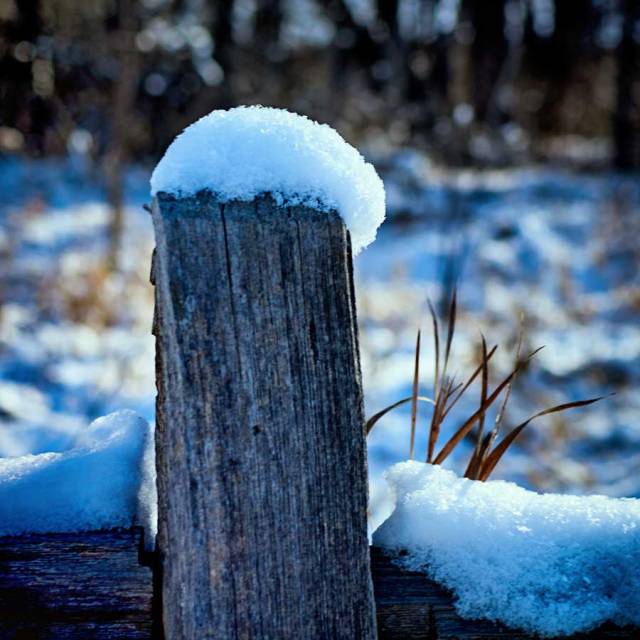
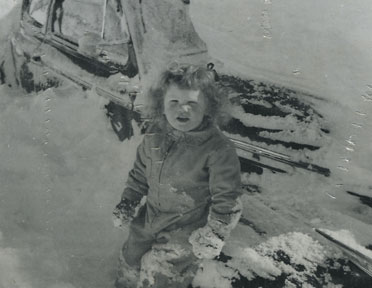
Memories are priceless…they are like hot chocolate and cozy socks on a chilly night.  This past week as I watched videos of the winter storm along the east coast memories of a particular winter in Iowa when the wind chill was reported to be 60 below zero visited for a moment or two…it was then replaced with memories of family photos of the winter  in Portola, California when the snow fall was recorded at 9 feet.

donna

Donna, Portola California

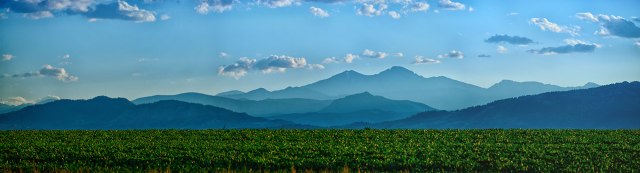
Even though January is my birth month, I often experience the winter blues in January as it is usually the longest, coldest, darkest month of the year.  Not so this year in Northeastern Colorado…weather forecast for today is partly cloudy and 47 degrees.

50% tip…Rachel Maddow’s tipping rule…there is gratitude for the compassion she has for those who deliver pizza through the rages of nature. Maddow: Terrible weather tipping rule is in effect:

xdrive photography learning – 18 – golden hour

In this xdrive photography lesson, Raj  notes that for about an hour during sunrise and again at sunset, photographers are gifted with what is known as the “golden hour” or “magic light.”  Generally the sun’s light is diffused and soft during these two time periods.

In the image below, I chose to combine Raj’s golden hour lesson with a personal study of  the rule of odds.  This image was created about 40 minutes before sunset with what I identified as cirrostratus clouds to the west of my home.  In the past, I have found that the quality of light during the hour before and after sunset is often times influenced by both western clouds as well as the foothills of the Rocky Mountains.


goldenhourweb

Nikon D750   f/7.1   .5 s   35 mm (prime)   ISO 100   neutral density lens

memories

memory1118web

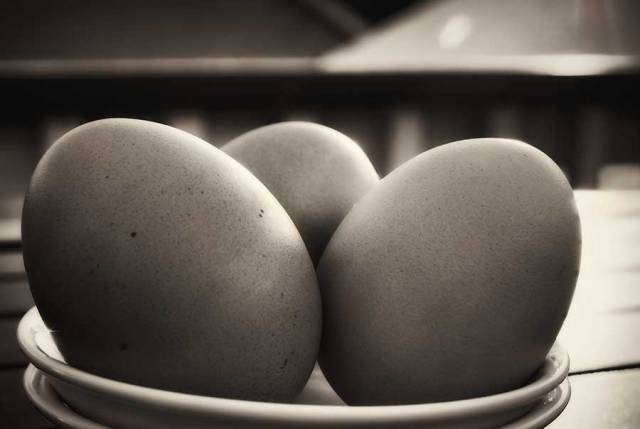
Nikon D750   f/2.2   1/800 s   35 mm   ISO 100

The stream of thought flows on; but most of its segments fall into the bottomless abyss of oblivion. Of some, no memory survives the instant of their passage. Of others, it is confined to a few moments, hours, or days. Others, again, leave vestiges which are indestructible, and by means of which they may be recalled as long as life endures. 

~William James  (The Principles of Psychology, Vol.1, pg. 643)

Speaking of memories, may I introduce you to an American science-fiction film, Marjorie Prime, that was based on Jordan Harrison’s Pulitzer Prize-nominated play of the same name.

Nighttime in the forest…

brendakofford_goatsbeardIIweb

Nighttime in the forest is not like nighttime in the city or on a farm. At night, the sacred forest declares its absolute authority. The curtain of darkness is thick and secretive. …I heard many eerie cries coming from the forest. By eight o’clock it was already night, and the forest’s dominance was restored. The whole universe sank into a profound silence that, at the same time, vibrated with life. I could almost hear the majestic steps of the mountain god as he leaped between the towering trees. 

On full moon nights, none of us could sleep. One time, I was up late writing… When the moon and forest were together they created a profoundly marvelous and mysterious atmosphere, unlike any we had experienced before. The silence was total, yet, we could hear moon and forest speaking to each other. They were no longer two, but had become one. If you took away the moon, the forest would cease to be. If you took away the forest, the moon would not be. We wouldn’t be standing by the moonlit window if moon and forest ceased to be. 

~Thich Nhat Hanh (Fragrant Palm Leaves, pg. 22)

a mental image

One of the interesting things about photography is the fact that it’s record of ourselves and our works so often do not correspond to our mental image…  Generally we assume that the difference between our expectation and the camera’s evidence is the result of some kind of photographic aberration.

~Henri Cartier Bresson

citypark2

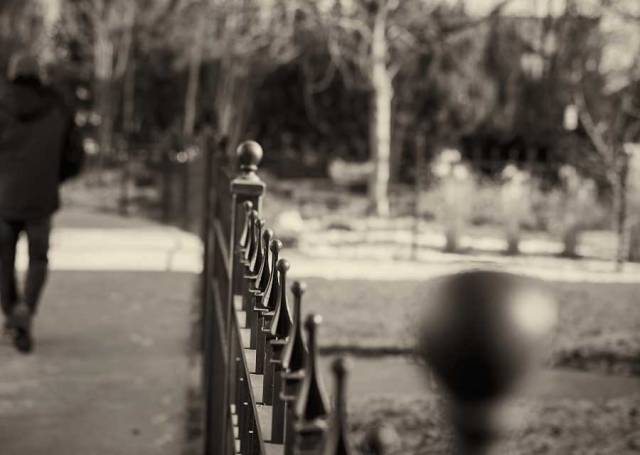
Nikon D750   f/5.6   1/160s   170 mm   ISO 100

home is the way…

December 14, 2012 at 3:56am
Home is the Way
A Christmas message from Thầy
Christmas time is a time for the family, when family members return to their home. Wherever we may be, we try to find a way home to be with our family. It is like the Tết holiday in the Vietnamese culture. We decorate our house and find ways to make our home warm and cozy. We all yearn to have a home that is warm and loving; where we feel that we do not need to go anywhere, or to do or to pursue anything anymore. It is what we can call our ‘true home’. We all have this yearning, this deep desire to be in our true home.
Searching for our home
Jesus, as soon as he was born, had to be on the run right away and to be a refugee, a runaway without a home. When he grew up and became a young man, it was the same; he was still a wanderer with no real home to return to. In one of his discourses, he protested that even the birds have their nests to return to or the rabbits and squirrels have their burrows; but the Son of Man has no place to lay his head, no place to call home.
Siddhartha, as an adult, found himself in a similar situation. He was born into a royal family that was wealthy and privileged. He could have anything he desired. He had a beautiful wife and a good son. He had a bright future ahead of him; destined to be king and ruler of a great empire. But still, he did not feel comfortable even with all this. He did not feel at home. He was not at peace. Therefore, one day, he decided to leave his family in search of his true home, in search of inner peace.
Both Jesus and Siddhartha were searching for their true home. They wanted to find a warm abode where they would not have to search for anything anymore and where they would feel truly at home and at peace. Western people have a saying, “There is no place like home” that expresses the feeling that there is nothing like coming home after being away. Yet still, some of us do not feel at home, do not feel that we have a home to return to, even in our own families. It is because in our families, there is not enough warmth, not enough love, ease, peace or happiness.
Some of us have a homeland, living in the country where we were born, yet we still want to escape and go somewhere else. We feel like we do not have a homeland. Some Jewish people feel that they still do not have a homeland. They have been wandering and searching for a homeland for thousands of years – for a place, a piece of land to call home. Even to this day they have yet to find their homeland. And we – the French, the Americans, the British, and the Vietnamese – we all have a country to call our homeland, but still, we do not feel contented and some of us want to leave. This is because we have not found our true home in our heart. This season, even if we buy a Christmas tree to decorate our home, this does not necessarily mean that we have found our true home or that we are at ease living in our homeland. For our home to be true, there needs to be love, warmth, and fulfilment.
“There is no place like home”
Our True Home
In the end, Jesus found his true home in his heart. He found the light in his heart. He taught his disciples that they too have their own light and he taught them to bring that light out for others to see. Siddhartha taught that one’s true home can be found in the present moment. He developed practices for his disciples so that they too could find their true home. He taught that we each have an island within that is safe and secure. If we know how to return to this island, we can be in touch with our blood and spiritual ancestors, with the wonders of life, and with our own self. In the island of our true self, we can find peace and fulfilment.
Siddhartha found his true home and wanted everyone to be able to find their true home. When the Buddha was in his 80th year and knew that he would soon pass from this life, he felt a lot of compassion for his disciples and friends because he saw that many of them had not found their true home. He knew that when the time came for their teacher to pass away, they would feel abandoned and at a loss. At that time, he was practising the Rains Retreat, residing outside of the city of Vaishali, north of the Ganges. He became very sick during that season. The Buddha’s attendant, Venerable Ananda thought his teacher would soon pass away, so he went into the forest behind some trees to weep. But the Buddha used his power of concentration to slow the progress of his illness and to find the strength to live for a few more weeks, so that he could return to his homeland, Kapilavastu, and pass away peacefully.
The Island Within
At the end of that Rains Retreat season, the Buddha went into the city of Vaishali to visit his disciples, the monks and nuns and the lay friends in the Sangha. Wherever he visited, he would give a short talk for about 5-7 minutes – a mini dharma talk. These mini talks were usually centered on the topic of ‘true home’. He felt that after he had passed on, there would be many disciples who would be at a loss. The Buddha taught them that they all had a place of refuge to return to and that they should take refuge only there.
We too, should return and take refuge in that abode and not take refuge in any other person or thing. That abode of refuge is the ‘Island of Self’; it is the Dharma, and there, one can find peace and protection; one can find our ancestors and our roots. This is our true home – our inner island where there is the light of the true Dharma. Returning there, one finds light, one finds peace and safety, and one is protected from the darkness. The ‘Island of Self’ is a safe place of refuge from the turbulent waves that can otherwise sweep us away. Taking refuge in this island within is a very important practice.
We have a song in Plum Village titled, ‘Being an Island unto Oneself’. This song is about the practice of taking refuge in oneself. If we still feel that we have not found our true home, that we do not have a place to call home, that we have not truly come home, that we still want to look for a homeland, or that we still feel lonely and at a loss; then this practice is for us. This song can remind us to return and take refuge in the island within.
That abode of refuge is the ‘Island of Self’; it is the Dharma, and there, one can find peace and protection; one can find our ancestors and our roots.
Our Refuge of Practice
Around the 4th or 5th century, when these mini talks were translated into Chinese, the monks translated the ‘Island of Self’ as ‘tự châu’ (tự is self and châu is island). “Dear monks, practice being islands unto yourselves, knowing how to take refuge in yourselves.” Those were the words the Buddha uttered just one month before he had passed away. If we consider ourselves to be soul mates of the Buddha, to be real students of the Buddha, we should take his advice and not go looking for our homeland, our true home, in time and space. We should look for this true home right within our own self, within our own heart; where there is everything we are searching for. There, we can touch our ancestors, blood and spiritual, and touch our roots, our heritage. There, we can find peace and stability. There, we can find the light of wisdom. Let us take refuge in our own island – in the island of the Dharma. We do not take refuge in any other person or thing, even Thầy.
The Buddha’s love is immense. He knew that there would be many students who would feel lost after he had gone, so he reminded them that his body was not something permanent and eternal. He taught them that which was most worthy for them to take refuge in, was their own island of self. We know that it is always there for us. We do not have to take the plane or the bus or the train to go there, but with our mindful breathing and mindful steps, we can be there right away. Our island within is our true refuge. It is our practice of the Dharma.
This Christmas, if you buy and bring home a Christmas tree to decorate, remember that your ‘True Home’ is not found outside yourself, but it is right in your own heart. We do not need to bring home anything for us to feel fulfilled. We have everything we need right in our heart. We do not need to practice for many years or to travel far to arrive at our true home. If we know how to generate the energy of mindfulness and concentration, then with each breath, with each step, we arrive at our true home. Our true home is not a place far removed from us in space and time. It is not something that we can buy. Our true home is present right in the here and now; if only we know how to return and to be truly present to it.
Home in the Present Moment
The other day, Thầy was reflecting on what message to send to his friends and students abroad so that they can practice, so that they can be like Jesus or be like the Buddha. Thầy then wrote this calligraphy: “There is no way home, Home is the way.”
The means and the ends are not two separate things. There is no way to return to our home. Our home is the way. Once we take a step on that path home, we are home right in that moment. This is true to the practice of Plum Village. There is no way to happiness, Happiness is the way. Recently, Thầy also shared in his Dharma Talk that, There is no way to nirvana, Nirvana is the way. Every breath and every step has the capacity to bring us right back to our true home, right in the here and now. This is the fundamental practice of Plum Village. This is the message that Thầy wants to send to his friends and students during this Christmas season. If you want to send a Holiday greeting to your friends and loved ones, you can also send this message. If you can practice it truly, then sending it will have a deep meaning; but if you do not practice it, then the message will have little substance.
Let us all enjoy our practice of coming home this Holiday season. Let us truly be at home within, and so become a home for our loved ones and all our friends.
With trust and love,
Thầy

I am…

Civil rights community doesn’t need to look Farr for racism in Trump.

Excerpt from The Hill, 12.22.2017

Our decision to protest President Trump’s visit to the opening of the Mississippi Civil Rights Museum wasn’t simply about the insult of his presence to the legacy of civil rights, it was also about his ongoing war to recreate the barriers and protections so many gave their lives to tear down.

ernest withers, civilrightsphoto

Sanitation workers’ protest in Memphis, TN in 1968
Ernest Withers, Civil Rights Photographer


Through his refusal to condemn white supremacy and his policies to dilute the voting strength and political power of the poor, the middle class and communities of color, Trump has frightened civil rights communities in ways they have not felt in a long time.  It is with this same fear and dread that we look upon his current nominations to the federal courts.

civilrights

Students’ Arrest in Jackson, MS 1961 

…we stand on the verge of a watershed moment that could impede progressive issues for decades. [Thomas] Farr’s nomination represents the tip of the iceberg in what many consider our president’s attempt to remake America’s ideology in his own image. Trump’s judicial nominees, like those elsewhere in his government, are more than 90 percent white and overwhelmingly male. In fact, white males make up 81 percent of the nearly 60 nominees (14 confirmed), including at least four who were determined to be “unqualified” by the American Bar Association.

images

Protest against racial integration in schools, at the Arkansas State Capitol in Little Rock, August 20, 1959. U.S. News and World Report photograph. Public domain

If ever there was a time to guard the federal judiciary, this is it. These nominees share dreadful records on civil rights and are simply unfit to serve. Unlike policy or legislation, these judges are lifetime appointees with the ability to influence all aspects of jurisprudence for decades to come.

~ Derrick Johnson, President and CEO of the National Association for the Advancement of Colored People (NAACP).