Within our home, the setting sun…a time of gratitude and metta meditation
setting sun
wind chime
My people went to live elsewhere and I remained alone in my solitary home. I was tired of meditation and sent a poem to one who had not called on me for a long time.
Weeds grow before my gate And my sleeves are wet with dew, No one calls on me, My tears are solitary–alas!
She was a nun and she sent an answer:
The weeds before a dwelling house May remind you of me! Bushes bury the hut Where lives the world-deserted one.
silhouettemay all sentient beings slumber in peace
Amy (The World is a Book…) writes that because of “the lockdown, we are spending more time at home. But, hopefully this isn’t limiting our interest in photographing. This week, we invite you to share photos taken at home.”
above images created with a Nikon D750
setting sun: f/7.1 1/1250s 65mm 400 ISO
wind chime: f/5.6 1/15s 125mm 400 ISO
silhouette: f/5.6 1/3200 230mm 400 ISO
may all sentient beings slumber in peace: f/8 1/20s 25mm 400 ISO
if one comes across a person who has been shot by an arrow, one does not spend time wondering about where the arrow came from, or the caste of the individual who shot it, or analyzing what type of wood the shaft is made of, or the manner in which the arrowhead was fashioned. Rather, one should focus on immediately pulling out the arrow.
~ The Buddha
spring
Life is short; it must not be spend in endless metaphysical speculations which will not be able to bring us the Truth.
Andres Hedman, Consciousness from a Broad Perspective
sunset april 23, 2020
“The Buddha’s teachings can be read on many levels … at a fundamental level, all the storytelling was a way of conveying ethical values. One of them is the peaceful coexistence of all life forms, which is very germane today. We’ve wandered dangerously far from that principle in the era of climate change. Referring to the seated Buddha sculpture in San Francisco, which is inscribed with the message that all things are connected by causality (in contrast with the deterministic belief that our fate is out of our hands)… What [the Awakened One] saw when he woke up is that things don’t happen by chance, that everything is connected by causality … and if nothing else, Covid-19 is waking us up to the fact that we are all connected.”
Stay at Home Order … day 29 plus 14 seclusion retreat days
‘Who and what are you?’
‘I am the Sabbath,’ said the other without moving. ‘I am the peace of God.’
C.K. Chesterton, The Man Who Was Thursday (The Project Gutenberg Ebook)
“‘What can you mean by all this?’ cried Syme. ‘They can’t be running the real world in that way. Surely not many working men are anarchists, and surely if they were, mere mobs could…
Nikon D750 f/5.6 1/320s 90mm 400 ISO
“… ‘Mere mobs!’ repeated his new friend with a snort of scorn. ‘So you talk about mobs and the working classes as if they were the question. You’ve got that eternal idiotic idea that if anarchy came it would come from the poor. Why should it? The poor have been rebels, but they have never been anarchists; they have more interest than anyone else in there being some decent government. The poor man really has a stake in the country. The rich man hasn’t; he can go away to New Guinea in a yacht. The poor have sometimes objected to being governed badly; the rich have always objected to being governed at all. Aristocrats were always anarchists, as you can see from the barons’ wars.’”
cited: G.K. Chesterton, The Man Who Was Thursday (The Project Gutenberg Ebook)
Note: “This ebook is for the use of anyone anywhere at no cost and with almost no restrictions whatsoever. You may copy it, give it away or re-use it under the terms the Project Gutenberg License included with this ebook or online at www.gutenberg.org.”
Stay at Home Order … day 27 plus 14 seclusion retreat days
Plausible deniability
Refers to circumstances where it is possible to deny knowledge or responsibility of wrongdoing since the subject was unaware of the truth or due to a lack of evidence to confirm responsibility for an action. The use of the tactic implies intentionally setting up the conditions to plausibly avoid responsibility for future actions.
Fox News is nervous. This is what Gabriel Sherman, author of a New York Times-bestselling book about the cable news giant, recently told MSNBC. Sherman said Fox News insiders are expressing concern that the network’s “early downplaying” of COVID-19 might open it up to “legal action by viewers who maybe were misled and actually have died from this.”
Broadcasting false information that causes substantial ‘public harm’
The FCC prohibits broadcasting false information about a crime or a catastrophe if the broadcaster knows the information is false and will cause substantial “public harm” if aired.
FCC rules specifically say that “the public harm: must begin immediately and cause direct and actual damage to property or the health or safety of the general public; or divert law enforcement or public health and safety authorities from their duties.”
Broadcasters may air disclaimers that clearly characterize programming as fiction to avoid violating FCC rules about public harm.
Broadcasting false content during news programming
The FCC is prohibited by law from engaging in censorship or infringing on First Amendment rights of the press. It is, however, illegal for broadcasters to intentionally distort the news, and the FCC may act on complaints if there is documented evidence of such behavior from persons with direct personal knowledge. For more information, please see our consumer guide, Complaints About Broadcast Journalism.
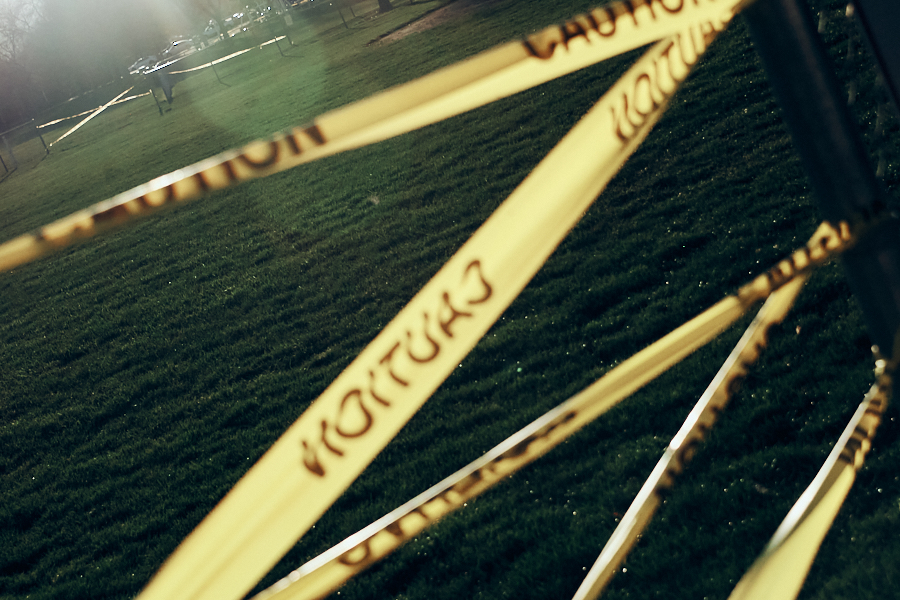
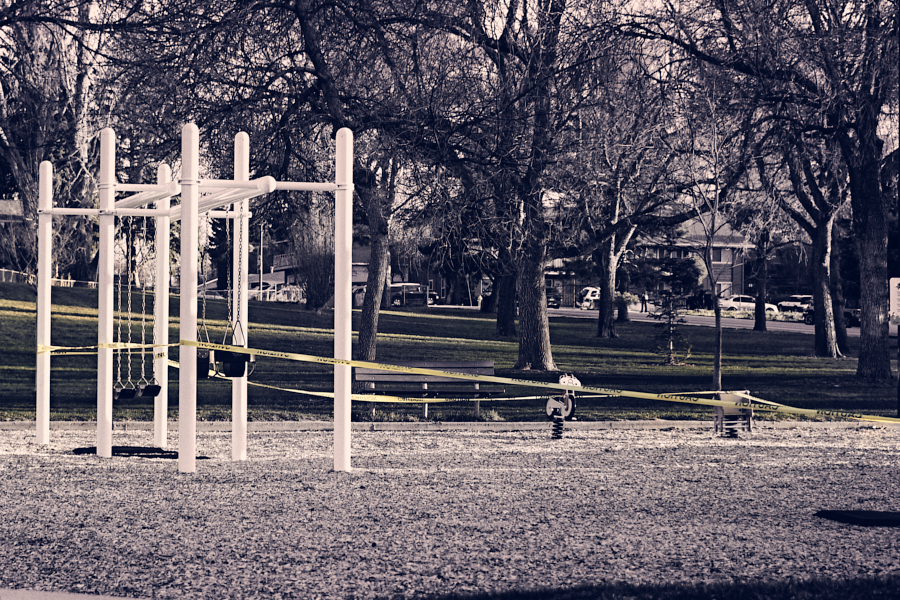
I find myself being drawn again and again to how the yellow caution tape forms a number of barriers around play areas within a park near my home. The tape intensifies the overwheming silence and emptiness contrasting with the news blitz that feeds powerlessness, sadness, anger, confusion, mistrust, division, anxiety, etc.
The empty playground also beings to mind the story of The Pied Piper of Hamelin. The story is a familiar one, but what most of us probably don’t know is that it has its feet at least somewhat planted in an apparently true event that took place in the real-life town of Hamelin, Germany in 1284.
The earliest accounts of the story don’t include the rats, which wouldn’t show up until around the year 1559, but they do include the piper, dressed in his “clothing of many colors.” there is not enough historical data to ascertain for certain what happened in the town of Hamelin in 1284, there is little doubt that something occurred there which left a heavy mark on the town, and on world folklore. Theories advanced over the years include that many of the town’s children died of natural causes that year; or possibly drowned in the nearby river; or were killed in a landslide, thus explaining the recurring motif of the rats being led into the water, or of the mountain opening up and swallowing the children. The pied piper himself is considered a symbolic figure of death.
One other explanation is that the children may have died of the Black Plague, which could be why the rats were later added into the story, though the Black Plague didn’t hit Germany until the 1300s, making its arrival probably too late to be the source of the legend.
Other theorists hold that the story of the pied piper actually refers to a mass emigration or even another Children’s Crusade like the one that may have occurred in 1212.
Our first clue about what really happened in the town of Hamelin comes from a stained glass window that stood in the town’s Market Church until it was destroyed in 1660. Accounts of the stained glass say that it alluded to some tragedy involving children, and a recreation of the window shows the piper in his colorful clothes and several children dressed in white. The date is set by an entry in Hamelin’s town chronicle, which was dated 1384 and said, simply and chillingly, “It is 100 years since our children left.”
Grammarist point out that the phrase “pied piper” usually has a pejorative connotation, pointing out that, “When it is time to pay the piper it is time to accept the consequences of a thoughtless or rash action” or to “fulfill a responsibility or promise, usually after the fulfillment has been delayed already.” Both of these meanings probably tie back to the legend of the pied piper.
Even the words “pied piper” have entered into common usage to mean everything from “a charismatic person who attracts followers” to “a leader who makes irresponsible promises” to “one who offers strong but delusive enticement,” according to the Merriam Webster Dictionary entry for pied piper meaning. “Pied piping” is also a phrase used to describe a certain phenomenon in linguistics in which some words “drag” others along with them when moved to the front of a sentence. (cited: The Chilling Story Behind the Pied Piper of Hamelin)
Now that I have got this obvious allusion out of my system, let’s move on the the composition elements within the above photograph:
Rule of Thirds
Rule of Odds
Leading Lines from right to left
Space
Triangle created by the placement of the “triangle” snow pile with the two subjects
Have we now come to the time in which to honestly acquaint
ourselves with private inner and outer moral guiding principles
and within this solitude with self
foreseehow our individual choices/actions may impact the future of humanity?
I begin this contemplation with a clear knowing that I do not wish to wake from this time of mistrust and uncertainty to the prison bars of moral shame.
Stay at Home Order … day 24 plus 14 seclusion retreat days
“… Syme could hardly see for the patterns of sun and shade that danced upon them. Now a man’s head was lit as with a light of Rembrandt, leaving all else obliterated; now again he had strong and staring white hands with the face of a negro. The ex-Marquis had pulled the old straw hat over his eyes, and the black shade of the brim cut his face so squarely in two that it seemed to be wearing one of the black half-masks of their pursuers. The fancy tinted Syme’s overwhelming sense of wonder. Was he wearing a mask? Was anyone wearing a mask? Was anyone anything? This wood of witchery, in which men’s faces turned black and white by turns, in which their figures first swelled into sunlight and then faded into formless night, this mere chaos of chiaroscuro (after the clear daylight outside), seemed to Syme a perfect symbol of the world in which he had been moving for three days, this world where men took off their beards and their spectacles and their noses, and turned into other people.
That tragic self-confidence which he had felt when he believed that the Marquis was a devil had strangely disappeared now that he knew that the Marquis was a friend. He felt almost inclined to ask after all these bewilderments what was a friend and what an enemy. Was there anything that was apart from what it seemed? The Marquis had taken off his nose and turned out to be a detective. Might he not just as well take off his head and turn out to be a hobgoblin? Was not everything, after all, like this bewildering woodland, this dance of dark and light? Everything only a glimpse, the glimpse always unforeseen, and always forgotten. For Gabriel Syme had found in the heart of that sun-splashed wood what many modern painters had found there. He had found the thing which the modern people call Impressionism, which is another name for that final scepticism which can find no floor to the universe. As a man in an evil dream strains himself to scream and wake, Syme strove with a sudden effort to fling off this last and worst of his fancies. …
cited: The Project Gutenberg Ebook of The Man Who Was Thursday, by G.K. Chesteron
The above photographs were created with a Nikon D750, f1/8, 35mm, 100 ISO. Shutter speeds of 1/3200 to 1/4000.
Stay at Home Order … day 21 plus 14 seclusion retreat days
“A haiku is not a poem, it is not literature; it is a hand becoming, a door half-opened, a mirror wiped clean. It is a way of returning to nature, to our moon nature, our cherry blossom nature, our falling leaf nature, in short, to our Buddha nature. It is a way in which the cold winter rain, the swallows of evening, even the very day in its hotness, and the length of the night, become truly alive, share in our humanity, speak their own silent and expressive language.”
– Haiku: Eastern Culture, 1949, Volume One, p. 243.
Nikon D750 f/5.6 1/640s 300m 400 ISO
This month I’ve continued with my intention to study and implement composition elements as offered through an on-line education site, Udemy. Thus far, I have completed two of their photography courses.
It is my intention for the next 30 days to “focus” on the basics of composition, both within camera and digital darkroom.
The image above was created by moving closer (telephoto lens) at a construction site with simplicity in mind. I learned in the second class that if photographers find the environment to be boring…they need to move in closer. Also, beautifully composed photographs will include 3-5 rules. It is my thought that the above image includes:
space
golden points, right to left
lead room
close-in with blurred background
sharpness
Do the shadows meet the rule of odds?
Does this photo include the element of dark figure on light background?
Do you have any constructive feedback about the above image? Do you see something I may have overlooked? If so, I would enjoy reading your thoughts. Thanks!
Stay at Home Order … day 18 plus 14 seclusion retreat days
pink!!!!
Nikon D750 f/1.8 1/4000s 35mm 200 ISO
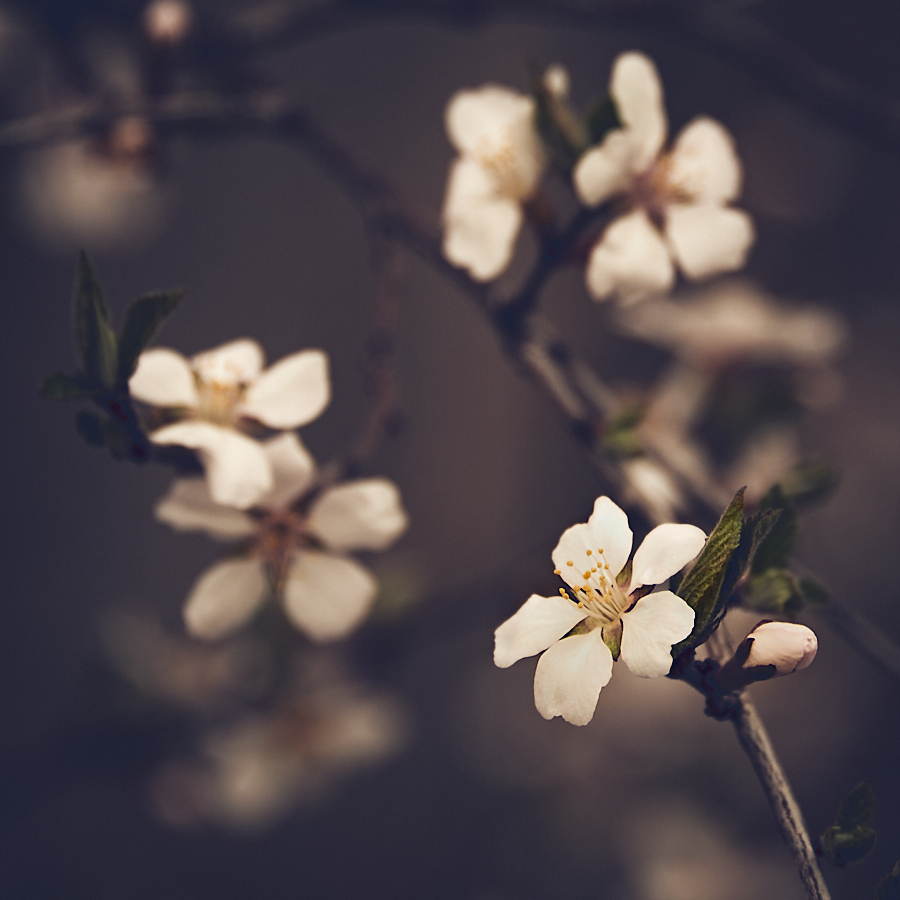
Northeastern Colorado’s mundane landscape that speaks of the transition of spring’s awakening from late winter’s fading is a time in which I find myself yearning for colors other than the various shades of browns, yellows, and blue skies.
Nikon D750 f/1.8 1/4000s 35mm 200 ISO
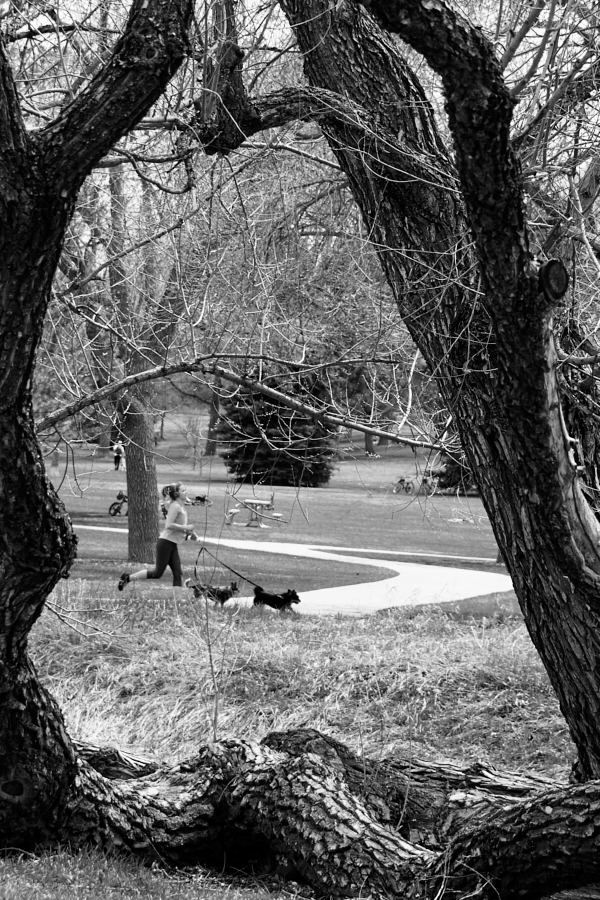
After reading Fletcher and Hewitt’s ebook (A Journey in Composition) I set out to explore if I could open myself to the beauty within this time through various compositional elements of photography: leading lines, repetition, points of interest, complementary colors, and vanishing points.
Nikon D750 f/1.8 1/4000s 35mm 200 ISO
Nikon D750 f/1.8 1/3200s 35mm 200 ISO
A Journey in Composition, an ebook written by photographers Christian Fletcher and Tony Hewitt, outlines their travel across the western United States. The ebook covers fundamental aspects of composition, including color and interpreted composition techniques while paying homage to the techniques of the old masters – Stephen Shore and William Eggleston.

























 a meditative journey
You must be logged in to post a comment.