Waking to the morning sunlight …
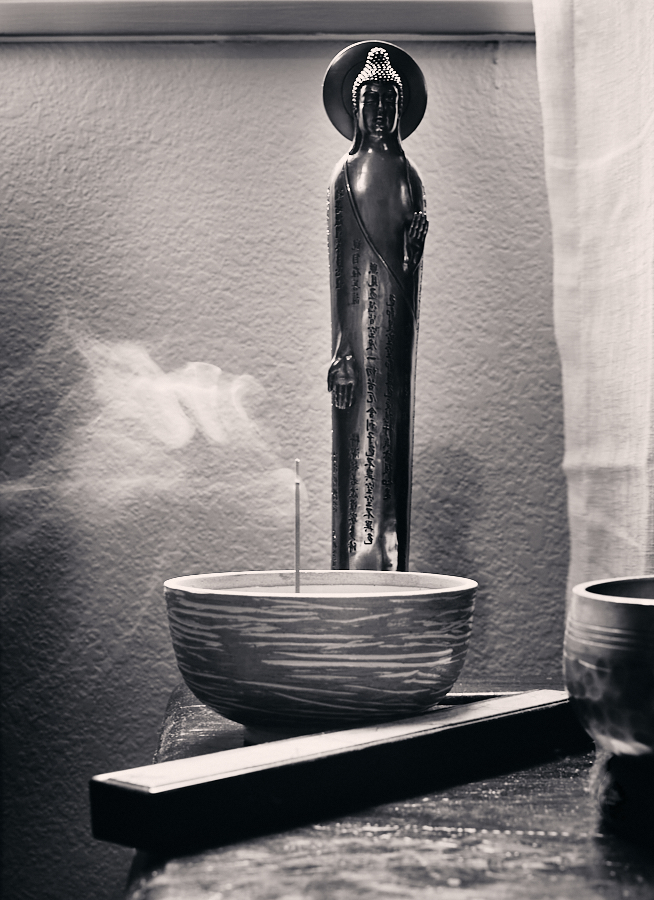

This week Patti invites us to take a “fresh look at ordinary, everyday objects–things that you see and use in your daily life.”
Waking to the morning sunlight …
This week Patti invites us to take a “fresh look at ordinary, everyday objects–things that you see and use in your daily life.”
Our heroes must be summoned from within. It’s up to us to put them to work and to learn how to save ourselves.

“People …like the idea of someone with special powers watching over us, ready to intervene in a crisis and keep us safe from dark forces. The Buddha…spoke of ‘the two bright qualities [that] protect the world’ (dve sukka dhamma lokam palenti—Anguttara Nikaya 2.9). These are Hiri, or conscience, and Ottappa, our respect for others. …
“Today, …the greatest dangers we face now erupt from within our own hearts: human greed, hatred, and delusion, the arch villains that cause so many real-world problems. Greed, the powerful impulse to snatch whatever it can, will take even life itself from the defenseless. Hatred drives us to do unspeakable things to those we view as other. And delusion, so willingly embraced, smothers any insight that might arise about the danger we’re in or the harm we may do. The twin guardians are the crucial allies we have to foil their plots.
“The first hero, Hiri, can be thought of as conscience or self-respect. She… flies into our mental world at the moment when we are considering doing something that we know deep down to be wrong. Hiri is our personal sense of ethical integrity, our moral compass, our intuitive understanding of what is right and wrong, what’s appropriate and what isn’t. She is not a severe critic but a soft, caring voice whispering in our ear and guiding us through our lives with courage and compassion. She saves us from the demons lurking within and stands beside us when we say, ‘No, that is just not right. I will not do it (or say it or think it).’
“Her intrepid ally Ottappa is the elemental force of caring for others and respecting their concerns. It appears on the scene when we’re tempted to do something that is against the laws of propriety, is outside the social norm, or would be condemned by the people we respect. Ottappa draws its strength from the fact that we are social creatures who belong to a family or community, and that our actions are rooted in and accountable to a larger collective order.
“…The Buddha said [Hiri and Ottappa] guard the world, protecting it from getting broken by the onslaught of the worst parts of ourselves. Without them people could act like beasts, ravaging even their own mothers. We all know what atrocities human beings are capable of. For so many victims, Hiri and Ottappa do not always show up in time, held at bay by their nemeses, Ahiri (lack of conscience) and Anottappa (lack of respect). These two anti-heroes are present every time a harmful, cruel, or ignorant deed is done, blocking out the benevolent effects of conscience and respect.
“Fortunately Hiri and Ottappa have other friends, including Sati, or mindfulness, who goes first into every fray and summons the team into action. Sati is conscious awareness of what is happening right now, and Ahiri and Anottappa can only function when such awareness is absent. When people do harm to themselves and others, they are often not aware of what they are doing. They are conscious enough to act, but not conscious enough to be aware of the quality of their actions or of their consequences. Whenever a person musters even a degree of mindfulness, conscience and respect arrive there too, helping them do, say, and think what is helpful rather than what is harmful…”
cited: Andrew Olendzik, Guardians of the World Tricycle, Fall 2017
Nikon D750 f/8 1/50s 145mm 400 ISO
edited in Capture One 20 and Photoshop

Stay at Home Order … day 30 plus 14 seclusion retreat days

everything is connected by causality … and if nothing else, Covid-19 is waking us up to the fact that we are all connected
Brian Boucher, CNN These ancient images of the Buddha are more timely than you think
if one comes across a person who has been shot by an arrow, one does not spend time wondering about where the arrow came from, or the caste of the individual who shot it, or analyzing what type of wood the shaft is made of, or the manner in which the arrowhead was fashioned. Rather, one should focus on immediately pulling out the arrow.
~ The Buddha
Life is short; it must not be spend in endless metaphysical speculations which will not be able to bring us the Truth.
Andres Hedman, Consciousness from a Broad Perspective

“The Buddha’s teachings can be read on many levels … at a fundamental level, all the storytelling was a way of conveying ethical values. One of them is the peaceful coexistence of all life forms, which is very germane today. We’ve wandered dangerously far from that principle in the era of climate change. Referring to the seated Buddha sculpture in San Francisco, which is inscribed with the message that all things are connected by causality (in contrast with the deterministic belief that our fate is out of our hands)… What [the Awakened One] saw when he woke up is that things don’t happen by chance, that everything is connected by causality … and if nothing else, Covid-19 is waking us up to the fact that we are all connected.”
Brian Boucher, CNN These ancient images of the Buddha are more timely than you think
All images created with a Nikon D750
sunset april 23, 2020: f/5.6 1/500 42mm 400 ISO
basketball court: f/5.8 1/800 100mm 400 ISO
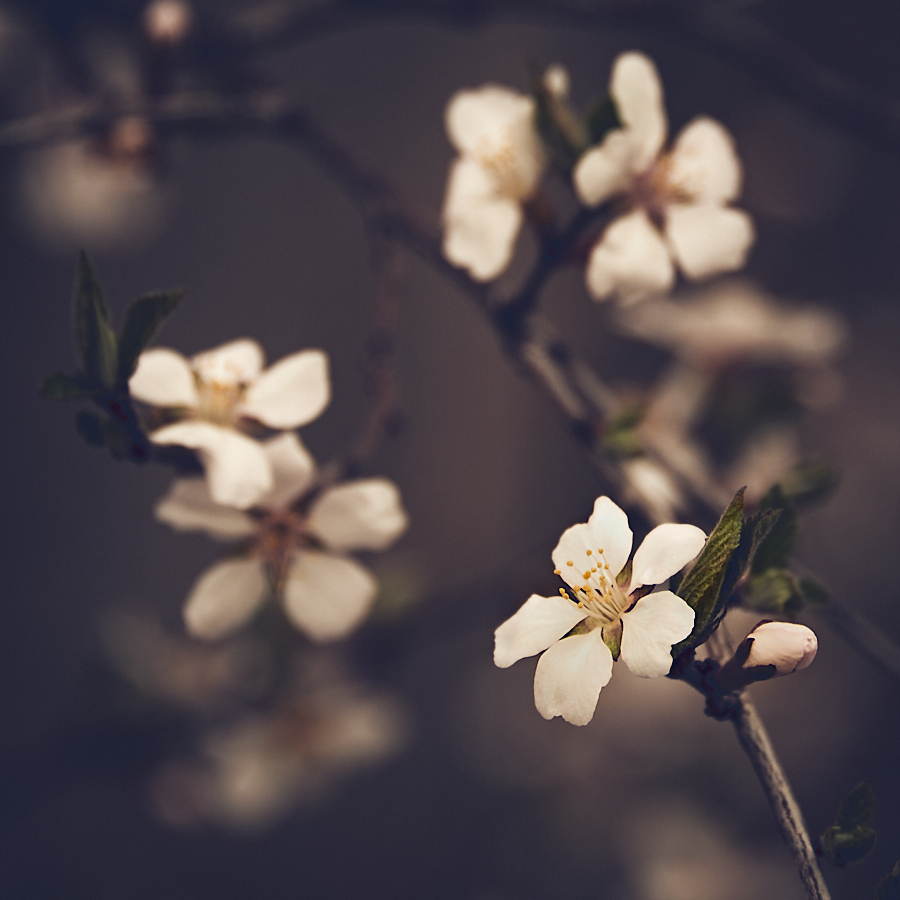
spring blossoms: f/5.6 1/160s 300mm 400 ISO

Riding within summer’s breeze with nothing to do, nothing to realize, no program, no goal to achieve…aimlessness.
Death of a loved one disturbs the relationships that sustain a person’s sense of ‘identity’ and the high level of binding and cathexis concentrated on the person who is lost is suddenly disrupted . . . there is a close link between the doctrines of egolessness and suffering.
De Silva, Padmasiri. An Introduction to Buddhist Psychology. Landam, MD, 2000.

Through this lens of Buddhist thought, I begin to feel a crumbling of a child’s self with an understanding of how my father’s absolute and final absence from our lives disrupted the multiple relationships between my father, mother, sister, and me. Besides the sudden severing of the identity I was forming via my father, the connecting emotional threads between those of us that were left, although still intact, were unknowingly stretched and pulled by our own individual fears of egolessness.
My father’s death left my mother, a young woman deaf from infancy, with two daughters and pregnant with her first son. I do not recall whose idea it was to wander outside the house early that morning as my mother slept. I can, however, imagine my young self following my older sister as if an invisible thread that tied us together tugged me along as she, with her five-year-old world view, undertook an emotional duty to find our father. Did we believe we could find him fly fishing in the creek that ran alongside the house? Or was there something about the water that enticed us into abandoning our search? I can recall to this day the cessation of anxiety and arising rapture that coincided with my surrender to the inevitable. Two young men, I am told, rescued us both from this search for our father.
Koeford, BC. A Meditative Journey with Saldage Homesickness for a place, a time, a person that cannot be
…the four–earth, water, fire, and wind–are without characteristic, without entity, without self, without … principle.
D S Lopez, Jr, The Heart Sutra Explained

“The fire element is heat, warmth, and also the motivation that dives us; it also is our metabolism. …
“The earth element is all things that are solid, all the things we can touch…
“The water element is all the fluids in our body…
“The air element is the space in our body, also the air that enters and leaves our body, our breath…the movement the our body makes.”
Brother Phap Hai, nothing to it ten ways to be at home with yourself
Hop on over to Amy’s to join this week’s lens-artists challenge: elements
May I find the Equanimity that will lift a veil of shamed despair and acquaint me to the perceived and perceiver absent of greed, anger, and ignorance.

This journey with saldage has brought me to a place and time in which to unweave and sort through the pseudo-beliefs I have simply, without question, absorbed through the lens of childhood fantasy and comprehension. To begin this process is to reformulate beliefs through a process of mindfulness and analysis and then to know for myself, “These things are bad, blamable, censured by the wise; undertaken and observed, these things lead to harm and ill… These things are good, blameless, praised by the wise… These things lead to benefit and happiness.”
It is not an easy undertaking to not simply believe what has been learned within family, school and church as well as conclusions reached through readings. The invitation to not simply follow tradition brings to the surface conflicts with compliance and opposition that come from an avalanche of values and guiding principles that outlines how I understand the roles and expectations of women.
To not adhere to that which was surmised within family stories about an ancestor, who upon seeing a swarm of locust “knelt in his patch of grain and pleaded with his Maker to spare his wheat” and then saw them divide and not damage his remaining crops. Or within the story about the ancestor, who during a trip from New York to England, calmed the seas with a prayer, and while in England, after much fasting and prayer administered to a deaf and dumb boy who was subsequently healed. To not simply believe opens a door of pondering about generations of family members who intimately knew powerlessness and insecurity, who eased their feelings of incompetence through prayer, and whose conceptions blinded them to their neighbors’ plight.
To not simply believe that I must endure suffering is to reject the axiom that there is an absence of fundamental faith and goodness. To not adhere to the assumed abilities of ancestors frees me from the belief that a sincere act of making amends for my sins will open the doors to Shangri-La. To not simply draw upon scripture unbinds me to the shame that I don’t have the faith – even of the size of a mustard seed – to be deeded as “good and without sin” so what I wish for, even that which goes counter to nature’s laws, will be granted. To ease the suffering within discontent is to not simply hold to be true that I am to acquiesce to pain until the final judgment of death, and only then will I be forever at peace, or forever condemned to an existence of even greater suffering.
To not simply believe opens my ears to the incongruence within a belief in an all-knowing presence who, if not validated, punishes, absent of the grace within loving-kindness. To not simply believe brings a compassionate acknowledgment to the painful efforts to sway God into granting me my desires through bargaining, sacrifice, negation, and suffering, and to finally surrender with acceptance to “Thy will be done on earth as it is in heaven.” To not simply believe sheds light upon the greed, aversion, and delusions that are intertwined into my conception of and relationship with life.
I do hold that my beliefs and the subsequent desire for their illusive promises of validation, forgiveness, or reunification have set me upon an unending path of suffering. These beliefs lead to harm and ill as they are like thorns that tear into my heart. This searing pain releases resentment intertwined with envy, awakens alienation, and denies me the essence of Christ’s wisdom and loving compassion.

Christ stood before self-righteous anger and commanded that only the one without sin was to cast the first stone of punishment and, at another time and in the midst of his own suffering, sought forgiveness for those who “know not what they do.” Within these written words, I hear compassion speaking for the suffering intertwined within anger ungoverned by moral shame and moral dread. Compassion is telling us how suffering, entangled into knots of mental, emotional, and social turmoil, deafens us to our guiding principles and blinds us to the horrors our moral shame will witness as it awakens from darkened ignorance.
The practice of the presence of God as being comparable to that of consciousness finally makes possible “full awareness” applied to every thought, world, and deed. ~ Unknown
Excerpts from B Koeford, A Meditative Journey with Saldage
May I find the Loving Compassion that will soften the shield embracing my heart so that I may love absent of greed, anger, and ignorance.

I find myself standing on a dry dirt road with two deep parallel ruts cutting winding dark ribbons into the road until they unite and disappear in the horizon. The sun greets me with the same dry warmth that soothingly penetrates my skin as I wrap around me a towel just pulled from a tumbling clothes dryer. The air messages that it is a time of transition and I see the slight touch of autumn’s mustard yellows and crimson reds upon the tips of trees lining a distant hill. Before me stands a child of about twelve years of age. Her head is bent down with absorbed attention upon the small puffs of dust clouds her bare feet stirs up before her.
She looks up at me with expectant eyes that suddenly overfill with tears. “I don’t remember who or what I’m looking for,” she says, as miniature rivulets begin to flow down her cheek.
Then I notice a three-year-old boy with wispy blonde hair and mesmerizing oxen-eyes as he emerges from his hiding place behind the girl. As he takes hold of her right index finger, he reaches up with his left hand and touches a teardrop that is forming along the girl’s chin, asking “Find mummy?”

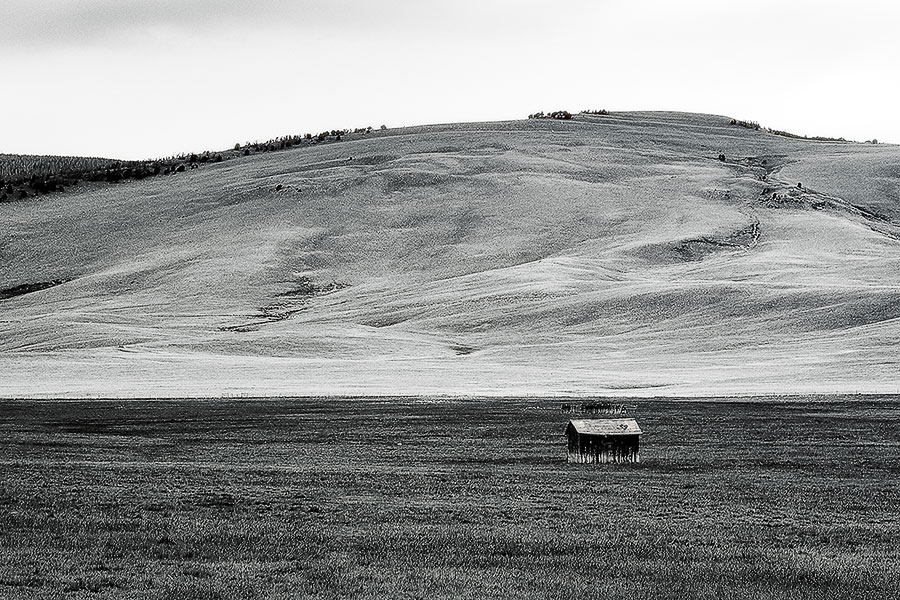
Nikon D750 f/7.1 1/500 50
Suddenly, as if a whirlwind came down from the heavens in response to the boy’s voice, I come to myself standing in the center of a frozen lake. I am shivering and see nothing more than a dark and shadowy forest surrounding me. I hear in the distance the sound of children’s voices repeating a refrain with a haunting tone, “Broken hearts, frozen hearts, shattered hearts.” And then I see them: four–no, five. Five hungry, child-like, ghosts with needle mouths, long twisted thin necks, and bloated stomachs.
They come out of the forest and stand along the lake’s shoreline, repeating their refrain, “Broken hearts, frozen hearts, shattered hearts.” Their words travel across the surface of the frozen lake and encircle me with the sounds of unfilled longings and infinite emptiness.
Then I awaken to my own craving for those who have been lost to me, those who have died. Within the darkness of this forest memories of past days rise and intermingle to become a swirling chaos within the image of emptiness where there once was a home, a family. Confusion, anger, and loneliness flash within as these memories incite feelings and memories that pummel upon me, one frozen memory after another.
I hear questions from a child. Confused, they come as fragments: “His heart was broken? Why did I have to go? They moved?” The sound of adolescent angst intertwined with arrogance swirls around me, as the questions become assertions: “I won’t be here if he comes back! I’ll do as I please.” The mist in the air surrounds me with the chilling voice of others, accusing: “If you had faith, she could hear. You were her companion. It is you that must leave. It does not matter, it is over. I cannot help you.” Then, “There was an accident.” I feel myself falling upon the ice as I have fallen before with broken promises, beliefs, and dreams shattered all around me. I feel the layers of iced grief, anger, sadness, confusion shielding my heart. Again, the refrain, “Broken hearts, frozen hearts, shattered hearts.”

The night cloud’s fingertips drift away from the moon. In the silvery light I see visions of a small child, alone in the gray-toned shadows, planting seeds in the moist soil of despair. Her sob-filled voice fills the night’s emptiness, “You are too stupid to understand. I don’t need you. I’m special. I’ll hide my tears. I won’t tell you anything. I won’t need you. I’ll show you that I don’t need you.”
A veil lifts and my observing mind sees a raging powerless ego annihilating self-in-relationship, suppressing feelings; and all the while, unknowingly creating her shadowy forest of worthlessness, hopelessness, alienation, and pseudo-independence.
Anger tells me that I am nothing;
love tells me I am everything.
Between the two, my life flows.
I feel a golden-toned voice, vibrating the soft and gentle touch of loving-kindness. “These hungry ghosts are visions that arise from years of tears closeted within your soul. Is it now time to cut this intertwining craving and clinging to your yesterdays?” She encourages a thought that to be freed from this frozen place and time begins with a true comprehension of the refrain, “Broken hearts, frozen hearts, shattered hearts.”
This voice says, “Call forth these five hungry ghosts, one by one, by their true given names and see each true ‘I’-in-self hidden behind veils of greed, anger, and ignorance. Ask what it is that will cease their yearning and release them from this frozen forest so that they may finally rest in peace. As you hear their request touch your heart, open yourself to share with each that which will release you from this bondage. Melt this chain with loving-kindness and forge the golden key that gives admission to a room of healing serenity.”

In a clearing I find myself slowly warmed by the autumn sun as I return to the two children I met earlier on a dry, dusty road. Behind me is the forest I have just emerged from; before me is a field of yellowed wheat. Just beyond the field is a house weathered gray by the seasons and weakened by the stresses of time. In the golden rays of the morning light, the young girl is kicking up clouds, searching through the barren soil for seeds of her past, and desiring to be freed from yesterday’s delusions. She walks over to the side of the road and bends over; as she stands, I see three keys, dangling from her left hand. One key is silver, another is gold, and the third is made of diamonds. I feel the pain of fear awaken as the warmth of this early autumn day touches the frozen shield that embraces her heart.
The air is filled with sounds of a new refrain, “May I be happy. May I be free from pain. May I feel emotionally connected with others. May I be at peace.
“May these children be happy. May they be freed from pain. May they feel emotionally connected with others. May they be at peace.
“May those hungry ghosts be happy. May they be freed from pain. May they feel emotionally connected with others. May they be at peace.”
Excerpts from B Koeford, A Meditative Journey with Saldage
May I find the Wisdom that silences the fortress of my mind’s discontent so I may hear with understanding teachings absent of greed, anger, and ignorance.

I often feel as though I am an old blind woman walking through a petrified forest with only a staff to ensure that my steps find solid ground. I remain ignorant, as I unconsciously look away from that which will break my heart and seek stability through the creation of and attachment to ideas, beliefs, principles, and concepts. I yearn for certainty; anger erupts each time I stumble and fall and forges a dogmatic fortress that encircles my heart and mind. The desire to hear with understanding teachings absent of greed, anger, and ignorance speaks of an awareness of how this protective barrier deafens me to words of wisdom that shed light into the shrouded mysteries of life. During those moments when I find myself attempting to engage the unknown, I ask of myself, “What energies would flow into a life emptied of greed, anger, and ignorance?”
As I reflect upon the fortress of my mind’s discontent, an imagined stained and scratched door opens before me as if to invite me into a dark and musty attic. As my eyes scan beyond the entrance, I see streaks of yellowed sun beams, weakened by dust laden drapes; a scuffed wooden floor, covered by a bare-thread carpet of muted colors; and wall paper, grayed and yellowed, tugged away at the top most of a corner by the collected weight of long ago wisps of cigarette smoke.
My observing mind notices that there is no other furniture other than two rocking chairs placed facing each other in the center of the room. Sitting in one is a slender child. She seems to be no older than four years old. A slight musty scent of aged vanilla greets me as I enter the room with a request that the child not be disturbed. The sound of her voice, which I first heard as a distant mumble, intensifies into an animated stream of words. The words seem to rush from her with such passion that a focused listener would surrender to an impulse to talk over the justifying, rationalizing, point–counter-point, argumentative, single-person monologue.
I stand quietly at the edge of the room listening not to the words but to the power within her words and note to myself, “Her words are gushing out from a center of guilt, shame, remorse.”
I again return to her words and listen so deeply that a crinkle forms on my forehead as I wonder, “Is there anxiety about a deed so wrong it is punishable by banishment?”
I quiet my distracting thoughts and listen even more deeply and then I acknowledge a profound sadness in the threads of defensive anger that is begging to be heard and understood.
If one comes across a person who has been shot by an arrow, one does not spend time wondering about where the arrow came from, or the caste of the individual who shot it, or analyzing what type of wood the shaft is made of, or the manner in which the arrowhead was fashioned. Rather, one should focus on immediately pulling out the arrow.
~ The Buddha
My compassionate self moves to the young child. As she embraces the young child, she begins to rock and whisper, gently, softly, “How long have you been here?” The young child tells of wakening to this room after a night of hiding under blankets trying to be unseen, holding her breath trying to be unheard, swallowing her fear trying to be still as the sounds of distant shattering glass and disembodied voices crashed and stumbled upon and into each other.
My compassionate self hears of the homesickness that emerged with such intensity that it overflowed her soul and traveled across rivers, over mountains, and through valleys searching for someone to bring her home. The yearning returned from its fruitless travels and surrounded her as if it were the voice of an unseen other. In a painfully frustrated response, anger roused within the child an intention to destroy this other’s yearning that come in the place of her heart’s desire.
My compassionate self awakens to the realization that this young child is ignorant of the fact that the chair opposite her is empty and that she is being persecuted by a phantom of her own creation. Slowly my compassionate self understands how this young child’s powerlessness created not a monologue but an internal dialogue between a phantom, lost within her homesickness, and a child, lost within her wounds. My mind recalls the story of Narcissus who believed that the image in his reflection was a water spirit with the same characteristics as Apollo, and hears how this child’s unproductive attempts to be heard and understood by her own echo has condemned her to remain forever alone in this shadowy dust-filled room. Narcissus clung to the image of his love; she clings to the sound of her anger.
Touching the present moment, we come to know the past created the present and together the future is being created.
“Shu-shu“, my compassionate self whispers as she rocks the small child with the sound of ancient mother’s loving-kindness. “Shu-shu, feel the sadness within you, hear its voice, be with it’s tone and texture, and release this caged discontent with the outward flow of my breath. Shu-shu. Silence your thoughts and listen only for the sounds within this room.” And together, they rocked back and forth, listening to the sounds in the room.
My compassionate self moves to the empty chair opposite the small child. I begin the practice of ‘Giving and Taking’ by first resting my thoughts and opening myself to silence. I then imagine a small black cloud filled with the child’s aloneness, anger, sadness, and anxiety surround her heart. I feel the inky dark cloud move away from her heart and leave her body as it rides upon the gentle wind of my in-breath. It enters my body; it touches my heart, and a sudden sensation of wondrous energy spreads throughout my body.

A tiny silvery whisper emerges, “It is your wish to be released from this room so that you may walk with the summer sun and feel its warmth touch your face. You wish to see the multiple colored leaves blanket the sidewalk and hear them crackle as their scent is released into the autumn air. You wish to feel the tingle of the first winter’s snow upon your tongue. You wish to release all that is frozen as the spring wind awakens mother earth. You wish to look into the eyes of others and see the reflection of love.”
On my exhalation, I release to her those wishes on a white cloud knowing they will give her the courage to leave this room, to open her door to life.
Silently, the sun’s rays departed to the west and unveiled the moon’s spherical disk. A pause fills the room with stilled silence as if time paused to honor this universal transition. My compassionate self inquires, “Where in this moment is the voice of your phantom? How will you allow yourself to hear the emptiness within this room and then know the other chair holds no one? What will you do with this absence? When will you give yourself permission to greet this absence, acquaint yourself with it, feel it, know it in its entirety, and allow it to settle within? I wonder what will open your mind to see that what your words attempt to harm, silence, or destroy is but a memory and thus you are in a perpetual state of cyclical suffering.
“Your desire to be heard and understood can be heard and understood only by you, not this phantom of a memory. I appeal to your imaginative skills to see and hear how you, as this phantom and small child, wish to be free from suffering, wish to be happy.
“Each time you become aware that you once again have entered this room and are engaged in a confrontation with your phantom, trust in the freedom that accompanies the awareness that both you and this transitory memory wish to be free from suffering. Breathe in with your whole body an image of your phantom’s pain; on your out breath release to your memory the happiness, joy, and calmness of mind that will bring an end to it’s suffering. This practice of ‘Giving and Taking’ is the silver key that opens a door to a space of tranquil abiding.”

The Buddha suggested that whatever it is that we reflect upon frequently becomes the inclination of our mind. If one recurrently thinks greedy, hostile, or harmful thoughts, desire, ill will, and harmfulness shape the mind. If one repeatedly thinks in the opposite way, compassion, loving-kindness, sympathetic joy, and equanimity become the preference of the mind. The direction we take always comes back to ourselves, to the intentions we generate moment by moment in the course of our lives.
Excerpts from B Koeford, A Meditative Journey with Saldage
Just as a solid rock is not shaken by the storm, even so the wise are not affected by praise or blame. ~The Buddha

Bare attention flows in opposition to a life guided by streams of unconscious habit patterns and emotional reactivity. Bare attention awakens us to the stones we stumble over due to the blindness of confusion or ignorance. It shines a light into the shadows of confusion and ignorance and finds our frustrated desires and suppressed resentments. Bare attention identifies and pursues the single threads of the closely interwoven threads of our thoughts, feelings, and actions, which have over the years formulated the tapestry of our life story.


Bare attention is the clear and single-minded awareness of what actually happens to us and in us at each successive moment of perception. It is the forerunner of insight. It is a way of being that is counter to the general manner by which we briefly and fleetingly know or experience the events or people within our daily schedules. Bare attention trains the mind to be detached, open, silent, and alert within the framework of the present moment. It is an intention to suspend all judgments and interpretations, and to simply note and dismiss them if and when they do occur.


The task within bare attention is to simply acknowledge what occurs just as it occurs. It is a process of inviting one’s self back into the present, of being mindful of the moment, with the realization that our minds have taken us into an imaginative realm of fantasy, recollections, or discursive thoughts. It is a means by which to acquaint our selves with an object before our minds alter its presence through conceptual paint overlaid with interpretations.


Bare attention is undertaken with an intention to undo our general ways of being in the world, it is an intention of simply noting and not thinking, not judging, not associating, not planning, not imagining, not wishing. It notes each occasion of experience as it arises, reaches its peak and then fades away. It is a sustained mindfulness of experience in its bare immediacy, carefully and precisely and persistently.

Bare attention awakens me to the relationship I have formed with this world through the untested foundations of beliefs, values, guiding principles, and morals. To attend to what formulated these foundations I have found seeds of misconstrued concepts built out of my childhood fears and fantasies. I have seen a blind faith to family customs, rituals, and cultures. I have come to understand how some of the holy of holy concepts within my “absolute truths” are unquestioned beliefs which perpetuate suffering.
Excerpts from B Koeford, A Meditative Journey with Saldage
Do not go upon what has been acquired by repeated hearing, nor upon tradition, nor upon rumor, nor upon scripture, nor upon surmise, nor upon axiom, nor upon specious reasoning, nor upon bias towards a notion pondered over, nor upon another’s seeming ability, nor upon the consideration ‘The monk is our teacher.’
When you yourselves know: ‘These things are bad, blamable, censured by the wise; undertaken and observed, these things lead to harm and ill,’ abandon them.
When you yourselves know: ‘These things are good, blameless, praised by the wise; undertaken and observed, these things lead to benefit and happiness,’ enter on and abide in them. ~ The Buddha (Kalama Sutta)

The Kalama Sutta tells us that the Buddha wanted our truths to be known, not through the words of others, but through personal experiences as well as introspection and intuition. His words suggest that the way in which we comprehend and make sense of this vast and mysterious thing called life brings forth beliefs that have the power to either ease our discontent or intensify our suffering. Yet, to undertake, for one self, the challenge to analyze the mental ground one stands upon is to encounter a time of uncertainty. This uncertainty is like quicksand: its power to imprison will intensify in association with the struggle to escape the entanglements of concepts that formulate the foundation of one’s life, family, culture.
Therefore, to observe, question, and analyze suffering through Buddhist psychology requires an acknowledgment that this endeavor will be influenced by the myths, beliefs, and expectations within my family of origin, how I understood doctrines within my religious upbringing, and the experience and training I have had as a psychotherapist.
Freud noted that suffering comes from three directions: the feebleness of our bodies, the superior power of nature, and more painful to us than that of any other, our relations with others. He also wrote, “In the last analysis, all suffering is nothing else than sensation; it only exists in so far as we feel it, and we feel it in consequence of certain ways in which our organism is regulated.” The few who possess the ability to experience pleasure through special dispositions and gifts do not have “an impenetrable amour against the arrows of future.”
Those who are most likely to have intimate knowledge of what it means to be fettered to suffering are those who present with a history of chemical use, either personal, that of a significant other, or both. The dynamics within dependency resemble the autumn leaves traveling upon the surface of a stream; they are overt manifestations of the undercurrent that demonstrates how each of us seeks pleasure and will, in the long run, endure suffering if there is a thread of hope, no matter how short lived, of experiencing remembered pleasure. As Freud wrote: “The most interesting methods of averting suffering are those which seek to influence our own organism . . . The crudest, but also the most effective method people use to ease their suffering is through “intoxication [to] alter the conditions governing our sensibility so that we become incapable of receiving unpleasureable impulses . . . The service rendered by intoxicating media in the struggle for happiness and in keeping misery at a distance is so highly prized. . . We owe to such media not merely the immediate yield of pleasure, but also a greatly desired degree of independence from the external world.”
This yield of pleasure and degree of independence that Freud identified creates its own attachment, which is compounded by an aversion to both the impermanence of intoxication and a re-engagement with life’s discontent. Suffering intensifies as cravings and intrusive thoughts feed a desire to escape discontent. Therefore, a relentless ruminating and obsessing mind has the power to create as much suffering as physical dependence.
Excerpts from B Koeford, A Meditative Journey with Saldage
Individuals have within themselves vast resources for self understanding and for altering their self concepts, basic attitudes, and self directed behavior; these resources can be tapped if a definable climate of facilitative psychological attitudes can be provided. ~ Carl Rogers
I am acquainted with a mind filled with multiple crosscurrents of unfinished thoughts, stifled emotions, and passing moods. There is also a growing recognition that at times I am overwhelmed by discursive thoughts that are formed by habitual ways of thinking, led by my own various prejudices, impacted by personal preferences or aversions, colored by laziness or selfishness, and intensified by faulty or superficial observations. Sometimes I awaken to myself to find that while engaged in a behavior, my mind has entered a dreamlike state, and therefore events and conversations are vague and fragmentary. Sometimes I acknowledge this process or attribute it to boredom, anxiety, doubt, impatience, exhaustion, misjudgments, and self-salient triggers.
Protecting oneself, one protects others; protecting others, one protects oneself . . . And how does one, in protecting oneself, protect others? By the repeated and frequent practice of meditation.
And how does one, in protecting others, protect oneself? By patience and forbearance, by a non-violent and harmless life, by loving kindness and compassion.” But self-protection is not selfish protection. It is self-control, ethical and spiritual self-development. ~ The Buddha
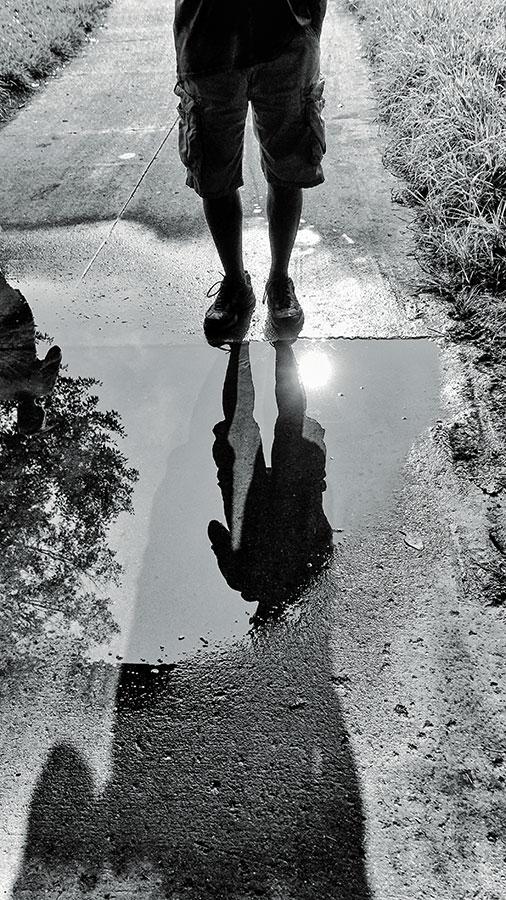
Every healing intervention is motivated by suffering and hope – be it of the individual, family, friends, or a community agency. The value within suffering is that it contains a message of incongruence that awakens the motivation to heal. William James wrote that life is the manifestation of behaviors that attempt to avoid, overcome, or remove that which is seen to block us from that which we desire.
The personal story is a narrative of our unique sense of identity. We create our identities through the stories we weave onto a tapestry that is formed against the background of our family mythologies. We pull threads from of an assemblage of recalled details from our pasts and weaved them into images that cast us in whatever role corresponds with our current situations, feelings, thoughts, or actions. The colored threads of this tapestry are often re-embroidered to reflect the creative and dynamic process of our perspectives as we shift in, out, and between various roles, feeling states, and cognitions. As we reflect on our self-created images we are in turn affected by them; therefore, there is an unconscious re-weaving of our tapestries.
Our self-stories as well as our family mythologies create and maintain our identities and thus influence how we anticipate experiences, act, and subsequently interpret our situation. Becoming aware of the tapestry and images we are creating frees us to review patterned behaviors, reframe our story through different colored concepts, and to release rigid interpretations.

While a person sits in a recovery group and labels her struggle with drug and alcohol as an “addiction”, she has begun to free herself from the power inherent in long-held secrets. As she tells her story she is weaving a tapestry of images that validates the hidden stories within others and thus invites listeners to abandon their alienated shame, anxieties, confusion, and anger. When she labels the various demons within addiction she dwindles their power as she un-shields their false promises. At the same time, the power of detrimental thinking begins to dwindle as its unsubstantiated lies are confirmed within the stories of others.
Within such a supportive and non-judgmental environment, each is invited into a process of bare attention that is non-coercive as they uncover the seeds of their suffering and thus begin to strengthen their recovery with renewed energy. It is after a meeting during the quiet of one’s alone time that each attendee begins a process of dismissing what is personally invalid, questioning harmful behavioral patterns, or replacing painful concepts with constructive meanings. They, through their own individual reflection, take what is helpful for them at the moment and let the rest flow away.
Through this process of externalization, validation, and reformation an individual is being invited to become other to herself as if she were the audience in a movie theatre watching her life story being retold on a screen. Consequently, a new relationship with the self is formed that lessens the suffering that comes out of subjective rigidity, alienation of self as “the only one”, and attachment to shame and guilt.
Excerpts: Koeford, B., A Meditative Journey with Saldage
 a meditative journey
You must be logged in to post a comment.