the waiting room

Sitting in the lobby waiting for a dry cleaning pickup … internally struggling with the angst of the anticipated cost of having a down jacket dry cleaned … flipping through a copy of The Wall Street Journal Magazine (October, 2026) to escape from the imprisonment of “waiting time” … becoming stunned by multiple advertisements … and then … finding myself intrigued, Aspens’ Existential Crisis.

Do memories of the 60s still linger within Aspen and Steamboat Springs?

I read, “In June, Aspen’s city council members gather for a presentation from the mountain town’s largest employer about the state of its business–and future of the place itself.

‘What does Aspen want to be'” read one slide prepared by David Tanner, president and CEO of Aspen One, which owns four mountains …”

How does one even own one mountain?

“‘The deck laid out three options: ‘A ski town.’ ‘A gated community for the ultra-wealthy.’ ‘A playground for influencers.’

Aspen has been soul-searching for half a century, since hippie ski bums began ceding ground to luxury real-estate developers, but the question of its identity has become more urgent as the city of roughly 7,000 has transformed into a year-round billionaire retreat.

It was time for the community to confront the headwinds it was facing. Tanner and his fellow executives told the council. … transportation remained a major barrier for visitors.

Aspen caters to the super rich, but it needs the plain-old rich, too. It’s a city that’s hard to reach–no direct commercial flights from New York or Miami–and expensive to stay in. … ‘We can’t understate the importance of getting the airport done,’ Tanner told the officials at City Hall. ..

‘It’s like an existential crisis’ … ‘Who are we? What do we stand for?’

… As the city contends with a string of challenges–declining snowfall and plummeting real-estate sales among them–it is the runway reconstruction that has become one of the hottest-button topics. … A rabbi referenced the runway overhaul in a recent sermon. …

… the Federal Aviation Administration recently told Pitkin County that it would stop funding renovations unless Aspen added more distance between the runway and taxiway …

The effort is expected to cost over $250 million, but the FAA will cover 90% of the bill…

90% of $250 million? 90% of $250 million for … who? what? … a ski town? A gated community for the ultra-wealthy? A playground for influencers? a year-round billionaire retreat?

Who actually is shouldering the cost of this 90% of 250 million project? You? Me? Ultra-wealthy? Influencers? Billionaires?

Really, Brenda! Aspen is in the middle of an existential  crisis. Quit being so self-serving. Be honest. Do you really need to have your winter coat dry-cleaned?

but … I need to ask

Who are we? What do we stand for? What do we want to be?

the waiting room – the hot murdering sun

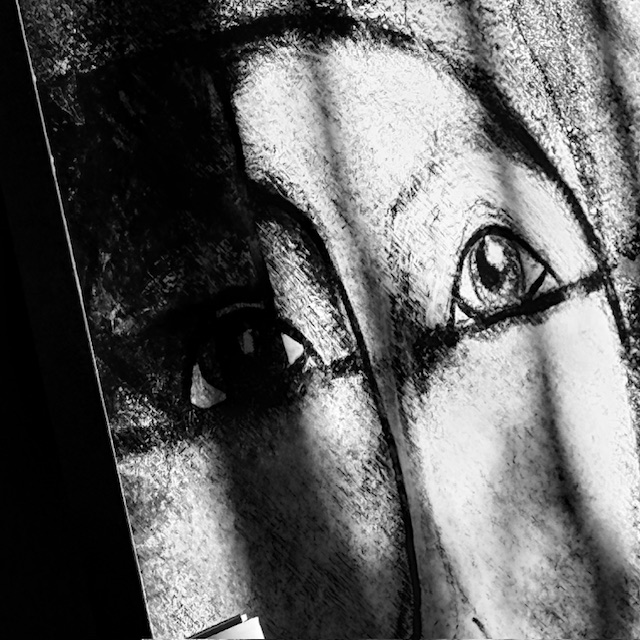
“Show me, then. Convince me. Roll back the rock. Return … . All of her. Gift her back to me, all sewn up and pretty and dark-eyed again. That’s all I ask. Is that too much? No more whining from me, no more weeping, no more complaints. A heavenly stitch, that’s all I ask. And bring back … too, for …, for me, for …, for …, for …, for … for all of us. And while you’re at it, bring back … and … and … and … and … and … and … and … and … and … and … and … and … and … and … and … and … and … and … and … and … and … and … and … and every other one under this hot murdering sun. Is that too much to ask for? Is it?”*

become aware of the suffering within war

*cited: Colum McCann, Apeirogon

lens-artists: phone photography

Over the past year a current events discussion group has opened up a number of challenging questions for me: 1) how to move from an understanding and then to thinking and feeling acceptance that each person sees and understands identical situations differently as told within the parable of the Six Blind Men and the Elephant? 2) is there a moral imperative within politics that includes elements of responsibility (short and long term) of actions, empathy and compassion for all life that is harmed (physically, mentally, and emotional), and guiding principles of shame and fear of one’s immoral actions that override the energy of self direction toward a greater connection with humanity? 3) how do I unite the elephant with the diversity of moral principles?

At this point you may be asking, “What does this have to do with phone photography?” Well … yeah …. maybe … these questions do validate that I spend way too much time in my head as well as an excessive amount of time alone. Yet, how does one turn off this search for congruence while world events are like rip currents, undertows, and rip tides that clash with my moral principles and leave me with an overwhelming sense of powerlessness.

I resist these tides of hate-filled political and self serving actions that attempt to erode the who of me and the humanity of we.

Yet, since the camera’s eye has opened me to different ways of seeing and moments of gasping beauty could this phone photography challenge invited me begin to explore the first question; that is, to begin to explore how to move out of my conceptions of the restrictive creative use of phones, “they are only good for happy snaps of people, flowers, and places” to engage with different perspectives?

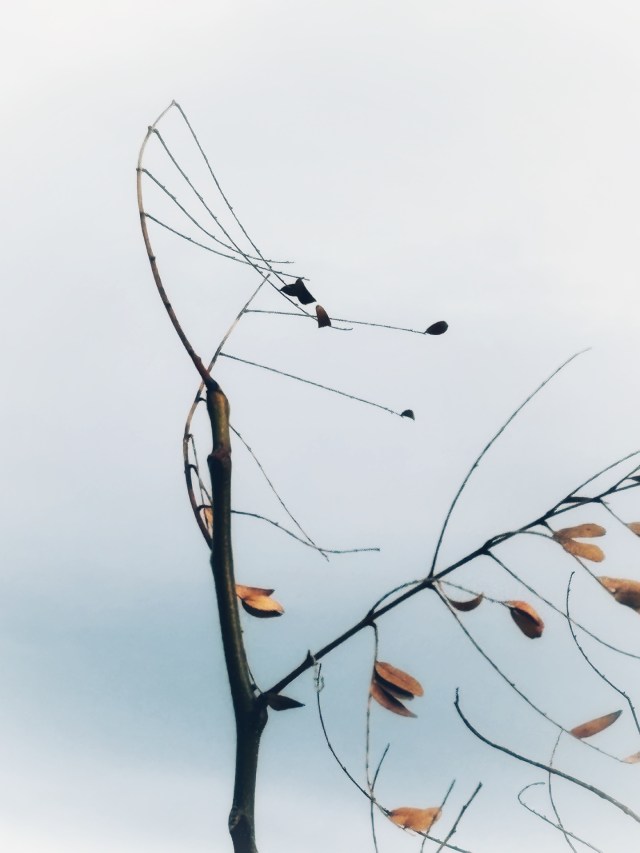
A phone’s happy snap as seen during a photowalk:

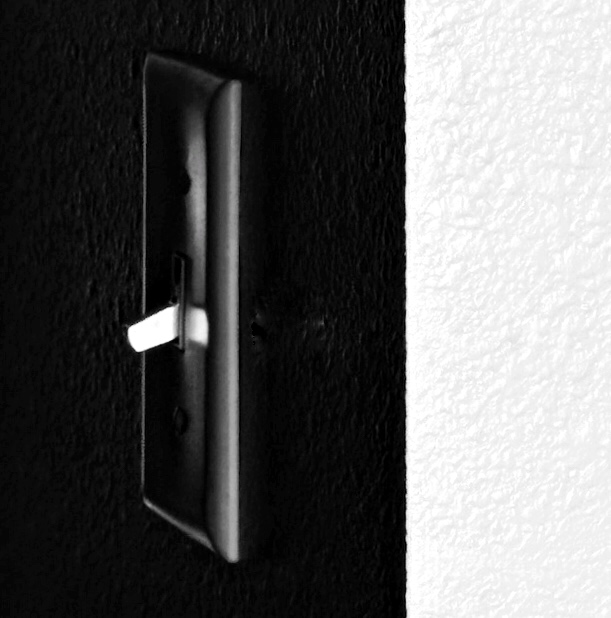
to the morning’s sun relationship with a light switch?

Thank you Tina for this week’s lens-artists’ challenge as it was great fun exploring the camera in ways I never thought possible.

a dove-grey morning of mourning


It was a perfect morning – a dove-gray sky with the amazing saturation of reds, oranges, and yellows … a braking car, a Pepsi truck, Target’s target …


A dove-gray morning that felt like 31 degrees with its 3 mph SSE breeze and 51% precipitation.


A dove-gray morning with the chilly tickle of the breeze upon my face as I walked sure footed in barefoot shoes and freed from hip and knee arthritic pain … a temporary release from the imprisonments of fading health.


A dove-gray morning with blooming trees filled with Spring’s whites and purple blossoms that seemingly woke during the night as I slumbered.


A dove-grey morning that carried the silent memories of fog horns, condensed-covered windows, pajama breakfasts with melting buttered waffles, maple syrup, bacon, rich dark coffee, unique scent of the newspaper, and the medley of sounds — crunchy folded newspaper, laughter, and voices of morning kitchen reunions from slumber to wakie-wakieness.


A gray-dove morning with unknown and unheard sounds of explosions as drones fill the sky; fear-filled, pain-filled screams intermixing with crumbling buildings … lives forever traumatized … all deafened by distance voices filling the air, “keep blowing them away” – “keep pushing, keep advancing, no quarter, no mercy.”

A gray-dove morning with a 9 year old bully in his ill-fitting Sunday clothes at the helm.

A gray-dove morning where more than 1,900 people have been killed and at least 20,000 injured in Iran.” …”more than 1,000 people in Lebanon and displaced nearly 1 million, 20% of the country’s entire population, creating a humanitarian crisis.”

A dove-grey morning of mourning

The Two Guardians of the World

The two guardians of the world – the bright states that protect the world – moral shame and moral fear.

The Buddha shared that a sense of shame and the fear of blame are two bright states that protect the world. Having a sense of shame means that we refrain from doing evil because we do not want to harm ourselves. It is because we wish to preserve our self-respect that we develop a sense of shame. We wish to be respected by others, so we develop the fear of blame.

When there is a leader who does not ask his predecessor to give him advice of how to govern, he will rule according to his own opinion which sets the stage for a decline in morality and consequently the quality of peoples’ lives. If we look at the world today, the two guardians of the world are fading away.

We have stories of immoral characters who go unpunished.

We begin to see and hear of increasing violence in its manifestation of negation of others, verbal and physical abuse, threats, power and control, and murder.

There are increasing rigid polarizations within families, between friends, and among neighbors and strangers.

There are reports of increasing incidents of racism.

There is a growing absence of social governance and increasing incidents of lawlessness; as well as, a growing sense of distrust, fear, anger, isolation, and sadness.

Looking to find resolution we find that government figures are more concerned with winning votes than with governing.

Some religious leaders seem ready to do almost anything to accommodate their followers while others resort to fanaticism.

What are the variables that can begin to nudge us out of this time of discontent? Faith, virtue, a sense of shame, the fear of blame, mindfulness, concentration, wisdom, compassion, and/or loving-kindness?

~reference: The Two Guardians of the World

the field outside my window…

Outside my window looking eastward is a field …once a hay field that silently told stories of seasonal changes. My favorite was during time of haying as it awakened childhood memories of harvesting … especially of those times of baling.

All of this ended when the construction of a new housing development began with dust and noise and then the absence of the hawk soaring through the late afternoon sky. After that it became a time of remembering when I was 7, and the sense of okay-ness to wander over to work sites accompanied with childhood curiosity, “what ya doin’?” during the beginning stages of construction.

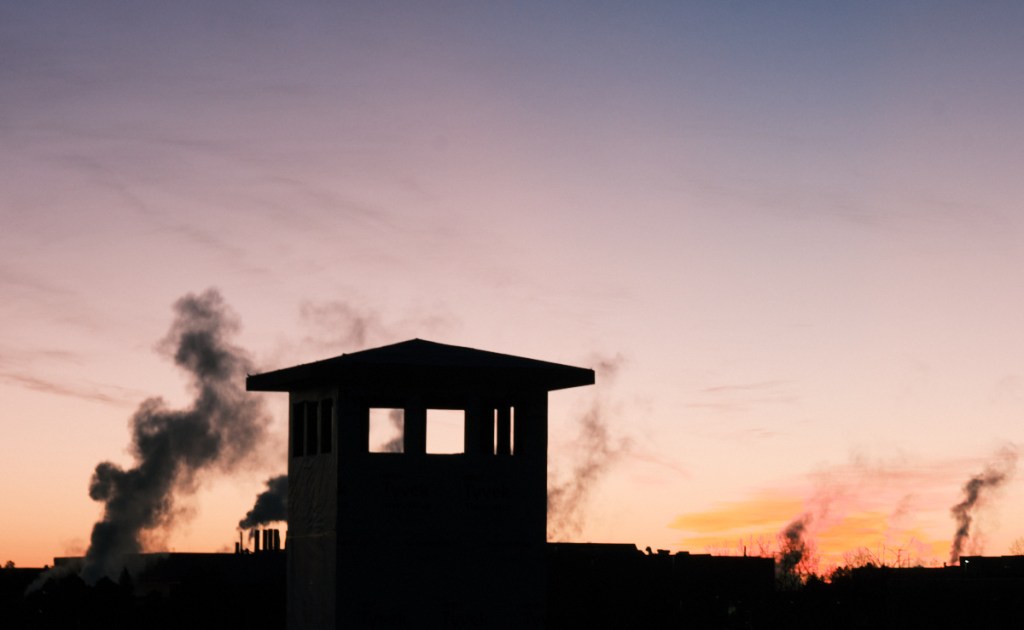
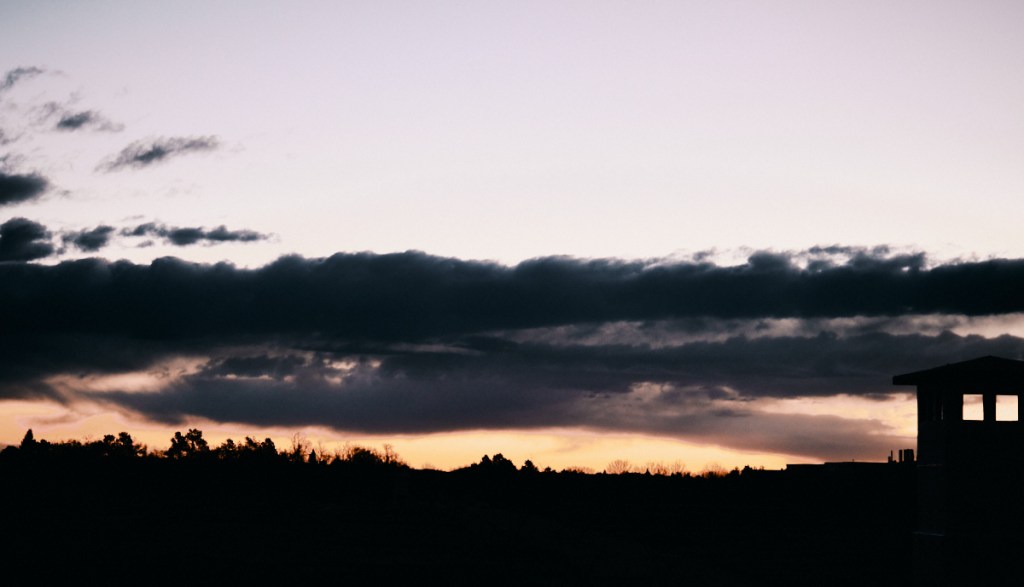
Then … the clock towers ... of importance, of course, was the building of the tower right across the street and questions about possible blocking of the eastern horizon’s dawn. So a shift from my year long photo project from …

the morning’s sun north to south – south to north travels to a focus on a section of the horizon – away from the clock tower which began to look like a prison guard tower.

Yet, this morning as I pulled the drapes open with joyful anticipation suddenly silenced by …

feeding america

Oatmeal, walnuts, sugar

Mother Earth, sunshine, and rain

in my breakfast bowl

Did you know 1 in 6 military and Veteran families experience food insecurity? Many of these families are forced to choose between paying their bills or putting food on the table.

During a research project for a sociology class while an undergraduate at San Diego City College in 1982, I was stunned to learn that many enlisted Navy Families relied on Food Stamps to feed their families. I found myself questioning then and again now the justification for service personnel whose lives are on the line for all of us to be experiencing food insecurity.

I recently learned that Navy Federal Credit Union is partnering with Feeding America to get more meals to those in need in the military community. With a little help from augmented reality (AR), you can join them in their mission to help combat hunger for Veteran and military families

March 23, 2023

Utah Governor Signs New Laws to Protect Children From the Harms of Social Media Usage

Utah took aggressive steps on March 23, 2023 to rein in teens’ social media use when Gov. Spencer Cox signed legislation designed to limit kids’ social media exposure, including a 10:30 p.m. to 6:30 a.m. curfew on social media use and age verification requirements.

East High students march on State Capitol and call for gun control a day after school shooting (March 23, 2023)

“We just buried Luis”: East High parents, students fume after another shooting and call for stricter security

  • More than 100,000 American children attended a school at which a shooting took place in 2018 and 2019.
  • Research indicates a higher rate of antidepressant use among those exposed to a school shooting in the years following the gun violence.
  • School shootings lead to drops in student enrollment and a decline in average test scores.
  • School shootings also lead to an increase in student absenteeism and the likelihood of needing to repeat a grade in the two following years.
  • Students exposed to shootings at their schools are less likely to graduate high school, go to college, and graduate college, and they are less likely to be employed and have lower earnings in their mid-20s.

Postscript

In 2019, authorities within CHINA restricted minors to playing 90 minutes a day on weekdays and banned them from playing between 10 p.m. and 8 a.m. In 2021, they issued restrictions in which minors are allowed to play online games for only an hour a day and only on Fridays, weekends and public holidays. Game approvals were halted for eight months.

double exposure

The images above were created through the use of multiple exposure, both within camera and through digital editing. This Double Exposure project was inspired by the belief that images give voice to the emotional pain of COVID across the globe. While this virus does not discriminate, the number of people who are most impacted during this time are those who live within impoverished communities—dense housing projects, reliance on public transportation, low income, limited access to medical care and sick leave, employment instability, and rates of non-communicable diseases and illness.  

The phoenix that may arise from the flames of inconsolable grief is an awareness of the inequality aggregation of these social and economic disparities exacerbates the adverse effects of all humanity.  

COVID-19 is not a pandemic. It is a syndemic.

contemplating sunset with …Valerie Brown

Today, I would like to share the words of Valerie Brown, How to Fight Without Hating:  Lessons in Power and Love. Valerie is an ordained Dharma teacher in the Plum Village tradition and a member of the Religious Society of Friends (Quakers). 

‘“Never succumb to the temptation of becoming bitter. As you press on for justice, be sure to move with dignity and discipline, using only the weapon of love.’  
Rev. Dr. Martin Luther King, Jr.

‘“Get in trouble: good trouble, necessary trouble.’ Congressman John Lewis

“As Black and Brown people, we are in the fight of our lives.  Our lives are constricted by systems and structures that foster discrimination and injustice. The legacy of violence, especially unlawful police violence, perpetrated against Black people, Asian people, indigenous people, people of color, differently abled people, people of various gender identities and expressions and sexual orientation, and others who are marginalized, is our constant reality. This is compounded by the disproportionate impact of COVID-19 on Black, Asian, Latinx, immigrant, un-housed, and low-income communities, which are among the hardest hit, grossly under-resourced, and devastatingly vulnerable.  

“Our hearts and our supports are broken open by grief, fear, and anger.  How do we fight injustice and not hate?  How do we fight injustice and support ourselves?  How do we deepen our resolve for a more just and equitable world in an unjust and inequitable world?

“Recently, I attended a gathering of more than 600 Black and Brown people hosted by Liberate, an app designed to support mindfulness and mediation for BIPOC (Black, Indigenous, and People of Color and BAME Black Asian and Ethnic Minorities).  The speaker was Ruth King, an important figure in mindfulness community especially among BIPOC. She guided us through a powerful meditation, calling us to invite the power of our ancestors and descendents to guide, protect, and support us, and to engage our innate inner resources and resilience toward a strong and calm heart.

“During the hour-long deeply healing and moving Zoom video conference session, an important question emerged from the chat:  

“How do you fight injustice without hating?

“Initially, I was intellectually intrigued by the question, which then settled in my own heart.

“How do you fight injustice without hating?

“In the Plum Village tradition of mindfulness meditation founded by Zen Master Thich Nhat Hanh, hate is likened to seed that lies dormant in the consciousness of the mind, along with many other kinds of seed-like emotions, including despair, shame, indifference, openheartedness, warmth, delight, and many more. These seed-like emotions become ‘activated’ by thoughts, words, and actions of life’s daily events. For example, someone cuts you off in traffic; the seed of anger gets activated.  You have an uplifting conversation with a friend; the seed of gratitude is touched. We live our daily life this way. 

“In Plum Village mindfulness practice, we learn to notice and become aware when these seed-like emotions are touched within us, to notice what the emotion feels like in the body, and to bring awareness to the feelings and bodily sensations, taking care of these emotions by calming and soothing the body and mind. 

“Taking care of the emotion of hate is an ongoing, daily, and moment to moment practice, especially now at this time when Black and Brown people are under attack from unlawful police violence, unconscious bias, and disparate treatment of Blacks during the COVID-19 health crisis.  As a Black woman, my daily practice is to notice the sensation of hate, which often feels like a flush of fire in my face that spreads across my chest to a dull pain in my heart.  I recognize that this sensation ripples outward in my body, in my words, and in my action. With this recognition and insight, I begin not only gain agency over my feelings, my words, and action, I recognize how I can support myself. 

“So, what is skillful action is required at a time of hate, fear, and violence?

“Congressman John Lewis has said, ‘Get in trouble: good trouble, necessary trouble.’  These are times that call on us to get into ‘good trouble’, which eradicates unlawful police violence and oppression, which dismantles social conditions of health disparities among the most marginalized people, which challenges deeply discriminatory educational systems.   These ‘good troubles’ include taking to the streets in peaceful institutions, exercising our right to vote, and bringing communities or color together to heal and to act.

“As an individual and as a society, we have been given specific instruction from countless people who sacrificed their lives through the Civil Rights Era and other social movements in how to take compassionate action in the face of violence, anger, and fear.  We are instructed to meet police violence with non-violence.  We are instructed to meet racist structures and systems with diligence with inner resilience born out of compassionate action.  We are instructed to meet hatred with an open heart and to cultivate heartfulness because love, compassion, kindness, and peace are bigger than a heart constricted by hate, discrimination and violence.

“This is the skillful action toward radical power and love.”

Valerie Brown, JD, MA, PCC

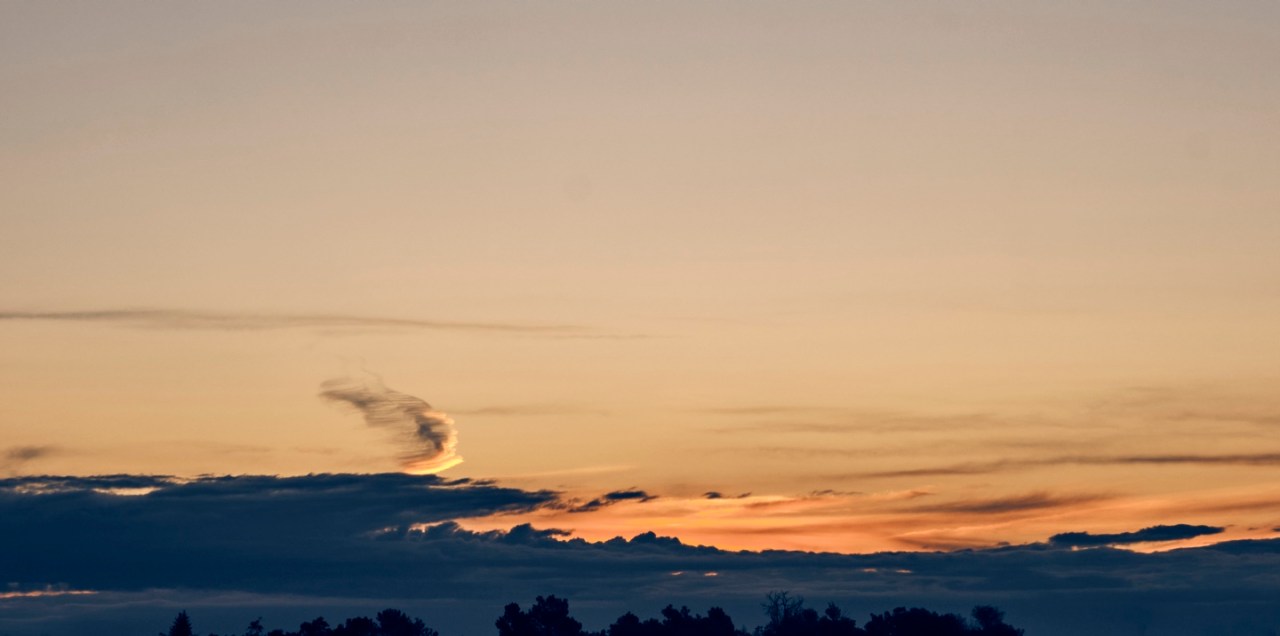
Skyscape image created with Nikon D750 f/5.6 1/320s 28mm 400 ISO edited with Capture One 20

contemplating a sunset with…w h auden

isolation retreat 74th day

W H Auden: “Refugee Blues”

Say this city has ten million souls,
Some are living in mansions, some are living in holes:
Yet there’s no place for us, my dear, yet there’s no place for us.

Once we had a country and we thought it fair,
Look in the atlas and you’ll find it there:
We cannot go there now, my dear, we cannot go there now.

In the village churchyard there grows an old yew,
Every spring it blossoms anew;
Old passports can’t do that, my dear, old passports can’t do that.

The consul banged the table and said:
‘If you’ve got no passport, you’re officially dead’;
But we are still alive, my dear, but we are still alive.

Went to a committee; they offered me a chair;
Asked me politely to return next year:
But where shall we go today, my dear, but where shall we go today?

Came to a public meeting; the speaker got up and said:
‘If we let them in, they will steal our daily bread’;
He was talking of you and me, my dear, he was talking of you and me.

Thought I heard the thunder rumbling in the sky;
It was Hitler over Europe, saying: ‘They must die’;
We were in his mind, my dear, we were in his mind.

Saw a poodle in a jacket fastened with a pin,
Saw a door opened and a cat let in:
But they weren’t German Jews, my dear, but they weren’t German Jews.

Went down the harbour and stood upon the quay,
Saw the fish swimming as if they were free:
Only ten feet away, my dear, only ten feet away.

Walked through a wood, saw the birds in the trees;
They had no politicians and sang at their ease:
They weren’t the human race, my dear, they weren’t the human race.

Dreamed I saw a building with a thousand floors,
A thousand windows and a thousand doors;
Not one of them was ours, my dear, not one of them was ours.

Stood on a great plain in the falling snow;
Ten thousand soldiers marched to and fro:
Looking for you and me, my dear, looking for you and me.

Moving Poems, Refugee Blues by W H Auden, by Dave Bonta

Set to the verses of W.H. Auden’s 1939 poem, the multi-award winning “Refugee Blues” charts a day in ‘the jungle’, the refugee camp outside Calais. More intimate and unlike much of what has been seen in the mass media, this documentary poem counterpoints the camp’s harsh reality of frequent clashes with the French riot police with its inhabitants’ longing for a better future.

skycape photography: Nikon D750 f/8 1/400s 150mm 400 ISO edited in Capture One and Photoshop