May I find the Wisdom that silences the fortress of my mind’s discontent so I may hear with understanding teachings absent of greed, anger, and ignorance.

I often feel as though I am an old blind woman walking through a petrified forest with only a staff to ensure that my steps find solid ground. I remain ignorant, as I unconsciously look away from that which will break my heart and seek stability through the creation of and attachment to ideas, beliefs, principles, and concepts. I yearn for certainty; anger erupts each time I stumble and fall and forges a dogmatic fortress that encircles my heart and mind. The desire to hear with understanding teachings absent of greed, anger, and ignorance speaks of an awareness of how this protective barrier deafens me to words of wisdom that shed light into the shrouded mysteries of life. During those moments when I find myself attempting to engage the unknown, I ask of myself, “What energies would flow into a life emptied of greed, anger, and ignorance?”
As I reflect upon the fortress of my mind’s discontent, an imagined stained and scratched door opens before me as if to invite me into a dark and musty attic. As my eyes scan beyond the entrance, I see streaks of yellowed sun beams, weakened by dust laden drapes; a scuffed wooden floor, covered by a bare-thread carpet of muted colors; and wall paper, grayed and yellowed, tugged away at the top most of a corner by the collected weight of long ago wisps of cigarette smoke.
My observing mind notices that there is no other furniture other than two rocking chairs placed facing each other in the center of the room. Sitting in one is a slender child. She seems to be no older than four years old. A slight musty scent of aged vanilla greets me as I enter the room with a request that the child not be disturbed. The sound of her voice, which I first heard as a distant mumble, intensifies into an animated stream of words. The words seem to rush from her with such passion that a focused listener would surrender to an impulse to talk over the justifying, rationalizing, point–counter-point, argumentative, single-person monologue.
I stand quietly at the edge of the room listening not to the words but to the power within her words and note to myself, “Her words are gushing out from a center of guilt, shame, remorse.”
I again return to her words and listen so deeply that a crinkle forms on my forehead as I wonder, “Is there anxiety about a deed so wrong it is punishable by banishment?”
I quiet my distracting thoughts and listen even more deeply and then I acknowledge a profound sadness in the threads of defensive anger that is begging to be heard and understood.
If one comes across a person who has been shot by an arrow, one does not spend time wondering about where the arrow came from, or the caste of the individual who shot it, or analyzing what type of wood the shaft is made of, or the manner in which the arrowhead was fashioned. Rather, one should focus on immediately pulling out the arrow.
~ The Buddha
My compassionate self moves to the young child. As she embraces the young child, she begins to rock and whisper, gently, softly, “How long have you been here?” The young child tells of wakening to this room after a night of hiding under blankets trying to be unseen, holding her breath trying to be unheard, swallowing her fear trying to be still as the sounds of distant shattering glass and disembodied voices crashed and stumbled upon and into each other.
My compassionate self hears of the homesickness that emerged with such intensity that it overflowed her soul and traveled across rivers, over mountains, and through valleys searching for someone to bring her home. The yearning returned from its fruitless travels and surrounded her as if it were the voice of an unseen other. In a painfully frustrated response, anger roused within the child an intention to destroy this other’s yearning that come in the place of her heart’s desire.
My compassionate self awakens to the realization that this young child is ignorant of the fact that the chair opposite her is empty and that she is being persecuted by a phantom of her own creation. Slowly my compassionate self understands how this young child’s powerlessness created not a monologue but an internal dialogue between a phantom, lost within her homesickness, and a child, lost within her wounds. My mind recalls the story of Narcissus who believed that the image in his reflection was a water spirit with the same characteristics as Apollo, and hears how this child’s unproductive attempts to be heard and understood by her own echo has condemned her to remain forever alone in this shadowy dust-filled room. Narcissus clung to the image of his love; she clings to the sound of her anger.
Touching the present moment, we come to know the past created the present and together the future is being created.
“Shu-shu“, my compassionate self whispers as she rocks the small child with the sound of ancient mother’s loving-kindness. “Shu-shu, feel the sadness within you, hear its voice, be with it’s tone and texture, and release this caged discontent with the outward flow of my breath. Shu-shu. Silence your thoughts and listen only for the sounds within this room.” And together, they rocked back and forth, listening to the sounds in the room.
My compassionate self moves to the empty chair opposite the small child. I begin the practice of ‘Giving and Taking’ by first resting my thoughts and opening myself to silence. I then imagine a small black cloud filled with the child’s aloneness, anger, sadness, and anxiety surround her heart. I feel the inky dark cloud move away from her heart and leave her body as it rides upon the gentle wind of my in-breath. It enters my body; it touches my heart, and a sudden sensation of wondrous energy spreads throughout my body.

A tiny silvery whisper emerges, “It is your wish to be released from this room so that you may walk with the summer sun and feel its warmth touch your face. You wish to see the multiple colored leaves blanket the sidewalk and hear them crackle as their scent is released into the autumn air. You wish to feel the tingle of the first winter’s snow upon your tongue. You wish to release all that is frozen as the spring wind awakens mother earth. You wish to look into the eyes of others and see the reflection of love.”
On my exhalation, I release to her those wishes on a white cloud knowing they will give her the courage to leave this room, to open her door to life.
Silently, the sun’s rays departed to the west and unveiled the moon’s spherical disk. A pause fills the room with stilled silence as if time paused to honor this universal transition. My compassionate self inquires, “Where in this moment is the voice of your phantom? How will you allow yourself to hear the emptiness within this room and then know the other chair holds no one? What will you do with this absence? When will you give yourself permission to greet this absence, acquaint yourself with it, feel it, know it in its entirety, and allow it to settle within? I wonder what will open your mind to see that what your words attempt to harm, silence, or destroy is but a memory and thus you are in a perpetual state of cyclical suffering.
“Your desire to be heard and understood can be heard and understood only by you, not this phantom of a memory. I appeal to your imaginative skills to see and hear how you, as this phantom and small child, wish to be free from suffering, wish to be happy.
“Each time you become aware that you once again have entered this room and are engaged in a confrontation with your phantom, trust in the freedom that accompanies the awareness that both you and this transitory memory wish to be free from suffering. Breathe in with your whole body an image of your phantom’s pain; on your out breath release to your memory the happiness, joy, and calmness of mind that will bring an end to it’s suffering. This practice of ‘Giving and Taking’ is the silver key that opens a door to a space of tranquil abiding.”

The Buddha suggested that whatever it is that we reflect upon frequently becomes the inclination of our mind. If one recurrently thinks greedy, hostile, or harmful thoughts, desire, ill will, and harmfulness shape the mind. If one repeatedly thinks in the opposite way, compassion, loving-kindness, sympathetic joy, and equanimity become the preference of the mind. The direction we take always comes back to ourselves, to the intentions we generate moment by moment in the course of our lives.
Excerpts from B Koeford, A Meditative Journey with Saldage
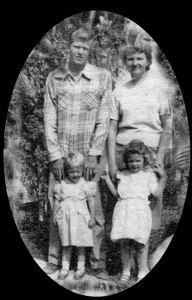 On the left side is a stationery box filled with certificates of marriage, birth, baptism, and death intermingled with a child’s brilliantly colored drawings.
 days,” my questioning mind wonders, “how many days were left before the decline of my father’s health shifted the lights of a colorful present into the gray-shaded time of waiting?” Within this stillness of waiting, memory tells of a young child seeking solace through repetitive rocking behaviors and of a father’s fragile heart enduring a turbulent wait for a donated aorta.
 awakens as the image of grief’s blackened shadow looms over me with its death-filled abyss of intermingled condemnation, uncertainty, and emptiness. I feel the void that will consume me if I were to release the eternal care of my son to its embrace. I come to know that I hold no trust that within death is compassionate loving-kindness. Awareness arises to tell me that as I run from grief with the anguish of powerlessness to protect the heart of my soul, like an addict running from her addiction, grief becomes even more insidious. In this undifferentiated chaos of anguish, fear, and mistrust there is hope [larger than a mustard seed] which seeks for the magical garment when donned will transform me into the Great Mother. It is childhood faith that clings to the belief that as God witnesses this transformation, absolution and reconciliation would simultaneously subdue this impenetrable monster and return my son, whole with the spirit of life, to…*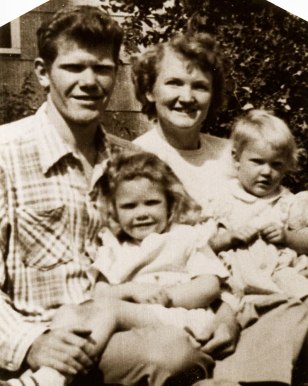

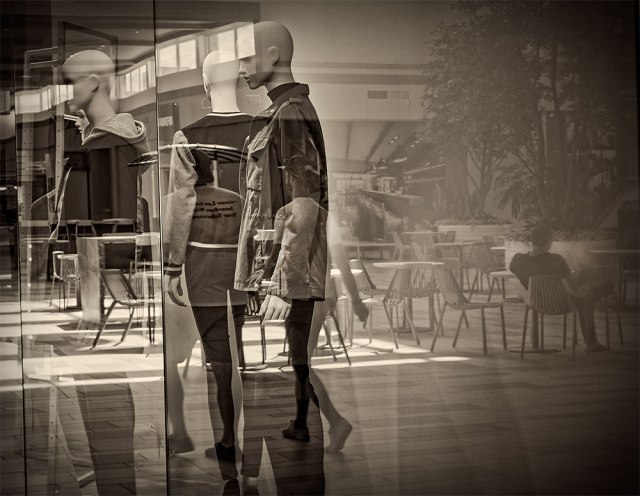

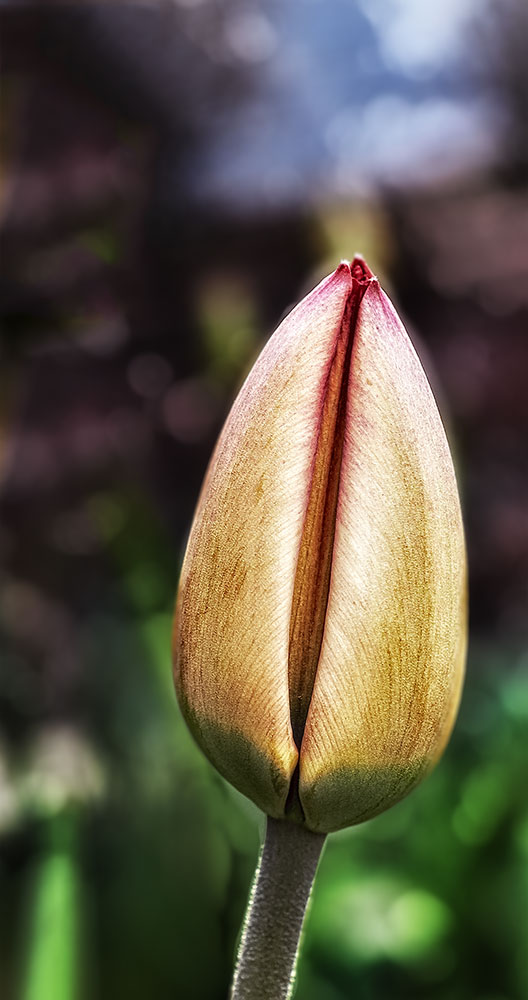
 Since her passing, a number of popular culture icons also left this world…and I found myself, in response to the exhausting news coverage, whispering, “my mother died” as if this utterance would bring about a global moment of silence in which to honor both her life and death and to ease the aloneness that dwells within grief’s shadow.
 prayers and practices that their spiritual teachers recommend and dedicating this positive energy to the mind/spirit of the loved one, wishing only peace and happiness for them and rebirth in the presence of their God or Buddha.”
 send emails that included attached images of “aweness” and beauty. I came to realize that during those moments when I allowed myself to be opened to amazement my emotional self shifted from a negative state of mind to a place of equanimity…as if these images offered a safe harbor sheltering self from an emotional storm.
 Last year I went to Kyoto and sobbed.


You must be logged in to post a comment.