None calls upon me, or remembers me in my mountain village.
On the reeds by the thin hedge, the Autumn winds are sighing.
~The Sarashina Diary, A.D. 1009-1059 (Diaries of Old Japan)

None calls upon me, or remembers me in my mountain village.
On the reeds by the thin hedge, the Autumn winds are sighing.
~The Sarashina Diary, A.D. 1009-1059 (Diaries of Old Japan)

Tokiwa Mountain’s
pine trees are always green–
I wonder,
do they recognize autumn
in the sounds the blowing wind?
~Ono no Komachi (J Hirshfield & M Aratani, The Ink Dark Moon)

Nikon D750 f/5.6 1/400s 135mm 400 ISO
… You press your mind, your forehead, against the beginning of a book, the cool cover of it, appreciating its impenetrability. It is rectangular and thick, heavy enough to stop a bullet or press a leaf flat. It will, you think, never let you through. And then you begin to lean into it, applying little attentive pressure, and the early pages begin to curl back with a soft, radish-slicing sound, and you’re in. You’re in the book. The thick, segmental chapters fan out into their component pages, and each turned page dematerializes itself, once read, into the fluent, cajoling voice its words carry. …When you reach the last sentence, there rests under you left thumb a monolithic clump of paper through which, it seems, you could not possibly have traveled. ~N Baker (preface), A Book of Books
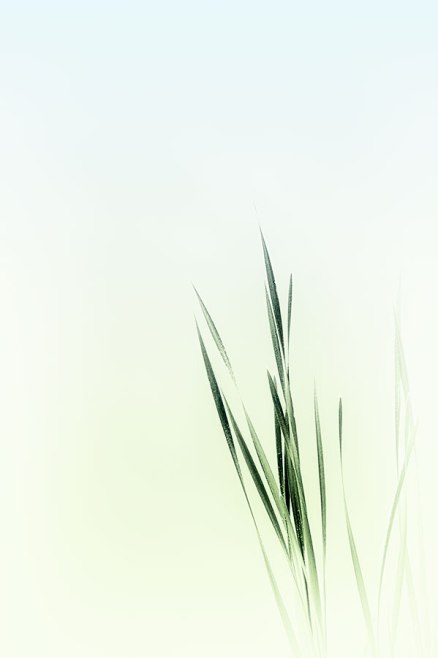
I am like dew on the grass–
And pitiable wherever I may be–
But especially am I oppressed with sadness
In a field with a thin growth of reeds.
~The Sarashina Diary, 1009-1059 (Diaries of Court Ladies of Old Japan
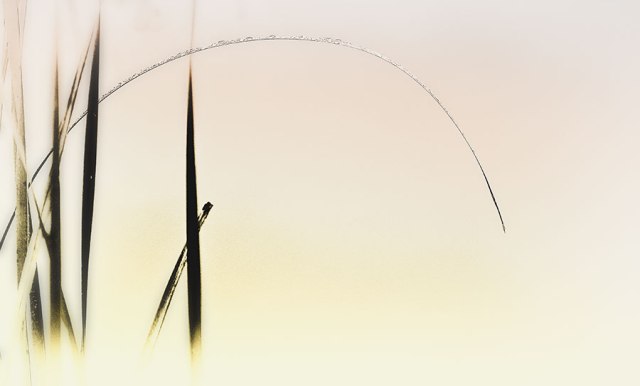

Once we establish the discipline of looking and seeing we are free to explore the open dimensions of the phenomenal world. As this orientation becomes more heartfelt, one becomes more attuned to the intimate qualities of contact, communication and natural expression in clear seeing. This brings relaxation and appreciation: the eye is allowed to fall through the world and celebrate this visual communion.
The discipline of looking and seeing cultivates a subtle and profound aesthetic sensibility. While this quality of seeing is genuine and fulfilling there remains a subtle allegiance to an underlying form of contemplative appreciation. The practice of direct perception undercuts this subtle ground and reference point. By completly trusting the unconditional power of the gap of perception one drops reference points and connects with the phenomenal world on its own terms. In direct perception there is no space for doubt or preference. Seeing is believing. With this confidence one enters the play of form and chaos in pure perception. Nothing added; nothing missing: each perception is an image of itself.
~cited: http://www.miksang.org
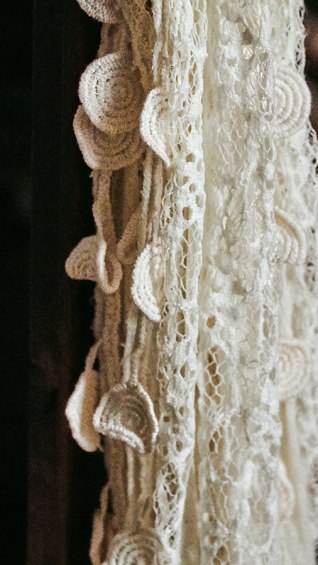
Forming the equivalent comes into play when one creates an image that reflects what was seen “—nothing more, nothing less.” It requires an intention to remain with the perception connected with as one engages the shutter. Making “sure the choices [depth of field, exposure, and color balance] you make honestly reflect your perception.”
…you have seen the subject clearly, without conceptual filters or discursiveness. You have rested with the perception in visual discernment, without agitation or photographic thinking.
This phase requires the silencing of composition rules/techniques and restraining the impulse to play around with various camera settings. Yes, easier said than done!

Texture is one of the photo assignments Kerr and Wood invites us to connect with as a means to further our awareness of the “flash of perception.” They noted that when we open ourselves to color the experiences are more sudden and intense than when intentionally photographing texture.
As I set out on this exercise, silencing a tendency to pre-identify objects of texture—grass, tree bark, mirrors—was, at first, a bit of a struggle. Then I found that when I opened myself to be with a consciousness of seeing and feeling…as if the surface quality that I visually connected with also invited me to touch, a combining of a visual and tactile moment…the experience tended towards mental qualifications of: silky, bubbly, prickly, nubby, fluffy, grainy, gritty, etc. A busy mind is indeed difficult to silence.
I do enjoy the exchanges of ideas and questions as these exchanges help clarify the nuances of Contemplative Photography. Let’s tag with #aphotostudy.

Spring Creek… Nikon D750 f/29 1/320s 85mm 12800 ISO
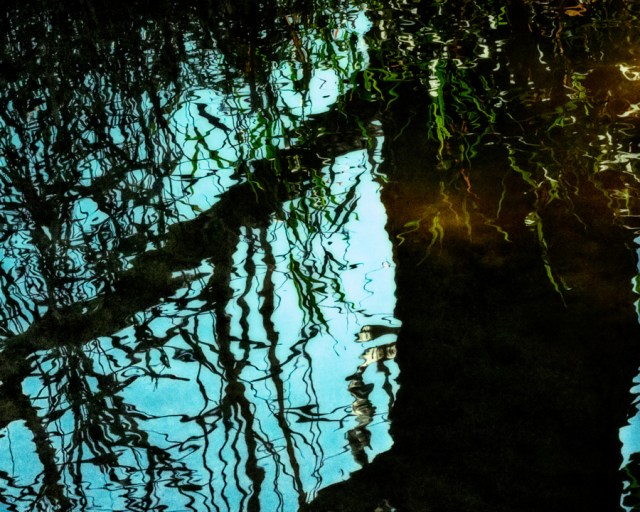
Nikon D750 f/29 1/400s 85mm 12800 ISO
Isn’t it true that it’s not people who meet,
but rather the shadows cast by their imaginations?
~Pascal Mercier, Night Train to Lisbon
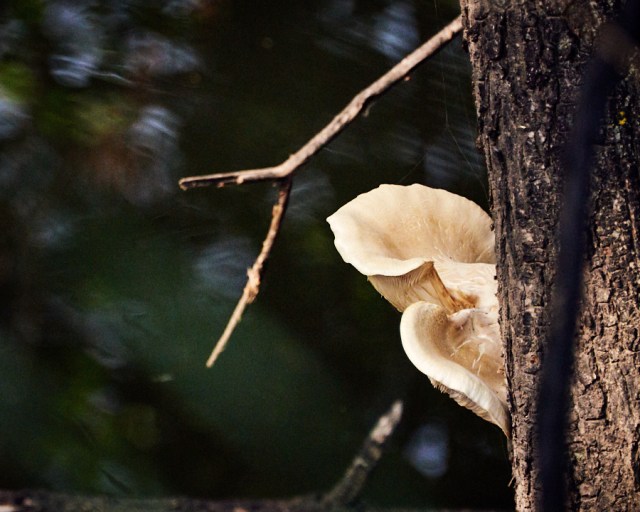
Nikon D750 f/5.6 1/400 300mm 100 ISO
When I was 14 I realized that a yucky, repetitive chore like mowing the lawn would end so much more quickly if I just allowed my mind to wander. In time I realized I could escape pain (physical and emotional) by shifting focus into an internal place of imaginative wanderings. As I write this it seems as if I chose to function in a vague dissociative dimension that is commonly referred to as autopilot. This mindless functioning is similar to how many people go through their daily lives, unaware of their unawareness.
To me this choice to go into autopilot is a stress management tool and can be an effective way to mange difficult moments; e.g., a root canal. The downsides of living life mindlessly by shifting focus to a place or time that is other than the present moment are:
1) life passes us by and we’ve miss wondrous moments – infant smiles, sun rises, bubble rainbows, falling stars, eye contact
2) we interact with others more from an imagined place, conversation, or conclusion than from reality itself
3) physical pain becomes chronic due to muscular tension that builds up from internal rehearsed arguments, speeches.
I have come to realize there is a physical tightening or bracing that unconsciously occurs while we are in our head. It is as if the brain senses the danger that comes from inattention and thus braces for an imagined attack from a saber tooth tiger or the possible fall that could occur while reading and walking.
4) we respond to life’s challenges from places of learned conditioning and imagined possibilities. For example, I have found myself grieving the ending of a Mozart piece while in the middle of the music. Thus sadness created from an expected outcome deafens me to the moment by moment experience. I call this personal crazy making.
So to pause in the middle of these emotional and mental rapids is to intentionally bring a roaming mind into the present. This intentional returning to self is to experience the refreshing flow of the breath; the movement of music as it travels throughout our soul (and to be with the music until it is no more and ask of ourselves, “where did the music go?”).
To quiet the ongoing ramblings within the mind and bring oneself into the present environment is to witness the dance of light and shadow upon a wall or the flow of steam above a cup of coffee. This stilled silence allows us to emotionally connect with another through the art of listening that guards us from injecting ourselves into their story.
When I do this I find that that these moment gift me with peaceful bliss as yesterday is not here and the next second has paused. In truth, despite all the worldly worries, possibilities, have tos, and shoulds this moment of non- judgmental awareness is life.
My awareness of this brings me to an intention. An intention that when doing yucky chores I will bring my focus to the sensual experience – the various sights, sounds, tastes, sensations, scents associated with dusting, washing dishes, sweeping, ect. Yet, I soon realize I unwittingly traveling through a land of Oz. So I non-judgmentally smile to myself in greeting and return to the moment, knowing and accepting that I’ll soon realize my mind has taken me elsewhere once again.
Research has found that mindfulness is associated with improved stress management, health, pain management, and problem solving. So to identify a event in one’s life — listening to music, bathing, walking, eating, knitting, writing in which to set out to be intentionally present is the door by which to learn how to be with oneself and to become aware when we have slipped away into a realm of mind making.
A daily formal meditative practice is good but most people struggle with setting aside 10 – 15 minutes for themselves (even though they will set aside hours watching TV).
So periodically throughout a day, I recommend a returning to the moment for a few minutes by asking oneself:
What am I thinking?
What physical sensations am I aware of in this moment?
What feeling am I feeling?
Where in my body do I feel this?
Shift your attention to the physical sensations of your breath. Be present with your breath for 3 cycles of in-breath, pause, out- breath, pause.
Ask yourself, “are my thoughts and/or feelings asking me to do something?” Listen to yourself for an answer.
End this mindful practice by bringing your awareness once again to your in-breath and with the out-breath release with a sigh. Gift yourself with a smile.
On a personal note, when I ask myself, “what am I thinking?” I often find that I can’t recall my thoughts.
May I welcome the peace within my in-breath. May I smile with the flow of peace within my out-breath. May all living beings know peace.
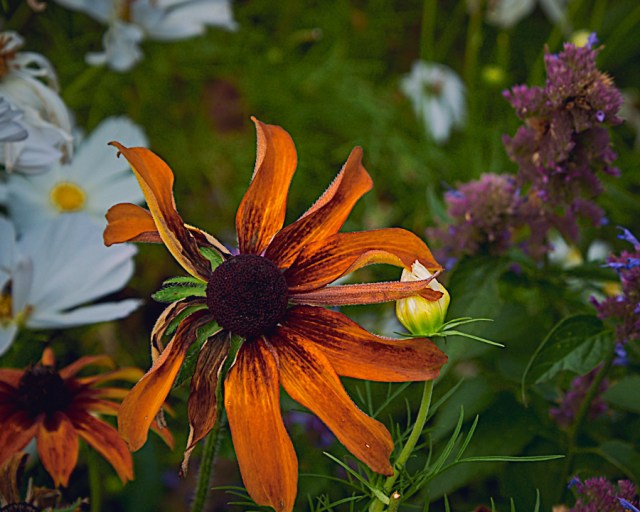
Nikon D750 f/5.6 1/400s 85mm 160 ISO
We leave something of ourselves behind when we leave a place, we stay there, even though we go away. And there are things in us that we can find again only by going back there.
~ Pascal Mercier, Night Train to Lisbon
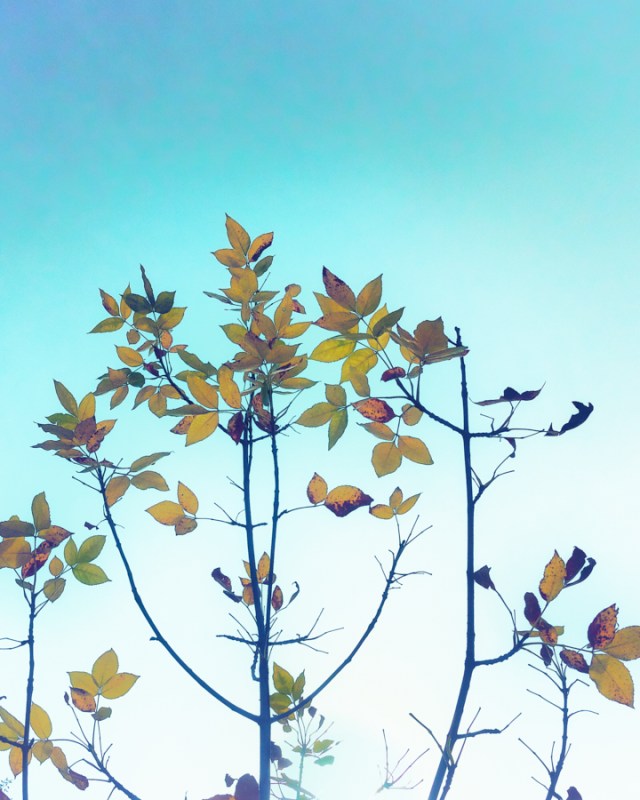
Sony RX100 III f/5 1/2000s 9.7mm 800 ISO
This week Patti at P.A. Moed invited photographers to “look up” and share what we see..I saw a smiling face. What do you see?

Intentionally, I set my mind upon the engagement of self with the process of reading the words of another with a knowing that I have accepted an invitation to consider an author’s worldview; that is, to place reality upon a shelf or to open a unique window of understanding.
…distraction, from this engagement as I become aware of a shadow presence – a transparent here-ness tinted with memories of you. It is as if you emerged from the printed page calling forth shared memories. I feel you sitting silently beside me. Within this silence, I begin to search for words, sentences that covey meanings and insights that awaken the joy that comes from an easing of longing and I hear myself whisper, “Here, a treasured story of thought that reconnects us, reflects a past time of us together, that validates words, ideas—you—and messages, ‘I have heard you within the sharing of love. I delight in knowing you. I wish to thank you for simply being…you are the joy that accompanies a gift in transit to being received.’”
…awareness, the words on the page have faded, I have disengaged myself from the invitation to consider the worldview of another as I entered imagined moments with you. I miss you. I miss us.
…accepting that what I yearn for can never be for I’m in the autumn of my life while you, my child, have now entered your summer as your children dance within their spring. Seasons flow one into another—their circular, repeating patterns defined by an unseen guiding hand—births expectations, hope and trust created from past consistencies.
History is remembrances re-emerging like the youthful sprout fragile in its newness, in its responding to life’s call. Yet, in time this newness will fade and become fragile as one’s autumn yields to their winter.
First posted on September 26, 2013


You must be logged in to post a comment.