even tortoise and crane
meet their fate…
autumn evening
~Issa (www.haikuguy.com)
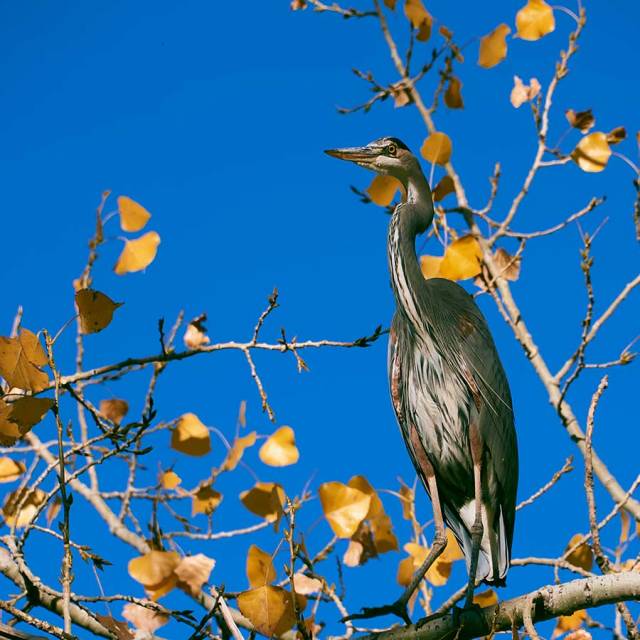
Nikon D750 f/7.1 1/125s 300 mm ISO 100
even tortoise and crane
meet their fate…
autumn evening
~Issa (www.haikuguy.com)
Nikon D750 f/7.1 1/125s 300 mm ISO 100
Going through the gate
I also am a wander
this twilight in autumn
~Buson (Y Sawa & E Shiffert, Haiku Master Buson)
 It began that first Halloween in Des Moines, Iowa, when I found myself wondering if the ghost, goblins, and witches that appeared at my door were also messaging the onset of seasonal changes. It was that year as my daughter’s Halloween costume was atop layers of clothing and hidden by a winter coat, I first noticed–and then again during later years in Wyoming and Colorado–that Halloween is often accompanied by a significant drop in temperature that generally lasted well into spring.
Today, the November 1, 2017 edition of Aljazeera reported that while Halloween is not recognized outside the western world “the date is climatologically significant in that it ends the three-month climatological autumn. Figures will now be confirmed and compared, by climatological statisticians, with autumn seasons from previous years.”
Additionally, at the end of October:
The Indian monsoon withdraws to the tip of India and Sri Lanka and the second cyclone season begins in the Arabian Sea and the Bay of Bengal. The Australian cyclone season officially begins.
Both Australia and South Africa have seen particularly stormy spring seasons and are settling now into summer.
China has entered its winter season with the northeast monsoon now prevalent. In the United States, the last few days of October brought some proper snow to the northern states.
Northern Europe has been battered by a windstorm followed by a big drop in temperature. The system responsible is still covering Belarus in snow. Western Europe, and in particular Iberia, is yet to realise the change of season.
Sometimes one’s private musings do have a bit of merit.
Tokiwa Mountain’s
pine trees are always green–
I wonder,
do they recognize autumn
in the sound of the blowing wind?
~Ono No Komachi (J Hirshfield & M Aratani, The Ink Dark Moon)

Nikon D750 f/14 1/30s 28mm 100 ISO
a peek of autumn with Ono No Komachi
the old dog
looks as if he’s listening…
earthworms sing
~Issa (www.haikuguy.com)

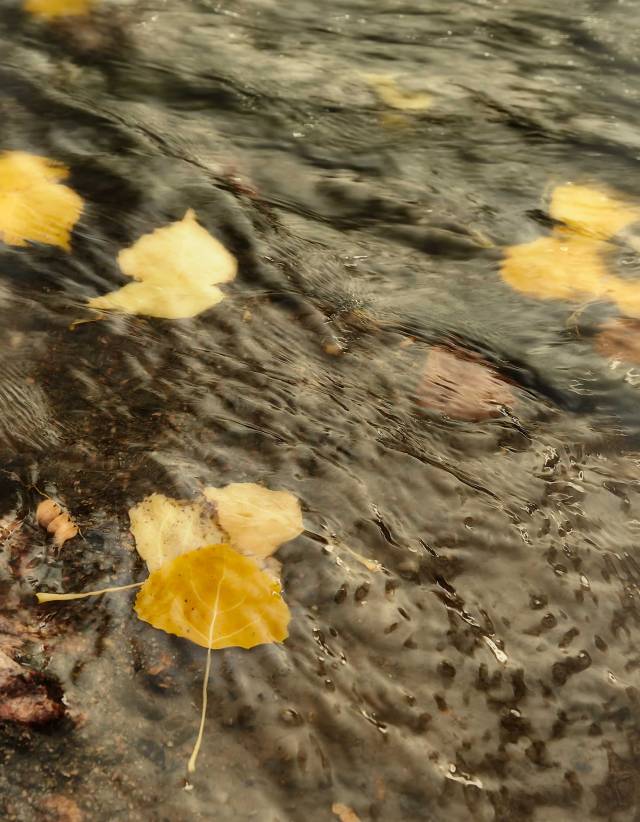
once green, now fading yellow
a beautiful leaf
all by itself in autumn

You didn’t come into this world.
You came out of it, like a wave from the ocean.
You are not a stranger here.
~Alan Watts
The healing way of Shinrin-yoku is through the medicine of simply being in the forest. A gentle path to wellness accessible to almost everybody. Studies have found that the benefits of forest bathing include:
I’m hoping that the Youtube video below motivates you to kick off your house slippers and rummage through closets for your long-forgotten hiking boots…
_()_
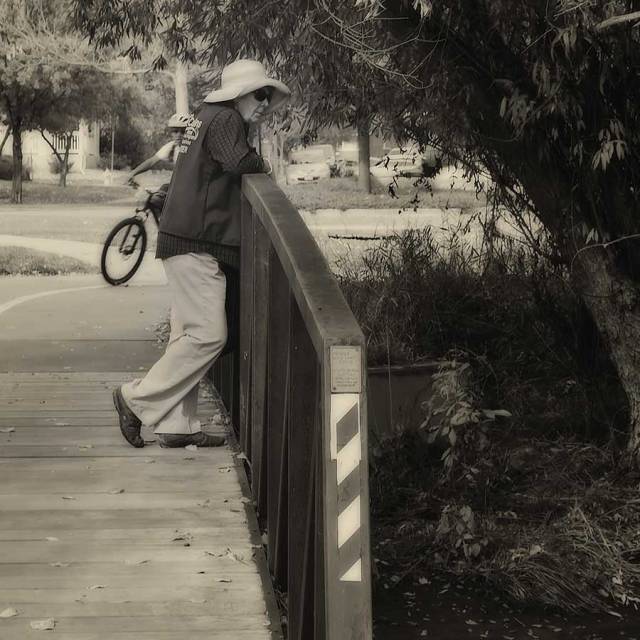
plum blossom scent–
the voices of children
sound reverent
~Issa (www.haikuguy.com)

Over the past couple of months I’ve found that postings of bloggers I follow are not always coming up in my WordPress Reader. One of those missed postings is Raj’s photo lesson on lenses. In that xdrive photo lesson Raj invited us to “really access the capabilities of your camera and find out what exactly is your stumbling block, is it a camera or a lens?”
So with this lesson in mind along with the recent discussions about photographing in raw, I set out on three separate nature walks with a different lens on each occasion.
On the first day of this assignment I used a Nikon 28-300mm f/3.5-5.6G ED VR lens with a Tiffen 0.6 neutral density lens.
This first image is a representation of the raw image. I see this image as a bit underexposed.
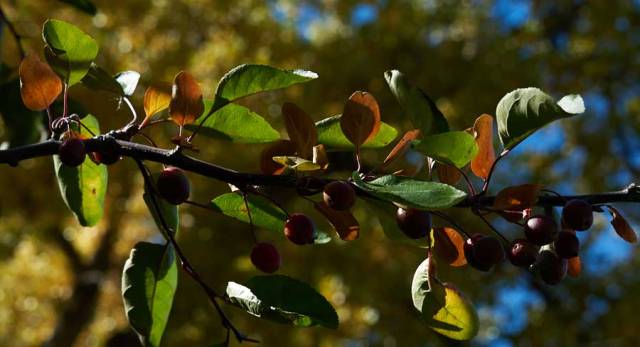
Nikon D750 f/9 1/40s 55mm ISO 100
This second image was created with Raj’s discussion regarding the consideration of sharpening and color saturation within the initial editing of raw images in mind.

Nikon D750 f/9 1/40s 55mm ISO 100
While I love bokeh – the way the lens renders out-of-focus points of light – I experimented with opening up the f-stop to explore Raj’s recommendation that an “open aperture would have created better isolation of leaves.”
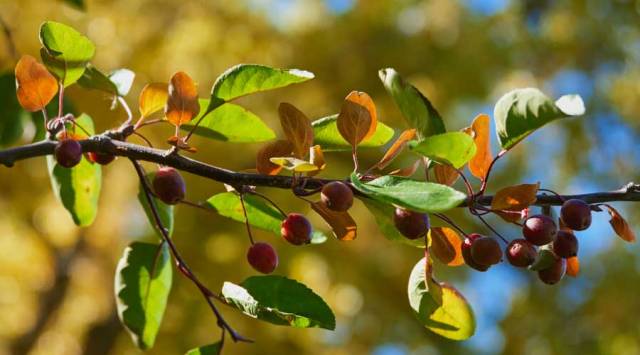
Nikon D750 f/4.5 1/100s 55mm ISO100
During the second day of this assignment I used a Nikon AF-S DX 35mm f/1.8G lens with a Platinum natural density lens.
The first image is a raw representation prior to any editing. This image seems a bit muted.
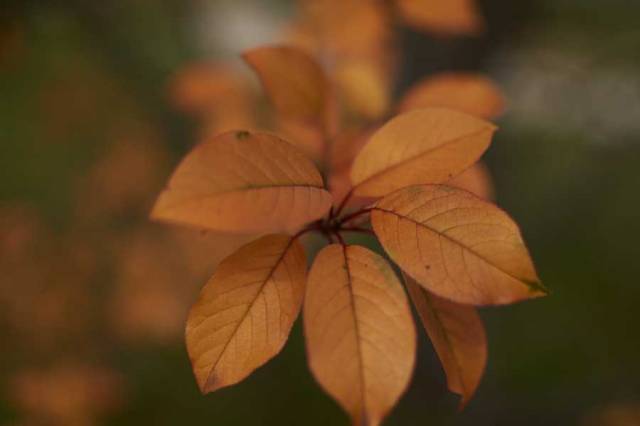
Nikon D750 f/1.8 1/1000s 35mm ISO 100
This second image was again edited with the intentional inclusion of sharpening and color saturation. As Raj noted an open aperture does allow for a greater isolation of the leaves. The f/1.8 setting also seems to offer a softness to the image as well as gentle depth of field.

Nikon D750 f/1.8 1/1000s 35mm ISO 100
In my limited experience and knowledge I find that a prime lens invites me to zoom in using my legs which is okay when photographing leaves…but not so much during street photography.
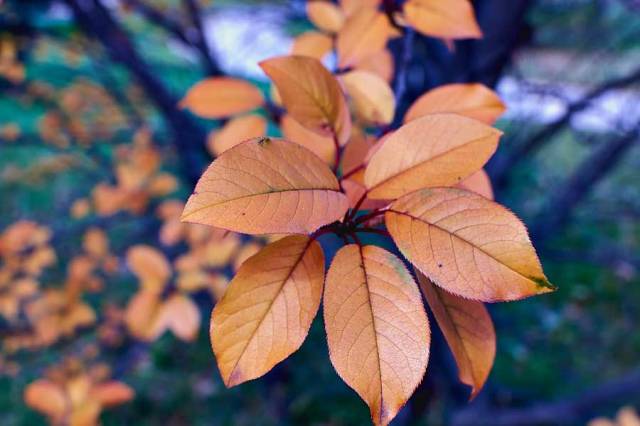
Nikon D750 f/7.1 1/60s 35mm ISO 100
On the third day, I set out with a Nikon AF-S 24-85mm f/3.5-4.5 G ED VR lens.
A raw representation prior to editing. Again, muted.
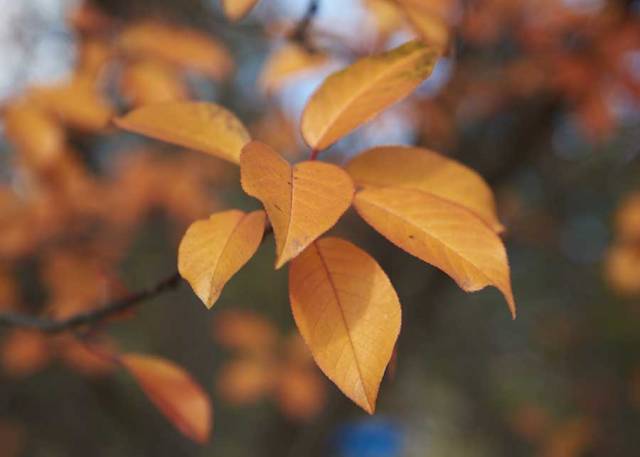
Nikon D750 f/4.2 1/125s 56mm ISO 100
In the edited f/4.2 image the shadows on the leaves are brought out; yet, I find the background a bit distracting. Sharpening and color saturation was also intentionally included in the editing process.

Nikon D750 f/4.2 1/125s 56mm ISO 100
In the f/7.1 image below the detail and sharpness of the leaves seems to offer a greater isolation of the leaves and isn’t as distracting as in the f/4.2 image. Also, it is interesting to note that both images have a bit of bokeh.
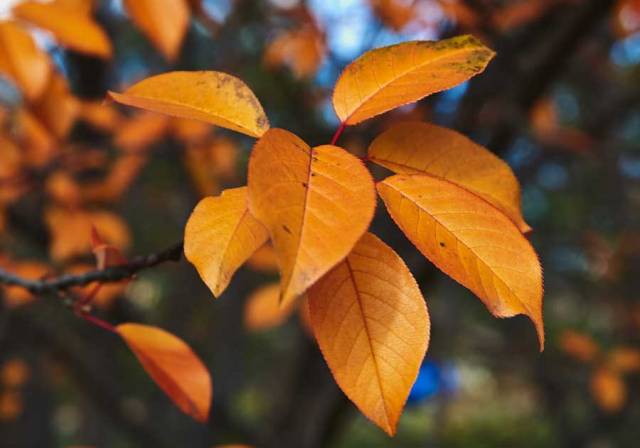
Nikon D750 f/7.1 1/80s 56mm ISO 100
Over to you Raj…I am finding great value in your lessons and feedback. Thank you for expanding my understanding of this never-ending learning experience.
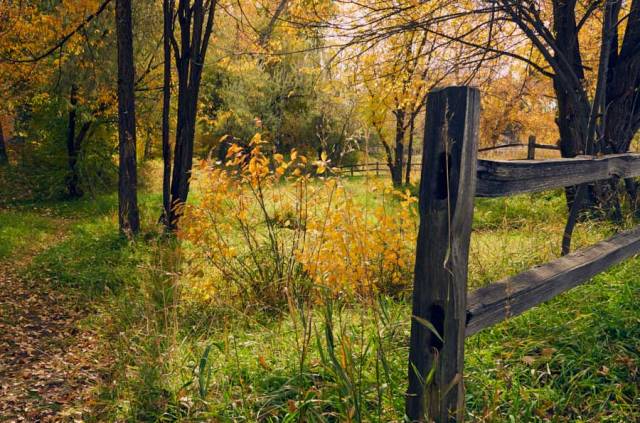
Nikon D750 f/10 1/50s 24mm !SO 100
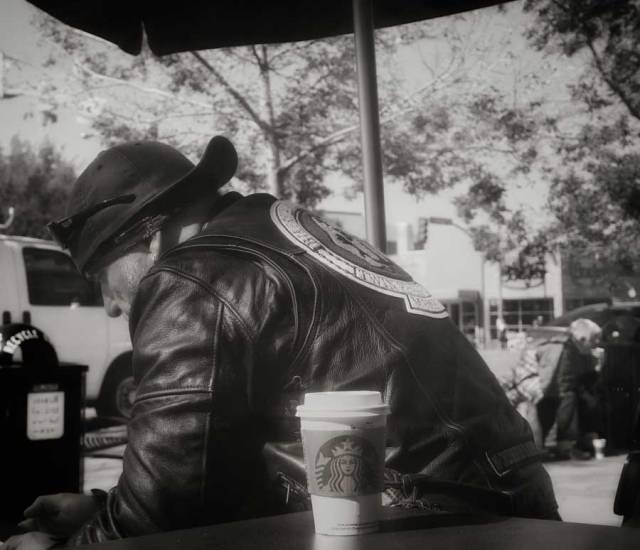
Lumix f/5.6 1/320s 32 mm ISO 200
Beckoning me?
Surely not –
pampas grass
~Nishiyama Soin (S Carter, Haiku before Haiku)

Nikon D750 f/5.6 1/160s 45 mm 100 ISO


You must be logged in to post a comment.