
Nikon D750 f/16 1500s 85mm ISO 800
Nikon D750 f/16 1500s 85mm ISO 800
Rocky Mountain National Forest…Never Summer
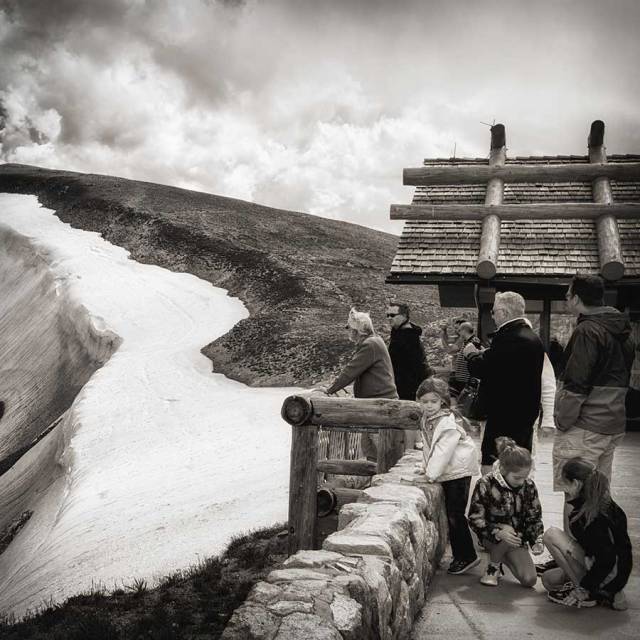
Nikon D750 f/7.1 1/320 28mm
How about a moment or two with Michael Jackson…
Raj (XDrive ) writes that high speed photography allows the photographer to freeze motion as it permits “only a fraction of a second for the sensor to ‘see’ the scene” and the sensor “is going to record things at standstill even though they are moving.”
I set out yesterday with my camera set on autofocus with continuous focusing and the ISO at 800. After coming home and doing a bit of deleting, I still have heaps of images…412. Regrettably, most of them will be tossed into the trash because I assumed that setting my camera on manual and using the highest f-stop that the shutter speed would automatically record at 1/4000 to 1/8000 seconds.
Why did I chose manual…well, before leaving home I initally set my camera on shutter speed priory mode and saw that the camera seemed to prefer lower f-stops. So, my first mistake came with the assumption that there is a correlation between high f-stops and shutter speeds. I also failed to set the camera on center focus and was not able to correct this decision as I left my glasses at home…sigh. Also, I did not pay attention to the shutter speed throughout the walk…and as you can see in the image below there are no frozen water drops…just a bit of blur, bubbles, and tiny pellets as well as a rock (lower right) in focus.
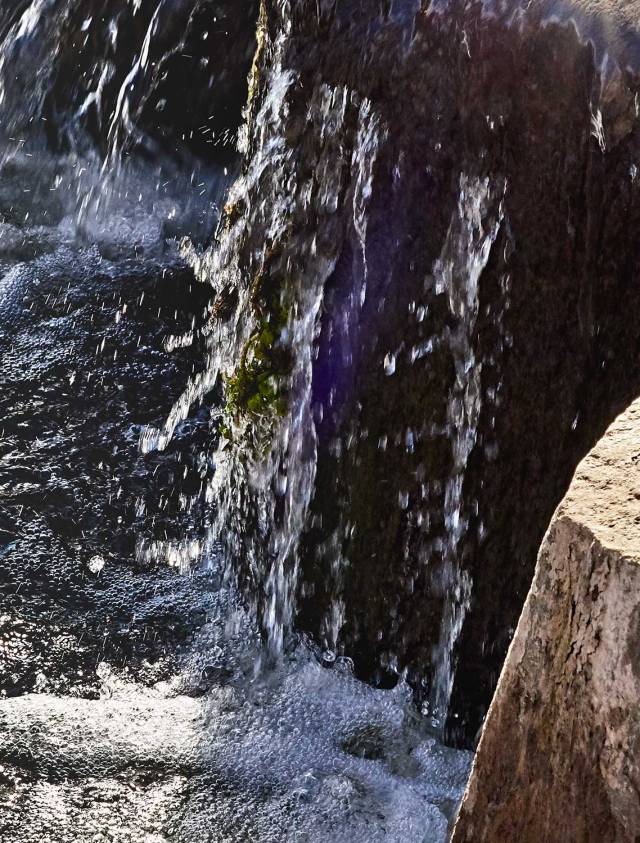
Nikon D750 f/22 1/250s 85mm ISO 800
The rain and snow last night left a bit of ice under a layer of snow…so will have to delay my return to the creek, when it is a bit warmer, to create motion frozen water drops with more attentive intention.
Yet, not all was lost…

Nikon D750 f/22 1/640s 85mm ISO 800

Nikon D750 f/16 1/1000s 85mm ISO 800
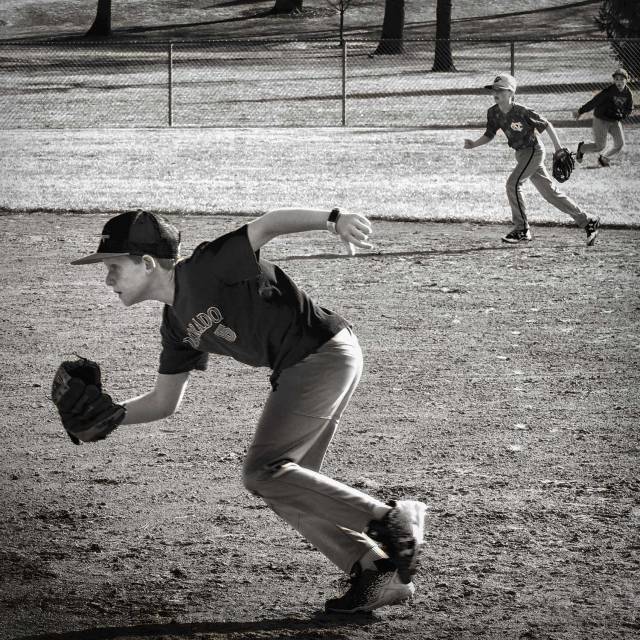
Nikon D750 f/16 1/500s 85mm ISO 800

Nikon D750 f/22 1/500s 80mm ISO 800
Thank you Raj…I appreciate these lessons and your feedback.
The fourth week of this journey exploring a particular element of photography invited me to open my eyes to triangles. It is easy for the eye to see triangles and they are often created through the use of three prominent points of interest, particularly if they are similar in content and size.
The first time I was introduced to triangles in photography was through the writings of Eric Kim who noted, “Triangles are one of the best compositional techniques you can use in your street photography to fill your frame, add balance, and add movement in your images.”
Within an image, you may notice three variations of triangular compositions: real triangles (actual triangles, triangles formed by perspective, inverted triangles formed by perspective) and implied triangles through the use of people.


Within street photography, implied triangles are often created by the direction of the subjects’ eyes. Within the first image below, both subjects are looking to the left creating a triangle that extends outside the photograph. In the second, the gaze of the father, daughter, and two geese create an implied triangle.


If you wish to join this learning journey at any time, please do so.
Please enjoy this educational video, Composition in Photography (Ted Forbes, The Art of Photography)
The wild geese yet
Are content to stay —
And must you return
~Otomo Oemaru (F Bowers, The Classic Traditions of Haiku)
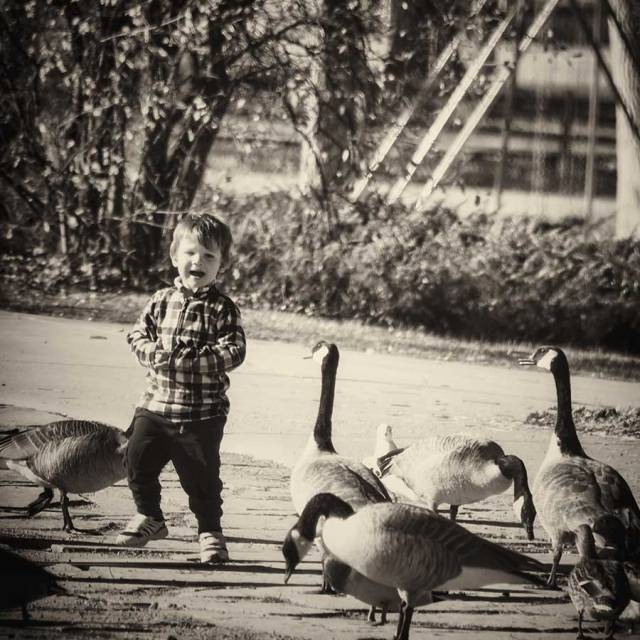
Nikon D750 f/5.6 1/320s 300mm
after the geese depart
back to normal…
Sumida River
~Issa (www.haikuguy.com)
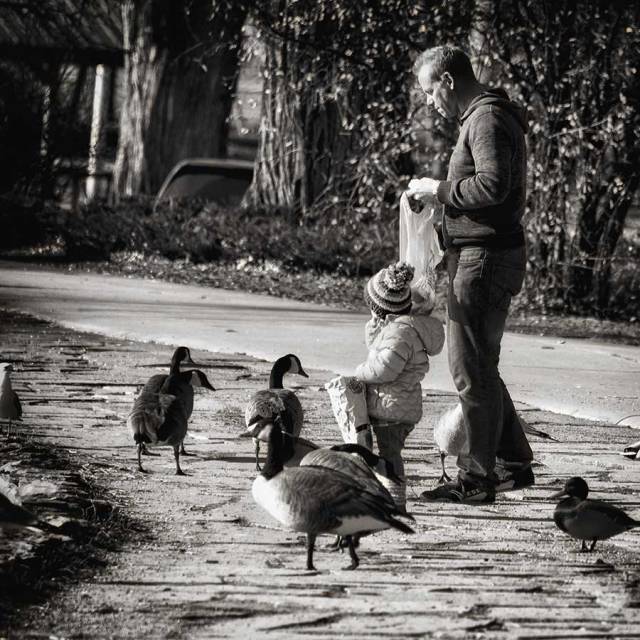
Nikon D750 f/5.6 1/230s 300mm
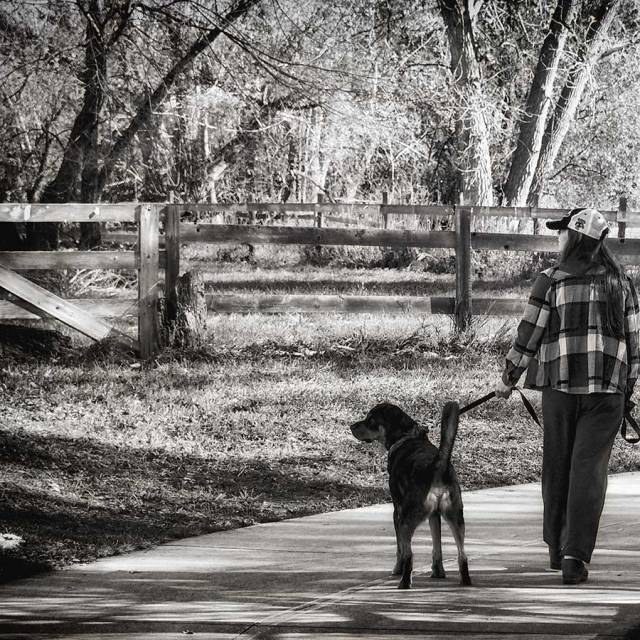
Nikon D750 f/5.6 1/100 62 mm
Sutcliffe rarely left Whitby [a port and resort community on the Yorkshire coast], where his portrait studio kept him busy, and said that he was ‘tethered for the greater part of each year by a chain, at most only a mile or two long.’ To most modern photographers this would seem a crippling restriction, but Sutcliffe gradually realized that it was an asset to him as a photographer since it forced him to concentrate on the transitory effects that could transform familiar scenes. …photographers should always aim for something more than ‘mere postcard records of facts.’ ‘By waiting and watching for accidental effects of fog, sunshine or cloud,’ he advised, ‘it is generally possible to get an original rendering of any place. If we only get what any one can get at any time, our labour is wasted; a mere record of facts should never satisfy us.’
cited: Frank Meadow Sutcliffe, The History of Photography Series, p 8
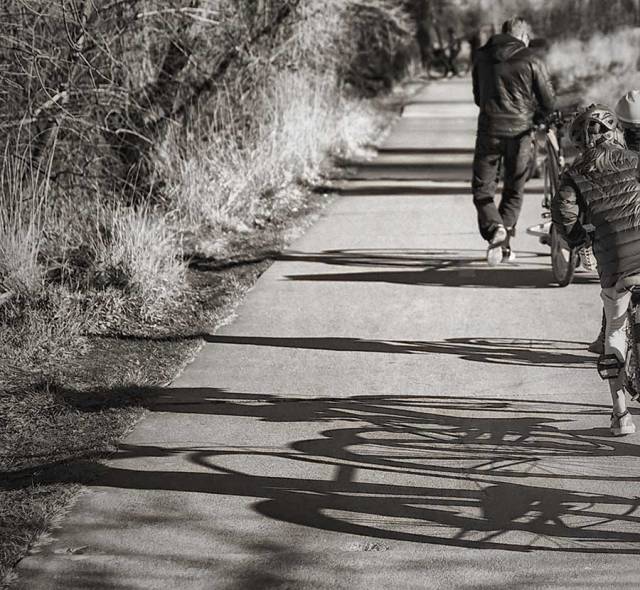
Nikon D750 f/1.8 1/800 35 mm


Nikon D750 f/5.6 1/100 s 300 mm ISO 100

Nikon D750 f/5.6 1/100 s 300 mm ISO 100

Nikon D750 f/5,6 1/100 s 300 mm ISO 100
One of the interesting things about photography is the fact that it’s record of ourselves and our works so often do not correspond to our mental image… Generally we assume that the difference between our expectation and the camera’s evidence is the result of some kind of photographic aberration.
~Henri Cartier Bresson

Nikon D750 f/5.6 1/160s 170 mm ISO 100

Nikon D750 f/7.1 1/500 s 35 mm prime ISO 100 neutral-density filter
 a meditative journey
You must be logged in to post a comment.