
This election season, we’re thrilled to partner with several nonpartisan voting initiatives.
via National Voter Registration Day 2018 — The WordPress.com Blog
This election season, we’re thrilled to partner with several nonpartisan voting initiatives.
via National Voter Registration Day 2018 — The WordPress.com Blog
For this week’s photo study, I decided to continue with Ian’s creative composition posts as they seem to be an ideal way to revisit basic elements of composition and explore how to incorporate them into street photography. He begins the second positing with noting the importance of slowing down with intentional “seeing” as a foundation to finding the ideal background and good light and then deciding to or not to press the shutter.
via Creative Composition in Street Photography – Part Two
Photography is not what’s important. It’s seeing.
The camera, film, even pictures, are not important.
~Algimantas Kezys (cited: H Zehr, The Little Book of Contemplative Photography)
Setting the Stage, Timing the Steps (fishing) Ian writes, “The key concept for this approach is to establish the static elements in your frame first (i.e. background and light), then patiently work to add interesting dynamic elements by moving close and far, exploring various angles, adjusting the camera’s settings, and finally with patience waiting for the person who fits into your story to walk on your stage.
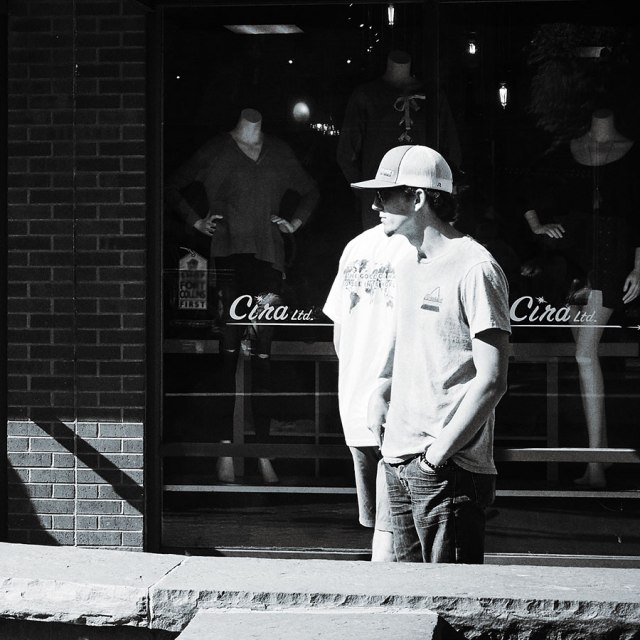
Frame within a Frame Create a frame within the image through the use of doorways, windows, window displays, trees, or any object that creates a frame around your subject.

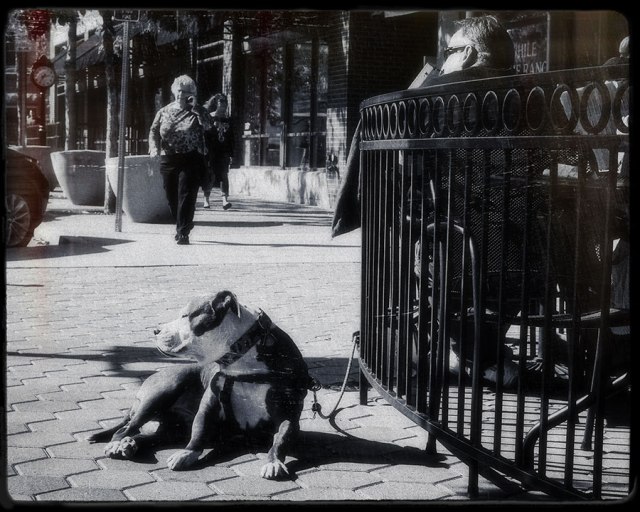
Leading Lines Drawing the viewer’s eye is an important compositional element especially when lines converge toward each other and draw the eye to the subject. I found that the gaze of both the man and the dog create an implied line as well as invite a story.
Juxtaposition Ian describes juxtaposition is where two adjacent objects appear to contrast with each other, as within the image below. The person in the foreground leans to the left opening us to the elderly man in the midground who is leading left. The Starbucks coffee cup in the center adds a social justice element as well as a contrast to both men.

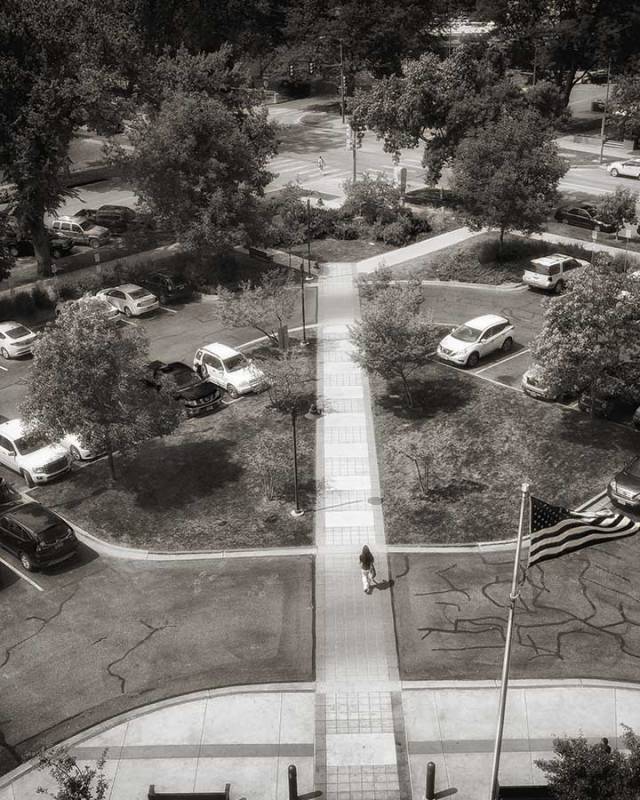
Perspective – create high-angle images by standing on stairs, platforms, balconies or low-angle photos by getting close to the ground and shooting upwards.

Scale Images where the subject is dwarfed by the environment seems to be a way of introducing feeling into the image and drawing the eye to the person within the frame.
Color Color intermixed with light, shadows, and silhouettes have the potential to create unique photographs that nudge images away from the photojournalism and documentary genre.
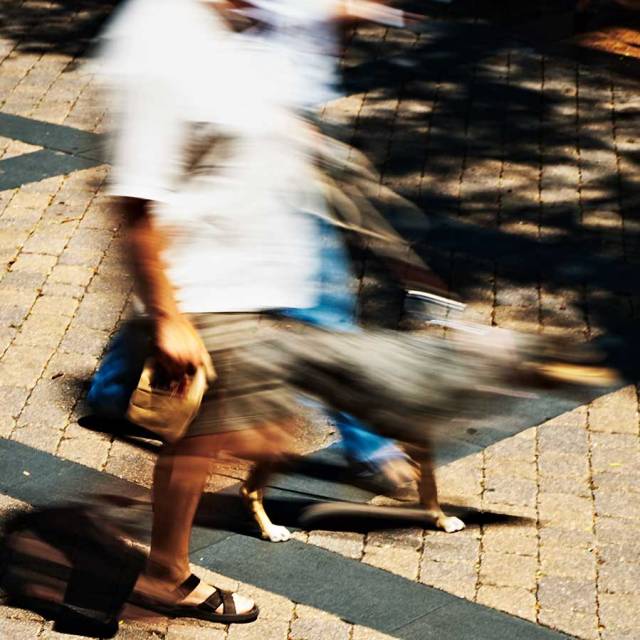
Reflections Entire stories can be created through the layers that are created when photographing through glass.
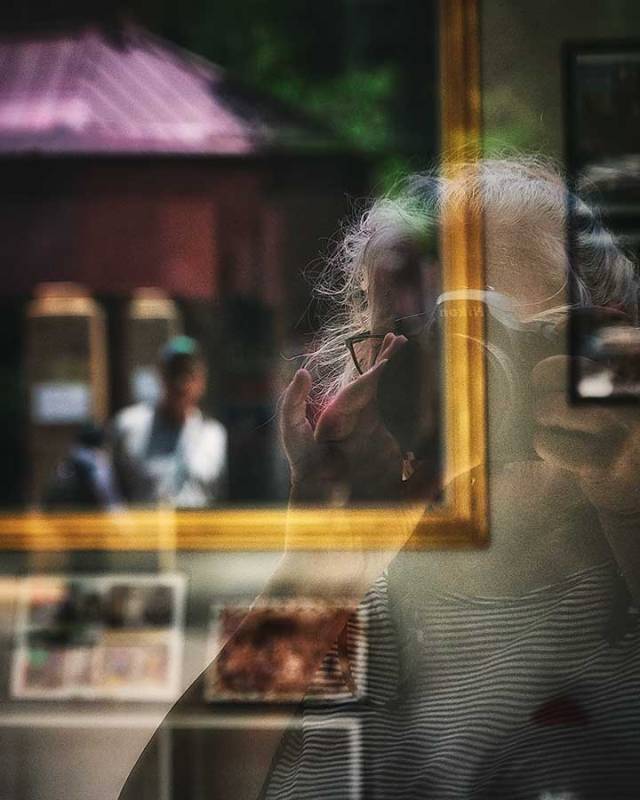
Light and Shadows Using your exposure compensation to drop the exposure on the frame (which protects the highlights while creating wonderful deep shadows) will create amazing interactions of shadows, light, and silhouettes.

The Candid Frame Within “Less than Obvious”, Ibarionex encourages us to open ourselves to “seeing” the world’s amazing detail and “being” intentional before we press the shutter.
I hope you find Ian’s educational blog and the Candid Frame to be an invaluable sources of information as well as doorways to a world of creative possibilities. I’m looking forward to seeing your creative work as well as reading your throughs about the use of basic composition elements into street photograph. Let’s tag with #aphotostudy. Until next week…

Nikon D750 f/8 1/8s 300m 100 ISO
“He sought out a background with formal qualities interesting in themselves. Often it was a wall parallel to the place of the image, or a space lending perspective with defined graphic lines. Then he waited for figures to come and find their place in this arrangement of forms, in what he himself called ‘simultaneous coalition.’ His approach to composition was like a little theater with a set and actors. One part of what formed the geometric quality of his images was perfectly controlled: the other–and probably the most important-was the result of chance.” (cited: Aperture Masters of Photography Henri Cartier-Bresson)
This week I would like to introduce you to Ian MacDonald, an Official Fujifilm X Photographer and educator living in Vancouver, British Columbia, Canada. In his first of a series of street composition blogs, he reviews:
What really matters in a photograph

Nikon D750 f/2 1/5s 35m 160 ISO
Setting the stage

Nikon D750 f/8 1/8 135m 100 ISO
Street portraits
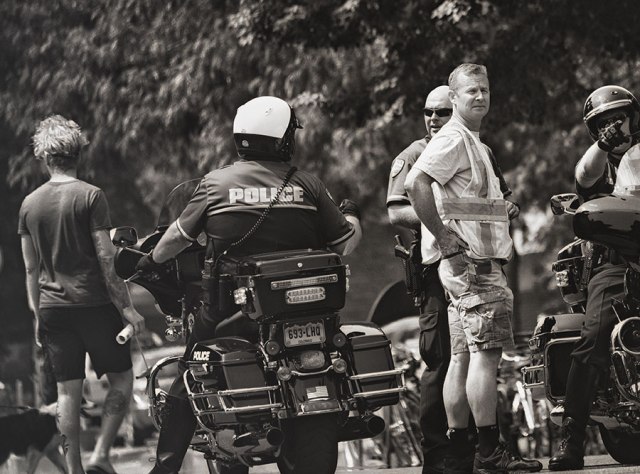
Nikon D750 f/5.6 1/160 300m I00 ISO
Detail Shots
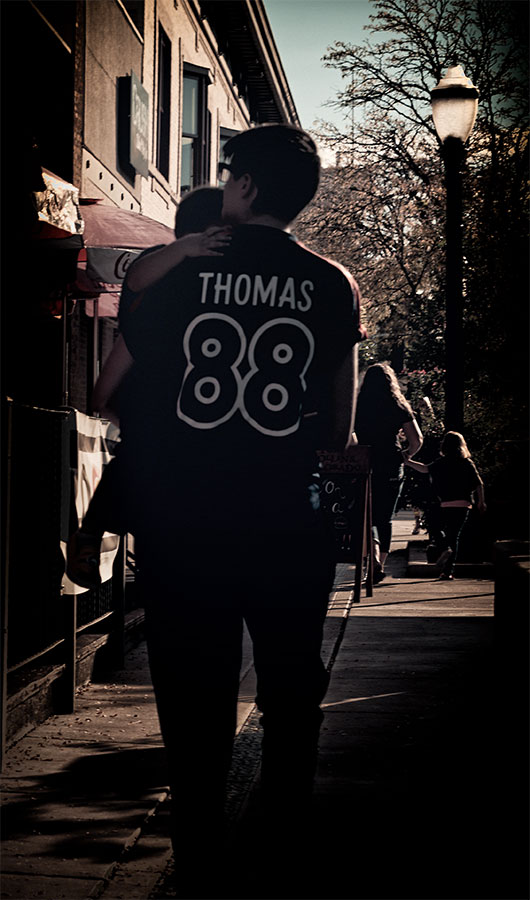
Nikon D750 f/8 1/100 68m 100 ISO
I hope you, also, find this to be interesting and informative. As always, I would love to read your thoughts and see your images. Let’s tag with #aphotostudy. Until next week…
 a meditative journey
You must be logged in to post a comment.