Street Art: I judge that they are men…

streetartftcollins

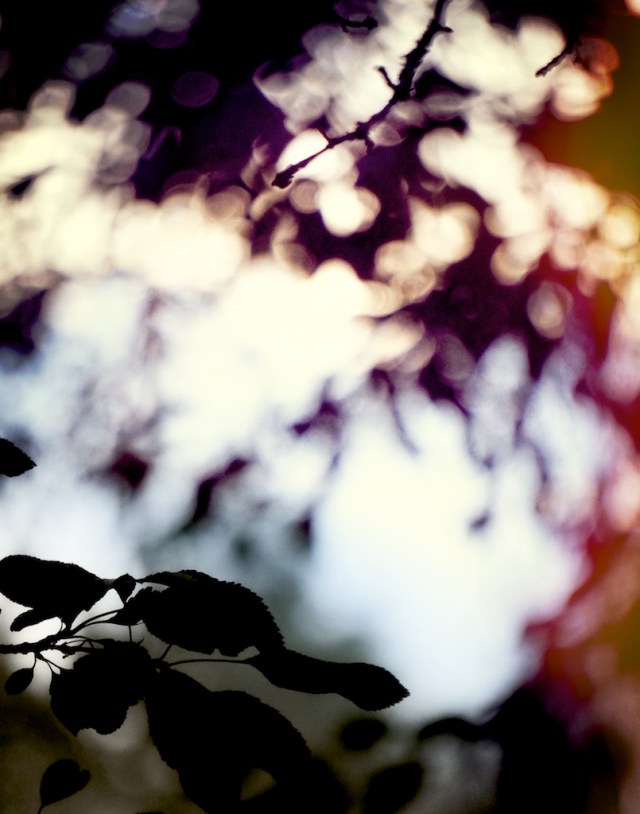
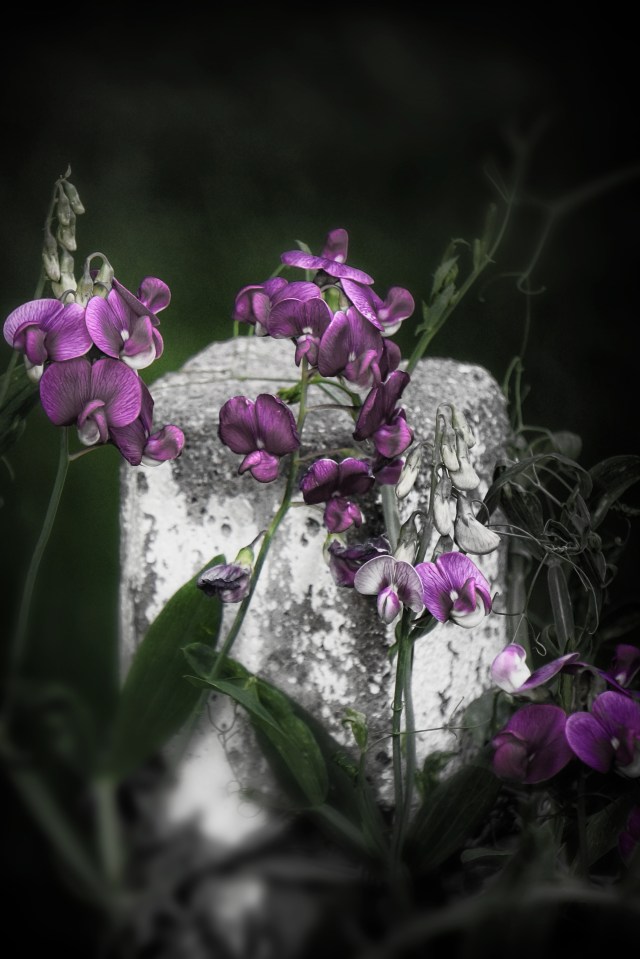
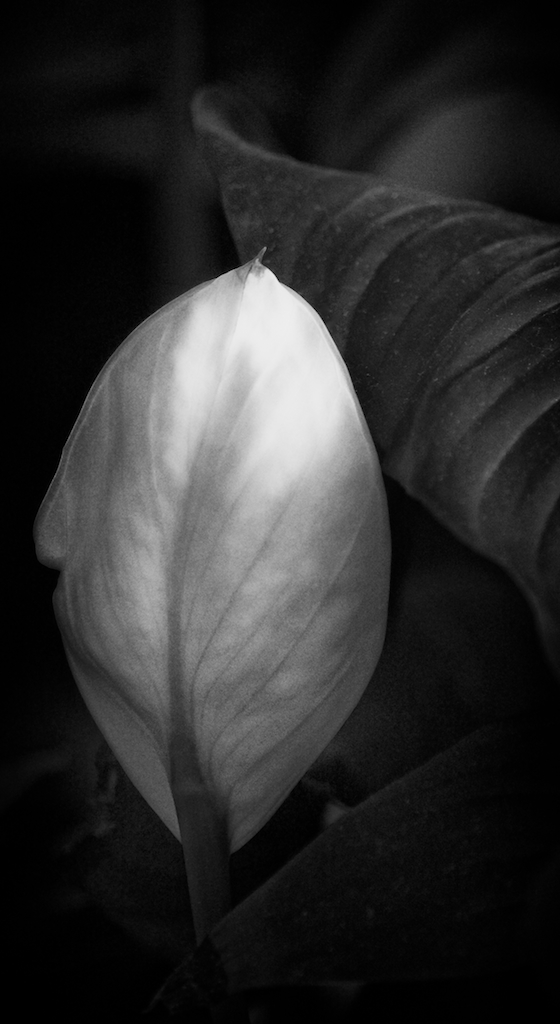
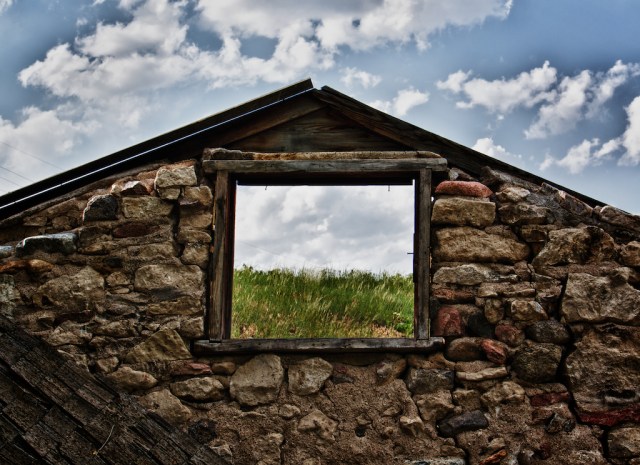
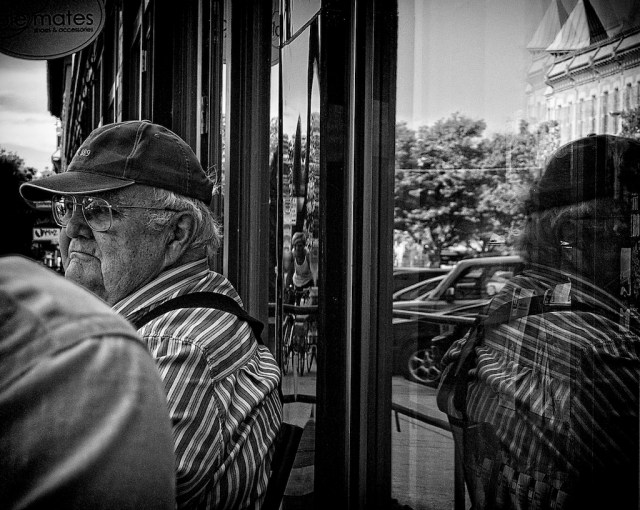
In a famous passage in the Meditations, Descartes speaks of looking from a window and seeing men pass in the street. ‘Yet,’ he reflects, ‘do I see any more than hats and coats which could conceal automations? I judge that they are men.’ …the observer no longer passes through them to see the living person beneath. He no longer sees what is implied.  However, the attention of the right hemisphere, concerned as it is with the being in context, permits us to see through them to the reality that lies around and beyond them. It could not make the mistake of seeing the clothes and hats in isolation.

The illusion that, if we can see something clearly, we see it as it really is, is hugely seductive. …We never see anything clearly…What we call seeing a thing clearly, is only seeing enough of it to make out what it is; this point of intelligibility varying in distance for different magnitudes and kinds of things…” Ruskin, in Modern Painters, makes the point that clarity is bought at the price of limitationHe gives the example of an open book and an embroidered handkerchief on a lawn.  Viewed from a distance of a quarter of a mile, they are indistinguishable; from closer, we can see which is which, but not read the book or trace the embroidery on the handkerchief: as we go nearer, we ‘can now read the text and trace the embroidery but cannot see the [fibers] of the paper, nor the threads of the stuff’; closer still and we can see the watermarks and the threads, ‘but not the hills and dales in the paper’s surface, nor the fine [fibers] which shoot off from every thread’; until we take a microscope to it, and so on, ad infinitum. At which point do we see it clearly? …Clarity, it seems, describes not a degree of perception but a type of knowledge.  To know something clearly is to know it partially only, and to know it, rather than to experience it, in a certain way (pp181-182).


**The Master and his Emissary

The Divided Brain and the Making of the Western World

Iain McGilchrist
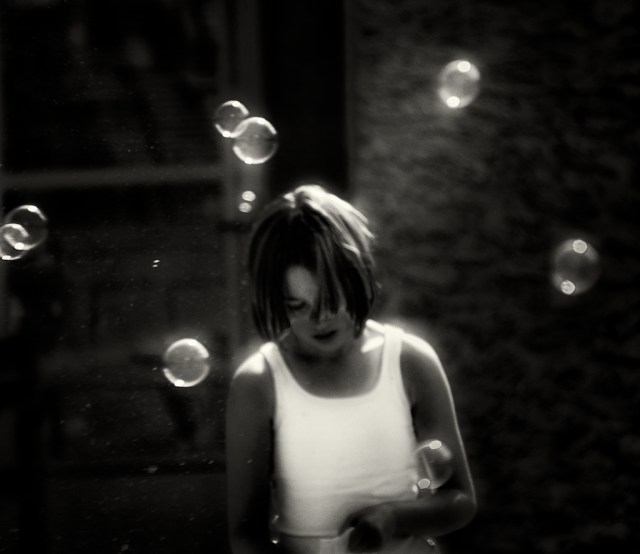
weekly photo challenge: one shot, two ways

the wonder of

flowers opening

and birds singing:

prayers!

ka ya hiraki / nori toku tori no / kirabiyaka ~Gozan (1695-1733)*

oneshottwoways (1)

oneshottwoways

Visit WordPress for additional images submitted for this week’s photo challenge: one shot, two ways.

*This haikai trickery, a palindrome, reads the same forward and backward in kana (the Japanese alphabet)

 source: The Classic Tradition of haiku

Ed: Faubion Bowers


weekly photo challenge: masterpiece

The child claps his hands

playing alone, happily,

under a festive tree ~Issa*

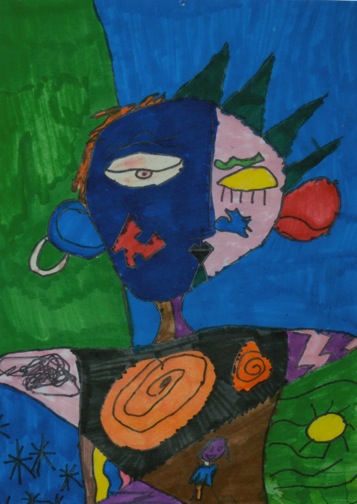
artist: R. B. AH**

artist: E. R. H-A**

One of the best ways to understand how the over-all space of creative expression reflects its parts is to imagine yourself inside the space of the artwork…select a place within the composition where you would like to locate yourself for a few minutes of contemplation. …imagine…passing through different areas of the artwork…feel…energetic patterns. (152)***

Please visit WordPress to view other images/works of art submitted for this week’s photo challenge

souce

*The Spring of My life

Trans: Sam Hamill

**used with permission by the artist

*** McNiff, Shawn

Trust the Process

manville, wy

Manville is located at the junction of Highways 20 and 270 — 9 miles west of Lusk, Wyoming.

H. S. Manville of Milwaukee, Wis. migrated to the Territory of Wyoming in 1879. He became partners with James Peck in a cattle ranch seven miles west of the Hat Creek Stage Station. In 1880 Manville was named manager for the Converse Cattle Company. He hired Addison A. Spaugh as ranch foreman.

When the railroad came in 1886, a new town was born. Addison Spaugh was asked to name the town and he named it after his good friend and business associate.

Hiram S. Manville was also influential in the early development of the community. Manville passed away at Oakdale, Nebr. on December 14, 1911.

Oscar Selden filed the original town plat in October 1886. He paid to have the land surveyed and platted by Henry Chase. Selden purchased this land, subdivided the site into lots, streets and alleys and offered the lots for sale. He would give anyone a lot if they would build a house of value on it. He was killed by a shot fired through the window of his home. The killer was never apprehended.

Almost all of the original houses in Manville were of rock and some of those landmarks are still standing.

Manville has been situated in Laramie County, Converse Co. and Niobrara County. The first mayor was J. F. Christensen. At the height of Manville’s prosperity, the population grew to 1500 people. Oil had been discovered at Lance Creek and several oil companies had their headquarters in Manville as well as their warehouses. The town boasted two lumberyards, a realty office, insurance business, two banks, post office, variety store, telephone office, four hotels, elevator, hardware store, bakery, furniture store, mercantile, meat company, candy store, a shop that did general repairing, plumbing and tinning, several barber shops, numerous saloons, several cafes, a town hall, three newspapers, physician, surgeon, drug store, attorney at law, two garages, billiard hall, dance hall, theatre, baseball diamond, Masonic Lodge, Eastern Star, Royal Neighbors Lodge, grade and high schools and at one time there were about 100 pupils in the grade school. Later the schools were closed and the pupils were bused to Lusk. There was also a cheese factory, livery barn, sawmill, blacksmith shop, dentist, jewelry store and watch repair shop.

Manville’s first post office was allotted in 1887 with John A. Shaeffer as postmaster.

Early day volunteer firemen were summoned by the tolling of a bell hung on Main Street. A hand-drawn cart carried limited equipment and courageous fire fighters did their best to control the blazes.

Part of the J. A. Manorgan homestead became the Bell View Cemetery. In it rest many of the early day pioneers.

When the Lance Creek Oil boom came to an end, Manville began to dwindle. There is still a post office, Community Church, mayor and town council and a population of 94 people.

In the late eighteen hundreds a tornado ripped thru Manville wrecking many buildings. Shaeffer’s hall and opera house were completely destroyed and the post office and Manorgan & Company’s general store were badly damaged.*

*source:

From “Niobrara Historical Brevity” published by the

Niobrara Historical Society, in observance of the Lusk Centennial 1886-1986

http://www.niobraracountylibrary.org/history/?id=37

rose buds

How invisibly

it changes color

in this world,

the flower

of the human heart.

                              ~Ono no Komachi*

 rose

our ordinary vision is limited, and…our conventional consensus of reality is not the only version of reality.

The complex multidimensionality of the modern world no doubt contributes to the constructive habit of the mind that, in its attempt to provide meaning, continually rearranges the world to fit individual needs.  The failure to recognize the constructive nature of the mind can be a major obstacle to artistry and creativity.  Conversely, understanding the constructive nature of the mind and reality can lead the way to Great Understanding in the art of photography and in the art of living. (61)**


sources:

*The Ink Dark Moon

Trans: Jane Hirshfield with Mariko Aratant

**Tao of Photography

Philippe L Gross & S.I. Shapiro

window of understanding

window

The remarkable thing about deja vu, or other vivid experiences of recollection,

is that they are vested with significances that we cannot put into words.

At an earlier time, whatever happened might have seemed important, or might not.

But the recollection is charged with relevance, and tears flow for no reason.

Robert Aitken, A Zen Wave

weekly photo challenge: curves

Share a picture of CURVES and explain why you chose that picture!

Gramophone

Gramophone

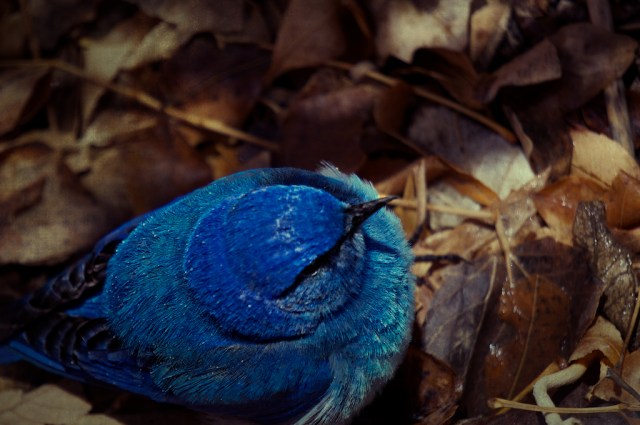
Blue Bird

Blue Bird

‘A photograph,’ it has been said, ‘shows the art of nature rather than the art of the artist.’  This is mere nonsense, as the same remark might be applied equally well to all the fine arts. Nature does not jump into the camera, focus itself, expose itself, develop itself, and print itself. On the contrary, the artist, using photography as a medium, chooses his subject, selects his details, generalizes the whole in the way we have shown, and thus gives his view of nature. This is not copying or imitating nature, but interpreting her, and this is all any artist can do. ~Henry Emerson *

cited in:

Tao of Photography  Seeing beyond Seeing

Philippe L. Gross and S. I. Shapiro