I’ll forget the trail
I marked out on Mount Yoshino
last year,
go searching for blossoms
in directions I’ve never been before
~Saigyō (B Watson, Poems of a Mountain Home)

I’ll forget the trail
I marked out on Mount Yoshino
last year,
go searching for blossoms
in directions I’ve never been before
~Saigyō (B Watson, Poems of a Mountain Home)


The question, “Is the centered eye more likely to follow the viewer?” drew me to the above piece of art while walking across the Colorado State University campus.

Nikon D750 f/3.3 1/1.250 40 mm 100 ISO

Nikon D750 f/4 1/160 190 mm I00 ISO
Ted Forbes notes that the rule of space offers the photographer a way to create a sense of motion, activity or conclusion within one’s composition and that it simply involves creating negative space that relates to the subject within the image.
For example, if you place negative space outside your subjects head in a portrait, you imply maybe there is thought going on – particularly if you direct your subject’s eyes toward the negative space.
Or if you have a picture of a motorcycle zooming across the desert. Placing the negative space in front of the motorcycle creates a sense of direction or implication of eventual destination

Nikon D750 f/4.2 1/400 45mm 100 ISO
It is my thinking that Ted Forbes’ discussion dovetails nicely with Raj’s Xdrive photography lesson about a photograph speaking.
a “good picture always speaks out its story…The story the picture is trying to broadcast is nothing but your vision or an intent or a message you are trying to convey to the viewers.

Nikon D750 f/14 1/80 32mm 100 ISO
Thank you for taking the time to visit; and as always, I would love to read your thoughts about the interconnection between story and space as photography composition tools and any images you would like to share.
Hope you enjoy Ted Forbes’ Rule of Space video.
The use of negative and positive space within photo composition aids in directing where you want the viewer’s eye to go.
 Hop on over to Amy’s The World is a Book to journey through her images of positive and negative space.

This is, because that is. This is not, because that is not. This comes to be, because that comes to be. This ceases to be, because that ceases to be…This is like this, because that is like this.
~Thich Nhat Hanh, The Heart of the Buddha
time-lapse of an apple blossom transforming

Nikon D750 f/13 1/320s 40mm 100 ISO

Nikon D750 f/29 1/3s 48mm 100 ISO

241 seconds into one moment.…Nikon D750 f/8 241s 24mm 100 ISO

For a table to exist, we need wood, a carpenter, time, skillfulness, and many other causes. And each of these causes needs other causes to exist. The wood needs the forest, the sunshine, the rain, and so on. The carpenter needs his parents, breakfast, fresh air, and so on. And each of these things, in turn, has to be brought about by other conditions. If we look in this way, we’ll see that nothing has been left out. Everything in the cosmos has come together to bring us this table. Looking deeply at the sunshine, the leaves on the tree, and the clouds, we can see the table. The one can be seen in the all, and the all can be seen in the one.
Thich Nhat Hanh, The Heart of the Buddha’s Teaching
 Tempo as a composition element within photography is an extension of Ted Forbes’ discussion of rhythm…the beat…the pulse within images. He notes that tempo is the means by which we display speed, movement, as well as the passing of time all within a frozen moment.
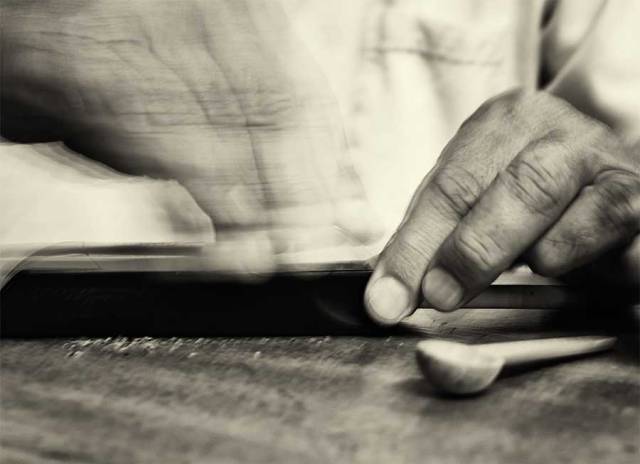
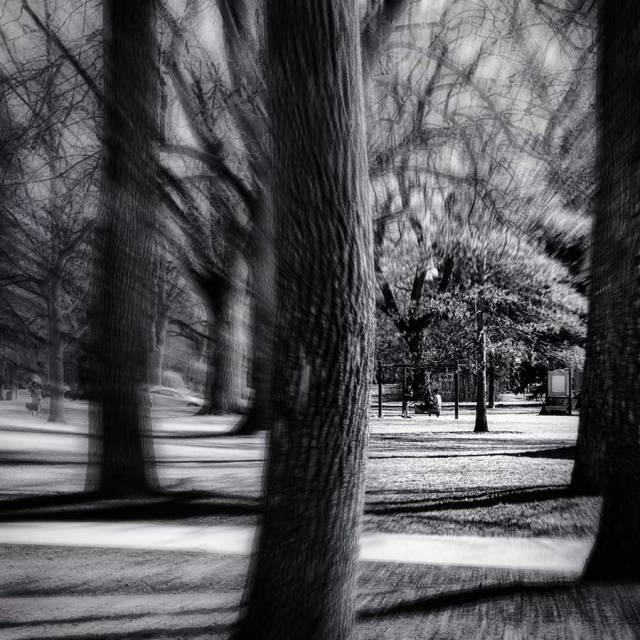

Within the comment section of the YouTube video , Tempo in Visual Composition and Photography, Ted Forbes furthers his discussion by noting that
tempo is different than the ‘rule of xxx’ stuff. Every photo has a tempo—a pace at which the elements relate to one another. This is simply becoming conscious of these relationships and learning how to vary the pace of the images you create.
Speaking of music within composition, here is a blog by Moss and Fog who offers us a video that is “a fascinating experimental film by Marcin Nowrotek [who] combines 3D footage of jazz musicians and 3D animations to create a video that brings amazing depth and physicality to the screen.” Enjoy.
As always, I would love hearing your thoughts and seeing how you understand Ted Forbes’ discussion of tempo within photography.

 a meditative journey
You must be logged in to post a comment.