…what we’re doing here is getting you to think…over the course of a long period of time you may see some of it very quickly, some of it in a matter of weeks, depending on how hard you work, it may be a couple of years before you start really feeling like you defining yourself as a photographer…the catalyst, which I think is really important…what we are looking for right now…is to get you to start thinking differently…
The first part of this Developing Your Personal Styleseries invited us as photographers to learn how to see and think–visualization. The second encouraged us to utilize the meditative process of concentration and returning to the object as a means to extend our creative endeavors by encouraging us as photographers to “exhaust all possibilities”and “to train the brain to think.”
This week Ted Forbes has offered three separate photo assignments that blend two things together…emulating an identified feeling state of experience and engaging with a subject in such a way as you create a portraiture that represents an identified feeling.
Exercise 1:
Start with a basic feeling…identify an event or something that happened in your life that is associated with a feeling — happy, angry, sad, worried, etc.
Visualize and mediate upon this feeling state.
Get your mind to think differently….how do I bring that certain feeling into an image?How do I just shoot something that represents that state of experience?What do I need to do to get that feeling to be represented in a photograph?
Replicate this feeling through a still life, landscape, or abstract image.
Don’t expect to be good…it takes time to emulating feelings.
The initial photographs we create during this time “…may not be great, but the whole point is [we’ve] got [our heads] thinking and [we’re] getting [our] mind around composition and possibilities and that’s what’s really important…”
This slideshow requires JavaScript.
Exercise 2:
Go to the library or book store and find a photo book of a photographer whose work touches upon the multiple emotions within the human experience; e.g., Cartier-Bresson, Walker Evans.
Ask yourself what is it about this photographer that inspires you to start seeing the varied possibilities of photographing and evoking feelings.
Remember you don’t have to try and be like him…just see the possibilities.
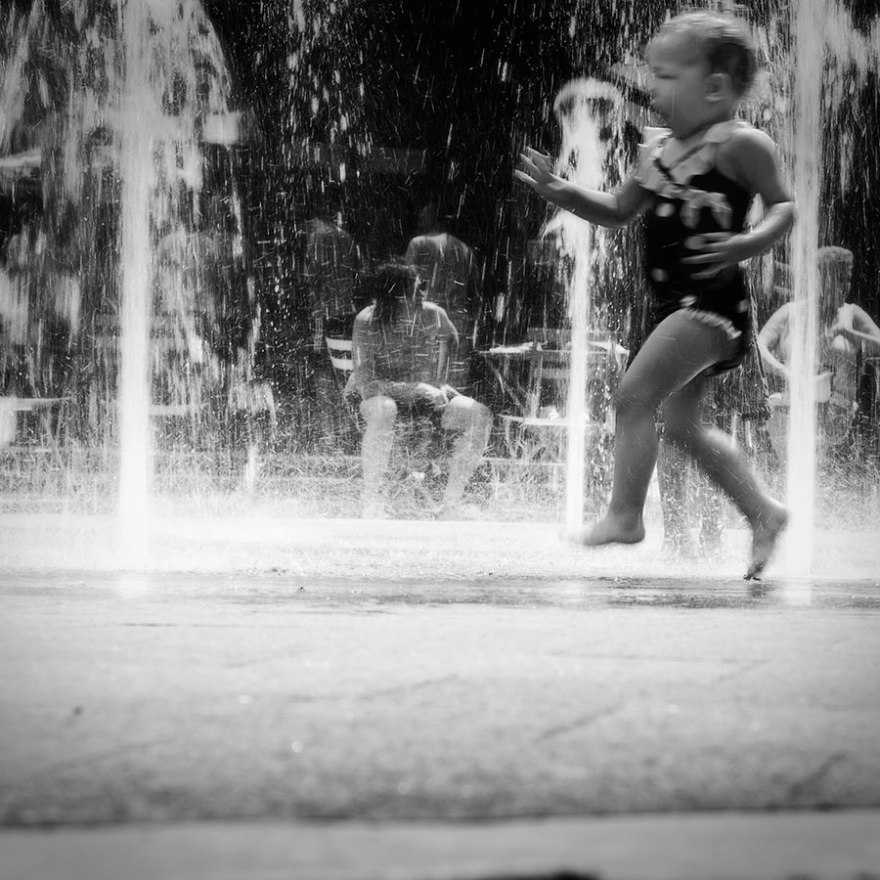
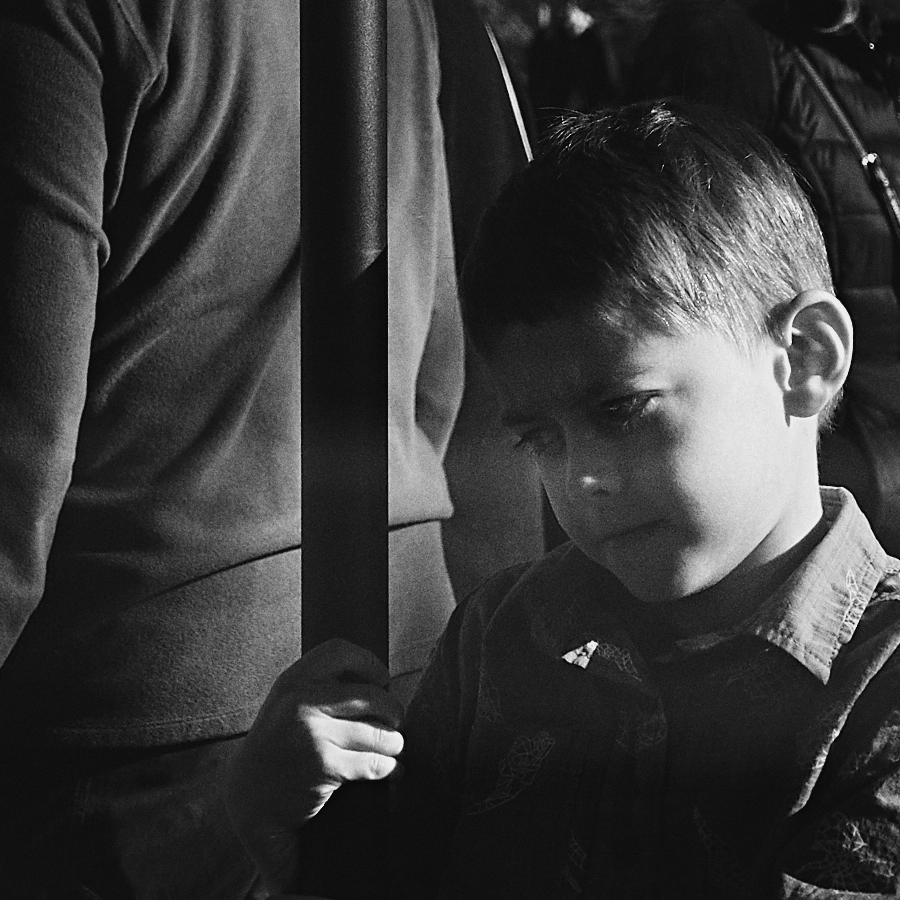
Create a portraiture of someone that demonstrates an identified feeling state.
Engage with your subject, share what feeling state you wish to convey, develop a sense of trust, be like a movie director encouraging an actor to communicate a specific feeling.
Keep in mind
there is discomfort for the viewer when she can not see someone’s eyes.
people communicate emotions all of the time through their facial expressions and body postures.
interacting with people will help increase your comfort level
experiment with how to evoke feelings of people so that in time your work demonstrates your individual touch and people will “want you and no one else.”
This slideshow requires JavaScript.
I hope you will enjoy these challenging exercises that encourages us to stretch our imaginations while creating images that represents your personal style. As always, I’m looking forward to seeing some of your work and reading your thoughts. Let’s tag with #aphotostudy.
“The fact that one may misunderstand the content of a picture is of no concern to the picture, which leads its own life independent of our interpretations. For some years the writer thought that the tree in Edouard Boubat’s picture grew on the top of a hill… What he finally realized that the tree stands not against the sky but against a wall, it was a momentary shock. But the picture refused to adapt itself for the sake of the new interpretation. It remained precisely as it had been before. …A picture is what it looks like. ~J Szarkowski, Looking at Photographs
The last part of the Diary [Sarashina Diary] is concerned chiefly with accounts of pilgrimages and dreams. She married, who and when is not recorded, and bore children. Her husband dies, and with his death the spring of her life seems to have run down. Her last entry is very sad: “My people went to live elsewhere and I lived alone in my solitary home.” So we leave her “a beautiful, shy spirit whose life had known much sorrow.” ~Diaries of Court Ladies of Old Japan
Nikon D750 f/5.6 1/400s 125mm 4000 ISO
Image and excerpt from Diaries of Court Ladies of Old Japan submitted in response to Traveling at Wits End’s photo challenge: the journey home.
This week’s a photo study continues with Ted Forbes’ Master Class series, Developing your own Creative Style.Last week’s blog reviewed and invited us to open ourselves to visualization by remaining in a selected location, without a camera.Within the second episode, he defines meditation and then offers two exercises designed to increase our awareness of mediation within the creative process.
In the world of photography, mindfulness has been described as “meditative” or “contemplative” photography.
While out on a photo walk, my eyes scan the environment, searching for that something (shape, patterns, color, light/shadow, story) that draws my attention or for the perfect background scene.As I move through my environment, my mind begins thinking about a photo article I read earlier or an image created by one of my favorite photographers.I then consider the various camera settings and variations that may help me recreate an image or avoid repeating a past mistake.For a moment or two, I ponder about what kind of image would be a great accompaniment with a particular haiku.I begin composing and designing my next post which then invites me to slip into a fantasy about recognition and praise and then silence an inner smile as unease creeps in with, “Most likely your pictures will not be good enough”
All of this invites me to question, “Am I really on a photo walk or am I engaged in a private screening of movies of my own making?” This mindlessness chatter of thoughts, expectations, and desires are like dense clouds that prevent me from really being present with and seeing the world around me.To see requires a meditative mind.
For some people meditation is shrouded in esoteric mystery.Others understand it through images of a person sitting in the lotus position with eyes half-closed.Others associate it with holiness and spirituality.In its most general sense it is deciding exactly how to focus the mind for a period of time and then doing just that.
In theory, focusing the mind upon an object sounds very easy, but practice acquaints us with a mind that seems to have a will of its own as it drifts from one thought, image, conversation, or memory to other remembrances, conversations, concepts, and thoughts.This internal stream goes on and on like a personal conversation with oneself or a perpetual story upon a movie screen…
…at the point when one realizes that the mind has traveled here and there, one is simply to note this to oneself and with acceptance gently return again to the meditative object…cited: A Meditative Journey, b c koeford
This slideshow requires JavaScript.
Even though they may not specifically use the word “mindfulness,” many of the great masters talk about photography as awareness of the present moment in which we forget ourselves. We let go of the goals, desires, expectations, techniques, and anxieties that make up who we in order to more fully immerse ourselves into the experience of seeing. We open up our receptive awareness to what the world offers us…. We’re not looking for anything in particular. We’re not going anywhere in particular. We’re not expecting or trying to control anything in particular. Instead, we’re wandering, perhaps rather aimlessly, without a goal or purpose. We’re fully and naively open to the possibility of the unexpected, the unique, the moment when things come together… to the flow of life. Under these conditions, when we let go of the self, “it” appears to us. We don’t find and take the picture. The photograph finds us. It takes itself. We unite with the scene not so we can see a shot we want, but rather what the scene offers. The experience comes to us and the photograph is simply the icing on the cake.cited: http://truecenterpublishing.com/photopsy/mindfulness.htm
In photography, mindfulness is like observing something for the first time, even though you may have looked at it a thousand times before.
With an understanding of the importance of returning, again an again, our concentration to the moment, Ted Forbes invites us to
1. Spend 30 minutes to an hour creating a still life.
Use an ordinary everyday item
focus on that one object
exhaust all the possibilities
when you become aware that you mind has begun to wander then—with acceptance—just return to this still life project
ask yourself what am I not doing, what if I introduce motion? what would be different if I would do….? what would this look likein different location—outdoors, on the floor, different table?
if it seems as though all possible angles, ideas, etc., have been exhausted, remain focused on the exercise for the rest of the time by jotting down thoughts and engaging in visualization.
2.Spend 30 minutes to an hour with a building or an outdoor space. — If you have chose a building that is in a public space and not a building that may arouse anxiety, a government building.
sit and explore ways to photograph.
just remember to keep returning to the exercise when you mind begins to wander.
exhaust all possibilities
use your journal to write down your ideas, frustrations, future projects.
This slideshow requires JavaScript.
If you are interested in meditation within the street photography genre, I invite you to visit Keep the Focus website. The Keep the Focus is a project initiated by German Street Photographer Thomas Ludwig who wants to bring the benefits of meditation techniques into street photography. On the site he offers a free ebook. A Meditation Guide for Street Photographers
I enjoy reading your comments and viewing your creative work. Thank you for sharing. Let’s tag with #aphotostudy.






 a meditative journey
You must be logged in to post a comment.