“Reachable, near and not lost, those remained amid the losses this one thing: language.
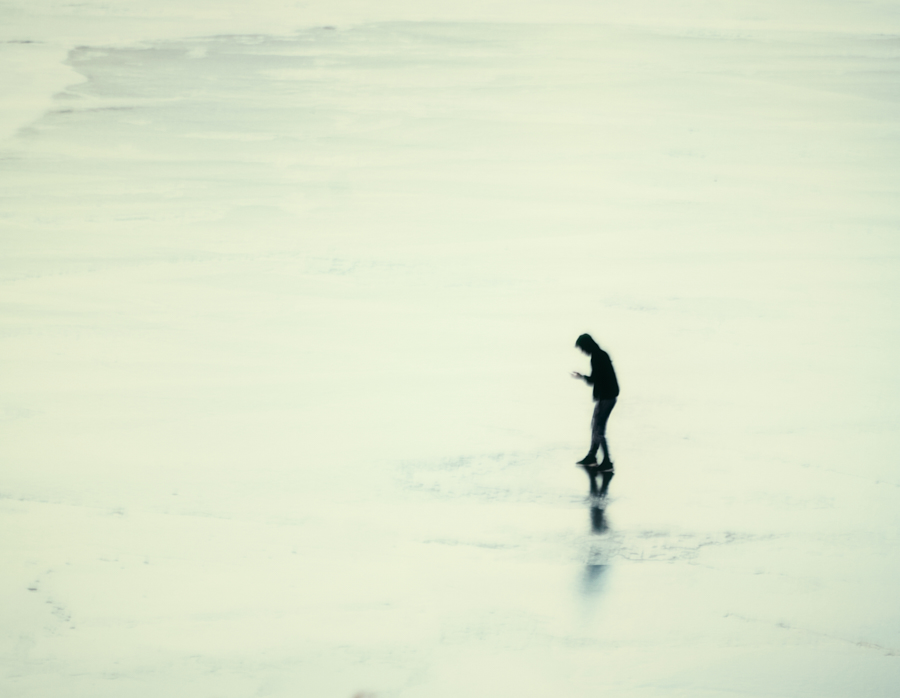
horsetooth reservoir… Nikon D750 f/7.1 1/25s 85mm 100 ISO
“It, the language remained, not lost, yes in spite of everything. But it had to pass through its wounded wordlessness, pass through frightful muting, pass through the thousand darknesses of deathbringing speech. It passed through and giveback no words for that which happened.” ~Paul Celan* (cited: V. Schwarcz, Bridge Across Broken Time p. 85)
*Poet, translator, essayist, and lecturer, influenced by French Surrealism and Symbolism. Celan was born in Cernăuţi, at the time Romania, now Ukraine, he lived in France, and wrote in German. His parents were killed in the Holocaust; the author himself escaped death by working in a Nazi labor camp. “Death is a Master from Germany”, Celan’s most quoted words, translated into English in different ways, are from the poem ‘Todesfuge’ (Death Fugue). Celan’s body was found in the Seine river in late April 1970, he had committed suicide.
…If we don’t have journalism, we don’t have democracy. ~Barbie Zelizer, director of Penn’s Center for Media at Risk
The fabric of press freedom in the US has been frayed and weakened by political stigmatisation of journalists and cries of “fake news”, but it risks much greater, and more permanent, damage from other forces, including harassment, detention and criminalisation. (cited: The Guardian Thebiggest risk to American journalism isn’t posed by Trump)
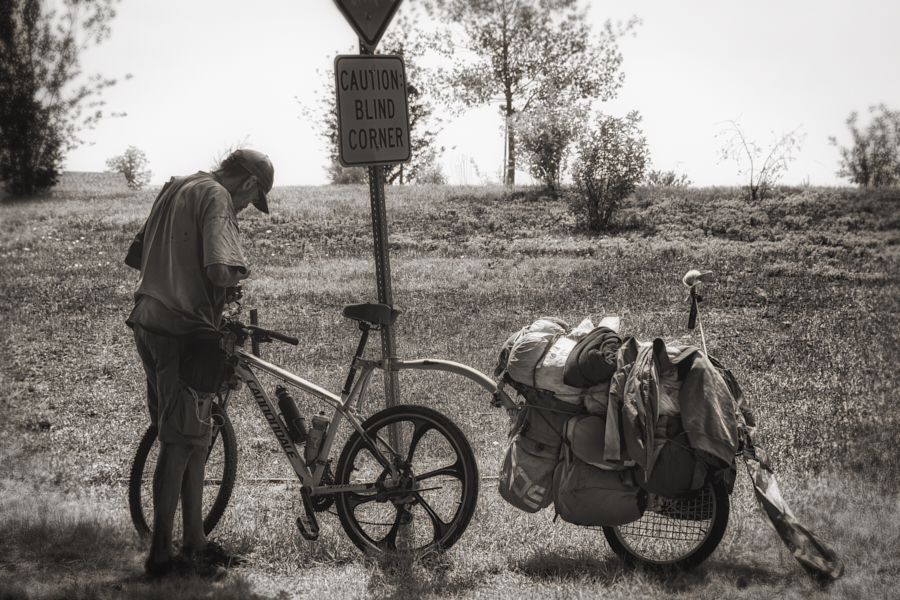
Nikon D750….Caution Blind Corner
In the context of this new world order of dramatic political, social, and unparalleled technological change, the role of media has never been more important, and it’s also never been more dangerous…Foreign reporters in war zones, as well as domestic reporters and journalists like me in war zones of our own here at home, are facing angry people and the threats of violence.” (cited: Multichannel Don Lemon: Role of Journalists Vitally Important in Today’s Divisive Political Environment.)
Who Will Write Our History
In November 1940, days after the Nazis sealed 450,000 Jews in the Warsaw Ghetto, a secret band of journalists, scholars and community leaders decided to fight back. Led by historian Emanuel Ringelblum and known by the code name Oyneg Shabes, this clandestine group vowed to defeat Nazi lies and propaganda not with guns or fists but with pen and paper. Now, for the first time, their story is told as a feature documentary. Written, produced and directed by Roberta Grossman and executive produced by Nancy Spielberg, Who Will Write Our History mixes the writings of the Oyneg Shabes archive with new interviews, rarely seen footage and stunning dramatizations to transport us inside the Ghetto and the lives of these courageous resistance fighters. They defied their murderous enemy with the ultimate weapon – the truth – and risked everything so that their archive would survive the war, even if they did not.
of silence ~ Katsura Nobuko (M Ueda, Far Beyond the Field)
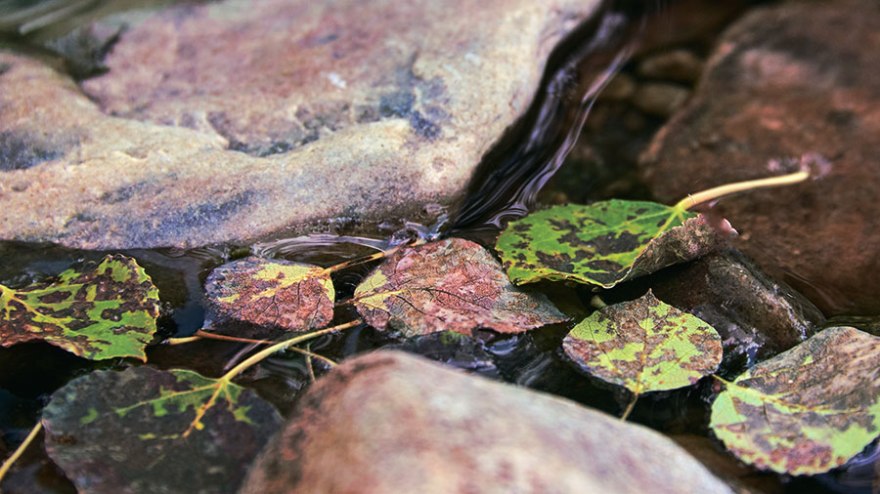
Nikon D750 f/5.6 1/2500 s 170 mm 1800 ISO
Katsura Nobuko was born Niwa Nobuko in Osaka, Japan on November 1, 1914. When she was five, she almost died of acute pneumonia. After graduating from Ootemae Girls’ High School, she began writing haiku when the poems in ‘Kikan’ (The flagship) magazine impressed her with their nontraditional style. She subsequently met the magazine’s editor, Hino Soojoo, and became his protege. Her marriage in 1939 changed her family name to Katsura, but her husband died two years later.
Childless, Nobuko returned to her mother’s home. On March 13, 1945, the home caught fire as the American planes bombed Osaka. Unable to put out the fire she gathered her haiku manuscripts before fleeing barefooted. It is said that when she was reunited with her mother, her mother – weeping – said, “You are safe — that’s all I care.” The rescued manuscripts were later published in her first volume, ‘Gekkoo shoo (Beams of the moon 1949).
The name of [Wall Street] originates from an actual wall that was built in the 17th century by the Dutch, who were living in what was then called New Amsterdam. The 12-foot (4 meter) wall was built to protect the Dutch against attacks from pirates and various Native American tribes, and to keep other potential dangers out of the establishment.
The area near the wall became known as Wall Street. Because of its prime location running the width of Manhattan between the East River and the Hudson River the road developed into one of the busiest trading areas in the entire city. Later, in 1699, the wall was dismantled by the British colonial government, but the name of the street stuck.
The financial industry got its official start on Wall Street on May 17, 1792. On that day, New York’s first official stock exchange was established by the signing of the Buttonwood Agreement. The agreement, so-called because it was signed under a buttonwood tree that early traders and speculators had previously gathered around to trade informally, gave birth to what is now the modern-day New York Stock Exchange NYSE.
Today, …in some circles, the term “Wall Street” has become a metaphor for corporate greed and financial mismanagement
September was the month when the American political environment had me wonder if I, like Washington Irving’s character, Rip Van Winkle, had slept through a cultural change so profound that my childhood values, morals, and guiding principles were left to rot in the wave of adults regressing back to the elementary school playground’s name-calling, bullying, and violence that left me cringe and hide with overwhelming fear and confusion.
What has blinded us to empathy? When did social justice become a basis of negation? How did human rights become a political loss? While the Great Wall of China is one of the great architectural wonders of the world, does anyone remember the lives of those encircled by the Warsaw Wall or the delight when the Berlin Wall came down?
If I didn’t have photography which invites me to shift “focus”, would this social regression have me rise up in anger and resentment? Would I become blind and deaf to my own moral shame and moral dread? So…in reflection contemplative photography invited my internal voice to become silent and see the world through a different lens.
In September, one of the blogs I posted noted,
“Henri Cartier-Bresson… is reported to have said, “Thinking should be done beforehand and afterwards—never while actually taking a photograph. Success depends on the extent of one’s general culture, on one’s set of values, one’s clarity of mind and vivacity.
…the creative mind of a photographer is like a piece of unexposed film. It contains no preformed images but is always active, open, receptive, and ready to receive and record an image.~Minor White cited: W Rowe, Zen and the Magic of Photography
I invite you to spend some time with “To Live”, an amazing story of a family’s survival through times of change.
Thinking of the world
Sleeves wet with tears are my bed-fellows.
Calmly to dream sweet dreams–
There is no night for that. ~Izumi Shikibu (Diaries of Court Ladies of Old
We are resolved to form a U.S. Caravan of supporters who will meet the Central American Caravan in Mexico, witness their movement, and accompany them into the U.S. At the border, we will assist those seeking entry with their demands to enter the US without losing their liberty
Hate speech and violence have crept into our communities with the targeting of synagogues, churches and other houses of worship and murders of their congregations. We want and need to stop this violence and we are calling you to stand with us, to put your bodies on the line.
The right to migrate is fundamental. Without it, the right to work, to be free, to live, cannot be realized. We reaffirm our conviction that every member of the Central American Caravan has an inalienable human right to flee from violence and poverty and toward better economic and political conditions elsewhere, regardless of national boundaries. We submit that they possess a right to enter and remain in the U.S. equal to anyone born there.
It has become amoral to engage in neutrality or silence on the right to migrate. On this issue there is a right side of history and a wrong side – but there is no middle. Each of us is morally obliged to choose such a side. The law will either make human beings illegal, or it will legalize equality, but it cannot accomplish both. The world is asking you to choose a side.
The New Sanctuary Coalition is resolved to choose the side of liberty and equality. We are resolved to sacrifice in solidarity with those leaders of liberty and pioneers of equality who are nonviolently asserting their right to migrate by moving their caravan of brave souls across the U.S./Mexican border.
If you are a lawyer, join our legal community. If you are a faith leader, join our clergy group. If you are a person of conscience, join our local organizing in your state. Click here to tell us how you would like to get involved and we will connect you with an organizing community that matches your skills and interests.
This week Traveling at Wits End’s guest post is St. Louis-based photographer David Adams. He writes that doors:
can be many things. They can be barrier, they can be invitations. They can be utilitarian, they can be ornate. Doors show personality or they can protect us from the world.
David challenges photographers to find “closed doors…no peaking inside” and to look for color, shape, decoration, as well as details…to find a door with personality.
The first time I found myself photographing doors was about 40 years ago while we were living in Newport, Rhode Island. Since then I also found that the doors within historical districts of the southern part of the United States, Australia, and Europe to be intriguing–the west…not so much.
Yesterday, while on an out-of-town trip with camera in hand and this challenge in mind, I undertook a photo walk through a small rural community. Regrettably, the doors within this town are…boring. Yet, I found myself thinking how sidewalks, steps, and porches are like a preface to the stories behind closed doors.
While the images above are not beautifully composed and do not specifically “focus” on doors, they do invite me to story the lives of the people who live behind these closed doors and to ponder the question, “how is the war economy doing for you?”
“Man tends to regard the order he lives in as natural. The houses he passes on the his way to work seem more like rocks rising out of the earth than like products of human hands. He considers the work he does in his office or factory as essential to the harmonious functioning of the world. … He respects and envies a minister of state or a bank director, and regards the possession of a considerable amount of money as the main guarantee of peace and security. He cannot believe that one day a rider may appear on a street he knows well, where cats sleep and children play…He is accustomed to satisfying those of his physiological needs which are considered private as discreetly as possible, without realizing that such a pattern of behavior is not common to all human societies. In a word, he behaves a little like Charlie Chaplin in The Gold Rush, bustling about in a shack poised precariously on the edge of a cliff.
His first stroll along a street littered with glass from bomb-shattered windows shakes his fate in the ‘naturalness’ of his world. The wind scatters papers from hastily evacuated offices, papers labeled ‘Confidential’ or ‘Top Secret’ that evoke visions of safes, keys, conferences, couriers, and secretaries. Now the wind blows them through the street for anyone to read; yet no one does, for each man is more urgently concerned with finding a loaf of bread.Strangely enough, the world goes on even though the offices and secret files have lost all meaning. Further down the street, he stops before a house split in half by a bomb, the privacy of people’s homes—the family smells, the warmth of the beehive, life, the furniture preserving the memory of lies and hatreds—cut open to public view. … His walk takes him past a little boy poking a stick into a heap of smoking ruins and whistling a song about the great leader who will preserve the nation against all enemies. The song remains, but the leader of yesterday is already part of the extinct past.
He finds he acquires new habits quickly. Once, had he stumbled upon a corpse on the street, he would have called the police. A crowd would have gathered, and much talk and comment would have ensured. Now he must avoid the dark body lying in the gutter, and refrain from asking unnecessary questions.The man who fired the gun must have had his reasons…. ” ~C Milosz, The Captured Mind
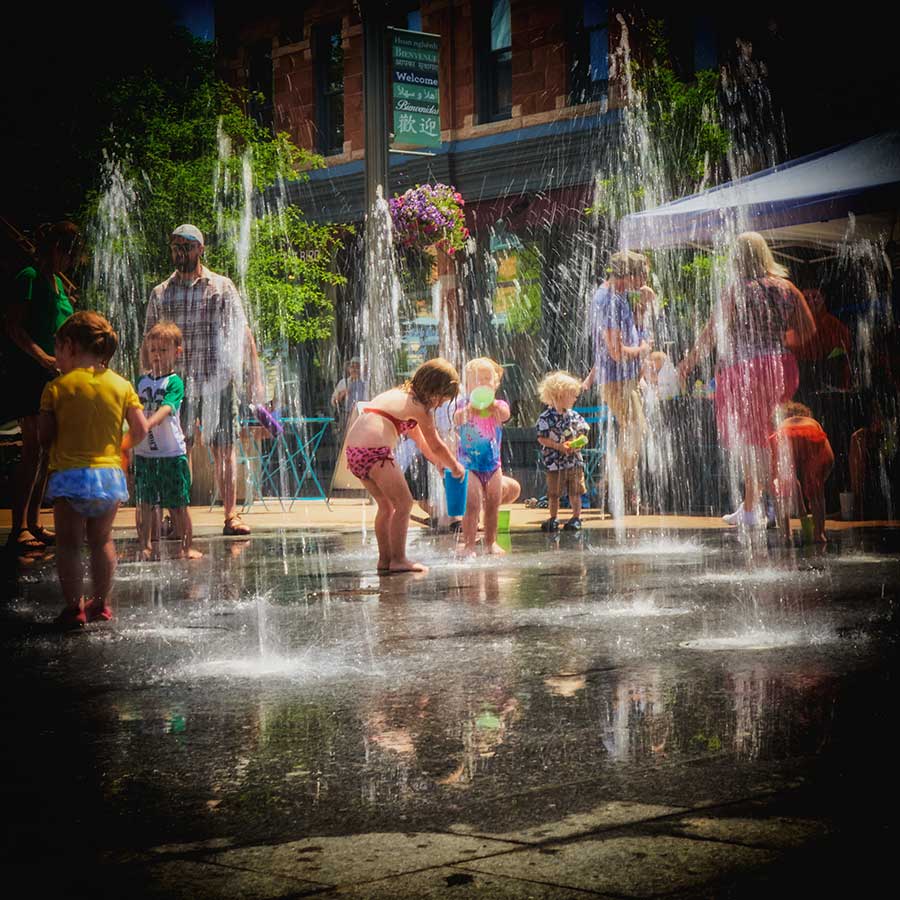
As I sit before my computer, the multiple sounds of children at play come through the open windows of my home and every once in awhile I will hear a toddler cry and for the duration of the distress I too will feel concern. A single child…
These children have families who are able to afford a country day school and who will spend the night in the safety of their own homes are in sharp contrast to the lives of children now scattered across the United States…miles away from their families. I cannot fathom an environment of 4-15-50 children crying and calling out for the comfort of an parental embrace. Cries unheard…
I am totally perplexed at the rationalization, justification, and denial of the decisions and actions of adults, many of whom are parents themselves, to remain deaf to these cries and to deny the bond between parent and child.
The Women’s Refugee Commission has noted:
“Over the past five years, the United States has seen a shift in the demographics of migrants encountered at our borders—from a majority of adult males, often from Mexico, seeking employment, to families, children, grandparents, aunts, and uncles fleeing together, seeking protection in the United States, coming mostly from Central America. Tragically, U.S. immigration enforcement policies, instead of shifting to adapt to this significant change, have continued to try forcing a square peg into a round hole, and in doing so have compounded the vulnerabilities of families and protection-seeking migrants. Instead of promoting family unity, we as a nation are breaking families apart.
[Betraying Family Values] documents the ways in which family separation is caused, both intentionally and unintentionally, by the U.S. government’s immigration custody and enforcement decisions. It explains how the government’s lack of consistent mechanisms for identifying and tracking family members result in family members being detained or removed separately and often losing contact with each other. Because the Department of Homeland Security and other government agencies currently have little policy guidance on humanitarian considerations during enforcement actions, many families are needlessly torn apart.”
An agenda designed to use cruelty against humanity as a means to win an election? “No!” I silently scream, “how would anyone want to politically benefit from this cloud of torment moving across the United States?”
Is this an example of how the crumbling of the pillars of society–moral shame and moral fear–gives way to a Stephen Miller’s delight at the public outrage and anger of migrant families being torn apart?
In The Atlantic, McKay Coppins writes that Stephen Miller
“… made it clear to me that he sees immigration as a winning political issue for his boss.
‘The American people were warned—let me [be] sarcastic when I remark on that—[they] were quote-unquote warned by Hillary Clinton that if they elected Donald Trump, he would enforce an extremely tough immigration policy, crack down on illegal immigration, deport people who were here illegally, improve our vetting and screening, and all these other things,’ Miller told me. ‘And many people replied to that by voting for Donald Trump.’
“Skeptics will note that most Americans did not, in fact, vote for Donald Trump, and that polls continue to show widespread disapproval of some of his signature immigration positions. But it doesn’t matter. In Miller’s view of the electoral landscape, the president is winning anytime the country is focused on immigration—polls and bad headlines be damned. (This explains why Miller is, according to Politico, leading an effort within the administration to plan additional crackdowns on immigrants in the months leading up to the midterm elections.)
“Speaking to The New York Times, Miller framed his theory this way: ‘You have one party that’s in favor of open borders, and you have one party that wants to secure the border. And all day long the American people are going to side with the party that wants to secure the border. And not by a little bit. Not 55–45. 60–40. 70–30. 80–20. I’m talking 90–10 on that.’
“Of course, if the goal were simply to draw voters’ attention to the border, there are plenty of ways to do it that are less controversial (not to mention, less cruel) than ripping young children from the arms of asylum seekers and sticking them in dystopian-looking detention centers. But for Miller, the public outrage and anger elicited by policies like forced family separation are a feature, not a bug.
“A seasoned conservative troll, Miller told me during our interview that he has often found value in generating what he calls ‘constructive controversy—with the purpose of enlightenment.‘ This belief traces back to the snowflake-melting and lib-triggering of his youth. As a conservative teen growing up in Santa Monica, he wrote op-eds comparing his liberal classmates to terrorists and musing that Osama bin Laden would fit in at his high school. In college, he coordinated an ‘Islamo-Fascism Awareness Week.’ These efforts were not calibrated for persuasion; they were designed to agitate. And now that he’s in the White House, he is deploying similar tactics.”
Instead of using children as a step ladder, let’s be inspired by the resilience of children, like Amanda Mena, and not succumb to the evil within these bullies.
As I read the news from multiple sources about children being taken away from family and placed in detention, I find myself stunned at the denial of harm, the justification of inhumanity, and the rationalization of the negation of compassion, all under the banner of Christian compliance with law. Whose law? The law of man? The law of God? The law of nature?
The laws and procedures in place today…are man made. And thus are to be questioned by all of humanity. Would you blindly comply with the laws regarding children in 18th century England?
If a child was not sold into employment he or she would inevitably end up homeless and living on the streets, in all manner of weather amongst the raw sewage, rotting animal and vegetable waste, rats, disease, and bad water. Many slum children had to endure filthy conditions as they fought a daily battle for survival.
Age 11: 14 days gaol + 5 years Reformatory for Stealing a Coat
Age 12: 14 days gaol + 5 years Reformatory for Stealing Boots
Age 11: 1 day gaol and whipped, for Stealing Pigeons
Age 9: 1 day gaol and whipped, for Stealing Pigeons [three boys]
Age 13: Trial at the Assizes, accused of Murder
Age 12: 21 days gaol + 5 years Reformatory, for Stealing Money
Age 13: 14 days gaol, for Stealing an Umbrella.
John Greening, age 11 charged with stealing a quarter of gooseberries (growing). Punishment: one calendar month of hard labor and five years reformatory.
John Hillesley, age 15 charged with stealing a coat. Punishment: transportation to a penal colony in a different country.
Joseph Lewis, age 11 charged with simple larceny for stealing 28 pounds of iron. Punishment: one calendar month of hard labor.
Just for a moment image the fear that would have you leave home, family, friends and run to the unknown? And then…imagine for another moment having your child removed from your arms and not knowing where she is or if you will ever be reunited.
Why are we not guided by the laws of compassion, loving kindness, equanimity…or even empathy?







 a meditative journey
You must be logged in to post a comment.