Choose one subject, anything will do — your own house, or the house opposite, or the next house — and in place of a tripod, drive a stake into the ground, nail a board on top of this, and make a screw hole in the board for the screw of your camera . . . Photograph your subject at every hour of the day, on fine days, and at intervals on dull days, photograph it after it has been rained on for weeks, and after it has been sun-dried for months.
~Frank Meadow Sutcliffe (cited: The Aperture History of Photography Series)
My mother once described a job interview for a dietary postion within a small community hospital in which she was asked if she could cook. She described how she directed the woman’s gaze to the various pictures of her children that were placed about her living room and invited the woman into her kitchen to show her that she, indeed, as a mother did and could cook.
This question, was experienced by my mother as an example of discrimination…a prejudice of deafness. As I listened to my mother’s story, I understood the question as appropriate to the job. What I interpreted to be discrimination came from the environment in which the interview occurred…not at the hospital, but within the privacy of her own home.
How many job interviews take place within a job applicant’s home?
Being a child of my mother’s and a female, I believed I came to understand discrimination, oppression, and marginalization, both personally and through my mother’s life stories. As a child, she was required by state law to attend a deaf school and initially attended a school that was close enough to the family home to allow for weekends with the family. Yet, because the school was located out of state, she had to enroll in a state school much further away, Consequently, she was then only able to be with family during specific holidays. This is of a time when letters were her only course of connection with her family.
Also, the school she attended had a policy prohibiting communication through the use of sign language as a means to assist the students to fit in with the “hearing world.” I smile today, remembering her pride as she described the opposition to this policy. She and her classmates would gather together in an attic, at night, to teach one another how to speak in sign.
The events of today have invited me to reflect upon my own behaviors — and even my reaction to my mother’s job interview experience — and to see them as being influenced by discrimination, marginalization, and oppression especially in light of my understanding of “microaggression.”
Microaggressions are the everyday verbal, nonverbal, and environmental slights, snubs, or insults, whether intentional or unintentional, which communicate hostile, derogatory, or negative messages to target persons based solely upon their marginalized group membership. In many cases, these hidden messages may invalidate the group identity or experiential reality of target persons, demean them on a personal or group level, communicate they are lesser human beings, suggest they do not belong with the majority group, threaten and intimidate, or relegate them to inferior status and treatment.
…microaggressions are active manifestations and/or a reflection of our worldviews of inclusion/exclusion, superiority/inferiority, normality/abnormality, and desirability/undesirability. Microaggressions reflect the active manifestation of oppressive worldviews that create, foster, and enforce marginalization. Because most of us consciously experience ourselves as good, moral and decent human beings, the realization that we hold a biased worldview is very disturbing; thus we prefer to deny, diminish or avoid looking at ourselves honestly. Yet, research suggests that none of us are immune from inheriting the racial, gender, and sexual orientation biases of our society. We have been socialized into racist, sexist and heterosexist attitudes, beliefs and behaviors. Much of this is outside the level of conscious awareness, thus we engage in actions that unintentionally oppress and discriminate against others.
I have come to realize that to there are no benign questions…and that a small section of my indignities towards another arise, in part, from my own denial and ignorance. Awakening to the suffering of others and to the unintentional harm I have caused others brings tears to my eyes as well as leaves me floundering in how to apologize.
It is my hope this sharing of Br Phap Man’s video, “Inclusivity and Justice”, is a small step that brings about a healing awakening that overcomes walls of various shapes, formations, and sizes.
Aryeah Kaplan wrote that when one is in a meditative state, one has obtained the ability to turn off faint after-images that are constantly with us and interfere with seeing objects with total clarity. He noted that when one is able “to turn off the spontaneous self-generated images . . . the beauty of the flower . . . seen in these higher states of awareness is indescribable [and] appears to radiate beauty.
~Aryeah, Kaplan, Jewish Meditation: A Practical Guide, p.9
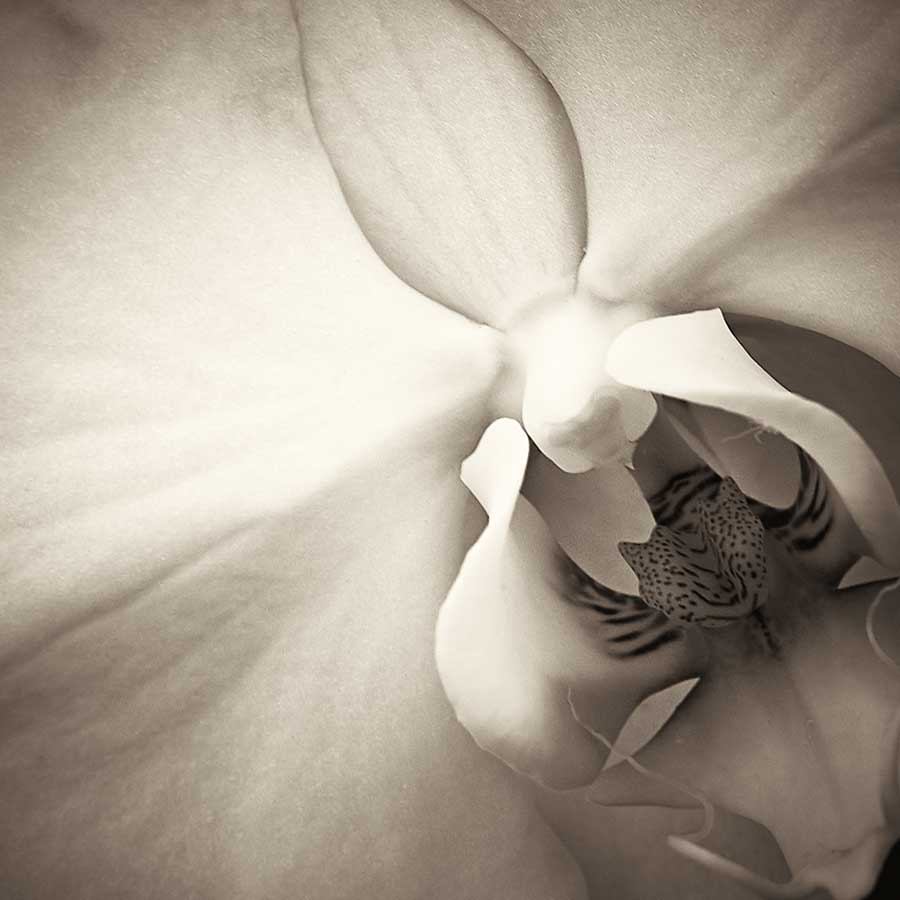
A flower is not a flower. It is made only of non-flower elements–sunshine, clouds, time, space, earth, minerals, gardeners, and so on. A true flower contains the whole universe. If we return any one of these non-flower elements to its source, there will be no flower. That is why we can say, “A rose is not a rose. That is why it is an authentic rose.” We have to remove our concept of rose if we want to touch the real rose.
~Thich Nhat Hanh, The Heart of the Buddha’s Teaching, p. 129
…when we hold a rose we see that it is composed of multiple elements, some tangible – leaves, stem, thorns, petals, stamens – and others intangible – scent, color, memories. If you were to remove any of these constituent parts, would you find an entity know as “rose”? As we are unable to find the rose in the absence of any one of these parts, we are also unable to find an enduring solid rose in any one of these elements.
~B Catherine Koeford, A Meditative Journey with Saldage, pp152-153
Imagine the dimension of time as a vertical line. Place yourself in the present on that line with the past above you and the future below you. Establish yourself in time. See all your ancestors that have come before you. The youngest generation of your ancestors is your parents. All of them are above you on this line of time. Then below you, see all your dependents, your children, your grandchildren, and all their future descendants. If you have no children, your descendants are the people you have touched in your life, and all the people they in turn influence.
In you are both your blood ancestors and your spiritual ancestors. You touch the presence of your father and mother in each cell of your body. They are truly in you, along with your grandparents and great-grandparents. Doing this, you realize their continuation. You may have thought that your ancestors no longer existed, but even scientist will say that they are present in you, in your genetic heritage, which is in every cell of your body.
Look into a plum tree. In each plum on the tree there is a pit. That pit contains the plum tree and all previous generations of plum tree. The plum pit contains an eternity of plum trees. Inside the pit is an intelligence and wisdom that knows how to become a plum tree, how to produce branches, leaves, flowers, and plums. It cannot do this on its own. It can only do this because it has received the experience and heritage of so many generations of ancestors. You are the same. ~Thich Nhat Hanh (No Death, No Fear, 137-138)
This posting was created in memory of Dustin, Bob, Elberta, Donna, Chris, Larry, and Margaret who all live on within the lives of my beloved.
May I find the Equanimity
that will lift this veil of shamed despair
and acquaint me to the perceived and perceiver
absent of greed, anger, and ignorance.
When we say, ‘I can see my consciousness in the flower.’ it means we can see the cloud, the sunshine, the earth, and the minerals in it. But how can we see our consciousness in a flower? The flower is our consciousness. It is the object of our perception. It is our perception. To perceive means to to perceive something. Perception means the coming into existence of the perceiver and the perceived. The flower that we are looking at is part of our consciousness. The idea that our consciousness is outside of the flower has to be removed. It is impossible to have a subject without an object. It is impossible to remove one and retain the other.
~Thich Nhat Hanh (The Heart of the Buddha’s Teaching, p.53)
Working homelessness in America…a glaring manifestation of income disparity.
The ocean of suffering is immense, but if you turn around, you can see the land. The seed of suffering in you may be strong, but don’t wait until you have no more suffering before allowing yourself to be happy. When one tree in the garden is sick, you have to care for it. But don’t overlook all the healthy trees. Even while you have pain in your heart, you can enjoy the many wonders of life — the beautiful sunset, the smile of a child, the many flowers and trees. To suffer is not enough. Please don’t be imprisoned by your suffering. … When you have suffered, you know how to appreciate the elements of paradise that are present. If you dwell only in your suffering, you will miss paradise. Don’t ignore your suffering, but don’t forget to enjoy the wonders of life. For your sake and the benefit of many beings.
When I was young, I wrote this poem. I penetrated the heart of the Buddha with a heart that was deeply wounded.
My youth an unripe plum. Your teeth have left their marks on it. The tooth marks still vibrate. I remember always, remember always
Since I learned how to love you, the door of my soul has been left wide open in the winds of the four directions. Reality calls for change. The fruit of awareness is already ripe, and the door can never be closed again.
Fire consumes this century, and mountains and forest bear its mark. The wind howls across my ears, while the whole sky shakes violently in the snowstorm.
Winter’s wounds lie still, Missing the frozen blade, Restless, tossing and turning in agony all night.
I grew up in a time of war…Once the door of awareness has been opened, you cannot close it. The wounds of war in me are still not all healed. … Embrace your suffering, and let it reveal to you the way to peace.
~Thich Nhat Hanh (The Heart of the Buddha’s Teaching, pp. 3-5)
Nothing is hidden; It has always been clear as day. For divine wisdom; look at the old pine tree; For eternal truth; listen to the birds sing. Seeking the mind; there is no place to look; Can you see the footprints of flying birds? Above, not a single tile to shelter under; Below, not a morsel of ground for support. ~Zenrin
Rule of Odds…not a rule, law, or expectation. A guideline created by how the composition within an image may gift us with the balance we unconsciously seek.
The youtube episode below is an introduction to the rule of odds hosted by Ted Forbes, a photographer and filmmaker. He started producing the Art of Photography as a podcast in 2008 and the show has since grown into a popular YouTube channel and resource website providing a 360° view of photography to a global audience. Enjoy https://youtu.be/n-1tq0FEBV4
The stream of thought flows on; but most of its segments fall into the bottomless abyss of oblivion. Of some, no memory survives the instant of their passage. Of others, it is confined to a few moments, hours, or days. Others, again, leave vestiges which are indestructible, and by means of which they may be recalled as long as life endures.
~William James (The Principles of Psychology, Vol.1, pg. 643)
Speaking of memories, may I introduce you to an American science-fiction film, Marjorie Prime, that was based on Jordan Harrison’s Pulitzer Prize-nominated play of the same name.
Nighttime in the forest is not like nighttime in the city or on a farm. At night, the sacred forest declares its absolute authority. The curtain of darkness is thick and secretive. …I heard many eerie cries coming from the forest. By eight o’clock it was already night, and the forest’s dominance was restored. The whole universe sank into a profound silence that, at the same time, vibrated with life. I could almost hear the majestic steps of the mountain god as he leaped between the towering trees.
On full moon nights, none of us could sleep. One time, I was up late writing… When the moon and forest were together they created a profoundly marvelous and mysterious atmosphere, unlike any we had experienced before. The silence was total, yet, we could hear moon and forest speaking to each other. They were no longer two, but had become one. If you took away the moon, the forest would cease to be. If you took away the forest, the moon would not be. We wouldn’t be standing by the moonlit window if moon and forest ceased to be.
One of the interesting things about photography is the fact that it’s record of ourselves and our works so often do not correspond to our mental image… Generally we assume that the difference between our expectation and the camera’s evidence is the result of some kind of photographic aberration.
The poetry of Japan has its seeds in the human heart and mind and grows into the myriad leaves of words. Because people experience many different phenomena in this world, they express that which they think and feel in their hearts in terms of all that they see and hear. A nightingale singing among the blossoms, the voice of a pond-dwelling frog–listening to these, what living being would not respond with his own poem? It is poetry which effortlessly moves the heavens and earth, awakens the world of invisible spirits to deep feeling, softens the relationship between men and women, and consoles the hearts of fierce warriors.
In the first legend of the Grail, it is said the Grail . . . belongs to the first comer who asks the guardian of the vessel, a king three quarters paralyzed by the most painful wound, ‘What are you going through?’ It is in our concern for others that we find the Grail.


 The ocean of suffering is immense, but if you turn around, you can see the land. The seed of suffering in you may be strong, but don’t wait until you have no more suffering before allowing yourself to be happy. When one tree in the garden is sick, you have to care for it. But don’t overlook all the healthy trees. Even while you have pain in your heart, you can enjoy the many wonders of life — the beautiful sunset, the smile of a child, the many flowers and trees. To suffer is not enough. Please don’t be imprisoned by your suffering. … When you have suffered, you know how to appreciate the elements of paradise that are present. If you dwell only in your suffering, you will miss paradise. Don’t ignore your suffering, but don’t forget to enjoy the wonders of life. For your sake and the benefit of many beings.





 a meditative journey
You must be logged in to post a comment.