life’s passages … 43

if I go to heaven I will forget you,

and

if I go to hell you will forget me.*

In China a person who will not forget the past is described as ‘one who did not drink Old Lady Meng’s soup.’ Borrowed from Buddhist folklore, Old Lady Meng dispenses the Broth of Oblivion to souls leaving the last realm of the underworld on their way to reincarnation. After drinking her soup, the soul is directed to the Bridge of pain that spans a river of crimson water. There, two demons lie in wait: Life-Is-Not-Long and Death-is-Near. They hurl the soul into waters that will lead to new births.

Old Lady Meng is more than a quaint antidote for the Greeks’ Mnemosyne. She embodies a psychological understanding about the forces that promote, indeed demand, forgetting for the sake of ongoing life.  It is not enough to note that water is linked with amnesia in Chinese folklore as much the same way that the river Lethe is associated with forgetting in Greek mythology. The challenge here is to make sense of the distinctively Chinese attachment to remembrance in spite of the benefits of Old Lady Meng’s soul.

In Jewish tradition, too, the benefits of amnesia were acknowledged along with the sacred commitment to recollection. There is a midrash, or Torah-based story, that teaches us a lesson similar to that of Lady Meng: ‘God granted Adam and Eve an all-important blessing as they were about to leave the Garden of Eden: I give you, He said, ‘the gift of forgetfulness.” What is so precious about amnesia? Why would God, who demands fidelity to memory, offer the relief from recollection? Perhaps it is because without some ability to forgive and forget we might become bound by grudges and hatred. To remember everything may be immobilizing. To flee from memory, however, leads to an ever more debilitating frenzy.(40-41)**

source:

*Arang and the Magistrate

Munhwa broadcasting corporation 

**Bridge Across Broken Time

Vera Schwarcz

life’s passages … 37

I was a child,
Nostalgia seemed a small stamp:
I was here…
My mother was there.

When I grew up
Nostalgia became a ticket:
I was here…
My bride was there.

Years later,
Nostalgia was a little tomb:
I was outside…
My mother was inside.

And now,
My nostalgia is a shallow strait:
I am at here…
The mainland is there.

~ Yu Guang Zhong

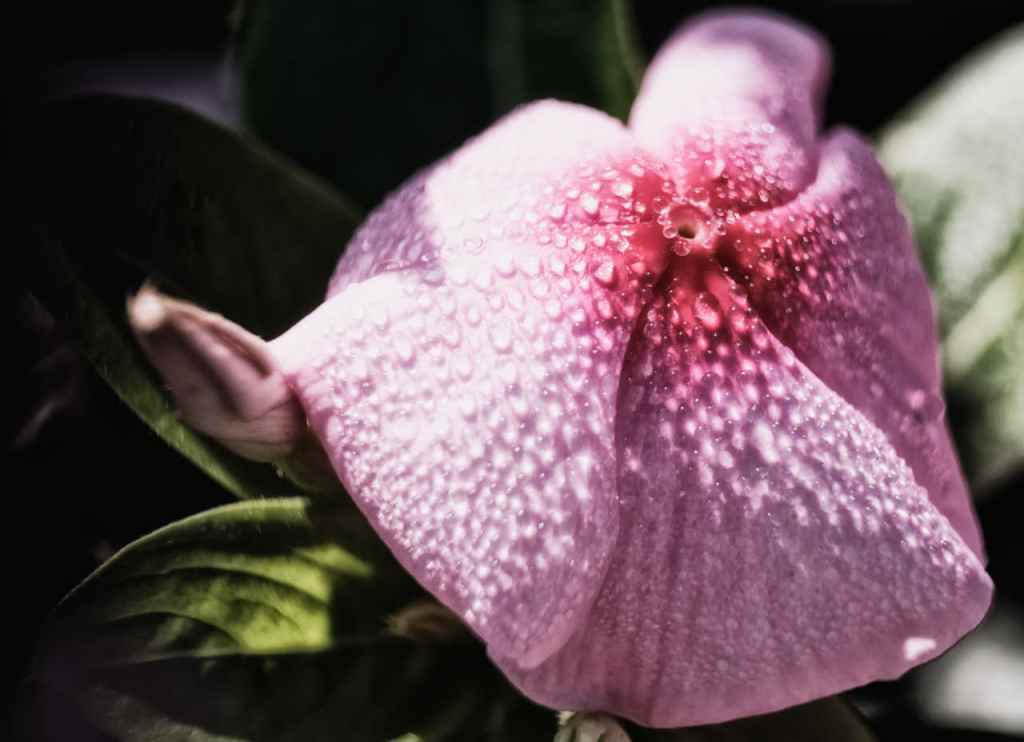
Orchid… Sony RX100-3 f/2.8 1/640 25.7 800 ISO

“The Chinese expression for “nostalgia” is xiangchou, literally “village sadness.” …xiangchou describes the grief that accompanies the traveler who cannot find a way back to the home village…[it] is not a geographical predicament but a spiritual state of being. First he finds himself outside the mother as a tiny emblem of apartness, then he is the man who contemplates her tomb. The shallow waters of the Taiwan straits are, similarly, not only a spatial divide between the island and the mainland but a reminder of the longing for, and the impossibility of going back to, ancestral roots.” *

*cited: V Schwarcz (Bridge Across Broken Time)

life’s passages … 23

Looking backward ... I cannot see the ancients of days.
Looking forward ... I cannot see ages yet to come.
Only heaven and earth have remained,
And will remain forever ...
I am alone, I grieve, I drop tears into the dust
~Chen Tzu-ang

(cited: Trans: Anonymous, The Jade Flute Chinese Poems in Prose. The Project Gutenberg

Nikon D750 f/5.6 1/400s 300mm


life’s passages … 22

sunday morning with Susan Fromberg Schaeffer

“… She was staring into the lake, watching the snow as it reached the black water and then vanished. As if the snow never existed. How nature teaches the same thing again and again, she thought. Yet it was so beautiful, the silence, the drift of the snow down from the heavens, the disappearance of each flake as it touched the surface of the lake. Surely they live on, she thought.” ~The Snow Fox, pg. 94

life’s passages … 6

wednesday morning with Susan Fromberg Schaeffer

“… And there the mist refuses to part again over that time in their lives, and for a long time, I know nothing about them. Life is like that, a book left in the rain, ink erase by water, entire chapters disappearing. And then the story continues, and you must imagine the missing chapters that went before. Rest assured, it has continued, their story, although no one was there to let me read it. But since I began to write, I have come to know the rest of it, and so I will write it down. …”*

*cited: Susan Fromberg Schaeffe, Snow Fox, pg. 172

a bit of orange

“Different flowers usually have separate meanings, but, as of often happens, flower-symbolism is broadly characterized by two essentially different considerations: the flower in its essence, and the flower in its shape. By it very nature it is symbolic of transitoriness, of Spring and of beauty…

“…Orange or yellow-colored flowers represent a reinforcement of the basic sun-symbolism …”*

*cited:Trans: Jack Sage: J. E. Cirlot, A Dictionary of Symbols

Image submitted in response to Cee’s Flower of the Day challenge

words of wisdom

“… the wind bids me to leave you.

“Less hasty am I than the wind, yet I must go.

“We wanderers, ever seeking the lonelier way, begin no day where we have ended another day; and no sunrise finds us where sunset left us.

“Even while the earth sleeps we travel.

” We are the seeds of the tenacious plant, and it is in our ripeness and our fullness of heart that we are given to the wind and are scattered.”~Kahlil Gibran*

Paula’s Lost in Translation: Words of Wisdom

*cited: Kahlil Gibran, The Prophet. (Alfred A Knopf 1973)

saturday morning with Rilke

“And if there is one thing more that I must say to you, it is this. Do not believe that he who seeks to comfort you lives untroubled among the simple and quiet words that sometimes do you good. His life has much difficulty and sadness and remains far behind yours. Were it otherwise he would never have been able to find those words.” ~Rilke*

and a saturday morning’s walk through a community garden. Cee’s FOTD

*(Trans: M. D. Herter Norton, Letters to a Young Poet)

dawn

does the red dawn
delight you…
snail?
~Issa (www.haikuguy.com)

Every life is a point of view directed upon the universe. Strictly speaking, what one life sees no other can. Every individual, . . . is an organ, for which there can be no substitute, constructed for the apprehension of truth . . . Without the development, the perpetual change and the inexhaustible series of adventures which constitute life, the universe, or absolutely valid truth, would remain unknown . . . Reality happens to be like a landscape, possessed of an infinite number of perspectives, all equally veracious and authentic. The sole false perspective is that which claims to be the only one there is. ~José Ortega y Gasset