life’s passages … 43

if I go to heaven I will forget you,

and

if I go to hell you will forget me.*

In China a person who will not forget the past is described as ‘one who did not drink Old Lady Meng’s soup.’ Borrowed from Buddhist folklore, Old Lady Meng dispenses the Broth of Oblivion to souls leaving the last realm of the underworld on their way to reincarnation. After drinking her soup, the soul is directed to the Bridge of pain that spans a river of crimson water. There, two demons lie in wait: Life-Is-Not-Long and Death-is-Near. They hurl the soul into waters that will lead to new births.

Old Lady Meng is more than a quaint antidote for the Greeks’ Mnemosyne. She embodies a psychological understanding about the forces that promote, indeed demand, forgetting for the sake of ongoing life.  It is not enough to note that water is linked with amnesia in Chinese folklore as much the same way that the river Lethe is associated with forgetting in Greek mythology. The challenge here is to make sense of the distinctively Chinese attachment to remembrance in spite of the benefits of Old Lady Meng’s soul.

In Jewish tradition, too, the benefits of amnesia were acknowledged along with the sacred commitment to recollection. There is a midrash, or Torah-based story, that teaches us a lesson similar to that of Lady Meng: ‘God granted Adam and Eve an all-important blessing as they were about to leave the Garden of Eden: I give you, He said, ‘the gift of forgetfulness.” What is so precious about amnesia? Why would God, who demands fidelity to memory, offer the relief from recollection? Perhaps it is because without some ability to forgive and forget we might become bound by grudges and hatred. To remember everything may be immobilizing. To flee from memory, however, leads to an ever more debilitating frenzy.(40-41)**

source:

*Arang and the Magistrate

Munhwa broadcasting corporation 

**Bridge Across Broken Time

Vera Schwarcz

life’s passages…40

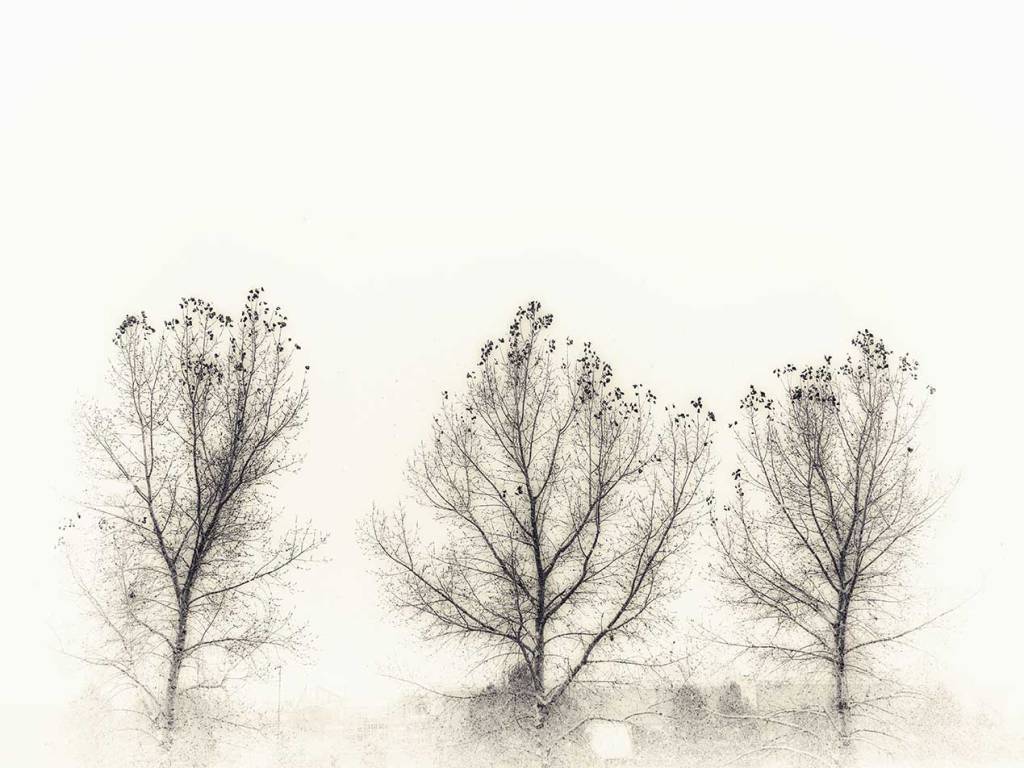
snowymtsweb82918
Nikon D750  f/5.3  1/80s   112mm   100 ISO

Standing at this Threshold

With uncertainty, I question:

What is it that I seek?

Protection? Compassion? Acceptance? Forgiveness? Completion?

Who is it that I beckon?

A father? A mother? A sister? A brother? A companion? A child? A god?

To be? To endure? To offer? To embrace? To validate?

An intentional presence that is drawn upon

A place and time of shadows, myths, and dreams?

Birthed within a family?

Matured within a relationship?

Nourished within a community?

Where the Stillness within Silence,

Affirms the exchange of life’s giving and taking,

Embraces the connection of life’s emotional threads, and

Observes the interdependence of life with non-judgmental awareness,

Yet, knows of a united oneness with another that can not be?

Since it can not be, do I yearn

To know integration through the formation of thought;

To see clarity through the flowing of ink; and

To feel completion through the act of creating?

And then, finally, within the stillness of silence,

I befriend

An internal companion with whom

There is an honoring of the who and what of which I am;

A woman, a daughter, a sister, a niece, a wife, a mother, an aunt, a grandmother, a great-grandmother.

I touch

With reverence the presence of all that was, is, and will be.

I release

The seeking, the beckoning, the yearning to the Winds of Change.

I with uncertainty, Step over this Threshold

Foreseeing a return

~bckofford

life’s passages … 23

Looking backward ... I cannot see the ancients of days.
Looking forward ... I cannot see ages yet to come.
Only heaven and earth have remained,
And will remain forever ...
I am alone, I grieve, I drop tears into the dust
~Chen Tzu-ang

(cited: Trans: Anonymous, The Jade Flute Chinese Poems in Prose. The Project Gutenberg

Nikon D750 f/5.6 1/400s 300mm


lens-artists challenge: illustrate a favorite quote or poem

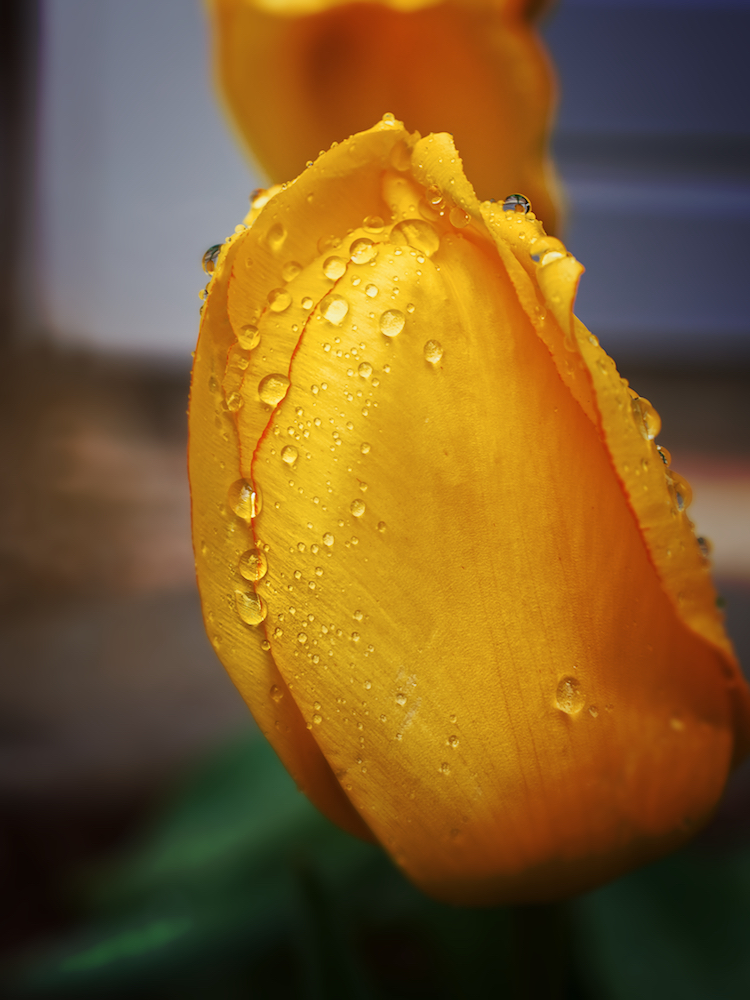
i like to wash,

the dust of this world

in the droplet of dew ~Basho

droplets forming

on the morning-glories

sitting still ~ Issa

Issa and Basho’s words traveling though time, sharing a moment of their lives…two of my favorite poets I share with you through Ann-Christine’s lens-artists challenge. Enjoy.

saturday morning with James Hillman

There is more in human life than our theories of it allow.  Sooner or later something seems to call us onto a particular path…This what I must do, this is what I’ve got to have.  This is who I am…

…the call may have been more like gentle pushings in the stream in which you drifted unknowingly…you sense that fate had a hand in it.*

cited: James Hillman, The Soul’s Code  In Search of Character and Calling.

a day of rest

“… because work implies a stage of change–of war–between man and the world around him, it follows that rest designates peace between him and Nature. One day a week–a day which, by virtue of the analogy between time and cosmic space, corresponds to the idea of the centre implicit in the position of the sun among the planets or the location of the earth according to the geocentric system–must be set aside for experiencing the spontaneous, perfect harmony of man in Nature. By not working, the human being can break away from the order of change which gives rise to history, and thereby free himself from time and space to return to the state of paradise, This symbolism provides the explanation … [of] ‘the fiery restlessness of the rebel’: the instinctive hatred of all forms of rest characteristic of the man of warlike spirit who challenges all Nature and the world as it appears to the senses.”*

*cited: Trans: Jack Sage. JE Cirlot, A Dictionary of Symbols