if one comes across a person who has been shot by an arrow, one does not spend time wondering about where the arrow came from, or the caste of the individual who shot it, or analyzing what type of wood the shaft is made of, or the manner in which the arrowhead was fashioned. Rather, one should focus on immediately pulling out the arrow.
~ The Buddha
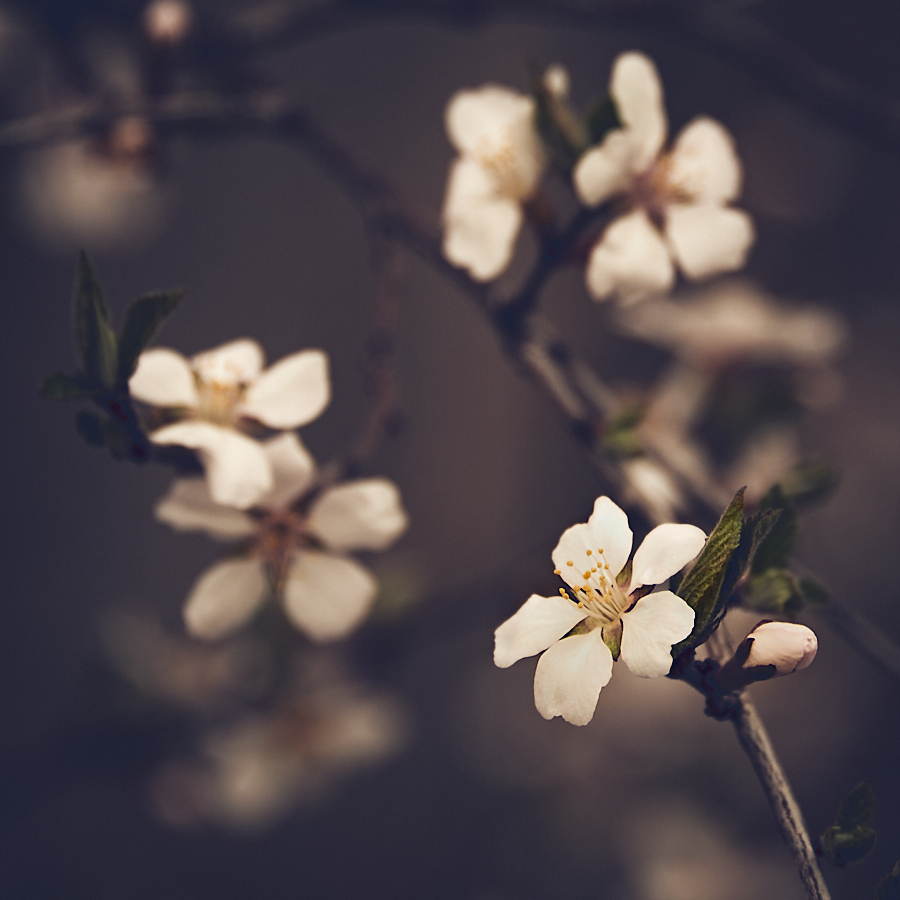
spring
Life is short; it must not be spend in endless metaphysical speculations which will not be able to bring us the Truth.
Andres Hedman, Consciousness from a Broad Perspective
sunset april 23, 2020
“The Buddha’s teachings can be read on many levels … at a fundamental level, all the storytelling was a way of conveying ethical values. One of them is the peaceful coexistence of all life forms, which is very germane today. We’ve wandered dangerously far from that principle in the era of climate change. Referring to the seated Buddha sculpture in San Francisco, which is inscribed with the message that all things are connected by causality (in contrast with the deterministic belief that our fate is out of our hands)… What [the Awakened One] saw when he woke up is that things don’t happen by chance, that everything is connected by causality … and if nothing else, Covid-19 is waking us up to the fact that we are all connected.”
The absence of faith is suffering. This time of uncertainty “…has brought me to a place and time in which to unweave and sort through the pseudo-beliefs I have simply, without question, absorbed through the lens of childhood fantasy and comprehension. To begin this process is to reformulate beliefs through a process of mindfulness and analysis and then to know for myself, “These things are bad, blamable, censured by the wise; undertaken and observed, these things lead to harm and ill… These things are good, blameless, praised by the wise… These things lead to benefit and happiness.”
“It is not an easy undertaking to not simply believe what has been learned within family, school and church as well as conclusions reached through readings. The invitation to not simply follow tradition brings to the surface conflicts with compliance and opposition that come from an avalanche of values and guiding principles that outlines how I understand the roles and expectations of women.
“To not adhere to that which was surmised within family stories about an ancestor, who upon seeing a swarm of locust “knelt in his patch of grain and pleaded with his Maker to spare his wheat” and then saw them divide and not damage his remaining crops. Or within the story about the ancestor, who during a trip from New York to England, calmed the seas with a prayer, and while in England, after much fasting and prayer administered to a deaf and dumb boy who was subsequently healed. To not simply believe opens a door of pondering about generations of family members who intimately knew powerlessness and insecurity, who eased their feelings of incompetence through prayer, and whose conceptions blinded them to their neighbors’ plight.
“To not simply believe that I must endure suffering is to reject the axiom that there is an absence of fundamental faith and goodness. To not adhere to the assumed abilities of ancestors frees me from the belief that a sincere act of making amends for my sins will open the doors to Shangri-La. To not simply draw upon scripture unbinds me to the shame that I don’t have the faith – even of the size of a mustard seed – to be deeded as “good and without sin” so what I wish for, even that which goes counter to nature’s laws, will be granted. To ease the suffering within discontent is to not simply hold to be true that I am to acquiesce to pain until the final judgment of death, and only then will I be forever at peace, or forever condemned to an existence of even greater suffering.
“To not simply believe opens my ears to the incongruence within a belief in an all-knowing presence who, if not validated, punishes, absent of the grace within loving-kindness. To not simply believe brings a compassionate acknowledgment to the painful efforts to sway God into granting me my desires through bargaining, sacrifice, negation, and suffering, and to finally surrender with acceptance to “Thy will be done on earth as it is in heaven.” To not simply believe sheds light upon the greed, aversion, and delusions that are intertwined into my conception of and relationship with life.
“I do hold that my beliefs and the subsequent desire for their illusive promises of validation, forgiveness, or reunification have set me upon an unending path of suffering. These beliefs lead to harm and ill as they are like thorns that tear into my heart. This searing pain releases resentment intertwined with envy, awakens alienation, and denies me the essence of Christ’s wisdom and loving compassion.
“Christ stood before self-righteous anger and commanded that only the one without sin was to cast the first stone of punishment and, at another time and in the midst of his own suffering, sought forgiveness for those who “know not what they do.” Within these written words, I hear compassion speaking for the suffering intertwined within anger ungoverned by moral shame and moral dread. Compassion is telling us how suffering, entangled into knots of mental, emotional, and social turmoil, deafens us to our guiding principles and blinds us to the horrors our moral shame will witness as it awakens from darkened ignorance.”*
The practice of the presence of God as being
comparable to that of consciousness
finally makes possible “full awareness” applied
to every thought, world, and deed.
~ Unknown
*cited: BC Koeford, A Meditative Journey with Saldage
Stay at Home Order … day 8 plus 14 seclusion retreat days
The true person is Not anyone in particular; But, like the deep blue color Of the limitless sky, It is everyone, everywhere in the world.
~Eihei Dōgen
Nikon D750 f/1.8 1/4000 35mm 200 ISO
Yesterday my mother came to visit…it was a remembered touch that announced her arrival not as the frail woman with a fierce determination time had transformed from the woman who carried with her the stature of Danish Vikings…warriors, explorers, conquerors, survivors. The English genes of a woman whose life was colored by an incessant search for union with God, an unquestioning moral and social mandate, and an aloneness I did not know.
She visited as my mom and walked alongside me as I gathered the ingredients for homemade soup, she watched me — with discerning eyes — as I made the bed and gathered the laundry, and she sat with me as I flipped through a photo book of fading memories. Memories…the mundane moments swept away into darkness by brooms of discontent, negation, and yes…shame. The shame that arises from a felt sense of a marginalized family’s “being different.”
She woke the memory within the shifting images of a night when I saw her sitting alone within the silence of deafness nested within the silence of night. Before her was a topsy-turvy pile of children’s scuffed and worn shoes. I watched her from the doorway, hiding as I did not want to be sent back to bed, slowly polishing each one and then matching them into pairs, forming a straight row — creating a sense of order. When her eyes acknowledged my presence, she invited me to sit alongside her. Moments passed as I felt her listening presence…a mother and a daughter sitting quietly in a dimly lit room, a protective barrier.
As this remembering faded, I felt a gentle gaze that spoke of a silent loving-kindness. It was as if she came from a place of waiting knowing that the barriers that blocked me from being receptive to the multiple color threads that weaved her life had begun to weaken and fade and — for the first time — I entered, felt, and embraced her aloneness. And she, in return, eased the discontent that ebbs and flows throughout this time of uncertain isolation.
I have often wondered, since her passing, that if we had met – not as mother-daughter but as children in a playground would she have wanted to be my friend?
Stay at Home Order … day 7 plus 14 seclusion retreat days
2020
And the people stayed home. And read books, and listened, and rested, and exercised, and made art, and played games, and learned new ways of being, and were still. And listened more deeply. Some meditated, some prayed, some danced.
Some met their shadows.
And the people began think differently. And the people healed. And, in the absence of people living in ignorant, dangerous, mindless, and heartless ways, the earth began to heal.
And when the danger passed, and at the people joined together once again, they grieved their losses, and made new choices, and dreamed new images, and created new ways to live and heal the earth fully, as they had been healed. ~Kitty O’Meara.
Nikon D750 f/1.8 1/4000s 35mm 200 ISO
Towards the end of a meditative walk around the park, I paused at the edge of a catchment pond. The morning sun brought clarity to the stilled water, sharp contrasting lights and shadows painted the reflection of three young, barren trees — a blue cloudless sky. The stillness was interrupted by silent surface ripples that created zigzagged branches upon the shimmering surface. Then…a deep low rumble of an approaching train with its horn bursting with pleas for all in its path to pause joined by the honking of geese. I waited with breath abated, “would their flight path be reflected on the water.” Yes! An amazing composition! Three small trees and three geese in flight reflected on an image of space and time.
Suddenly it all became fragments of canvas torn apart, “I should have brought my camera!” Forgetting that this morning walk was undertaken with the intention to simply return to the present – a quick glance at the watch, “I’ll be back tomorrow…8 a.m.!”
A beautiful moment. A silent exchange. A greeting from mother nature’s paintbrush to a quieting presence — disconnected by: regret about an earlier decision, cravingfor what had been, and a temporary ignorance of impermanence.
I now find myself contemplating how my thoughts/words thrown into this series of unsettling moments have the potential to quiet reflecting states of mind, feelings, actions or to create a turmoil of inner states that create distorted waves of mind, thoughts, and behavior.
Words, like stones, thrown into a pond have the potential to bring about gentle ripples or explosive columns of water. Is there a fear of what lies hidden…or is there a challenge to that hidden in the shadows to emerge so that I can see this monster? Do the stones thrown at this monster have a purpose…to blame, judge, distract from a growing sense of uncertainty or a calling out to be saved…a silent belief/wish of unity, a coming together of collective skills, a global sharing of words that comfort and heal?
I ponder how in my powerlessness, I am able to connect with self/others with an initial contact as I did with the pond or reflect first with a simple question, “will these words/actions that sit at the edge of expression ease disruption or increase explosive states of being?
The culminating power within tiny seeds of intention…
~Ryokan (cited: K Tanahashi, Sky Above, Great Wind)
It was about 20 years ago when I was first introduced to the word equanimity, grandmother’s calm. Of note, my maternal grandmother was anything but calm. Yet, even to this day I find myself puzzled about that sudden very brief phone call in which she asked if I was pregnant. She in Oregon; I in Colorado. A couple weeks later, a positive pregnancy test. How did she know?
Equanimity is felt within the grandparent who have more than one grandchild; that is, each child is her/his grandchild and each receives love with inclusiveness absent of discrimination.
Sister Dang Nghiem (Mindfulness as Medicine) identities equanimity as an element of true love that contains inclusiveness. Inclusiveness. Yes, I personally am acquainted with the felt sense of inclusiveness — cherished and joy-filled memories gifted with unconditional togetherness (a silent moment of gratitude). Regrettably, I, as so many, am also very aware of exclusion’s uncertain darkness (A silent prayer, may we be free from anxiety).
Reflecting on the continuum of inclusion and exclusion, I find that moments of inclusiveness also block connection with others. Is there a clear differentiation between when one is in or out? (May we all love and be loved).
“When the crowded Vietnamese refugee boats met with storms or pirates, if everyone panicked, all would be lost. But if even one person on the boat remained calm and centered, it was enough. It showed the way for everyone to survive.”
–Thich Nhat Hanh
“When I first heard about COVID-19 in January, I knew I’d have to dial up my equanimity mode. Equanimity is an evenness of mind, considered by Buddhists as one of four Brahma Viharas (sublime attitudes, or immeasurable abodes). Equanimity enables us to remain alert for danger while calm – and level-headed in the midst of emergency – all on an even keel.
“Equanimity doesn’t mean indifference. Mindful equanimity is grounded in caring. When I’m open-hearted and present with the suffering within and around me, then I can engage in meaningful compassionate action. Since a person can be a carrier of COVID-19 and remain asymptomatic, when I’ve done all I can to be safe, then I’m glad to know I’m not a vector for the virus to travel on to others.
“Equanimity means inclusivity. It’s interesting to note how this isn’t an epidemic we’re living through but a pandemic. The Greek roots of the word pandemic mean “pertaining to all people; public, common.” It’s vital we not let this pandemic fracture or fragment our commonality. The fact we all could eventually contract this virus is a most strange but very real reminder that we are all one.
“The inclusivity of equanimity means embracing our pain and our joy as one. It also means acknowledging obstacles as well as breakthroughs. While I’m hopeful for breakthroughs, I’d like to point out three common obstacles in our path. With mindfulness, we can stop, breathe, and smile at ourselves before our awareness gets hijacked by our habit energies of denial, anger, and fear.
“It’s a common tendency to shut down, go numb, and ignore any 800-lb gorilla in the room. Our deluded tendency to ignore has two toxic cousins: anger and fear. It’s needful to be aware of anger so we don’t blindly act out from its knee-jerk impulses. If I had tickets for this year’s now-cancelled SXSW festival in Austin, I might feel bummed that it was cancelled, push away my disappointment, then let out my micro-aggression on some innocent passerby. Moreover, other people are now living close to the edge, too, and so my anger can easily trigger their own. Say traffic stalls: rather than honk my horn and set off a chain reaction, I can pause, breathe, and smile at my natural instinct, that of others, refrain from honking back, and remain in equanimity.”
FYI
On Monday, March 23, TED kicks off a free, live and daily conversation series, TED Connects: Community and Hope. As COVID-19 continues to sweep the globe, it’s hard to know where to turn or what to think. Hosted by head of TED Chris Anderson and current affairs curator Whitney Pennington Rodgers, this new program will feature experts whose ideas can help us reflect and work through this time with a sense of responsibility, compassion and wisdom.
We are in this global boat together, please be safe.
Chaos – eternal, immense, uncreated – from which all is born; nether darkness nor light, nor damp nor dry, not hot nor cold, but all things mingled, eternally one and limitless.
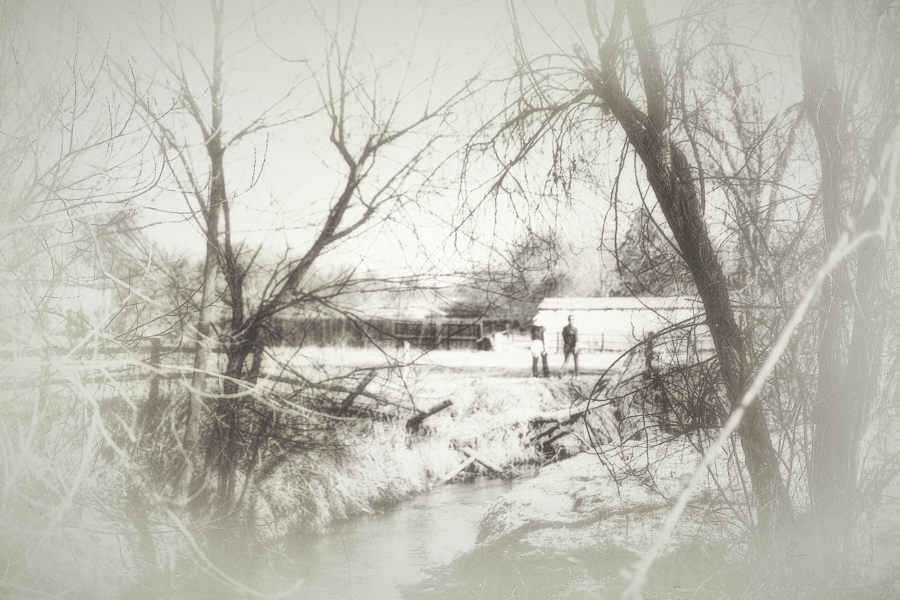
winterwalk Nikon D750 f/1.8 1/4000s 35mm 200 ISO
Chaos was the beginning. Within her void slumbered, in undifferentiated fusion, all the elements, the potential, the seed of a person. Yet, some say that Chaos was born from Mist and that Mist was the first to exist.
Mist is symbolic of things indeterminate, or the fusing together of the elements of air and water, and the inevitable absorbing of the outlines of each aspect and each particular phase of the evolution process.
It is also said that Chaos existed from the beginning together with Nyx, the goddess of Night, mother of Erebus, god of darkness, and Tartarus, the underworld.
Or is Chaos the soul’s state of potentiality – eternal, vast, uncreated, where all is intermingled, folding and unfolding, evolving and enveloping – prior to the birth to the unconscious?
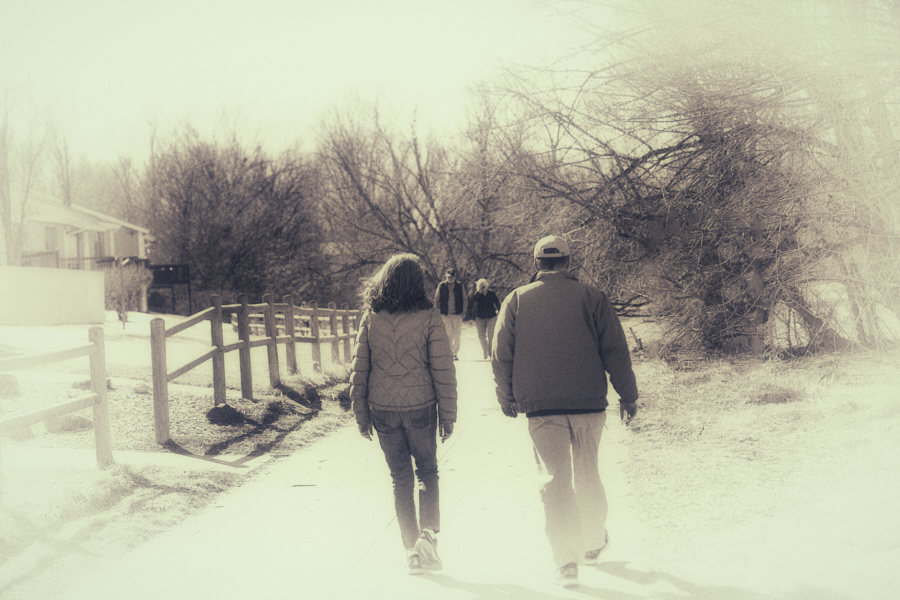
winterwalk Nikon D750 f/1.8 1/4000s 35mm 200 ISO
stillness– in the depths of the lake billowing clouds
*David G. Lanoue (a translator of Japanese haiku, a teacher of English and world literature, a writer of haiku and “haiku novels) writes that this haiku serves as a substitute for experience–or, perhaps, a clear window into experience–allowing the reader, in contemplation, to see that same lake, those same clouds, and to feel the serenity and stillness of the moment.
The above images are drawn from a 30 day photo assignment (same lens – camera wide open) and are submitted in response to Leya’s lens-artists photo challenge: chaos.
“Canada invades. Invades on behalf of industry. Invades during ceremony. Canada tears us from our land. Tears us from our families, from our homes. Takes our drums away. Takes our women away. Jails us for protecting the land, for being in ceremony, for honouring our ancestors.
On February 10, RCMP invaded unceded Unist’ot’en territory, arresting and forcibly removing Freda Huson (Chief Howilhkat), Brenda Michell (Chief Geltiy), Dr. Karla Tait, and four Indigenous land defenders from our yintah. They were arrested in the middle of a ceremony to honour the ancestors. Police tore down the red dresses that were hung to hold the spirits of missing and murdered Indigenous women, girls, and two spirit people. They extinguished our sacred fire.
We have had enough. Enough dialogue, discussion, negotiation at the barrel of a gun. Canada comes to colonize. Reconciliation is dead.
It is time to fight for our land, our lives, our children, our future. Revolution lives.”
Solidarity Action with Unis’tot’en Water Protectors
(Yinka Dini – People of this Earth) Unis’tot’en – People of the Headwaters
The Unis’tot’en (C’ihlts’ehkhyu / Big Frog Clan) are the original Wet’suwet’en Yintah Wewat Zenli distinct to the lands of the Wet’suwet’en. Over time in Wet’suwet’en History, the other clans developed and were included throughout Wet’suwet’en Territories. The Unis’tot’en are known as the toughest of the Wet’suwet’en as their territories were not only abundant, but the terrain was known to be very treacherous. The Unis’tot’en recent history includes taking action to protect their lands from Lions Gate Metals at their Tacetsohlhen Bin Yintah, and building a cabin and resistance camp at Talbits Kwah at Gosnell Creek and Wedzin Kwah (Morice River which is a tributary to the Skeena and Bulkley River) from seven proposed pipelines from Tar Sands Gigaproject and LNG from the Horn River Basin Fracturing Projects in the Peace River Region
The Unist’ot’en Camp is an indigenous re-occupation of Wet’suwet’en land in northern “BC, Canada.” The Camp is on high alert in response to the Coastal Gaslink’s application for an injunction, as well as served notice for a civil lawsuit to claim financial damages for “occupying, obstructing, blocking, physically impeding or denying access” against the Camp on their own unceded territory and denying the collective hereditary leadership of the Wet’suwet’en.
‘Wiggus’, the Wet’suwet’en word for respect. In the landmark Supreme Court Decision of Delgamuukw Gisday’wa Wiggus it was defined as “respect for all living-beings, starting with oneself”.
The Unist’ot’en Camp has been a beacon of resistance for nearly 10 years. It is a healing space for Indigenous people and settlers alike, and an active example of decolonization. The violence, environmental destruction, and disregard for human rights following TC Energy (formerly TransCanada) / Coastal GasLink’s interim injunction has been devastating to bear, but this fight is far from over.
Coastal GasLink is a project of TransCanada Pipelines Ltd., the same subsidiary of TransCanada behind the controversial Keystone XL tar sands pipeline. The 420-mile Coastal GasLink pipeline would carry fracked gas from northeast British Columbia to LNG Canada, a massive proposed liquefied natural gas (LNG) terminal that exemplifies the sector’s climate and human rights impacts.
JPMorgan Chase
Bank of Montreal
Deutsche Bank
Canadian Imperial Bank of Commerce
Go to Mazaskatalks.org to see if your bank is invested in fossil fuels
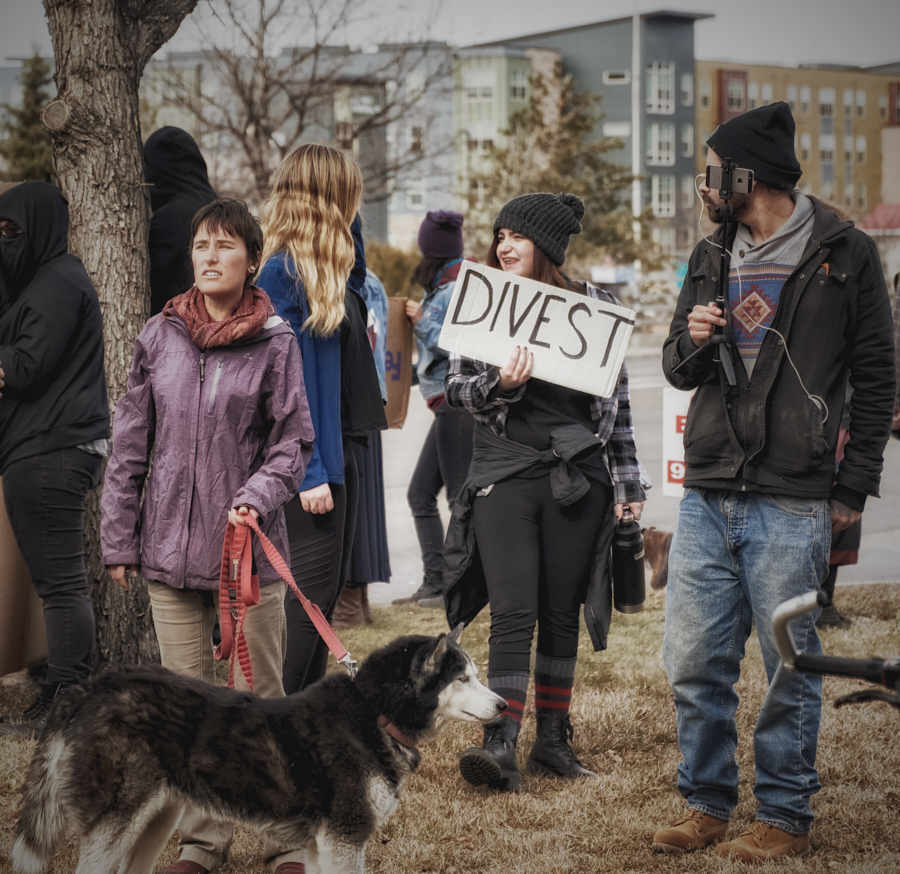
Divestment is the opposite of investment. It is removing your funds, benefits, capital and stock from companies and approaching institutions asking them to remove their money out of companies for either ethics and/or financial reasons.
In this era of “reconciliation”, Indigenous land is still being taken at gunpoint. INVASION is a new film about the Unist’ot’en Camp, Gidimt’en checkpoint and the larger Wet’suwet’en Nation standing up to the Canadian government and corporations who continue colonial violence against Indigenous people.
Fossil fuels have been utilized as our primary energy source since the industrial revolution in the mid 18th century. Fossil fuels have provided jobs as well as heat and electricity before and during our lifetimes. The problem is that the extraction process and burning of fossils fuels have caused extreme pollution of low income (indigenous, Black and People of color) communities, threatened sensitive ecosystems and is causing green house gases to climb at all-time highs. The world is now heating at an unprecedented rate: storms, hurricanes and other natural disasters are becoming more frequent and powerful than we have ever seen. In the midst of the 6th mass extinction and overall threat of climate change, we need to oppose all future fossil fuel expansion projects, and make a just and fast transition to renewable energy.
This week’s post was made in response to the lens-artist’s challenge by Viveka – capital. It was created to advance global awareness of the Costal Gaslink Project.
It is an in between time — stepping through the doorway that separates sleep and wakefulness — when one has a sense of self shifting betwixt roles. The observer of and actor within a movie which randomly muses through moments past or re-creates imagined eras.
abstract street photography
The awareness of self as an observer and/or director, speaks to me of an inner knowing of something that is vague, immense, and has a Will separate from the unconscious actor “me.” Let us name this in-between time, Chaos.
Chaos manifested in the beginning. Within her void, time slumbered in undifferentiated fusion with all the elements, potentials, and seeds of sentience. Yet, some say that Chaos was born from Mist and that Mist was the first to exist.
Mist is symbolic of things indeterminate, or the fusing together of the elements of air and water, and the inevitable absorbing of the outlines of each aspect and each particular phase of the evolution process.
“I bow my head before you as I look deeply and recognise that you are present in me and that I’m a part of you. I was born from you and you are always present, offering me everything I need for my nourishment and growth. My mother, my father, and all my ancestors are also your children. We breathe your fresh air. We drink your clear water. We eat your nourishing food. Your herbs heal us when we’re sick. …
“Sometimes I forget. Lost in the confusions and worries of daily life, I forget that my body is your body, and sometimes even forget that I have a body at all. Unaware of the presence of my body and the beautiful planet around me and within me, I’m unable to cherish and celebrate the precious gift of life you have given me. Dear Mother, my deep wish is to wake up to the miracle of life. I promise to train myself to be present for myself, my life, and for you in every moment. I know that my true presence is the best gift I can offer to you, the one I love.”
~ Thich Nhat Hanh, Love Letter to the EarthPlum Village











You must be logged in to post a comment.