
a white egg, on a white plate, on a white table cloth…submitted in response to Jenn’s Traveling at Wit’s End photo challenge: white on white
a white egg, on a white plate, on a white table cloth…submitted in response to Jenn’s Traveling at Wit’s End photo challenge: white on white

Nikon D750 f/8 1/400s 300mm 1250 ISO
With five weeks left of this year-long project, it is the time to explore how we as photographers
…eventually get to a point where we are comfortable with a certain look, a certain subject, or genre. Our work becomes recognizably ours. Sometimes this is done intentionally, sometimes we become well known for a subset of our work and everyone wants more of it. ~Dan K (Japan Camera Hunter)
I found that Dan K’s last two learning steps — Find Yourself and Reinvent Yourself — dovetail nicely with the Master Class Live series that Ted Forbes created a number of years ago, Developing your Creative Style.
The first of this Master Class series, Developing your Eye, begins with an introduction of his intention for this four week series:
To introduce exercises that will help us improve our creative work as photographers and to encourage us to allow our images to emerge through the camera from the source of our individual selves:
To understand photography as an art form
The materials used in the Master Class series are: a camera (exception for the “Wish I had my camera” exercise), framing template, small notebook, pencil/pen, photo browser software like Adobe Bridge that allows you to view images that do not have post adjustment tools.
Exercise I: I Wish I Had My Camera
tear down walls to get from the concrete to the imagined
This exercise is designed to encourage awareness of photographic memory through the use of a journal to record spontaneous creative ideas that generally fade after a few seconds and incorporate pre-visualization as a creative tool. It is common for creative people to experience creative moments during times of disengagement — in the shower, while falling into or awakening from sleep.

Sony RX100 III f/2.8 1/100s 25.7mm 800 ISO
…just let your imagination flow. If you have an image in your head it may take a number of times to create the image or it may even takes years.
Exercise II: Finding Your Own Creative Voice
I would love to read about your experience with “wish I had my camera” and about the photographers who resonate with your creative soul. Let’s tag with #aphotostudy.
The Master Class YouTube videos and the history video are around an hour long. I have found that it is difficult to sit and view a video for this period of time, so I generally break it down to 20 minute segments.
Below are the The Photographer posts that reviewed Dan K’s steps to becoming a better photographer.
https://ameditativejourney.wordpress.com/2018/08/11/a-photo-study-the-photographer-iii/
https://ameditativejourney.wordpress.com/2018/08/18/a-photo-study-the-photographer-iv/

“…is it the wish—the dreamlike, bombastic wish—to stand once again at that point in my life and be able to take a completely different direction than the one that has made me who I am now?
“There is something peculiar about this wish, it smacks of paradox and logical peculiarity. Because the one who wishes it—isn’t the one who, still untouched by the future, stands at the crossroads. Instead, it is, the one marked by the future become past who wants to go back to the past, to revoke the irrevocable. And would he want to revoke it if he hadn’t suffered it. …it’s the absurd wish to go back behind myself in time and take myself—the one marked by events—along on this journey.” ~P Mercier (Night Train to Lisbon, pp. 51-54)
“No man ever steps in the same river twice, for it’s not the same river and he’s not the same man.” ~ Heraclitus
When my heart came to rule
in the world of love,
it was freed
from both belief
and from disbelief.
On this journey,
I found the problem
to be myself.
When I went beyond myself,
the pathway finally opened. ~Mahsati Ganjavi

In the autumn when words sound
like the echo of a stone ax,
some demon in me
wants to rise up and walk away.
~Baba Akiko (K Rexroth & I Atsumi, The Burning Heart)

margaret’s home.… Nikon D750 f/5 1/400s 72mm 320 ISO
Even water could not live on–
So lonesome is the mountain
Of the leaf-scattering stormy wind. ~The Sarashin Diary (Diaries of Court Ladies of Old Japan)

Visit Patti at P.A. Moed to join this week’s lens-artists photo challenge: splash

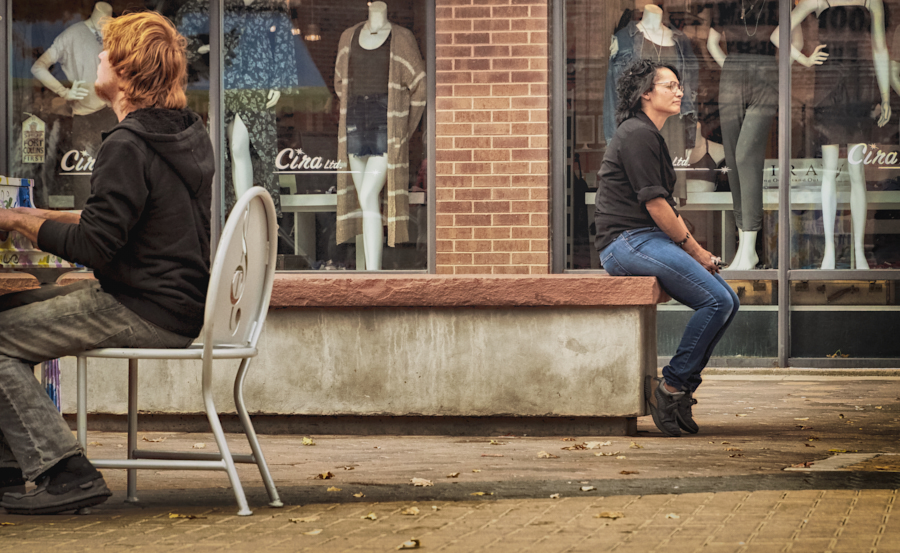
My brain is tired. After fourteen posts in which my thinking/photographic self weaved in, through, and out of contemplative photography, I decided it was time to shift “focus” to the genre of street portraiture by inviting a number of amazing photographers to share their creative endeavors.
But first, what is street portraiture?
Well to me, a street portrait is just a photograph/portrait of someone you meet on the streets (stranger). Generally it is focused on their face, but doesn’t need to be. A “portrait” just means a “likeness” of someone. For example, you can shoot a “full body portrait” of someone, and you can also shoot a closeup face portrait of someone. ~Eric Kim
On the photo forums they are always debating whether street portraiture is street photography.
There are no hard and fast rules. But in general, if a picture contains a person on the street and is posed / staged, it is street portraiture. If the photo of the person is candid, it is street photography. Street portraiture may come under realm of street photography, but it is not to be confused with candid, non staged street work. Now, there are no photo police to decide such matters, so people are free to call em as they see em. ~ Daniel D. Teoli Jr.
Now let’s visit the website 123Photogo who shares with us that …character portraits is a whole different type of portrait photography, but, truly an art form that is just totally fun
Jamie Windsor offers us “Tips for taking portraits of strangers”:
Mikaël Theimer’s talk about his connecting with strangers
Amazing examples of street portraiture to inspire you to pick up your camera and connect with life on the street.
https://www.viewbug.com/blog/street-portraits-photo-contest-finalists
http://www.zunlee.com/streetportraits#10
I am looking forward to seeing one or more of your creative connection with people on the street. Let’s tag with #aphotostudy. Thank you for being a part of this learning journey.

Image submitted in response to Jenn’s (Traveling at Wit’s End) photo challenge: balance.

Nikon D750 f/5.6 1//400s 300mm 640 ISO
When spring escapes
freed from being huddled in winter’s sleep,
the birds that had been stilled
burst into song.
The buds that had been hidden
burst into flower.
The mountains are so thickly forested
that we cannot reach the flowers
and the flowers are so tangled with vines
that we cannot pick them.
When the maple leaves turn scarlet
on the autumn hills,
it is easy to gather them
and enjoy them.
We sigh over the green leaves
but leave them as they are.
That is my only regret–
so I prefer the autumn hills.
~Princess Nukada – 7th Century (K Rexroth I Atsumi, The Burning Heart*)
*note: Princess Nukada lived in the later half of the 7th Century. She was the daughter of Prince Kagami, wife and the favorite of Emperor Temmu.

“When others make us angry at them–at their shamelessness, injustice, inconsideration–they exercise power over us, they proliferate and gnaw at our soul, then anger is like a white-hot poison that corrodes all mild, noble, and balanced feelings and robs us of sleep. Sleepless, we turn on the light and are angry at the anger that has lodged like a succubus who sucks us dry and debilitates us. We are not only furious at the damage, but also that it develops in us all by itself, for while we sit on the edge of the bed with aching temples, the distant catalyst remains untouched by the corrosive force of the anger the eats at us. On the empty internal stage bathed in the harsh light of mute rage, we perform all by ourselves a drama with shadow figures and shadow words we hurl against enemies in helpless range… And the greater our despair that it is only a shadow play and not a real discussion with the possibility of hurting the other and producing a balance of suffering, the wilder the poisonous shadows dance and haunt us even in the darkest catacombs our dreams. (We will turn the tables, we think grimly, and all night long forge words that will produce in the other the effect of a fire bombs that now he will be the one with the flames of indignation raging inside while we, sooth by schadenfreude, will drink our coffee in cheerful calm.)
What could it mean to deal appropriately with anger? We really do’t want to be soulless creatures who remain thoroughly indifferent to what they come across, creatures who appraisals consist only of cool, anemic judgments and nothing can shake them up because nothing really bothers them. Therefore, we can’t seriously wish not to know the experience of anger and instead persist in an equanimity that wouldn’t be distinguished from tedious insensibility. Anger also teaches something about who we are. Therefore this what I ‘d like to know: What can it mean to train ourselves in anger and imagine that we take advance of its knowledge without being addicted to its poison?
We can be sure that we will hold on to the deathbed a part of the last balance sheet–and this part will taste bitter as cyanide–that we have wasted too much, much too much strength and time on getting angry and getting even with other in a helpless shadow theater, which only we, who suffered in impotently, knew anything about. Why did our parents, teachers and other instructors…Not give us in this case any compass that could have helped us avoid wasting our soul on useless, self-destructive anger.” ~Pascal Mercier, Night Train to Lisbon (pp.377-378)


You must be logged in to post a comment.