
Nikon D750 f/4.5 1/400 56mm 125 ISO
Nikon D750 f/4.5 1/400 56mm 125 ISO

iPad f/1.8 1/3200s 20 ISO
Another with same thoughts
May be gazing at the pale morning moon
Of the Long-night month–
No sight is more sorrowful.
~Izumi Shikibu, Diaries of Court Ladies of Old Japan
May I find the Wisdom that silences the fortress of my mind’s discontent so I may hear with understanding teachings absent of greed, anger, and ignorance.

I often feel as though I am an old blind woman walking through a petrified forest with only a staff to ensure that my steps find solid ground. I remain ignorant, as I unconsciously look away from that which will break my heart and seek stability through the creation of and attachment to ideas, beliefs, principles, and concepts. I yearn for certainty; anger erupts each time I stumble and fall and forges a dogmatic fortress that encircles my heart and mind. The desire to hear with understanding teachings absent of greed, anger, and ignorance speaks of an awareness of how this protective barrier deafens me to words of wisdom that shed light into the shrouded mysteries of life. During those moments when I find myself attempting to engage the unknown, I ask of myself, “What energies would flow into a life emptied of greed, anger, and ignorance?”
As I reflect upon the fortress of my mind’s discontent, an imagined stained and scratched door opens before me as if to invite me into a dark and musty attic. As my eyes scan beyond the entrance, I see streaks of yellowed sun beams, weakened by dust laden drapes; a scuffed wooden floor, covered by a bare-thread carpet of muted colors; and wall paper, grayed and yellowed, tugged away at the top most of a corner by the collected weight of long ago wisps of cigarette smoke.
My observing mind notices that there is no other furniture other than two rocking chairs placed facing each other in the center of the room. Sitting in one is a slender child. She seems to be no older than four years old. A slight musty scent of aged vanilla greets me as I enter the room with a request that the child not be disturbed. The sound of her voice, which I first heard as a distant mumble, intensifies into an animated stream of words. The words seem to rush from her with such passion that a focused listener would surrender to an impulse to talk over the justifying, rationalizing, point–counter-point, argumentative, single-person monologue.
I stand quietly at the edge of the room listening not to the words but to the power within her words and note to myself, “Her words are gushing out from a center of guilt, shame, remorse.”
I again return to her words and listen so deeply that a crinkle forms on my forehead as I wonder, “Is there anxiety about a deed so wrong it is punishable by banishment?”
I quiet my distracting thoughts and listen even more deeply and then I acknowledge a profound sadness in the threads of defensive anger that is begging to be heard and understood.
If one comes across a person who has been shot by an arrow, one does not spend time wondering about where the arrow came from, or the caste of the individual who shot it, or analyzing what type of wood the shaft is made of, or the manner in which the arrowhead was fashioned. Rather, one should focus on immediately pulling out the arrow.
~ The Buddha
My compassionate self moves to the young child. As she embraces the young child, she begins to rock and whisper, gently, softly, “How long have you been here?” The young child tells of wakening to this room after a night of hiding under blankets trying to be unseen, holding her breath trying to be unheard, swallowing her fear trying to be still as the sounds of distant shattering glass and disembodied voices crashed and stumbled upon and into each other.
My compassionate self hears of the homesickness that emerged with such intensity that it overflowed her soul and traveled across rivers, over mountains, and through valleys searching for someone to bring her home. The yearning returned from its fruitless travels and surrounded her as if it were the voice of an unseen other. In a painfully frustrated response, anger roused within the child an intention to destroy this other’s yearning that come in the place of her heart’s desire.
My compassionate self awakens to the realization that this young child is ignorant of the fact that the chair opposite her is empty and that she is being persecuted by a phantom of her own creation. Slowly my compassionate self understands how this young child’s powerlessness created not a monologue but an internal dialogue between a phantom, lost within her homesickness, and a child, lost within her wounds. My mind recalls the story of Narcissus who believed that the image in his reflection was a water spirit with the same characteristics as Apollo, and hears how this child’s unproductive attempts to be heard and understood by her own echo has condemned her to remain forever alone in this shadowy dust-filled room. Narcissus clung to the image of his love; she clings to the sound of her anger.
Touching the present moment, we come to know the past created the present and together the future is being created.
“Shu-shu“, my compassionate self whispers as she rocks the small child with the sound of ancient mother’s loving-kindness. “Shu-shu, feel the sadness within you, hear its voice, be with it’s tone and texture, and release this caged discontent with the outward flow of my breath. Shu-shu. Silence your thoughts and listen only for the sounds within this room.” And together, they rocked back and forth, listening to the sounds in the room.
My compassionate self moves to the empty chair opposite the small child. I begin the practice of ‘Giving and Taking’ by first resting my thoughts and opening myself to silence. I then imagine a small black cloud filled with the child’s aloneness, anger, sadness, and anxiety surround her heart. I feel the inky dark cloud move away from her heart and leave her body as it rides upon the gentle wind of my in-breath. It enters my body; it touches my heart, and a sudden sensation of wondrous energy spreads throughout my body.

A tiny silvery whisper emerges, “It is your wish to be released from this room so that you may walk with the summer sun and feel its warmth touch your face. You wish to see the multiple colored leaves blanket the sidewalk and hear them crackle as their scent is released into the autumn air. You wish to feel the tingle of the first winter’s snow upon your tongue. You wish to release all that is frozen as the spring wind awakens mother earth. You wish to look into the eyes of others and see the reflection of love.”
On my exhalation, I release to her those wishes on a white cloud knowing they will give her the courage to leave this room, to open her door to life.
Silently, the sun’s rays departed to the west and unveiled the moon’s spherical disk. A pause fills the room with stilled silence as if time paused to honor this universal transition. My compassionate self inquires, “Where in this moment is the voice of your phantom? How will you allow yourself to hear the emptiness within this room and then know the other chair holds no one? What will you do with this absence? When will you give yourself permission to greet this absence, acquaint yourself with it, feel it, know it in its entirety, and allow it to settle within? I wonder what will open your mind to see that what your words attempt to harm, silence, or destroy is but a memory and thus you are in a perpetual state of cyclical suffering.
“Your desire to be heard and understood can be heard and understood only by you, not this phantom of a memory. I appeal to your imaginative skills to see and hear how you, as this phantom and small child, wish to be free from suffering, wish to be happy.
“Each time you become aware that you once again have entered this room and are engaged in a confrontation with your phantom, trust in the freedom that accompanies the awareness that both you and this transitory memory wish to be free from suffering. Breathe in with your whole body an image of your phantom’s pain; on your out breath release to your memory the happiness, joy, and calmness of mind that will bring an end to it’s suffering. This practice of ‘Giving and Taking’ is the silver key that opens a door to a space of tranquil abiding.”

The Buddha suggested that whatever it is that we reflect upon frequently becomes the inclination of our mind. If one recurrently thinks greedy, hostile, or harmful thoughts, desire, ill will, and harmfulness shape the mind. If one repeatedly thinks in the opposite way, compassion, loving-kindness, sympathetic joy, and equanimity become the preference of the mind. The direction we take always comes back to ourselves, to the intentions we generate moment by moment in the course of our lives.
Excerpts from B Koeford, A Meditative Journey with Saldage
Life seems to invite periods of time in which I think, “I’ve been here before.” For example, my first readings about contemplative photography occurred about 6-7 years ago. Even though this genre resonated with me, I chose to put it aside as there was limited resources on the internet and what training programs I was able to find were a bit outside of my financial resources.
In June of this year, I began to explore contemplative photography as part of this A Photo Study project. Today, this 12th posting of contemplative photography has been motivated by A Karr and M Wood’s discussion of “simplicity” within their book, The Practice of Contemplative Photography. What I find interesting is that the January, 2018, blog of this project was, A Photo Study: Simplification and Negative Space, which was inspired by one of Ted Forbes’ composition videos.
Even though life seems to move in a linear progression from birth to death; at times like this I find myself wondering if there are periods of time in which there are episodes of circular movements within one’s life journey in which we are “presently” invited to pause and reflect upon our “past” before time nudges us into a new present, our future.
Well, I think I’ve digressed from this week’s photo study, simplicity. Karr and Wood note that their simplicity exercise is to open us to the relationship between form and space, to open ourselves to the experience of simplicity without seeking an external validation of our concept of simplicity.
Space intensifies the experience of form, and simple form intensifies the experience of space. … Simplicity and space are aspects of our perception. Visual space can be produced by a red wall, a length of gray fabric…a smooth beach…a backdrop of dark shadows, gray pavement…sky.. An object seen seen against any unadorned expanse will be surrounded by visual space.
Their definition of space brings to mind the post, Negative Space, in which I wrote:
In photography negative space is perhaps the most important element as it embraces the subject within your image — the element of interest — helping it stand out and inviting the viewer’s attention. It is the aspect within a photograph that generally doesn’t attract much attention. It is sometimes referred to as white space and has the potential to change what appears to be an average subject into an outstanding image
For this exercise, Kerr and Wood encourage a point of departure in which our intention should be to recognize perception where form and space produce strong contrasts—where the experience of form is weighted because of the space around it. …to look at one thing at a time. Look at objects and also look at their environment. Don’t hurry. Proceed in a relaxed way that allow you to see the space around things, not just the things themselves.
The first series of the images in the slideshow below are of a couple of photo walks directed by my understanding, thus far, of contemplative photography especially in regards to flash of perspective, visual discernment, and forming the equivalent, comparable to what I perceived—nothing more, nothing less.
The second series of images in the slide show below are part of the images I created as part of the simplification and negative space blogs posted earlier this year. These images, I believe, were created by a natural inclination towards flash of perspectives, visual discernment, and a bit of digital darkroom creative exploration.
I enjoy the creative playgrounds offered by Photoshop, Capture One, and Nik. Am looking forward to a comparison of images you created in repose to the earlier blogs on simplification and negative space with those of simplicity as defined within contemplative photography. Please tag with #aphotostudy.

go…? Nikon D750 f/7.1 1/640s 85mm 100 ISO

Nikon D750 f/5.6 1/400s 135mm 400 ISO
… You press your mind, your forehead, against the beginning of a book, the cool cover of it, appreciating its impenetrability. It is rectangular and thick, heavy enough to stop a bullet or press a leaf flat. It will, you think, never let you through. And then you begin to lean into it, applying little attentive pressure, and the early pages begin to curl back with a soft, radish-slicing sound, and you’re in. You’re in the book. The thick, segmental chapters fan out into their component pages, and each turned page dematerializes itself, once read, into the fluent, cajoling voice its words carry. …When you reach the last sentence, there rests under you left thumb a monolithic clump of paper through which, it seems, you could not possibly have traveled. ~N Baker (preface), A Book of Books

Nikon D750 f/5.6 1/400s 85mm 1600 ISO
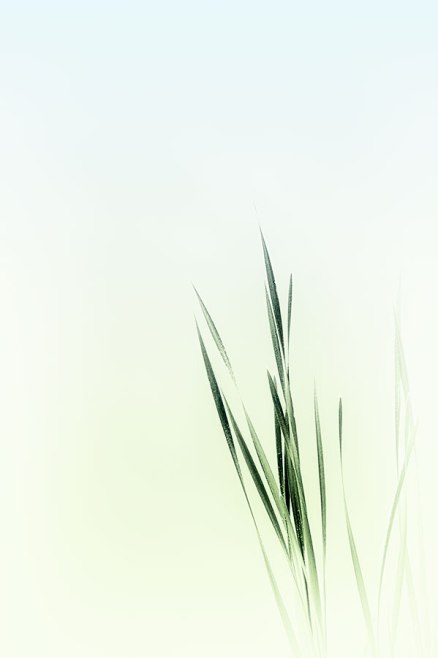
I am like dew on the grass–
And pitiable wherever I may be–
But especially am I oppressed with sadness
In a field with a thin growth of reeds.
~The Sarashina Diary, 1009-1059 (Diaries of Court Ladies of Old Japan
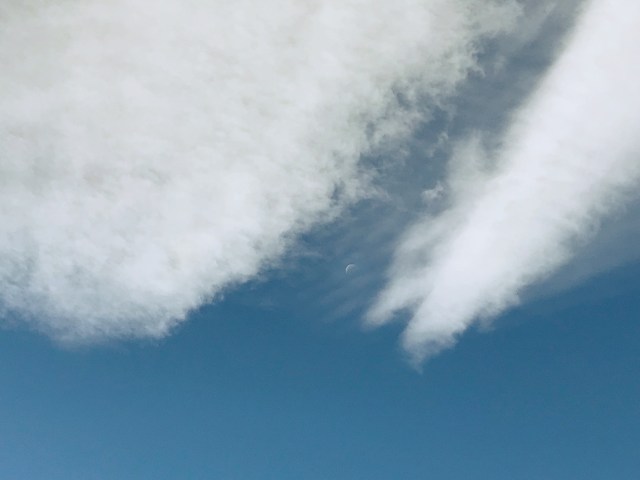
iPad f/1.8 1/3700s 20 ISO
She is like the Moon, who, opening the gate of Heaven,
goes up over the clouds.
We, being in the same heavenly Palace, pass the night
in remembering the footfalls of the past.
~The Sarashina Diary, 1009-1059 (Diaries of Court Ladies of Old Japan
Just as a solid rock is not shaken by the storm, even so the wise are not affected by praise or blame. ~The Buddha

Bare attention flows in opposition to a life guided by streams of unconscious habit patterns and emotional reactivity. Bare attention awakens us to the stones we stumble over due to the blindness of confusion or ignorance. It shines a light into the shadows of confusion and ignorance and finds our frustrated desires and suppressed resentments. Bare attention identifies and pursues the single threads of the closely interwoven threads of our thoughts, feelings, and actions, which have over the years formulated the tapestry of our life story.


Bare attention is the clear and single-minded awareness of what actually happens to us and in us at each successive moment of perception. It is the forerunner of insight. It is a way of being that is counter to the general manner by which we briefly and fleetingly know or experience the events or people within our daily schedules. Bare attention trains the mind to be detached, open, silent, and alert within the framework of the present moment. It is an intention to suspend all judgments and interpretations, and to simply note and dismiss them if and when they do occur.


The task within bare attention is to simply acknowledge what occurs just as it occurs. It is a process of inviting one’s self back into the present, of being mindful of the moment, with the realization that our minds have taken us into an imaginative realm of fantasy, recollections, or discursive thoughts. It is a means by which to acquaint our selves with an object before our minds alter its presence through conceptual paint overlaid with interpretations.


Bare attention is undertaken with an intention to undo our general ways of being in the world, it is an intention of simply noting and not thinking, not judging, not associating, not planning, not imagining, not wishing. It notes each occasion of experience as it arises, reaches its peak and then fades away. It is a sustained mindfulness of experience in its bare immediacy, carefully and precisely and persistently.

Bare attention awakens me to the relationship I have formed with this world through the untested foundations of beliefs, values, guiding principles, and morals. To attend to what formulated these foundations I have found seeds of misconstrued concepts built out of my childhood fears and fantasies. I have seen a blind faith to family customs, rituals, and cultures. I have come to understand how some of the holy of holy concepts within my “absolute truths” are unquestioned beliefs which perpetuate suffering.
Excerpts from B Koeford, A Meditative Journey with Saldage
This week Traveling at Wits End’s guest post is St. Louis-based photographer David Adams. He writes that doors:
can be many things. They can be barrier, they can be invitations. They can be utilitarian, they can be ornate. Doors show personality or they can protect us from the world.
David challenges photographers to find “closed doors…no peaking inside” and to look for color, shape, decoration, as well as details…to find a door with personality.
The first time I found myself photographing doors was about 40 years ago while we were living in Newport, Rhode Island. Since then I also found that the doors within historical districts of the southern part of the United States, Australia, and Europe to be intriguing–the west…not so much.
Yesterday, while on an out-of-town trip with camera in hand and this challenge in mind, I undertook a photo walk through a small rural community. Regrettably, the doors within this town are…boring. Yet, I found myself thinking how sidewalks, steps, and porches are like a preface to the stories behind closed doors.


While the images above are not beautifully composed and do not specifically “focus” on doors, they do invite me to story the lives of the people who live behind these closed doors and to ponder the question, “how is the war economy doing for you?”
… to hold a moment, how to record something so completely, that all who see [the picture of it] will relive an equivalent of what has been expressed. ~Alfred Stieglitz (cited: http://www.metmuseum.org)
The theory of equivalence was inspired by Wassily Kandinsky’s belief that colors, shapes, and lines reflect the inner, often emotive “vibrations of the soul.” In his cloud photographs, which he termed Equivalents, Stieglitz emphasized pure abstraction, adhering to the modern ideas of equivalence, holding that abstract forms, lines, and colors could represent corresponding inner states, emotions and ideas.
The following are excerpts from Equivalence: The Perennial Trend: Minor White, PSA Journal, Vol. 29, No 7, pp 17-21, 1963 (cited: http://www.johnpaulcaponigro.com)
A change of perspective is a change in state. Jean Piaget reminds us that, “What we see changes what we know. What we know changes what we see.” Perception changes reality… The more conscious the perception the stronger the change. Furthermore, the quality of consciousness one engages perception with influences what is perceived, what is produced, how it is received and the consequences that has. Acting on what one observes, choosing and sustaining one thing / quality amid many others, reinforces that state of being and this is particularly true if during observation one creates something tangible and durable and never more true if multiple related works are created. Often, during the process of manifestation perception continues to change, further extending this process of revelation and transformation.
The visible can be used to reveal the invisible; the external can be used to reveal the internal. ~Alfred Stieglitz
Minor White remarked, “One should photograph things not only for what they are but also for what else they are.” and “Equivalence is a function, not a thing.” He did not mean to suggest that equivalence was merely a rhetorical device. Equivalence is more than a rhetorical device, not a simile that suggests shared commonalities (this is like that), not a metaphor that observes shared qualities through the power of transformation (this is that), but a process inclusive and transcendent of both. Like a simile its power starts with the recognition of shared qualities and like a metaphor its power lies in transformation, but an equivalent transcends both through a heightened state of self-awareness, even to the point of transforming the self through its accompanying effects of clarity and commitment.
Equivalence embraces and elevates the debate over whether photographs are windows (onto the world) or mirrors (into the soul) and whether they are taken (through distant observation, objective to varying degrees) or made (through immediate interaction, subjective to varying degrees), illuminating many more levels of an evolving process. Through equivalence the photographic object created becomes a reflection of both the external things it represents and the internal states of its creator. This reflective capacity is extended to the viewers, who re-experience this shared process in their own ways.
Resonance is a consequence of equivalence. What we create can transform us. We then become co-creators, creating not only things and ideas but selves. What we create can also transform others, triggering cascades of sympathetic vibrations, if we imbue our creations with a persistent resonance, brought on by intensity, clarity and connection (connection to subject, medium, self, and others). Through the experience of art, the powers of perception and transformation can be awakened, in both the ones who create directly and the ones who [perceive] indirectly.
Stieglitz set a shining example for us all. He demonstrated that the full power of our photographs lies not in special subjects or moments but in what we bring to the picture, which can be much more than technical skill, compositional prowess, and cultural awareness. Through photography we can simultaneously bear witness to things / events, affirm our connection / participation with them (even if only as observers, no small thing), and clarify our understanding / interpretation of the confluence of everything that is brought to bear in each moment and the continuing resonances they produce. More than an intellectual interpretation or emotional expression, this is a process of holistic integration.
The photograph can be much more than a material trace of another material; it can even be much more than a trace of light and time; it can also be a trace of spirit, the energetic confluence of body, mind, and emotion, either single or multiple.

White reminds us that this process of self-realization is open to everyone, “With the theory of Equivalence, photographers everywhere are given a way of learning to use the camera in relation to the mind, heart, viscera and spirit of human beings. The perennial trend has barely been started in photography.” Though all photographers do it, not all photographers do it with equal clarity or intensity. Regardless of what level they engage this process, whenever photographers break through to new levels of consciousness the results are transformative for the photographer and the viewer and even the viewed, sometimes subtly and sometimes dramatically is a form of contemplative photography that asks us to see our world in a new way. In some ways it seems very simple, but it is not always easy.
 a meditative journey
You must be logged in to post a comment.