
Seeing begins with respect, but wonder is the fuel which sustains vision.~Steven J Meyers
I believe we all intimately know of that moment…the moment, an early morning moment, that occurs just as we lift a window frame. That fleeting moment as morning awakens us…before the mind discriminates, defines, labels, associates, and tucks away into memory…the moment of awareness to, awakening to the touching, the greeting..our vulnerability to morning’s sensual presence…That’s magic, the “things in themselves.”
our eye consciousness and ear consciousness can touch the world of suchness without distorting it. With mind consciousness, we tend to distort…
Thich Nhat Hanh (Understanding the Mind) writes that there are three fields of perception: perception of things-in-themselves, as presentation, and as mere images, and that the way we perceive reality has everything to do with our happiness and suffering.
The perception of things-in-themselves is when we are perceiving directly without distortion or delusions. This is the only one of the three modes of perception that is direct. This way of perceiving is in the stream of…suchness; that is, “reality as it is.” … Everything—a leaf, a pebble, you, me—comes from suchness. Suchness is the ground of our being, just as water is the ground of being of a wave.
Are we capable of touching reality-in-itself? … A flower can be the manifestation of the world of suchness, if we perceive it directly. It all depends on our mode of perception whether we touch the suchness of a flower or only an image of it that our minds have created. Our perceptions rarely reach the mode of things-in-themselves, however. We usually perceive things in the other two modes, as representations or mere images.
The first five consciousness-the sense consciousness of eye, ear, nose, tongue, and body—are capable of touching the realm of things-in-themselves, especially when they contact their objects of perception without the participation and intervention of mind consciousness. When mind consciousness gets involved, however, there will always be some thinking and imagination, and the image brought to it by one of the sense consciousnesses will become distorted.
We are capable of reaching the field of things-in-themselves, the world of suchness, but because we think and discriminate we don’t usually perceive things as they truly are. The nature of our mind is obstructed. This means that we build a world full of illusions for ourselves because of the distorted way we perceive reality. Meditation is to look deeply in order to arrive at reality—first the reality of ourselves and then the reality of the world. To get to that reality, we have to let go of the images we create in our consciousness… Our practice is to correct this tendency to discriminate and think dualistically, so that reality will have a chance to reveal itself. (pp 65-71)
This slideshow requires JavaScript.
Miksang, a Tibetan word, has been translated to ‘Good Eye.’ Miksang photographers write that when we see with/through a Good Eye we see the world as it is for the first time. This is because this way of seeing is absent of memory and association. The world is manifesting to us, as it is out of nowhere.
Julie DuBose wrote (Shambhala Times, April 7, 2017, “What is Miksang Really?”) that the basis of Miksang photography
…is the open space of availability in our minds. When our mind and eye connect directly with a visual perception, it is like a flash of lightening arising from this empty open space. Without the voltage, the electric presence of the flash of contact inherent in the image, it is flat and lifeless, somebody’s idea. This is the juice of direct perception. If we can maintain our connection to this raw energy of perception through to our expression of the perception with our camera, then it will be completely expressed in our image.
There is no halfway, half a flash of perception. The perception and the resulting image either does, or does not, have the living, raw experience of that moment of voltage embedded in it. There is no in between. This is the joy of “fresh” seeing.
A. Karr and M. Wood (The Practice of Contemplative Photography) notes that contemplative photography begins with “the flash of perception.”
In the flash of perception…there is a space for things to come to you. Experience is definite, because there is no doubt about what you are seeing… Whatever it is, it is here, and there is no doubt involved, no shakiness. The nature of perception is sharp, with a brilliant, clear quality. The flash of perception is a moment of seeing that is one-pointed, stable, and free from distraction. Experience is not diffused or scattered or moving. It is direct and in focus. It is stable because it is not tossed about by winds of thought or emotion. There is a stillness and roundedness as awareness remains with perception.
W. Rowe (Zen and the Magic of Photography) introduces the reader to Roland Barthes’ description of the essence of photography, the “punctum”,a small, distinct point.
The punctum, “will break (or punctuate) the studium*…photographs that are “in effect punctuated, sometimes even speckled with these sensitive points; precisely, these marks, these wounds, are so many points.” Punctual rises out of the scene, seeks out the viewer, disturbs the studio, wounds, cuts, pricks, and stings the viewer…also has the power to provide sudden enlightenment… a tiny shock, is usually found in the detail bringing “certain photographs very close to haiku.”
Only the moon
and I, on our meeting-bridge
alone, growing cold ~Teiga (S. Hill, The Sound of Water)

Torsten Andreas Hoffmann (Photography as Meditation: Tap into the Source of Your Creativity) indicated that within:
the context of photography and shooting images, the photographer must be at the right place, with the right lens and the right aperture, at exactly the right moment to capture the picture. Successful images, however, are not guaranteed based solely on having the correct posture and intent. However, by letting go of intent, the stillness of the mind can take over and you can attain oneness with your surroundings. Barthes refers to this concept using the term “satori,” which describes the highest state of enlightenment and comprehension in Zen. I prefer to use the term “Samadhi,” which indicates a state of utmost vigilance and attention. Photographs taken while in this state may achieve the quality of puncture.
As I was pondering my understanding of “the flash of perspective”, as an experience of a shock that is like being awakened from sleep by a loud noise and Barthes’ punctual that “disturbs, wounds, cuts, picks, and stings the viewer to an haiku moment, images of Buddhist masters who drop a book or strike with a stick as a means of wakening wandered into my thoughts. As a therapist, I came to understand that there is an immediate response to “shock” that may be expressed as denial, laughter, tears, shaking, screaming, or tears that occurs as a way for the body/mind to re-establish a state of equilibrium. Also, my own personal life experiences have taught me that expected moments of “shock” (as opposed to those horrid moments that come out of the blue) are more likely to be responded to with a more grounded and contemplative state of being.
“Wounds, cuts, shocks, picks, stings…are not these words of violence incongruent to a contemplative state? With all this said, I find myself wondering if these “shock” elements identified by contemplative photographers may have, even the smallest tendency, to blur and distract me from those now moments of “things in themselves.” If so, then how could I open myself to being a photographer who receives and shares the gift that awaits my awareness? To lessen the tendency to shift away from an “awakening?” What are they ways to cultivate an attitude of receptivity, an openness to what might be given to me? To engage in a photo walk that is more like meditation or a spiritual discipline than a search or a hunt?

I have come to a place of consideration that one small way in which to become acquainted with underlying attitudes and be in a more graceful receptive place to receive “things in themselves” is to begin to become aware of the words/attitudes that have the potential to define the process by which I photograph.
I ask myself will I be more able to see with respect, as noted by Steven J Meyers, if I intentionally silence the words “shoot,” “capture,” “frame,” “take,” “exposed,” “cover,” “take the shot,” in order to open myself to “receive,” “connect with,” “create,” “be present with,” “wonder,” “surprise,” “reveal.”
And then, will I be more able to open myself to the expression of a temporary enlightenment, in which I see into the life of things.”
*studium…
the intention of the photographer…the elements of an image rather than the sum of the image’s information and meaning. …the elements of the punctum penetrate the studium—they have the ability to move the viewer in a deep and emotional way.


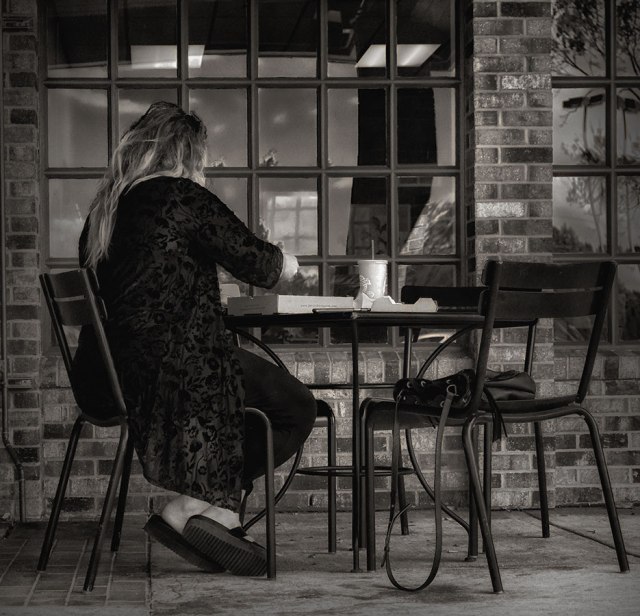



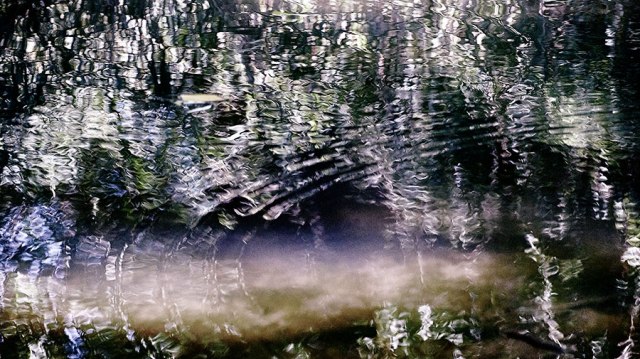


 a meditative journey
You must be logged in to post a comment.