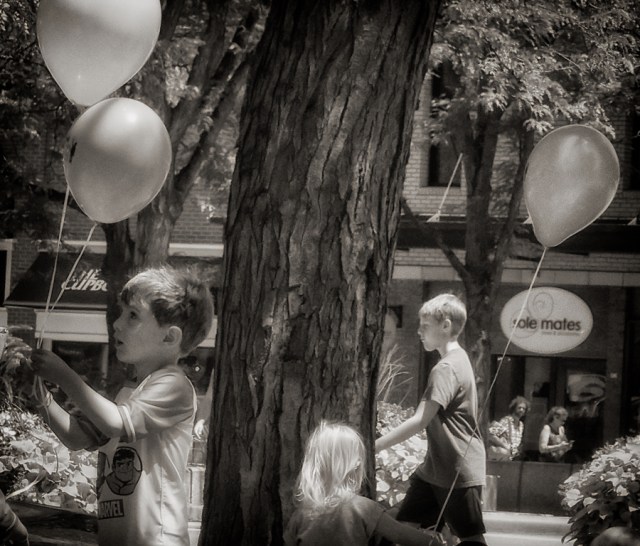
Sony RX100 III f/8 1/400s 25.7m 800 ISO
Sony RX100 III f/8 1/400s 25.7m 800 ISO
One autumn day while walking in a park, I became absorbed in the contemplation of a very small and beautiful leaf in the shape of a heart. It was turning red and barely hanging on to the branch, about to fall. I spent a long time with this leaf …. Usually we think of the tree as the mother and the leaves as its children. But contemplating the leaf, I could see that the leaf was also a mother to the tree. The sap that the tree’s roots take up, called xylem sap, is only water, amino acids, and minerals, not rich enough to nourish the tree. So the tree distributes that sap to the leaves, which, with the help of the sun and carbon dioxide, transform it into phloem sap, rich in sugars, which the leaves send back to nourish the tree. So the leaves are also a mother to the tree. …
“We are like that leaf. When we were in our mother’s womb, we were also linked to her by a stem, an umbilical cord. All our nourishment came through the umbilical cord. Our mother breathed for us, ate for us, drank for us, did everything for us. Then one day that cord was cut, and we started to think of our mother and ourself as two different entities. In fact, our mother continued to nourish us like before. Our parents are present in every cell of our body. We continue to receive nourishment from our mother, as well as the suffering and the troubles of our mother, which continue to influence us, as they did when we were in the womb. That cord is still there, not just until we turn eighteen, but for our whole life.
”When we can see the umbilical cord, we can start to see the countless umbilical cords that link us to life all around us. There is an umbilical cord that exists between us and the river…. So the river is also a mother and there is an invisible umbilical cord between us. … There is another umbilical cord betweens and the clouds, between us and the forests, and another between us and the sun. The sun is like a parent to us. Without our link we to the sun we could not live, and neither could anything else. We are nourished and sustained by countless parents….
Excerpt From
The Other Shore
Thích Nhất Hạnh
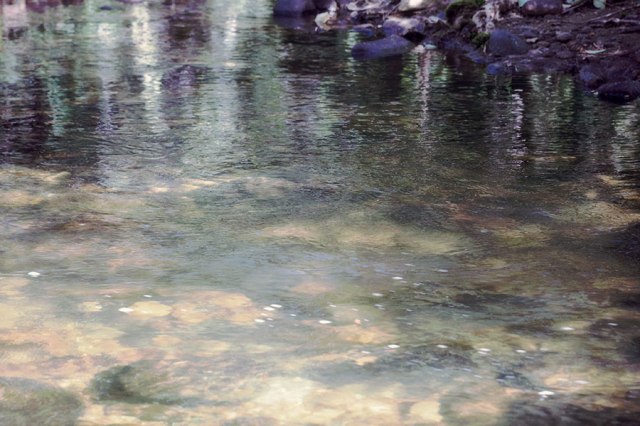
a metaphysical search…Nikon D750 f/7.1 1/25s 135m 100 ISO
I awaken to the mourning dove’s appeal for the sound of another, and find the passing dream state, like many before, was spent wandering through a petrified forest unlike any created by the ancient uniting of Gaea, Mother Earth, and Uranus, Father Heaven. It was filled with a longing, a seeking; it was a series of moments of futile endeavors.
As I walked upon moonlit pathways, edged by shadows of hidden yesterdays as well as shrouded by entangled memories, I encountered afterimages, echoes, phantoms, fragmented sequels, refrains, and vague specters. Now and then, it felt as though I had stepped on a “mind-trap” and suddenly became entangled inside an invisible emotional net that swirled me around and around from one apparition to another. Each apparition messaged that I have gone around and around in discursive circles once, twice, a thousand times throughout my lifetime of nights. I say to myself, “I’ve been here before. I’ve re-imaged, revisited, and reviewed past dreams as if I were an author rewriting a long ago discarded novel about an outcast.” Within this uncertainty a voice urges compassionate reflection.
Within stilled and silent reflection is an awareness of the emergence of a cluster of physical sensations from my stream of experiential consciousness. Together with the awareness of this particular cluster of physical sensations is the identification of a feeling I have labeled as “homesickness for a place, person, or time” and the creation of a story about an “I” who is an outcast.
TWO TRUTHS
From this point, I ask of myself, “What are the defining characteristics of a person who is an outcast?” I question if I have had these characteristics since the moment of my conception. I then discern if my relationship with all living beings, from my spouse to the robin outside my house, is limited to and defined by these characteristics. In other words, have I always been an outcast, and does every living being relate to me as an outcast?
I come to the conclusion that the answer to both of these questions is no. I now hear an encouragement to release the story line that arises from a false identification with “I am an outcast.” In conjunction with the release of this story line is the subsequent letting go of the construct of an unknown person, place, or time. Within the emptiness that accompanies this release arises a consciousness of feeling – sadness intertwined with loneliness. To find that to simply acknowledge this particular cluster of physical sensations with “sadness and loneliness is arising” and to resist the urge to identify with these feelings releases me from the wellspring of suffering within the label of “outcast.”
I am now free to concentrate on that discernment of myself as being freed from this metaphysical search, and to focus on this inferential understanding and to concentrate on discerning the impermanence of sadness and loneliness. This is the discriminating awareness that arises from meditating.
Thus you must train yourself: “In the seen there will just be the seen; in the heard, just the heard; in the reflected, just the reflected; in the cognized, just the cognized.” . . . when in the seen there will be to you just the seen; . . . just the heard; . . . just the reflected; . . . just the cognized, then . . . you will not identify yourself with it, you will not locate yourself therein. When you do not locate yourself therein, it follows . . . this will be the end of suffering. ~ The Buddha
Excerpts from B Koeford, A Meditative Journey with Saldage
Fallen to the ground
like those words of old –
glowing leaves ~Inko

Sony RX100 III f/4 1/50s 17.9m 400 ISO
Amy (The World is a Book) invites us to share our interpretation of “small is beautiful.” Inko’s words tells me how the small messengers of autumn’s soon arrival are beautiful gifts celebrated today as well as long, long ago.
I have very elementary understanding of color theory so if you find that there is an error within this post or a particular point needs additional clarification, I would appreciate hearing from you in the comments section. I appreciate any positive critique that assists with this year-long learning project.
Color is light, and light is composed of many colors—the reds, oranges, greens, blues, and violets create the visual spectrum the human eye is able to see. The objects in our world absorb certain wavelengths while reflecting other colors; for example, we see the leaves on trees as green because that is the wavelength that is being reflected by the tree’s leaves.
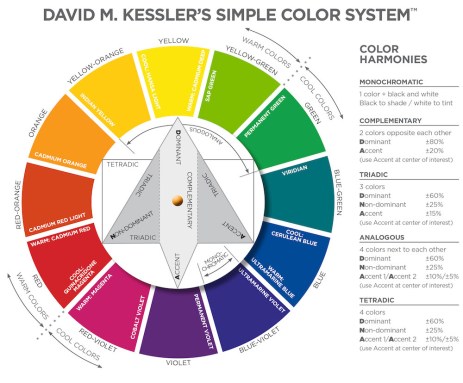
The color wheel is a chart representing the relationships between colors. The colors include:
Primary Colors: Red, yellow, and blue are the basic colors and cannot be made from mixing other colors.
Secondary Colors: Orange, green, and violent – each of these colors are created by mixing two primary colors.
Tertiary Colors: There are six tertiary colors, each made by mixing one primary color with an adjacent secondary color.
On the Pocket Color Wheel, for Amateur and Professional Use one will read that color is described by three characteristics: hue, value, and intensity.
Hue is the name of a particular color.
Value is the relative lightness or darkness of a color (refer to gray scale). To increase contrast in your color scheme, you can adjust the value of a specific color; for example, making a yellow darker or lighter.
Intensity (Chroma, Saturation) is the purity of a color which determines its relative brightness or dullness.
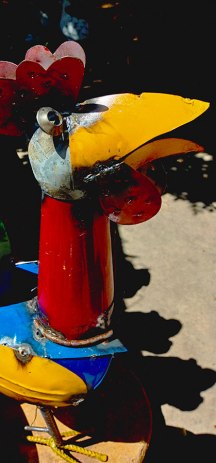
Saturated Primary Colors red, yellow, and blue


Shade and tint are terms that refer to a variation of a hue.
Neutral Gray is a balanced combination of white and black.
Warm (Advancing) Colors: Reds, oranges, and yellows.
Cool (Receding) Colors: Greens, blues, and violets.
Monochromatic is the use of any tint, tone or shade of just one color. These color schemes can be subtle and sophisticated and the contrast within these image is formed by the juxtaposition of light and dark values.
Using a color wheel divided into various shades and tints is one method of identifying possible options for color schemes. By varying the saturation and experimenting with shades and tints within the hue relationship, you can achieve quite a variety of palette options. Color combinations may pass unnoticed when pleasing, yet offend dramatically when compositions seem to clash.
Analogous: Using colors that are adjacent to each other on the Color Wheel. Use at least two colors but no more than five consecutive colors on the wheel.
Complementary: Using any two colors directly opposite each other on the wheel. Complementary colors bring out the best in each other and fully saturated colors offer the highest level of contrast. When one choses from tints o shades within the hue family the over contrast is reduced.
Split Complementary: Using any color with the two colors of each side its complement.
Triad: Using three colors equally spaced from each other on the wheel.
Tetrad: using a combination of four colors on the wheel that are two sets of complements.
Key Color: Predominant color in the color scheme of a painting or other creative project. Color is very psychological and different color harmonies produce different effects. For example, because analogous colors are similar in hue they will create a smooth transition from one color to the next.
When we are working on a computer, the RBG colors we see on the screen are created by combining the light from three colors (red, blue, and green). The complementary primary-secondary combinations are red-cyan, green-magenta, and blue-yellow. Black is [0,0,0], and White is [255, 255, 255]; Gray is any [x,x,x] where all the numbers are the same. The max value of each of the colors is 255.
How do you use color in your images? Do you find that your creative work tends toward back and white, monochrome, or color? Do you have a favorite photographer who works with color?
I am looking forward to any images you would like to share and your thoughts about the use of color in photography. Let’s tag with #aphotostudy.
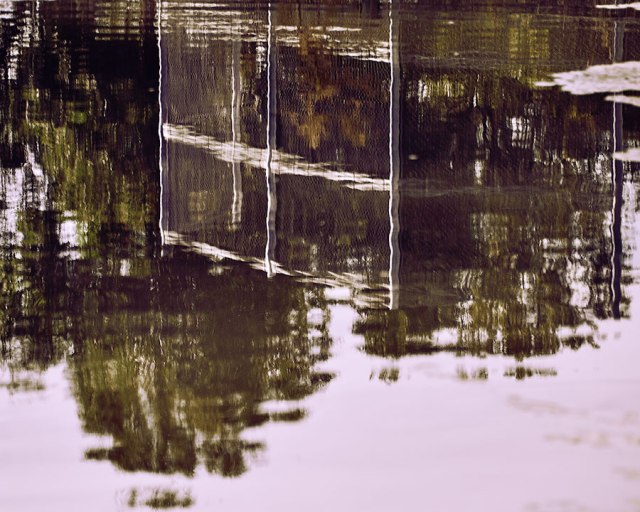
Nikon D750 f/5.6 1/400 180m 350 ISO
In the higher Buddhist view, appearances rise from emptiness and dissolve again…It is a process like birth, living, and dying…practice letting come and go…we may rest longer and longer in the space of openness…Don’t try to shape the oneness, or see it as one thing or another, or gain anything from it. Just let things be. This is the way to find your center. ~Tulku Thondup, The Healing Power of Mind
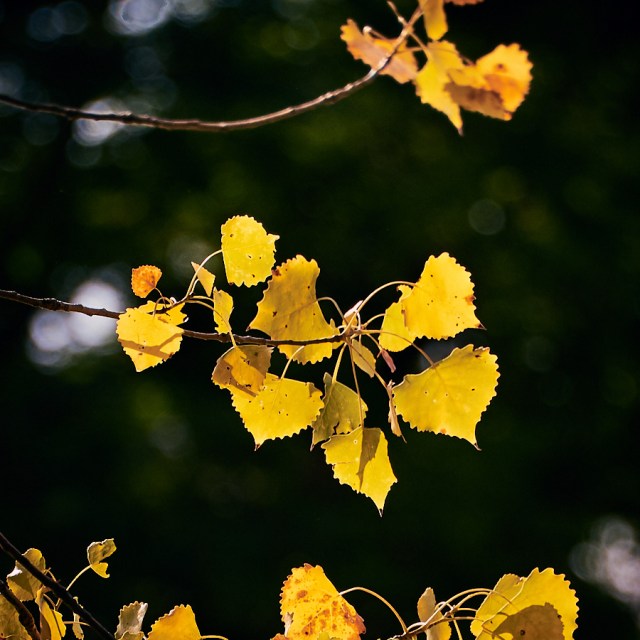
Nikon D750 f/5.6 1/400s 170m 450 ISO
“…there is thinking as a result of mind and object of mind, but there is no thinker. There is feeling, but the feeling and the one who feels are not separate.” ~Thich Nhat Hanh, The Other Shore
“In this acausal world … artists are joyous. Unpredictability is the life of their paintings, their music, their novels. … Most people have learned how to live in the moment. The argument goes that if the past has uncertain effect on the present, there is no need to dwell on the past. And if the present has little effect on the future, present actions need not be weighed for their consequence. Rather, each act is an island in time, to be judged on its own. Families comfort a dying uncle not because of a likely inheritance, but because he is loved at that moment. Employees are hired not because of their resumes, but because of their good sense in interviews. … it is a world of impulse. It is a world of sincerity. It is a world in which every word spoken speaks just to that moment, every glance given has only one meaning, each touch has no past or no future, each kiss is a kiss of immediacy.” ~ A Lightman, Einstein’s Dreams
“…Go on transforming a square canvas in your head until it becomes a circle. Pick up any shape in the process and pin up or place on the canvas an object, a smell, a sound, or a colour that came to mind in association with the shape. ~ Yoko Ono (cited: J F Simon, JR, Drawing Your Own Path)
It is by its breath
That autumn’s leaves of trees and grass
Are wasted and driven.
So they call this mountain wind
The wild one, the destroyer.
~Fun’ya no Yasuhide

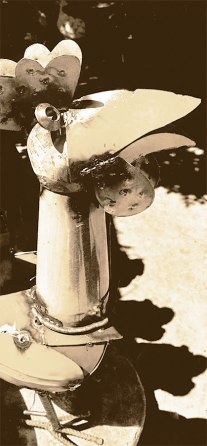
Nikon D750 f/4.5 1/400s 85mm 2200 ISO
spring peace–
a mountain monk peeks
through a fence
~Issa (cited: http://www.haikuguy.com)


This week lens-artists invited us to share our favorite fence images. While the images above are not my “favorite,” the sign did bring a smile.
I had to go back a number of “blog” years to find three of my favorite fences.


contemplative photography…Nikon D750 f/5.3 1/80s 112mm 100 ISO
Standing at this Threshold
With uncertainty, I question:
What is it that I seek?
Protection? Compassion? Acceptance? Forgiveness? Completion?
Who is it that I beckon?
A father? A mother? A sister? A brother? A companion? A child? A god?
To be? To endure? To offer? To embrace? To validate?
An intentional presence that is drawn upon
A place and time of shadows, myths, and dreams?
Birthed within a family?
Matured within a relationship?
Nourished within a community?
Where the Stillness within Silence,
Affirms the exchange of life’s giving and taking,
Embraces the connection of life’s emotional threads, and
Observes the interdependence of life with non-judgmental awareness,
Yet, knows of a united oneness with another that can not be?
Since it can not be, do I yearn
To know integration through the formation of thought;
To see clarity through the flowing of ink; and
To feel completion through the act of creating?
And then, finally, within the stillness of silence,
I befriend
An internal companion with whom
There is an honoring of the who and what of which I am;
A woman, a daughter, a sister, a niece, a wife, a mother, an aunt, a grandmother, a great-grandmother.
I touch
With reverence the presence of all that was, is, and will be.
I release
The seeking, the beckoning, the yearning to the Winds of Change.
I with uncertainty, Step over this Threshold
Foreseeing a return
~bckofford

From my research about “seeing” through the eyes of a photographer, I learned that within our day-to-day lives we usually connect with the visual aspects of our world through various cognitive lenses. For example, a continuum of perceiving begins with sensory seeing on one side and conceptual seeing on the other. Sensory seeing perceives that which appear to our senses, and conceptual seeing perceives that which appear to the mind’s eye.
For example, while riding a train you glance up from your reading and do a quick glance at your fellow travelers. You may see a young adolescent, with blue hair, engrossed by the sounds coming through his earphones, an elderly couple with multi-colored silk scarves loosely wrapped around their necks and their gray-streaked hair, a handsome man, in a gray-toned business suit, snapping a newspaper as he becomes engrossed in an article, and towards the front you see and hear a group of tittering, fashionably-attired women.
Sensory seeing takes in the colors and textures of this environment—the sights, sounds, smells, tastes, and so on.
All the rest of your experience is conceptual. You see the visual forms of the “young adolescent”, “elderly couple,” “handsome man,” and “fashionably-attired women.” “Young,” “elderly,” “handsome,” “fashionably-attired” are not visible to the eye; these adjectives are the result of the thinking mind, the discriminating mind.

There are times as we move in and out of the dance of life, we become totally engrossed in the conceptual realm which blinds us to the sensory elements that create our world. Other times, our thinking mind begins to hush and a door opens to a sensory world. Generally, these two ways of being-in-the-world are in a mental flux in which we create stories with a blending and folding of what we are “seeing” overlaid with our “thinking.” It seems to me that this creative process serves to put-into-order the stuff within the environment so that there is an easing of uncertainty and to bring about a certainty of space and time; yet, this lessening of anxiety has the potential to obscure the richness and natural beauty of our sensory world.
Reality is transformed by our looking at it, because we enter it with our baggage of concepts. …But it is not easy to abandon concepts. …The armor of a scientist is his or her acquired knowledge and system of thought, and it is most difficult to leave that behind. … religious seekers have always been reminded that they must let go of all of their concepts to experience reality… ~ Thich Nhat Hanh (The Sun My Heart, p.82)
Personal concepts such as what is beautiful, artistic, worthwhile become blinding filters that overlay a photographer’s eye as they direct a search for subjects that fit into these personal templates. I was nudged away from my search for symmetric tree templates during a project in which I would spend 5 minutes being present with a Michael Kerr image. In time, I found myself slowly becoming freed from the fetters of this obsession to find the perfect tree.
Contemplative Photography
The word “contemplate” means to be within a process of reflection that draws on a deeper level of intelligence than our usual way of thinking about things. The root meaning of the word “contemplate” is connected with careful observation. It means to be present with something in an open space. This space is created by letting go of the currents of mental activity that obscure our natural insight and awareness.
Contemplative photography is a method of seeing and photographing the world in unique ways—through fresh eyes—inviting us to open ourselves to the richness and beauty through our sensory eyes. For example: capturing the beauty of shadows, elegance of lines or clash of colors, the elements which a passer by, lost in thought, will be unable to see.
Photography can be used to help distinguish the seen from the imagined, since the camera registers only what is seen. It does not record mental fabrications. As the photographer Aaron Siskind said, “We look at the world and see what we have learned to believe is there, [what] we have been conditioned to expect… But, as photographers, we must learn to relax our beliefs.”
Sensory Seeing
…the right presence of mind’ involves an empty and open state of mind with no definite plans, thoughts, desires, expectations, purposes, or ego-involvement-but where all is possible. ~Eugen Herrigel, cited W Rowe, Zen and the Magic of Photography
One thing that all these explanations have in common is that it is the process of clear seeing that is central to being at one with the present moment; to connecting with what you are experiencing.
How does clear seeing produce clear images? When you see clearly, your vision is not obscured by expectations about getting a good or bad shot, agitation about the best technique for making the picture, thoughts about how beautiful or ugly the subject is, or worries about expressing yourself and becoming famous. Instead, clear seeing and the creativity of your basic being connect directly, and you produce images that are the equivalents (this is Alfred Stieglitz’s term) of what you saw. What resonated within you in the original seeing will also resonate in the photograph.
Henri Cartier-Bresson offers key insights into this approach. He is reported to have said, “Thinking should be done beforehand and afterwards—never while actually taking a photograph. Success depends on the extent of one’s general culture, on one’s set of values, one’s clarity of mind and vivacity.”
…the creative mind of a photographer is like a piece of unexposed film. It contains no preformed images but is always active, open, receptive, and ready to receive and record an image. ~Minor White cited: W Rowe, Zen and the Magic of Photography
Exercise: Opening a Door to Sensory Seeing
The moment of clear seeing—an unfiltered flash of perception with silenced concepts generally last for a fraction of a second. Before the rush of the thinking, discriminating, conceptualizing, judging mind, we are gifted with a clarity of perception and basic form: color, light, texture, line, pattern, shape, space.
To open ourselves to “clear seeing”, I’m inviting you to open yourselves to an experiential exercise; to become a sensor of experience to flashes of perception.
I am finding myself excited about this learning phase of “a photo study.” I am looking forward to your images and thoughts. Let’s tag with #aphotostudy.
 a meditative journey
You must be logged in to post a comment.