“Mind is a river of psychological phenomena that is always flowing. In this river, the arising, duration, and cessation of any phenomenon is always linked with the arising, duration, and cessation of all other phenomena. To know how to identify psychological phenomena as they arise and develop is an important part of meditation practice”
Excerpt From Awakening of the Heart
Thích Nhất Hạnh
Marcus, Streets of Nuremberg, invites those who are interested in street photography to “try to shoot people who are engulfed in their every day business, unaware of the photographer aiming the camera at them. Obviously, using a longer lens (or zoom) does help not to get too close. But even with a wide angle lens, the camera up at the eye, you can wander through shops, bars or your local market, looking for interesting scenes, people, gestures, colors, patterns – and press the shutter when something catches your eye and gets your creative juices flowing. Move naturally, shoot, and trust me you will not be noticed.”
“The object is of secondary importance to how I see the object. …concentrated looking is the way to get past labels and our preconceived ideas of what interests us. Looking slowly and in detail, …gives way to interlocked abstract shapes, energetic textures, ranges of colors, spaces in between things, sharp edges, and soft shadows. This way of seeing objects turns any item into an interesting subject.”
~John F Simon, Jr (Drawing your own Path)
I began this week with a posting of a 20 minute photo project with an egg and then went on to a second project…20 minutes with two eggs, a white small dish, a white tea cloth, a white pitcher, a small ball. Images edited in Snapfeed.
Limited resources has the potential to awaken creativity.
iPad…f/1.8 1/30 sec ISO 20
iPad…f/1.8 1/30 sec IS) 25
The third mediative photography project…one hour photographing an egg and a small white dish…2 minutes with each image before clicking the shutter. Images edited in Snapfeed.
iPad f/1.8 1/1,050 ISO 64
iPad f/1.8 1/370 sec ISO 64
iPad f/1.8 1 sec ISO 64
iPad f/1.8 1 sec ISO 64i
Creativity begins as we begin to think differently, move out of our comfort zone, start to use our head over the camera, and go beyond all apparent possibilities.
iPad f/1.8 1/50 sec ISO 64
A closing note: My restless soul resisted the idea to photograph an egg for an hour with a point and shoot camera (I substituted the point and shoot with an iPad). As a consequence, I began with two separate 20 minute exercises and then found the inspiration to set a meditative app for an hour with bells to chime every 2 minutes. Now I’m wondering what images would have emerged if I challenged myself for 2 hours…
Are you up to this challenge…one 20 minute photo session, two 20 minute sessions, or an hour? Let’s tag with #aphotostudy.
As I sit before my computer, the multiple sounds of children at play come through the open windows of my home and every once in awhile I will hear a toddler cry and for the duration of the distress I too will feel concern. A single child…
These children have families who are able to afford a country day school and who will spend the night in the safety of their own homes are in sharp contrast to the lives of children now scattered across the United States…miles away from their families. I cannot fathom an environment of 4-15-50 children crying and calling out for the comfort of an parental embrace. Cries unheard…
I am totally perplexed at the rationalization, justification, and denial of the decisions and actions of adults, many of whom are parents themselves, to remain deaf to these cries and to deny the bond between parent and child.
The Women’s Refugee Commission has noted:
“Over the past five years, the United States has seen a shift in the demographics of migrants encountered at our borders—from a majority of adult males, often from Mexico, seeking employment, to families, children, grandparents, aunts, and uncles fleeing together, seeking protection in the United States, coming mostly from Central America. Tragically, U.S. immigration enforcement policies, instead of shifting to adapt to this significant change, have continued to try forcing a square peg into a round hole, and in doing so have compounded the vulnerabilities of families and protection-seeking migrants. Instead of promoting family unity, we as a nation are breaking families apart.
[Betraying Family Values] documents the ways in which family separation is caused, both intentionally and unintentionally, by the U.S. government’s immigration custody and enforcement decisions. It explains how the government’s lack of consistent mechanisms for identifying and tracking family members result in family members being detained or removed separately and often losing contact with each other. Because the Department of Homeland Security and other government agencies currently have little policy guidance on humanitarian considerations during enforcement actions, many families are needlessly torn apart.”
An agenda designed to use cruelty against humanity as a means to win an election? “No!” I silently scream, “how would anyone want to politically benefit from this cloud of torment moving across the United States?”
Is this an example of how the crumbling of the pillars of society–moral shame and moral fear–gives way to a Stephen Miller’s delight at the public outrage and anger of migrant families being torn apart?
In The Atlantic, McKay Coppins writes that Stephen Miller
“… made it clear to me that he sees immigration as a winning political issue for his boss.
‘The American people were warned—let me [be] sarcastic when I remark on that—[they] were quote-unquote warned by Hillary Clinton that if they elected Donald Trump, he would enforce an extremely tough immigration policy, crack down on illegal immigration, deport people who were here illegally, improve our vetting and screening, and all these other things,’ Miller told me. ‘And many people replied to that by voting for Donald Trump.’
“Skeptics will note that most Americans did not, in fact, vote for Donald Trump, and that polls continue to show widespread disapproval of some of his signature immigration positions. But it doesn’t matter. In Miller’s view of the electoral landscape, the president is winning anytime the country is focused on immigration—polls and bad headlines be damned. (This explains why Miller is, according to Politico, leading an effort within the administration to plan additional crackdowns on immigrants in the months leading up to the midterm elections.)
“Speaking to The New York Times, Miller framed his theory this way: ‘You have one party that’s in favor of open borders, and you have one party that wants to secure the border. And all day long the American people are going to side with the party that wants to secure the border. And not by a little bit. Not 55–45. 60–40. 70–30. 80–20. I’m talking 90–10 on that.’
“Of course, if the goal were simply to draw voters’ attention to the border, there are plenty of ways to do it that are less controversial (not to mention, less cruel) than ripping young children from the arms of asylum seekers and sticking them in dystopian-looking detention centers. But for Miller, the public outrage and anger elicited by policies like forced family separation are a feature, not a bug.
“A seasoned conservative troll, Miller told me during our interview that he has often found value in generating what he calls ‘constructive controversy—with the purpose of enlightenment.‘ This belief traces back to the snowflake-melting and lib-triggering of his youth. As a conservative teen growing up in Santa Monica, he wrote op-eds comparing his liberal classmates to terrorists and musing that Osama bin Laden would fit in at his high school. In college, he coordinated an ‘Islamo-Fascism Awareness Week.’ These efforts were not calibrated for persuasion; they were designed to agitate. And now that he’s in the White House, he is deploying similar tactics.”
Instead of using children as a step ladder, let’s be inspired by the resilience of children, like Amanda Mena, and not succumb to the evil within these bullies.



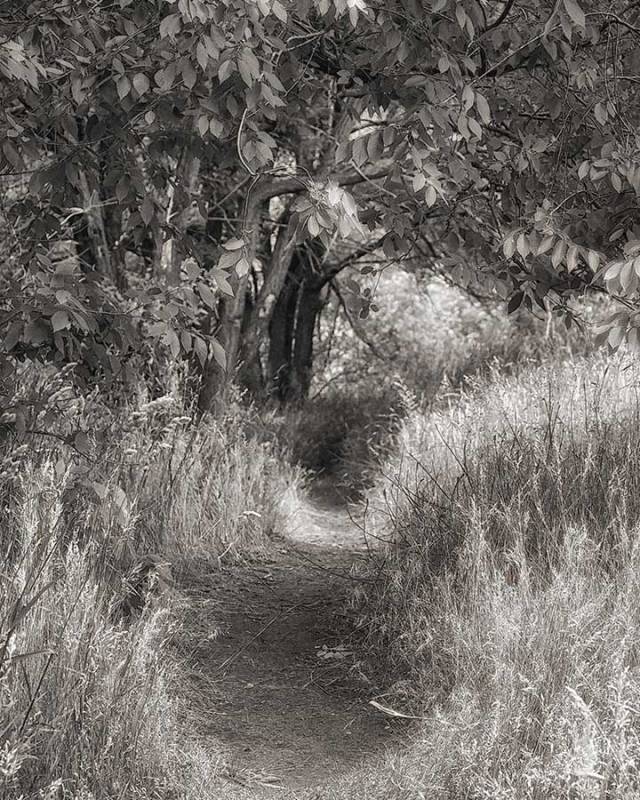


 Richo GX100 f/5.1 1/320 5.1m 80 ISO[/caption]






 a meditative journey
You must be logged in to post a comment.