


crocs

Year by year, season by season, day by day
quietly in the memories of children I live.
In my sleeves, drifting in peaceful slumber
tiny whispered wishes, two or three.
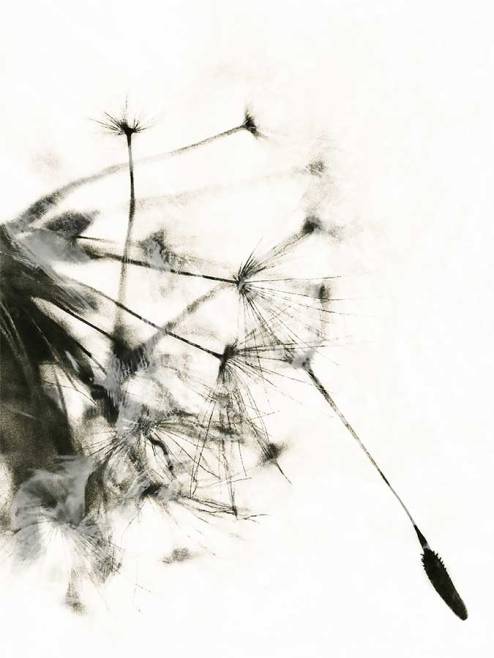

summer’s ending
Max Richter was born on March 22, 1966 in Hamelin, Lower Saxony, West Germany. He was nominated for Breakout Composer of the year in 2008 by the International Film Music Critics Association (IFMCA).


He saw that his own mind was present in every phenomenon in the universe. …Our own mind is the source of all phenomena. Form, sound, smell, taste, and tactile perception such as hot and cold, hard and soft – these are all creations of our mind. They do not exist as we usually think they do. Our consciousness is like an artist, painting every phenomenon into being.
Thich Nhat Hanh, Old Path White Clouds

In response to Lost in Translation’s request, here is a selection of images posted during July and August…


After listening to the TED Talk, “Can a Divided America Heal”, I did a brief exploration of the three basic principles of moral psychology
A bit of personal reflection opens a window of understanding of how I’m more often than not influence by what feels right and yes, the importance I place in intuition over reasoning. Often a movement towards “spiritual” reasoning occurs after a period of solitude and contemplation.
There is also an awareness that I do enjoy the rhythmic power of football tribalism while being perplexed by a religious leader’s comment about limiting compassion to one’s own tribe.
Then finally…do I acknowledge the possibility of some hidden agenda to persuade you to join me in what feels right over someone else’s sense of right? Ugh, I think I’ll close this window for a bit and open one that has us explore a new empathy.
…we have an existential threat on our hands..we need a new kind of empathy…if you want to escape from this [the anger and worry of the last year], read Buddha, read Jesus, read Marcus Aurelius. They have all kinds of great advice for how to drop the fear, reframe things, stop seeing the other people as your enemy. There’s a lot of guidance in ancient wisdom…(Jonathan Haidt)
Ancient wisdom guiding us to “a new kind of empathy.” I believe that the on-the-ground community response to Harvey is a living example of an ancient empathy that has the potential to heal.
I invite you to listen to the TED talk below in which social psychologists Jonathan Haidt and TED Curator Chris Anderson explore the sharp divisions of today and then discuss how we may be able to move forward. _()_

If you are…someone who enjoys the countryside, or the green forest, you know that the forests are our lungs outside our bodies. Yet, we have been acting in a way that has allowed two million square miles of forest land to be destroyed by acid rain. We are imprisoned in our small selves, thinking only of the comfortable conditions for this small self, while we destroy our large self. One day I suddenly saw that the sun is my heart, my heart outside of this body. If my body’s heart ceases to function I cannot survive; but if the sun, my other heart, ceases to function, I will also die immediately… (Thich Nhat Hanh, Being Peace)

Cee’s foto challenge: a bit of blue and some black
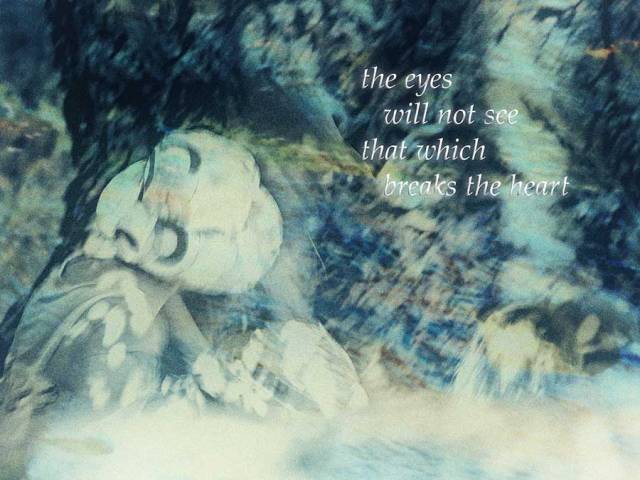
As I was reviewing images taken during a morning walk, this blurry photograph of children, gathered under a weeping willow to escape the summer heat, brought to mind the quote, “the eyes will not see that which breaks the heart.” So with the quote in mind I did a bit of exploring within the Nik Collection, added a couple of layers, and then did a bit of dodging and burning.
Speaking of love, check out Gidget at Pixel Sisters Studio
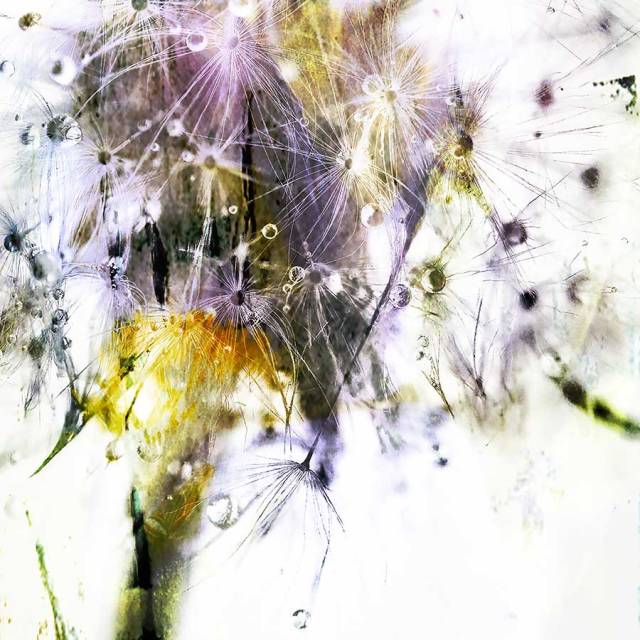
tears
The Belgian composer Wim Mertens (born 1953) is an international recording and performing artist who has given countless concerts, as a soloist and with his ensemble, all over Europe, North and Central America, Japan, Thailand and in Russia. He initially studied at the Conservatory of Brussels and graduated in political and social sciences at the K.U. Leuven and Musicology at the R.U. Gent. In 1998, Mertens became the Cultural Ambassador of Flanders.

The awareness of “I” emerges from a reflection of the stream of experiential consciousness that awakens when one becomes aware of being observed by an internalized watcher or seer who is felt but never known. This wavering consciousness, an “I”, knits together streams of memories, thoughts, feelings, and interactions in such a manner that formulates an awareness of continuity, striving, identity, as well as an sense of other.
Buddhist psychology suggests that the personal self that we experience, perceive, and conceive arises from five material and non-material elements: our bodies, feelings, perceptions, thoughts, and consciousness. These five categories of self introduce us to the nature of our being. We are the five and the five are us. Whatever we identify with, whatever we hold to as our self, falls within this collection. Together they generate the whole array of thoughts, emotions, ideas, and dispositions in which we dwell, “our world.”
Buddhism notes that these five elements, neither singly or collectively, constitute any permanent unchanging self, nor is there to be found any self apart from them. Hence the belief in a permanent solid self proves to be a mere illusion as we find a self riddled with gaps and ambiguities that appear coherent because of the monologue we keep repeating, editing, censoring, and embellishing in our minds.
Taking this discussion further, when we hold a rose we see that it also is composed of multiple elements, some tangible – leaves, stem, thorns, petals, stamens – and others intangible – scent, color, memories. If you were to remove any of these constituent parts, would you find an consistent, unchanging entity know as “rose”? As we are unable to find a permanent rose in the absence of any one of these parts, we are also unable to find an enduring rose in any one of these elements.

Contemplating the absence of an enduring and solid rose, is the mental “knowing” of the rose within the dynamics of I, the subject, and the rose, the object. To hold a rose is also to hold in your hand all the elements that make up both the tangible and intangible: the sun, rain, soil, eyes, nose, touch, consciousness, etc.
Thich Nhat Hanh tells us, “When we look at a chair, we see the wood, but we fail to observe the tree, the forest, the carpenter, or our own mind. When we meditate on it, we can see the entire universe in all its inter-woven and interdependent relations in the chair. The presence of the wood reveals the presence of the tree. The presence of the leaf reveals the presence of the sun. The presence of the apple blossoms reveals the presence of the apple. Meditators can see the one in the many, and the many in the one. Even before they can see the chair, they can see its presence in the heart of living reality. The chair is not separate. It exits only in its interdependent relations with everything else in the universe. It is because all other things are. It is is not, then all other things are not either.”

The words of Thich Nhat Hanh invites me to imagine the multiple phenomena present within both the rose and chair—sun, earth, rain, bacteria, worms, horticulturist, carpenter—to list a few. When I explore the elements within the horticulturist, my mind visualizes parents, doctors, teachers, grocery clerks, farmers, machinists, seamstress, etc. To extend this contemplation to the seamstress brings me to consider what elements are within designer labels: silk, bombyx mori, Chinese sericulture, organic nutrients, incubators, glass containers, designers, paper, sewing machines, laborers, mulberry trees, and the person who identifies herself with designer labels.
So…what elements are within a person who has an interdependent relationship with the phenomena of designer labels? If we were to remove all of the elements within labels what or who would actually be removed and what sense of “I” would remain?
What kind of world would it be if she and I came to honor and respect our interdependence with the seamstress, migrant worker, sales clerk, janitor, secretary, unemployed, homeless, negated other, rose and chair? If she and I saw that “I am them, and they are me?”
In summary, I draw upon Thich Nhat Hanh’s writing, “…An awakened individual vividly sees the non-chair elements when looking at the chair, and realizes that the chair has no boundaries, no beginning, and no end.
” …To deny the existence of a chair is to end the presence of the whole universe.
sources:
Thich Nhat Hanh, The Sun, My Heart
B Catherine Koeford, A Meditative Journey with Saldage
 a meditative journey
You must be logged in to post a comment.