a photo study: contemplative photography V – things in themselves

conttemplative 7

Seeing begins with respect, but wonder is the fuel which sustains vision.~Steven J Meyers

I believe we all intimately know of that moment…the moment, an early morning moment, that occurs just as we lift a window frame.  That fleeting moment as morning awakens us…before the mind discriminates, defines, labels, associates, and tucks away into memory…the moment of awareness to, awakening to the touching, the greeting..our vulnerability to morning’s sensual presence…That’s magic, the “things in themselves.”

our eye consciousness and ear consciousness can touch the world of suchness without distorting it.  With mind consciousness, we tend to distort…

Thich Nhat Hanh (Understanding the Mind) writes that there are three fields of perception: perception of things-in-themselves, as presentation, and as mere images, and that the way we perceive reality has everything to do with our happiness and suffering.

The perception of things-in-themselves is when we are perceiving directly without distortion or delusions. This is the only one of the three modes of perception that is direct. This way of perceiving is in the stream of…suchness; that is, “reality as it is.”  … Everything—a leaf, a pebble, you, me—comes from suchness. Suchness is the ground of our being, just as water is the ground of being of a wave.  

Are we capable of touching reality-in-itself? … A flower can be the manifestation of the world of suchness, if we perceive it directly.  It all depends on our mode of perception whether we touch the suchness of a flower or only an image of it that our minds have created. Our perceptions rarely reach the mode of things-in-themselves, however.  We usually perceive things in the other two modes, as representations or mere images. 

The first five consciousness-the sense consciousness of eye, ear, nose, tongue, and body—are capable of touching the realm of things-in-themselves, especially when they contact their objects of perception without the participation and intervention of mind consciousness.  When mind consciousness gets involved, however, there will always be some thinking and imagination, and the image brought to it by one of the sense consciousnesses will become distorted. 

We are capable of reaching the field of things-in-themselves, the world of suchness, but because we think and discriminate we don’t usually perceive things as they truly are.  The nature of our mind is obstructed.  This means that we build a world full of illusions for ourselves because of the distorted way we perceive reality.  Meditation is to look deeply in order to arrive at reality—first the reality of ourselves and then the reality of the world.  To get to that reality, we have to let go of the images we create in our consciousness… Our practice is to correct this tendency to discriminate and think dualistically, so that reality will have a chance to reveal itself. (pp 65-71)  

This slideshow requires JavaScript.

Miksang, a Tibetan word, has been translated to ‘Good Eye.’ Miksang photographers write that when we see with/through a Good Eye we see the world as it is for the first time.  This is because this way of seeing is absent of memory and association.  The world is manifesting to us, as it is out of nowhere.

Julie DuBose wrote (Shambhala Times, April 7, 2017, “What is Miksang Really?”) that the basis of Miksang photography

…is the open space of availability in our minds. When our mind and eye connect directly with a visual perception, it is like a flash of lightening arising from this empty open space. Without the voltage, the electric presence of the flash of contact inherent in the image, it is flat and lifeless, somebody’s idea. This is the juice of direct perception. If we can maintain our connection to this raw energy of perception through to our expression of the perception with our camera, then it will be completely expressed in our image. 

There is no halfway, half a flash of perception. The perception and the resulting image either does, or does not, have the living, raw experience of that moment of voltage embedded in it. There is no in between. This is the joy of “fresh” seeing.

A. Karr and M. Wood (The Practice of Contemplative Photography) notes that contemplative photography begins with “the flash of perception.”  

In the flash of perception…there is a space for things to come to you. Experience is definite, because there is no doubt about what you are seeing… Whatever it is, it is here, and there is no doubt involved, no shakiness.  The nature of perception is sharp, with a brilliant, clear quality.  The flash of perception is a moment of seeing that is one-pointed, stable, and free from distraction.  Experience is not diffused or scattered or moving. It is direct and in focus. It is stable because it is not tossed about by winds of thought or emotion. There is a stillness and roundedness as awareness remains with perception.

W. Rowe (Zen and the Magic of Photography) introduces the reader to Roland Barthes’ description of the essence of photography, the “punctum”,a small, distinct point.  

The punctum, “will break (or punctuate) the studium*…photographs that are “in effect punctuated, sometimes even speckled with these sensitive points; precisely, these marks, these wounds, are so many points.”  Punctual rises out of the scene, seeks out the viewer, disturbs the studio, wounds, cuts, pricks, and stings the viewer…also has the power to provide sudden enlightenment… a tiny shock, is usually found in the detail bringing “certain photographs very close to haiku.”

Only the moon

and I, on our meeting-bridge

alone, growing cold ~Teiga (S. Hill, The Sound of Water)

contemplationcolor5web

Torsten Andreas Hoffmann (Photography as Meditation: Tap into the Source of Your Creativity) indicated that within:  

the context of photography and shooting images, the photographer must be at the right place, with the right lens and the right aperture, at exactly the right moment to capture the picture.  Successful images, however, are not guaranteed based solely on having the correct posture and intent. However, by letting go of intent, the stillness of the mind can take over and you can attain oneness with your surroundings. Barthes refers to this concept using the term “satori,” which describes the highest state of enlightenment and comprehension in Zen. I prefer to use the term “Samadhi,” which indicates a state of utmost vigilance and attention. Photographs taken while in this state may achieve the quality of puncture.

As I was pondering my understanding of “the flash of perspective”, as an experience of a shock that is like being awakened from sleep by a loud noise and Barthes’ punctual that “disturbs, wounds, cuts, picks, and stings the viewer to an haiku moment, images of Buddhist masters who drop a book or strike with a stick as a means of wakening wandered into my thoughts.  As a therapist, I came to understand that there is an immediate response to “shock” that may be expressed as denial, laughter, tears, shaking, screaming, or tears that occurs as a way for the body/mind to re-establish a state of equilibrium.  Also, my own personal life experiences have taught me that expected moments of “shock” (as opposed to those horrid moments that come out of the blue) are more likely to be responded to with a more grounded and contemplative state of being. 

“Wounds, cuts, shocks, picks, stings…are not these words of violence incongruent to a contemplative state?  With all this said, I find myself wondering if these “shock” elements identified by contemplative photographers may have, even the smallest tendency, to blur and distract me from those now moments of “things in themselves.”  If so, then how could I open myself to being a photographer who receives and shares the gift that awaits my awareness? To lessen the tendency to shift away from an “awakening?”  What are they ways to cultivate an attitude of receptivity, an openness to what might be given to me?  To engage in a photo walk that is more like meditation or a spiritual discipline than a search or a hunt?  

aloneweb82518

I have come to a place of consideration that one small way in which to become acquainted with underlying attitudes and be in a more graceful receptive place to receive “things in themselves” is to begin to become aware of the words/attitudes that have the potential to define the process by which I photograph. 

I ask myself will I be more able to see with respect, as noted by Steven J Meyers, if I intentionally silence the words “shoot,” “capture,” “frame,” “take,”  “exposed,” “cover,” “take the shot,” in order to open myself to  “receive,” “connect with,” “create,” “be present with,” “wonder,” “surprise,” “reveal.”

And then, will I be more able to open myself to the expression of a temporary enlightenment, in which I see into the life of things.”

*studium…

the intention of the photographer…the elements of an image rather than the sum of the image’s information and meaning.  …the elements of the punctum penetrate the studium—they have the ability to move the viewer in a deep and emotional way.  

i awaken to…

waldon-24web9518

a metaphysical search…Nikon D750  f/7.1   1/25s  135m 100 ISO

I awaken to the mourning dove’s appeal for the sound of another, and find the passing dream state, like many before, was spent wandering through a petrified forest unlike any created by the ancient uniting of Gaea, Mother Earth, and Uranus, Father Heaven. It was filled with a longing, a seeking; it was a series of moments of futile endeavors.

As I walked upon moonlit pathways, edged by shadows of hidden yesterdays as well as shrouded by entangled memories, I encountered afterimages, echoes, phantoms, fragmented sequels, refrains, and vague specters.  Now and then, it felt as though I had stepped on a “mind-trap” and suddenly became entangled inside an invisible emotional net that swirled me around and around from one apparition to another.  Each apparition messaged that I have gone around and around in discursive circles once, twice, a thousand times throughout my lifetime of nights.  I say to myself, “I’ve been here before.  I’ve re-imaged, revisited, and reviewed past dreams as if I were an author rewriting a long ago discarded novel about an outcast.”   Within this uncertainty a voice urges compassionate reflection.

Within stilled and silent reflection is an awareness of the emergence of a cluster of physical sensations from my stream of experiential consciousness.  Together with the awareness of this particular cluster of physical sensations is the identification of a feeling I have labeled as “homesickness for a place, person, or time” and the creation of a story about an “I” who is an outcast.

TWO TRUTHS

From this point, I ask of myself, “What are the defining characteristics of a person who is an outcast?”  I question if I have had these characteristics since the moment of my conception.  I then discern if my relationship with all living beings, from my spouse to the robin outside my house, is limited to and defined by these characteristics.  In other words, have I always been an outcast, and does every living being relate to me as an outcast?

I come to the conclusion that the answer to both of these questions is no.  I now hear an encouragement to release the story line that arises from a false identification with “I am an outcast.”  In conjunction with the release of this story line is the subsequent letting go of the construct of an unknown person, place, or time.  Within the emptiness that accompanies this release arises a consciousness of feeling – sadness intertwined with loneliness.  To find that to simply acknowledge this particular cluster of physical sensations with “sadness and loneliness is arising” and to resist the urge to identify with these feelings releases me from the wellspring of suffering within the label of “outcast.”

I am now free to concentrate on that discernment of myself as being freed from this metaphysical search, and to focus on this inferential understanding and to concentrate on discerning the impermanence of sadness and loneliness. This is the discriminating awareness that arises from meditating.

Thus you must train yourself:  “In the seen there will just be the seen; in the heard, just the heard; in the reflected, just the reflected; in the cognized, just the cognized.” . . . when in the seen there will be to you just the seen; . . .  just the heard;  . . . just the reflected; . . . just the cognized, then  . . . you will not identify yourself with it, you will not locate yourself therein.  When you do not locate yourself therein, it follows . . . this will be the end of suffering.         ~ The Buddha

Excerpts from B Koeford, A Meditative Journey with Saldage

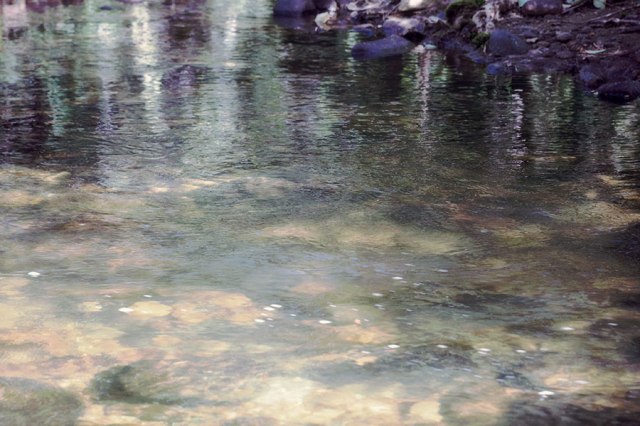
pond reflections

pondreflectionsweb291318

Nikon D750   f/5.6   1/400   180m   350 ISO

In the higher Buddhist view, appearances rise from emptiness and dissolve again…It is a process like birth, living, and dying…practice letting come and go…we may rest longer and longer in the space of openness…Don’t try to shape the oneness, or see it as one thing or another, or gain anything from it. Just let things be. This is the way to find your center.  ~Tulku Thondup, The Healing Power of Mind

clouds II

clouds4aweb

“Before the cloud appeared in the sky she was not nothing. She was the water in the ocean. She was the heat generated by the sun. She was the water vapor rising up to the sky. And when we can no longer see the cloud in the sky, she hasn’t died; she has just transformed into rain or snow. The notion of death is also created by our mind. It is impossible for something to become nothing. The cloud hasn’t died; it is manifesting in its new form as rain, as hail, as snow, as the river, and as the cup of tea in my two hands. So the true nature of the cloud is no-birth and no-death.

clouds2aweb

“… we can start to see the countless umbilical cords that link us to life all around us. There is an umbilical cord that exists between us and the river. The water we drink every day flows down from mountain springs and streams, right into our kitchen. So the river is also a mother and there is an invisible umbilical cord between us. If we cannot see it yet, it’s because we haven’t looked deeply enough. There is another umbilical cord between us and the clouds, between us and the forests, and another between us and the sun. The sun is like a parent to us. Without our link to the sun we could not live, and neither could anything else. We are nourished and sustained by countless parents. The river, the wild animals, the plants, the soil and all its minerals are our mothers and fathers, and are mothers and fathers to all phenomena on planet Earth. That is why in the sutras it is said that living beings have been our parents through countless lifetimes.

clouds1bweb

“There are umbilical cords linking us to all that is in the universe and in the entire cosmos. Can you see the link between you and me? If you are not there, I am not here; that is certain. If you do not yet see it, look more deeply and I am sure you will see”

Excerpt: Thich Nhát Hanh, The Other Shore 

beginning anew

tree-4web

Although we think the past is gone and the future is not yet here, if we look deeply we see that reality is more than that. The past exists in the guise of the present because the present is made from the past. In this teaching, if we establish ourselves firmly in the present and touch the present moment deeply, we also touch the past and have the power to repair it. That is a wonderful teaching and practice. We don’t have to bear our wound forever. We are all unmindful at times; we have made mistakes in the past. It does not mean that we have to always carry that guilt without transforming it. Touch the present deeply and you touch the past. Take care of the present and you can repair the past. The practice of beginning anew is a practice of the mind. Once you realize what mistake you made in the past, you are determined never to do it again. Then the wound is healed. It is a wonderful practice.

~Thich Nhat Hanh & Melvin McLeod (The Pocket Thich Nhat Hanh)

mindful energy

perspectiveweb

Nikon D750      f/1.8   1/10   35mm   100 ISO   (neutral density lens)

Every moment that we’re alive in this body, in this human manifestation, we’re emitting energy. This energy can be transformed but it can’t die; it remains in the world forever. … A thought is an action because it already has energy and it has the power to affect things. When we produce a thought of compassion, understanding, and love, that thought has the power to heal our body, our mind, and the world. If we produce a thought of hatred, anger, or despair, that thought has an affect not only on ourselves but on the world; it can destroy us and lead to the obstruction of many other lives.

Suppose a nation produces a collective thought of anger and fear and decides to go to war. The whole country is then producing fear and anger. That collective fear and anger can cause much real destruction and suffering. … The thoughts and feelings we send out to into the world have a powerful effect. Every thought we produce, everything we do and say, is an action. These actions continue forever. They can transform, but like the cloud, they will not disappear. We have to recognize the power of our [actions] and make a firm determination to be mindful of our thoughts, speech, and actions in order to heal ourselves and the Earth.

Thich Nhát Hanh, Love Letter to the Earth

with each breath…

impliedlines-2web

Spring Creek         Nikon D750   f/2   1/40s   35mm   100 ISO

The foundation of all mindfulness practice is awareness of the breath. There is no mindfulness without awareness of our in-breath and out-breath. Mindful breathing unites the body and mind and helps us to become aware of what is going on inside us and around us. In our daily life, we often forget that mind and body are connected. Our bodies are here but our minds are not. Sometimes we lose ourselves in a book, a film, the internet or an electronic game, and we’re carried off, far away from our body and the reality of where we are. Then, when we lift our head out of the book or look up from the screen, we may be confronted with feelings of anxiety, guilt, fear, or irritation. We rarely go back to our inner peace, to our inner island of calm and clarity, to be in touch with Mother Earth.

We can get so caught up in our plans, fears, agitations, and dreams that we aren’t living in our bodies anymore and we’re not in touch with our real mother, the Earth, either. We can’t see the miraculous beauty and magnificence that our planet offers to us. We are living more and more in the world of our minds and becoming increasingly alienated from the physical world. Returning to our breathing brings body and mind back together and reminds us of the miracle of the present moment. Our planet is rich here, powerful, generous, and supportive at every moment. Once we recognize these qualities in the Earth, we can take refuge in her in our difficult moments, making it easier for us to embrace our fear and suffering and to transform it.

Awareness of the in-breath and out-breath first of all calms us down. By paying attention to your breathing, without judgment, you bring peace back to your body, and release the pain and tension. …

When our minds and bodies have calmed down, we begin to see more clearly. When we see more clearly, we feel more connected to ourselves and to the Earth and we have more understanding. When there is clarity and understanding, love can bloom because true love is based on understanding.

…Each breath contains nitrogen, oxygen, and water vapor as well as other trace elements, so each breath that we inhale contains the Earth. With each breath, we’re reminded that we are part of this beautiful life-giving planet.

~Thich Nhát Hahn, (Love Letter to the Earth)


this is, because…

ruleofspace-1web copy

This is, because that is.  This is not, because that is not. This comes to be, because that comes to be. This ceases to be, because that ceases to be…This is like this, because that is like this.

~Thich Nhat Hanh, The Heart of the Buddha

time-lapse of an apple blossom transforming

https://youtu.be/sEwmUbzN_-g

geography doesn’t create justice….

My mother once described a job interview for a dietary postion within a small community hospital in which she was asked if she could cook. She described how she  directed the woman’s gaze to the various pictures of her children that were placed about her living room and invited the woman into her kitchen to show her that she, indeed, as a mother did and could cook.

This question, was experienced by my mother as an example of discrimination…a prejudice of deafness.  As I listened to my mother’s story, I understood the question as appropriate to the job. What I interpreted to be discrimination came from the environment in which the interview occurred…not at the hospital, but within the privacy of her own home.

How many job interviews take place within a job applicant’s home?

Being a child of my mother’s and a female, I believed I came to understand discrimination, oppression, and  marginalization, both personally and through my mother’s life stories.   As a child, she was required by state law to attend a deaf school and initially attended a school that was close enough to the family home to allow for weekends with the family.  Yet, because the school was located out of state, she had to enroll in a state school much further away,  Consequently, she was then only able to be with family during specific holidays. This is of a time when letters were her only course of connection with her family.

Also, the school she attended had a policy prohibiting communication through the use of sign language as a means to assist the students to fit in with the “hearing world.”  I smile today, remembering her pride as she described the opposition to this policy.  She and her classmates would gather together in an attic, at night, to teach one another how to speak in sign.

The events of today have invited me to reflect upon my own behaviors — and even my reaction to my mother’s job interview experience —  and to see them as being influenced by discrimination, marginalization, and oppression especially in light of my understanding of “microaggression.”

Microaggressions are the everyday verbal, nonverbal, and environmental slights, snubs, or insults, whether intentional or unintentional, which communicate hostile, derogatory, or negative messages to target persons based solely upon their marginalized group membership. In many cases, these hidden messages may invalidate the group identity or experiential reality of target persons, demean them on a personal or group level, communicate they are lesser human beings, suggest they do not belong with the majority group, threaten and intimidate, or relegate them to inferior status and treatment.

…microaggressions are active manifestations and/or a reflection of our worldviews of inclusion/exclusion, superiority/inferiority, normality/abnormality, and desirability/undesirability. Microaggressions reflect the active manifestation of oppressive worldviews that create, foster, and enforce marginalization. Because most of us consciously experience ourselves as good, moral and decent human beings, the realization that we hold a biased worldview is very disturbing; thus we prefer to deny, diminish or avoid looking at ourselves honestly. Yet, research suggests that none of us are immune from inheriting the racial, gender, and sexual orientation biases of our society. We have been socialized into racist, sexist and heterosexist attitudes, beliefs and behaviors. Much of this is outside the level of conscious awareness, thus we engage in actions that unintentionally oppress and discriminate against others.

~ https://www.psychologytoday.com/blog/microaggressions-in-everyday-life/201011/microaggressions-more-just-race

 I have come to realize that to there are no benign questions…and that a small section of my indignities towards another arise, in part, from my own denial and ignorance.  Awakening to the suffering of others and to the unintentional harm I have caused others brings tears to my eyes as well as leaves me floundering in how to apologize.

It is my hope this sharing of Br Phap Man’s video, “Inclusivity and Justice”, is a small step  that brings about a healing awakening that overcomes walls of various shapes, formations, and sizes.

a flower is not a flower

100dayspoppy

Aryeah Kaplan wrote that when one is in a meditative state, one has obtained the ability to turn off faint after-images that are constantly with us and interfere with seeing objects with total clarity. He noted that when one is able “to turn off the spontaneous self-generated images . . . the beauty of the flower . . . seen in these higher states of awareness is indescribable [and] appears to radiate beauty.

~Aryeah, Kaplan, Jewish Meditation: A Practical Guide, p.9

wordless wed

A flower is not a flower.  It is made only of non-flower elements–sunshine, clouds, time, space, earth, minerals, gardeners, and so on. A true flower contains the whole universe. If we return any one of these non-flower elements to its source, there will be no flower. That is why we can say, “A rose is not a rose. That is why it is an authentic rose.” We have to remove our concept of rose if we want to touch the real rose.

~Thich Nhat Hanh, The Heart of the Buddha’s Teaching, p. 129


deconstruction2

…when we hold a rose we see that it is composed of multiple elements, some tangible – leaves, stem, thorns, petals, stamens – and others intangible – scent, color, memories. If you were to remove any of these constituent parts, would you find an entity know as “rose”? As we are unable to find the rose in the absence of any one of these parts, we are also unable to find an enduring solid rose in any one of these elements.

~B Catherine Koeford, A Meditative Journey with Saldage, pp152-153