
dandelion
the journey begins

You can learn about the pine only from the pine, or about the bamboo only from bamboo. When you see an object, you must leave your subjective pre-occupation with yourself; otherwise you impose yourself on the object, and do not learn. The object and yourself must become one, and from that feeling of oneness issues your poetry. However well phrased it may be, if your feeling is not natural—if the object and our self are separate—then your poetry is not true poetry but merely your subjective counterfeit.
~ Basho*
Keith Kenniff is an American composer, multi-instrumentalist, and electronic music producer. He composes ambient/electronic music under the moniker Helios and post-classical piano music under Goldmund.
everyman’s artist…consciousness

He saw that his own mind was present in every phenomenon in the universe. …Our own mind is the source of all phenomena. Form, sound, smell, taste, and tactile perception such as hot and cold, hard and soft – these are all creations of our mind. They do not exist as we usually think they do. Our consciousness is like an artist, painting every phenomenon into being.
Thich Nhat Hanh, Old Path White Clouds

thursday special: july & august recap
In response to Lost in Translation’s request, here is a selection of images posted during July and August…


Before


tears
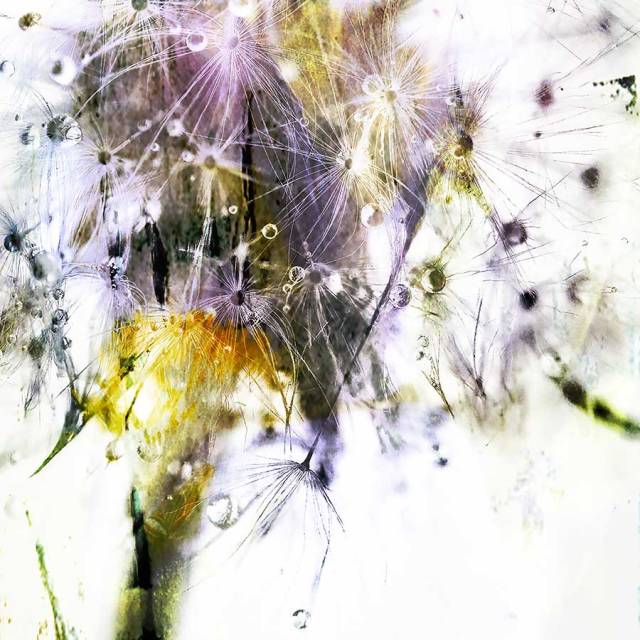
tears
The Belgian composer Wim Mertens (born 1953) is an international recording and performing artist who has given countless concerts, as a soloist and with his ensemble, all over Europe, North and Central America, Japan, Thailand and in Russia. He initially studied at the Conservatory of Brussels and graduated in political and social sciences at the K.U. Leuven and Musicology at the R.U. Gent. In 1998, Mertens became the Cultural Ambassador of Flanders.
dandelion project
“Bodhi means being awake, and satttva means a living being, so bodhisattva means an awakened being. All of us are sometimes bodhisattvas, and sometimes not.

“Understanding is like water flowing in a stream. Wisdom and knowledge are solid and can block our understanding. In Buddhism, knowledge is regarded as an obstacle for understanding. If we take something to be the truth, we may cling to it so much that even if the truth comes and knocks at our door, we won’t want to let it in.”
Thich Nhat Hanh, The Heart of Understanding
dandelion project

objectification

My eye for me is a certain power of making contact with things, and not a screen on which they are projected … The other’s gaze transforms me into an object, and mine, him, only if both of us withdraw into the core of our thinking nature [left hemisphere], if we both make ourselves into an inhuman gaze, if each of us feels his actions to be not taken up as understood, but observed as if they were an insect’s. This is what happens, for instance, when I fall under the eyes of a stranger. But even then the objectification of each by the other’s gaze is felt as unbearable only because it takes the place of a possible communication.
~Maurice Merleau-Pontry (cited: Iain McGilchrist, The Master and his Emmissary, p.166)
dandelion project
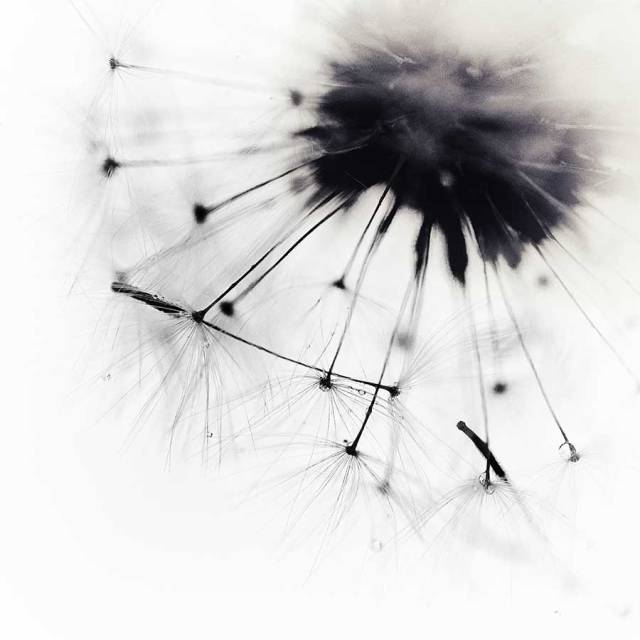
All phenomena of being, since time memorial, are independent of concepts and words. Concepts and words cannot transform them or separate them from their true nature.
~The Awakening of Faith in the Mahayana (cited: Thich Nhat Hanh, Zen Keys, pg. 81)
sliver of perspective

“…thoughts of the past, fantasies about the future, judgements and evaluations concerning…work itself–what are these but shadows and ghosts flickering about in our minds, preventing us from entering fully into life itself.”
~Philip Kapleau (Thich Nhat Hanh, Zen Keys, Introduction)

awakening
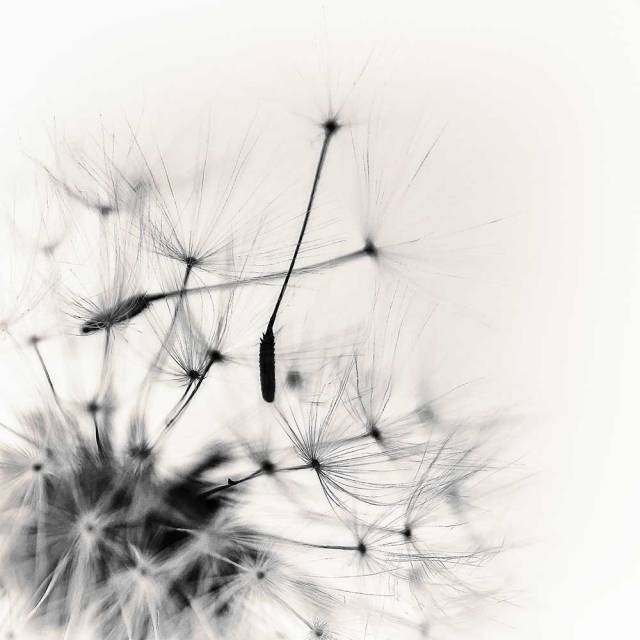 “Suppose I invite you to join me for a cup of tea. You receive your cup, taste the tea, and then drink a little more…
“Now suppose I ask you to describe the tea. You use your memory, your concepts, and your vocabulary to describe the sensations. …concepts and words describe your direct experience of the tea, they are not the experience itself. Indeed, in the direct experience of the tea, you do not make the distinction that you are the subject of the experience and that the tea is its object, you do not think that the tea is the best, or the worst…There is no concept or word that can frame this pure sensation resulting from experience. You can offer as many descriptions as you like, but only you have had a direct experience of the tea. …And you yourself, when you are describing the experience, are no longer in it. In the experience you were one with the tea. There was no distinction between subject and object, no evaluation, and no discrimination. That pure sensation is an example of non-discriminative wisdom, which introduces us to the heart of reality.
“To reach truth is not to accumulate knowledge, but to awaken to the heart of reality. Reality reveals itself complete and whole at the moment of awakening. In the light of awakening, nothing is added and nothing is lost. …The moment of awakening may be marked by an outburst of laughter, but this is not the laughter of someone who has won the lottery or some kind of victory. It is the laughter of one who, after searching for something for a long time, suddenly finds it in the pocket of his coat.”
~Thich Nhat Hanh ( Zen Keys, pp.43-44)
wpc: delta
The past, present, and future…in a moment of time. In your mind’s eye, do you see the generations of past dandelions—sleeping soundly within each protective seed shell? Each kernel attached to a fragile parachute, waiting for a gentle summer breeze, trusting in an unknown tomorrow’s life-giving rain, sun, and soil for its awakening.

Delta sharing a picture that symbolizes transitions, change, and the passing of time.
 a meditative journey
You must be logged in to post a comment.